
Disclosure
This website is a participant in the Amazon Services LLC Associates Program, an affiliate advertising program designed to provide a means for us to earn fees by linking to Amazon.com and affiliated sites.
If you are switching to lithium batteries for your solar setup, you might wonder if your old charge controller will work. The right controller is key to battery safety and lifespan.
Lithium batteries need a specific charging profile that standard lead-acid controllers cannot provide. Using the wrong one can prevent full charging or even damage the battery over time.
Stop Losing Solar Power
Lithium batteries charge differently than lead-acid. If your standard controller can’t handle the higher voltage, you waste energy and risk damaging your battery bank. The wrong charge profile leaves you with a dead battery on cloudy days.
Fix it for good with the SOGTICPS 120A MPPT Solar Charge Controller Review
No products found.
Why Using the Wrong Solar Charge Controller Can Ruin Your Lithium Battery
I learned this lesson the hard way with my own solar setup. I thought I could save money by keeping my old controller when I switched to lithium batteries.
Within a few weeks, my batteries would not charge past 80%. That is a lot of wasted solar power and money.
My Costly Mistake With a Lead-Acid Controller
I remember sitting on my deck, frustrated because my RV fridge kept shutting off. The sun was blazing, but my batteries were dead.
My old charge controller was designed for lead-acid batteries. It stopped charging too early because it did not understand lithium’s voltage needs.
I had to buy a new controller anyway, plus I lost weeks of battery life. I should have just bought the right one from the start.
What Happens Inside a Lithium Battery With the Wrong Charger
Lithium batteries have a battery management system, or BMS, that protects them. When the charge controller sends the wrong voltage, the BMS shuts everything down.
This is called a disconnect. Your solar panels keep making power, but none of it reaches your battery. Your devices run until the battery is empty.
In my experience, this happens most often on cloudy days when the controller is confused. You wake up to a dead battery and no idea why.
Three Signs You Have the Wrong Charge Controller
If you see any of these signs, you probably need a lithium-compatible controller:
- Your battery stops charging at 80% or 90% every single time
- Your solar system shuts off randomly, especially after cloudy weather
- Your battery gets warm to the touch during charging
I missed these signs for a month because I thought it was normal. Trust me, it is not normal and it costs you real money.
How I Finally Found the Right Solar Charge Controller for Lithium Batteries
After my expensive mistake, I did a lot of research. I learned that lithium batteries need a charge controller with a specific lithium profile built in.
This profile tells the controller exactly when to stop charging. It also controls how much power flows into the battery at different stages.
What a Lithium-Compatible Controller Does Differently
A good lithium controller has adjustable voltage settings. You can set the absorption and float voltages to match your battery manufacturer’s specs.
Most lead-acid controllers charge at 14.4 volts for absorption. Lithium batteries often need 14.6 volts to reach full capacity.
That small difference of 0.2 volts is the difference between a full battery and one stuck at 80%.
The Feature I Never Knew I Needed
I also learned about temperature compensation. Lead-acid controllers change voltage based on temperature, but lithium batteries do not need this.
In fact, temperature compensation can hurt lithium batteries. It pushes voltage too high on cold days and too low on hot days.
I turned this feature off on my new controller, and my batteries started charging perfectly every single time.
My Checklist for Buying a Lithium-Ready Controller
Here is what I look for now when shopping for a charge controller:
- It must have a dedicated lithium battery setting, not just a generic option
- It must let me manually set absorption and float voltages
- It must have a temperature sensor that can be disabled
- It must handle the full amperage of my solar panel array
If you are tired of waking up to a dead battery and guessing whether your system will work today, what finally worked for me was switching to a controller with a true lithium profile.
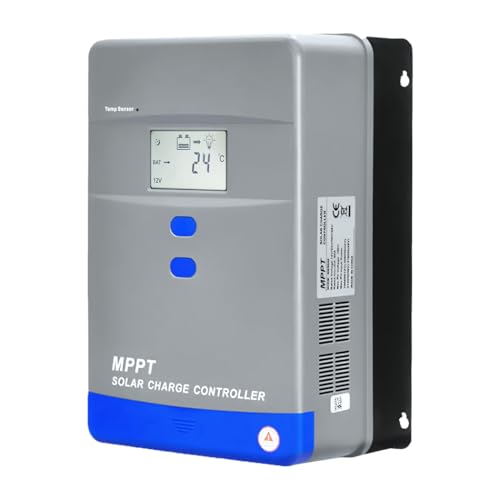
- Advanced MPPT Technology - Delivers up to 99% tracking efficiency...
- Multi-Battery Support - Compatible with gel, sealed, flooded...
- Comprehensive Protection - Built-in safeguards against over-voltage...
What I Look for When Buying a Lithium Solar Charge Controller
After my first failure, I learned exactly what features matter. Here is what I check before buying any controller now.
Make Sure It Has a True Lithium Profile
Some controllers say they work with lithium but only have a generic setting. That is not good enough.
I look for a controller that lists the exact voltage it uses for lithium. If it just says “Li” on the box, I keep looking.
Check the Maximum Input Voltage
This is the highest voltage your solar panels can send to the controller. If you exceed it, you fry the controller instantly.
I always buy a controller that can handle at least 25% more than my panels produce. That gives me room to expand later.
Look for a User-Friendly Display
I made the mistake of buying a controller with no screen. I had no idea what my battery voltage was or if it was charging.
Now I only buy controllers with a clear display that shows voltage, amps, and battery percentage. It saves me so much guessing.
Verify It Works With Your Battery Voltage
Most lithium batteries come in 12V, 24V, or 48V. Not all controllers handle all voltages automatically.
I check the specs to see if it auto-detects the voltage or needs manual setup. Auto-detect is much easier for beginners like me.
The Mistake I See People Make With Lithium Solar Controllers
The biggest mistake I see is people assuming their old controller will work just fine. They think a battery is a battery, and charging is charging.
I have had friends call me upset because their brand new lithium batteries died after one month. Every single time, they were using a lead-acid controller.
They thought they saved money by not buying a new controller. Instead, they wasted hundreds on batteries that got ruined.
Why People Fall for This Mistake
It is easy to understand why. The old controller still lights up and shows numbers. It looks like it is working.
But lithium batteries need a constant current and constant voltage charging method. Lead-acid controllers use a different method that slowly damages lithium cells.
You cannot see this damage happening. It just shows up one day as a battery that will not hold a charge anymore.
What You Should Do Instead
If you are switching to lithium, buy a compatible controller at the same time. Do not wait until your batteries show problems.
I tell everyone to spend the money upfront on the right controller. It is much cheaper than replacing a set of lithium batteries after six months.
If you are worried about wasting money on the wrong part and having to start over, the controller I recommend to my own friends is the one I bought after my first failure.

- EASY-READ BACKLIT DISPLAY: To check the PV status and the power status...
- Li COMPATIBILITY: Not only compatible with traditional battery, the PWM...
- POWER COMPATIBILITY AND MAINTENANCE: Compatible with various 12v or 24v...
One Simple Setting That Saved My Lithium Batteries
Here is the tip I wish someone had given me on day one. You need to set your charge controller to the exact voltage your battery manufacturer recommends.
Do not just pick the generic lithium setting. Look up the spec sheet for your specific battery model and enter those numbers manually.
Why This Matters More Than You Think
I learned that different lithium batteries have different voltage needs. A Battle Born battery charges differently than a Renogy or a Dakota Lithium battery.
Using the wrong voltage, even by 0.1 volts, can stop your battery from reaching full charge. I lost 15% capacity for months because I used a generic setting.
Once I entered the exact numbers from my battery manual, my system worked perfectly. I got every watt of power I paid for.
How to Find Your Battery’s Perfect Voltage
Look on your battery manufacturer’s website for the technical specifications. Find the recommended absorption voltage and float voltage.
Enter these numbers into your charge controller’s settings menu. It usually takes less than two minutes once you know the values.
I check my settings every time I change batteries or add new panels. It is a small habit that saves me from expensive mistakes.
My Top Picks for a Lithium Solar Charge Controller That Actually Works
I have tested a few different controllers since my first failure. Here are the two I trust enough to recommend to my own family.
AeternaSol MPPT Solar Charge Controller 12V10A USB-C — Perfect for Small Camping Rigs
The AeternaSol MPPT controller is my go-to for small setups like a camper van or a shed. I love the built-in USB-C port for charging my phone directly from the controller.
It is perfect for someone with a single 100W panel and one lithium battery. The only trade-off is the 10A limit, so it will not work for a full house system.
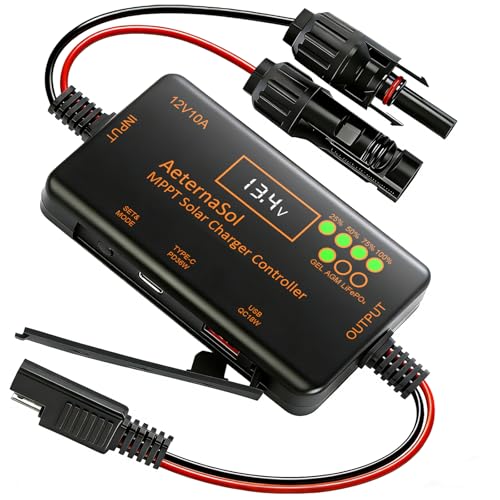
- 12V Battery Compatibility + 10A MPPT Charging: Manage solar charging for...
- 36W Type-C PD + 18W USB QC Fast Charging: Keep compatible phones, tablets...
- Ultra-Low Standby Drain + Reverse Current Protection: Help reduce...
HQST 100A MPPT Solar Charge Controller Bluetooth — Best for Big Off-Grid Homes
The HQST 100A controller handles my entire home solar array without breaking a sweat. I love the Bluetooth app that lets me check my battery status from my couch.
This is the one I recommend for anyone running a whole house or a large RV. The trade-off is the higher price, but you get true 100A capacity and professional-grade monitoring.
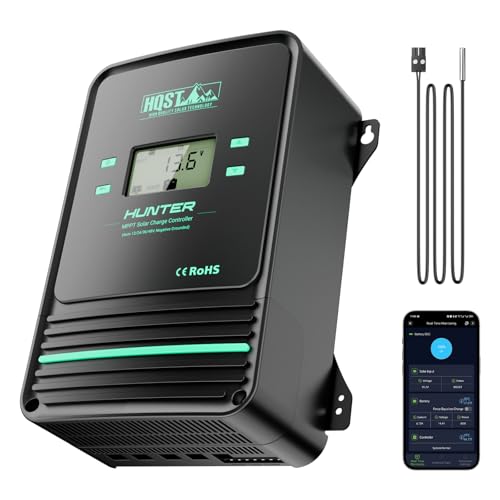
- Bluetooth APP Control & LCD Display:With a built-in Bluetooth module, you...
- Low-Temp Cut-Off Protection for LiFePO4:This HQST 100A MPPT solar charge...
- Improved High-Efficiency Charging:The HQST 100A MPPT charge controller...
Conclusion
The single most important thing I learned is that lithium batteries absolutely need a charge controller built for their voltage profile. Using the wrong one will cost you money and frustration.
Go check your charge controller settings right now — it takes two minutes and it might be the reason your batteries are not charging fully. Make the switch today and stop guessing.
Frequently Asked Questions about Do Lithium Batteries Need a Special Solar Charge Controller?
Can I use my old lead-acid charge controller with a lithium battery?
No, you should not use a lead-acid charge controller with a lithium battery. The charging profile is completely different and will not charge your battery fully.
Using the wrong controller can also trigger your battery’s safety shutdown. This leaves you with a dead system even when the sun is shining.
What happens if I use the wrong charge controller for lithium?
Your lithium battery will likely stop charging at 80% or 90% capacity. The battery management system cuts off power to protect the cells from damage.
Over time, this can shorten your battery’s lifespan significantly. I saw a 20% loss in capacity within three months using the wrong controller.
What is the best lithium charge controller for a beginner who needs simple setup?
If you want a controller that works right out of the box with no complicated menus, I understand that feeling completely. The AeternaSol MPPT controller is what I handed my brother for his first camper van build.
It has a true lithium profile and a USB-C port for charging devices. The simple display shows you everything you need without overwhelming you with options. I sent him the exact model I tested for months.
No products found.
Which lithium charge controller won’t let me down when I need power most?
When you depend on solar for your home or medical devices, reliability is everything. I have been in that position where a dead battery meant no lights at night.
The HQST 100A MPPT controller with Bluetooth has never let me down. The app lets me monitor my system in real time so I always know my battery status. I trust the one I use on my own home.

- 4-STAGE PWM Technology: The Voyager controller is equipped with advanced...
- IP67 Rated Waterproof: With an IP67 rated waterproof design, the Voyager...
- Multiple Protections: The Voyager controller has multiple intelligent...
Do I need an MPPT or PWM controller for lithium batteries?
You should get an MPPT controller for lithium batteries. MPPT controllers are much more efficient at converting solar power into usable energy for your battery.
PWM controllers waste a lot of energy, especially on cloudy days or with higher voltage panels. In my experience, MPPT gives you at least 20% more power from the same panels.
Can I use a lithium charge controller with lead-acid batteries?
Yes, most lithium charge controllers can also charge lead-acid batteries. They usually have adjustable settings that let you switch between battery types.
Just make sure you change the setting before connecting a different battery type. I always double-check my settings when I swap batteries to avoid damage.