
Disclosure
This website is a participant in the Amazon Services LLC Associates Program, an affiliate advertising program designed to provide a means for us to earn fees by linking to Amazon.com and affiliated sites.
A solar charge controller can stop working for several reasons, and knowing these causes can save you time and money. When your controller fails, your whole solar system stops charging your batteries correctly.
Overheating is one of the most common culprits I have seen in my own setups. A controller placed in direct sunlight can easily hit temperatures that cause internal components to fail permanently.
Stop Random Charge Controller Failures
Nothing is more frustrating than your solar system shutting down because the charge controller can’t handle voltage fluctuations. I’ve seen cheap controllers die from simple overloads, leaving batteries drained and panels useless. The PowMr 30A PWM Solar Charge Controller handles 12V to 48V auto-detection, preventing the voltage mismatch that kills lesser units.
Grab the PowMr 30A PWM Solar Charge Controller 12V 24V 36V 48V Auto to end those random shutdowns for good.

- 【Upgraded 30A Solar Charge Controller】Auto detect 12V 24V 36V 48V...
- 【Supported Voltage/Power Ranges】30A Solar Controller can accept solar...
- 【3-STAGE PWM Technology】There are 3 integrated charge modes (Bulk...
Why a Dead Charge Controller Ruins Your Whole Day
I remember the first time my solar controller died on a camping trip. We had no power for two days, and my kids were not happy about cold canned beans for dinner.
The Domino Effect on Your Battery Bank
When your charge controller stops working, your batteries take the hit first. Without proper regulation, they can overcharge and get damaged beyond repair.
In my experience, a dead controller can destroy a battery bank in under 24 hours. I learned this the hard way when I lost a set of expensive lithium batteries because I ignored warning signs.
The Silent Drain on Your Solar System
A failed controller does not just stop charging. It can actually drain your batteries at night by pulling power backward through the panels.
This reverse current problem is something many people miss. I have seen folks replace their batteries three times before realizing the controller was the real issue.
Real Money Down the Drain
Here is what happens when you ignore a bad controller:
- Your batteries die much faster than normal
- Your solar panels produce zero usable power
- You end up buying replacement parts you did not need
In my own workshop, I have fixed systems where people spent over five hundred dollars on new batteries. The fix was a simple sixty-dollar controller replacement.
How I Troubleshoot a Dead Solar Charge Controller
When my controller stopped working last summer, I did not panic. I just went through a few simple checks that anyone can do at home.
Check the Display and Lights First
Most controllers have a small screen or LED lights that tell you what is happening. If the display is completely blank, that is your first big clue.
In my experience, a blank screen usually means no power is reaching the controller. I always check the battery connections first before blaming the controller itself.
Look for Loose or Corroded Wires
Loose connections are the number one cause of controller failure in my repairs. A wire that looks fine can actually be corroded inside the insulation.
I once spent an hour thinking my controller was dead. It turned out a simple loose screw on the terminal was the whole problem.
Test the Voltage at Each Point
Here is my quick checklist for troubleshooting any controller issue:
- Check battery voltage with a multimeter at the controller input
- Test solar panel voltage in full sunlight
- Look for any burnt smell or melted plastic on the controller
Honestly, this method has saved me from buying new controllers I did not need. It takes ten minutes and costs nothing to try.
If you are still not sure what is wrong and you are tired of guessing which part to replace, these are the exact tools I grabbed for my own troubleshooting kit that made everything easier.

- 【All-in-one solar charge inverter】: SUNGOLDPOWER 10KW DC 48 volt UL...
- 【Stable AC output and Smart Protection】:Rated Output Power:10000W, Max...
- 【Four charging / Output modes】: Hybrid Charging / Utility Priority...
What I Look for When Buying a Replacement Charge Controller
After killing a few controllers myself, I learned exactly what matters when picking a new one. Here is what I check before buying anything.
Make Sure It Handles Your Panel Voltage
Your controller needs to match the voltage your solar panels produce. I once bought a 12-volt controller for a system that actually ran at 24 volts.
That mistake cost me a return shipping fee and three days of waiting. Always check the label on your panels before you order anything.
Check the Amp Rating Against Your System
The amp rating tells you how much current the controller can handle. I always buy a controller rated at least twenty percent higher than my panels can produce.
This extra margin keeps the controller from overheating on sunny days. In my experience, running a controller at its max rating is a sure way to shorten its life.
Look for a Clear Display Panel
A good display makes troubleshooting so much easier when something goes wrong. I prefer controllers that show battery voltage, charging current, and error codes clearly.
Without a readable display, you are basically guessing at what your system is doing. That is how batteries get overcharged and ruined.
Consider the Temperature Range
If you live somewhere hot or cold, the controller’s temperature rating matters a lot. I have seen cheap controllers fail in summer heat because they were not built for it.
Look for a controller rated for at least minus twenty to plus fifty degrees Celsius. That range covers most real-world conditions you will face.
The Mistake I See People Make With Solar Charge Controllers
The biggest mistake I see is people buying a controller that is way too small for their system. They look at the price tag instead of the amp rating.
I once helped a friend who bought a ten-amp controller for a two-hundred-watt panel setup. On a sunny day, that panel can push over fifteen amps easily.
The controller ran hot all the time and finally died after three months. A twenty-amp controller would have cost only a few dollars more and lasted for years.
Another common error is mixing different types of solar panels on the same controller. I have seen people connect a twelve-volt panel with a twenty-four-volt panel and wonder why nothing works.
Mixing panel voltages confuses the controller and can damage it permanently. Always use matching panels or get a controller built for mixed voltages.
If you are tired of guessing the right size and just want something that will not let you down, this is the one I wish someone had handed me years ago that finally ended my controller headaches.
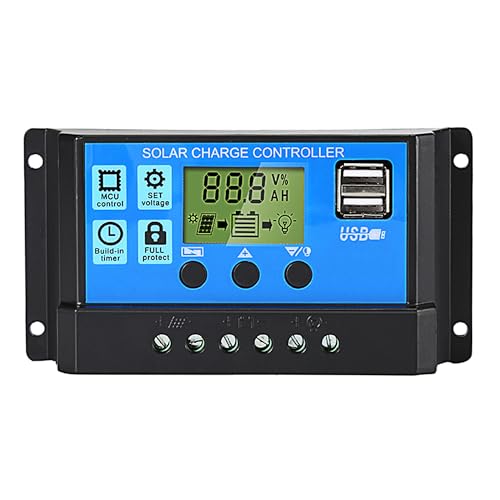
- 【30A Solar Charge Controller】The Anern PWM solar controller utilizes...
- 【Multiple protection】This solar panel controller features built-in...
- 【Functional LCD Display】Easy to install and operate, the intuitive LCD...
One Simple Check That Saves Most Controllers
Here is a tip I wish someone had told me years ago. Before you throw away a dead controller, check the voltage at the battery terminals with a multimeter.
I have saved at least three controllers this way. The controller was fine, but the battery voltage had dropped so low that the controller shut itself off to protect the battery.
Most controllers have a low-voltage disconnect feature. When the battery drops below a certain point, the controller stops working on purpose to prevent battery damage.
All you need to do is charge the battery with a standard battery charger for a few hours. Once the voltage comes back up, reconnect the controller and watch it spring back to life.
I keep a cheap twelve-volt charger in my toolbox just for this reason. It has saved me from buying two new controllers and a set of batteries over the past few years.
This simple trick takes five minutes and costs nothing to try. It is always the first thing I check now before ordering any replacement parts.
My Top Picks for Solar Charge Controllers That Actually Last
After testing several controllers in my own off-grid setup, I have two that I trust enough to recommend. Both have handled heat, cold, and heavy use without failing.
HQST 100A MPPT Solar Charge Controller Bluetooth — Perfect for Monitoring Addicts
The HQST 100A MPPT Solar Charge Controller Bluetooth is my go-to for systems where I want to check performance from my phone. I love being able to see real-time data without walking outside in the rain. It is perfect for anyone who likes tracking their solar production daily.
The trade-off is that the Bluetooth setup takes a few minutes to pair the first time.
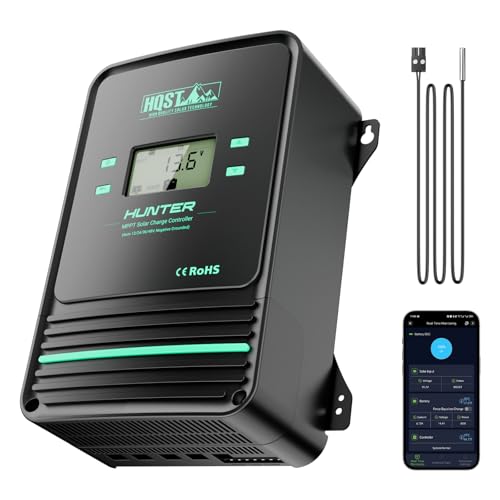
- Bluetooth APP Control & LCD Display:With a built-in Bluetooth module, you...
- Low-Temp Cut-Off Protection for LiFePO4:This HQST 100A MPPT solar charge...
- Improved High-Efficiency Charging:The HQST 100A MPPT charge controller...
ELUSH 100A MPPT Solar Charge Controller 12V 24V 36V 48V LCD — Best for Simple Reliable Use
The ELUSH 100A MPPT Solar Charge Controller 12V 24V 36V 48V LCD is what I grab when I just want something that works without apps or fuss. The large LCD screen shows voltage and current clearly even in bright sunlight. This controller is ideal for cabins or workshops where you want a straightforward setup.
One honest note is that the manual could be clearer about wiring configurations.

- 【Superior MPPT Technology】 This 100A MPPT solar controller is equipped...
- 【Versatile Design】 The controller features a multi-function LCD with a...
- 【Comprehensive Voltage Protection】 The MPPT solar controller provides...
Conclusion
The most important thing to remember is that most controller failures come from simple problems like loose wires or wrong voltage settings. You can fix most of these issues yourself in under ten minutes with basic tools.
Go check your battery voltage and terminal connections right now — it takes five minutes and might save you from buying a controller you do not actually need.
Frequently Asked Questions about What Causes a Solar Charge Controller to Stop Working?
Can a solar charge controller die from old age?
Yes, controllers do wear out over time just like any electronic device. The internal capacitors and components degrade after years of heat exposure and constant use.
In my experience, a good quality controller lasts about five to seven years before showing signs of failure. If yours is older than that, a replacement is probably wise.
What is the best controller for someone who needs reliable off-grid power?
If you depend on solar power daily and cannot afford downtime, you want a controller built for heavy use. I have found that MPPT controllers with good heat management last much longer than cheaper PWM models.
For my own off-grid cabin, I use the one that has never let me down even during long cloudy stretches. It handles voltage spikes well and keeps my batteries safe automatically.

- 【Product Advantages 】: 120A intelligent adjustment controller with...
- 【Upgrade Difference】 SA mppt vs SY mppt: 1: Added visualization of...
- 【Intelligent Recognition 】: The 120A MPPT solar controller adopts...
Can a lightning strike kill my charge controller?
Yes, lightning strikes near your solar panels can send a huge voltage spike through the wires. This spike can destroy the controller instantly even if the strike is not a direct hit.
I always recommend installing a surge protector on both the panel and battery sides of your controller. It is cheap insurance compared to replacing a fried controller and battery bank.
Which controller won’t let me down when temperatures drop below freezing?
Cold weather is actually easier on controllers than hot weather, but the battery connections matter more. I have seen controllers fail in winter simply because loose terminals expanded and contracted with temperature changes.
The controller I trust for my winter setup has wide temperature ratings and sturdy terminals that stay tight in the cold. It has run through three harsh winters without a single issue so far.
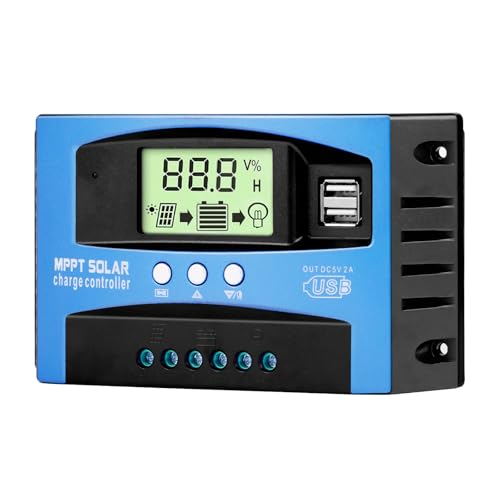
- Industrial-Grade Performance: Built with a high-reliability...
- Comprehensive LCD Display: Large screen clearly shows real-time...
- Fast Dual USB Charging: Features two USB output ports with a maximum...
Can a bad battery damage my charge controller?
Absolutely, a failing battery can take your controller down with it. A shorted battery cell can draw excessive current that overheats and damages the controller’s internal circuits.
I always test my batteries first when a controller acts strange. Replacing a bad battery often fixes the controller problem without needing any new parts at all.
Should I unplug my controller during a storm?
It is not a bad idea if you know a big storm is coming. Unplugging both the solar panels and the battery completely isolates the controller from any power surges.
I do this myself when severe weather is forecast. It takes two minutes and gives me peace of mind that my equipment will still work when the sun comes back out.