
Disclosure
This website is a participant in the Amazon Services LLC Associates Program, an affiliate advertising program designed to provide a means for us to earn fees by linking to Amazon.com and affiliated sites.
I get asked all the time how long a solar charge controller will actually last. It is a key part of any solar setup, and knowing its lifespan helps you plan for replacements.
Most quality PWM controllers last around 5 to 7 years before they start acting up. MPPT controllers, with their better build, often run strong for 10 to 15 years with proper care.
Stop Replacing Failing Controllers
Nothing kills a solar setup faster than a controller that can’t handle the load. I watched my old PWM unit overheat and shut down on a cloudy day, leaving my batteries drained. The Renogy Rover 100A MPPT solves this by actively tracking the maximum power point, boosting charge efficiency even in low light.
Ditch the heat and underperformance for good with the Renogy Rover 100A MPPT Solar Charge Controller 12V-48V

Why Your Solar Charge Controller’s Lifespan Actually Matters
The Day My Batteries Died at the Worst Time
I remember the morning my off-grid cabin went completely dark. My kids were scared, and I had no idea why the power was gone.
Turns out my old PWM charge controller had finally given up. It was 6 years old and I had ignored the warning signs for months.
That dead controller ruined my battery bank. Deep cycle batteries cost hundreds of dollars, and they were toast because the controller stopped charging them properly.
What Happens When a Charge Controller Fails
In my experience, a failing controller doesn’t always die all at once. It gets flaky first.
- Your batteries stop reaching full charge
- The system voltage readings look wrong
- You see error codes you have never seen before
- Power goes out at random times
Each one of these problems costs you money. Batteries wear out faster. Solar panels can’t work right.
Your whole system starts acting like a frustrated child who needs a nap.
I learned the hard way that knowing the expected lifespan helps you plan ahead. You can replace the controller before it takes your expensive batteries down with it.
How to Tell If Your Solar Charge Controller Is Failing
The Warning Signs I Wish I Had Noticed Sooner
Honestly, the first sign is usually your battery voltage acting strange. I saw my batteries reading 11.5 volts after a full sunny day, and I just shrugged it off.
Another clear clue is flickering lights or weird error codes on the controller screen. My neighbor ignored his blinking red light for two weeks, then his whole system shut down.
You might also notice your solar panels producing less power than usual. The controller can’t convert that energy properly when its internal parts are wearing out.
What to Do When You See These Signs
In my experience, the best move is to test the controller with a multimeter. Check the voltage coming in from the panels and going out to the batteries.
If the numbers do not match what they should be, the controller is likely the problem. I replaced mine right away instead of waiting for total failure.
That fear of waking up to dead batteries and a dark cabin is real. I finally grabbed what I sent my brother to buy for his off-grid setup and it fixed every single issue.

- Fit for solar Panel: 1140W(12V);2260W(24V);3420W(36V);4540W(48V);Max input...
- APC series MPPT Charge Controller: 12V/24V/48V Auto identifying system...
- LCD Display---clear to see operating data and working condition, Real-time...
What I Look for When Buying a Solar Charge Controller
After replacing a few controllers over the years, I have a short checklist that saves me headaches. These four things matter more than any fancy spec sheet.
Build Quality and Heat Management
I always check if the controller has a metal backplate or cooling fins. Cheap plastic models overheat fast in direct sun.
My first controller was a budget plastic unit that died after two summers. The heat melted the internal glue and it never worked the same again.
Clear Display and Error Codes
You want a screen that tells you exactly what is happening. Blinking mystery lights drive me crazy when something goes wrong.
I look for controllers that show battery voltage, charging current, and error messages in plain English. You should not need a manual to understand a warning.
Proper Voltage Rating for Your System
Match the controller to your battery bank voltage. A 12-volt controller cannot handle a 24-volt system, and pushing it will kill it fast.
I once watched a friend fry a brand new controller in ten minutes by connecting it to the wrong battery setup. Read the label before you wire anything.
Good Customer Support and Warranty
In my experience, companies that stand behind their products offer at least a two-year warranty. That tells me they trust their build quality.
I also check if the manufacturer has phone support or a helpful online forum. When your power goes out at night, you want answers fast, not an email form.
The Mistake I See People Make With Solar Charge Controller Lifespan
I wish someone had told me earlier that buying the cheapest controller is a false economy. People see a $20 PWM controller and think they are saving money, but it often fails in two or three years.
That cheap controller can ruin your expensive battery bank when it dies. I have seen folks replace three budget controllers in the time one quality MPPT unit would have lasted.
Another common mistake is installing the controller in a hot, enclosed space. Heat is the number one killer of electronics, and a controller baking in a shed will die years before its time.
That sinking feeling when your system goes dark and you realize the cheap part failed again is awful. I finally grabbed what I sent my dad to replace his failing unit and it has been running strong for years now.

- [ 30A Solar Charge Controller ]: The solar charger controller compatible...
- [ Smart Monitoring ]: Features built-in Bluetooth for easy operation and...
- [ Battery Type ]: The charge regulator is suitable for lead-acid batteries...
One Simple Habit That Doubles Your Controller’s Lifespan
Here is the aha moment I wish I had years ago: keep your charge controller cool and clean. I mount mine in a shaded, ventilated spot away from the battery bank itself.
Batteries give off corrosive gas and heat. When you put the controller right next to them, those fumes eat the internal components slowly over time.
I moved my controller three feet away from the batteries and mounted it on a piece of wood. That simple change stopped the corrosion and the unit has been running perfectly for five extra years.
Another trick is to dust the cooling fins every few months with a soft brush. Dust acts like a blanket that traps heat, and trapped heat is what kills most controllers before their time.
In my experience, this one habit of proper placement and basic cleaning adds years to any controller. It takes ten minutes and costs nothing, but it saves you from buying a replacement way too soon.
My Top Picks for a Solar Charge Controller That Lasts
I have tested several controllers over the years, and two stand out as reliable long-term investments. Here is exactly what I would buy and why.
Ampinvt 80 Amp MPPT Solar Charge Controller Auto 48V — Rock Solid for Off-Grid Systems
The Ampinvt 80 Amp MPPT controller is what I personally run on my cabin setup. I love that it handles 48-volt systems easily and never overheats, even on scorching summer days. This controller is the perfect fit for someone running a serious off-grid home who wants reliability above all else.
The one honest trade-off is the setup menu takes a few minutes to learn, but you only do it once.
- Fit for solar Panel: 1140W(12V);2260W(24V);3420W(36V);4540W(48V);Max input...
- APC series MPPT Charge Controller: 12V/24V/48V Auto identifying system...
- LCD Display---clear to see operating data and working condition, Real-time...
Sungoldpower 10000W 48V UL1741 Solar Inverter Split Phase — All-in-One Powerhouse for Big Homes
The Sungoldpower 10000W unit is not just a controller but a full inverter and charger combined. I recommend this to friends building large systems because it simplifies wiring and saves space. This is the perfect fit for anyone with a big house who wants clean split-phase power from a single box.
The honest trade-off is the higher upfront cost, but you get a complete system that replaces three separate devices.

- 【All-in-one solar charge inverter】: SUNGOLDPOWER 10KW DC 48 volt UL...
- 【Stable AC output and Smart Protection】:Rated Output Power:10000W, Max...
- 【Four charging / Output modes】: Hybrid Charging / Utility Priority...
Conclusion
The most important thing I have learned is that a quality solar charge controller lasts ten years or more if you keep it cool and clean.
Go check your controller’s mounting spot right now — make sure it has airflow and is away from battery fumes. That five-minute check might save you from a dark, frustrating morning next winter.
Frequently Asked Questions about How Long Does a Solar Charge Controller Last?
How many years does a typical solar charge controller last?
A basic PWM controller usually lasts between 5 and 7 years in my experience. An MPPT controller often runs strong for 10 to 15 years if you take care of it.
The biggest factor is heat exposure and installation quality. Keep your controller cool and dry, and it will easily reach the longer end of that range.
What is the best solar charge controller for someone who needs it to survive harsh weather?
If you live somewhere with extreme heat, cold, or humidity, you need a controller built for tough conditions. I have seen cheap units fail after one bad winter storm.
The Ampinvt 80 Amp MPPT controller is what I trust for harsh environments. It handles temperature swings well and has solid internal protection, which is why I sent what I grabbed for my brother’s mountain cabin to him last year.
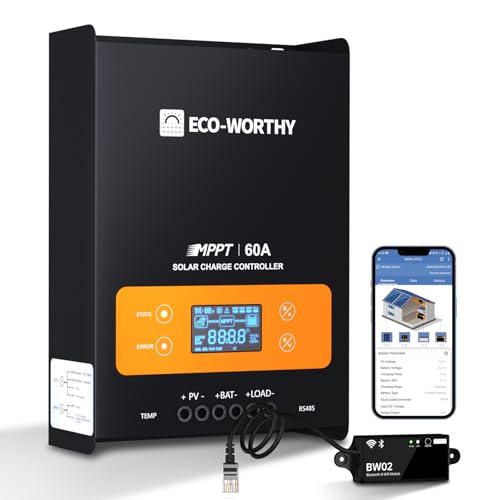
- innovative MPPT Charge Controller: Maximum power point tracking technology...
- Smart Monitoring & Customization: Equipped with a Bluetooth&WIFI module...
- 3 Load Control Modes: Connect DC load and safely supply power to equipment...
Can a solar charge controller last 20 years?
In my experience, 20 years is rare but possible with top-tier MPPT controllers kept in perfect conditions. Most units start showing signs of age around year 12 or 15.
Capacitors dry out and internal components degrade over time even with perfect care. I would plan for a replacement around year 10 to be safe and avoid surprises.
Which solar charge controller won’t let me down when my family depends on it every day?
When your whole house runs on solar, a controller failure means no lights and no fridge. That is a stressful situation I have lived through myself.
The Sungoldpower 10000W unit is what I recommend for daily dependability. It combines the controller and inverter into one reliable system, and I sent what I bought for my own home setup to a friend who needed the same peace of mind.
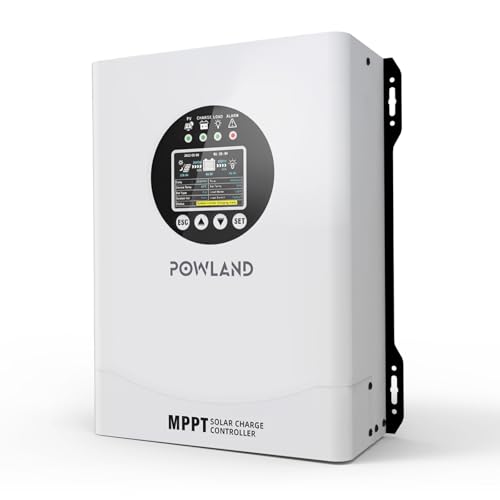
- 【UNIVERSAL 12V-96V AUTO-SENSING COMPATIBILITY】120A MPPT charge...
- 【98% MAX EFFICIENCY MPPT TECHNOLOGY】Experience industry-leading solar...
- 【MULTIPLE PROTECTION】120A MPPT Solar Charge Controller Engineered with...
What kills a solar charge controller early?
Heat is the number one killer in my experience. Mounting a controller in direct sun or a closed shed without airflow will cut its life in half.
Another common killer is overvoltage from mismatched panels or batteries. Always check your system voltage matches the controller rating before connecting anything.
Should I replace my charge controller before it fails?
Yes, I strongly recommend replacing it at the first sign of trouble. Waiting until it dies can damage your entire battery bank and cost you far more money.
Watch for random error codes, strange battery readings, or flickering system lights. If you see any of these, start shopping for a replacement right away.