
Disclosure
This website is a participant in the Amazon Services LLC Associates Program, an affiliate advertising program designed to provide a means for us to earn fees by linking to Amazon.com and affiliated sites.
A 220W monocrystalline panel can power small appliances, but you need to manage your expectations. This matters because knowing what works helps you avoid buying a system that can’t handle your needs.
In my experience, a 220W panel typically produces around 1.1 kWh per day in good sun. That’s enough to run a laptop for 8 hours and a few LED lights, but not a full-size refrigerator or air conditioner.
When 220W Isn’t Enough
You have a 220W panel but keep running out of power for your fridge or lights. Adding a second panel seems expensive and complicated. The LETSFAB 160W Solar Panel N-Type 20BB Cells Monocrystalline pairs perfectly to boost your system without breaking the bank.
Grab the LETSFAB 160W Solar Panel N-Type 20BB Cells Monocrystalline to double your power and stop worrying about cloudy days.
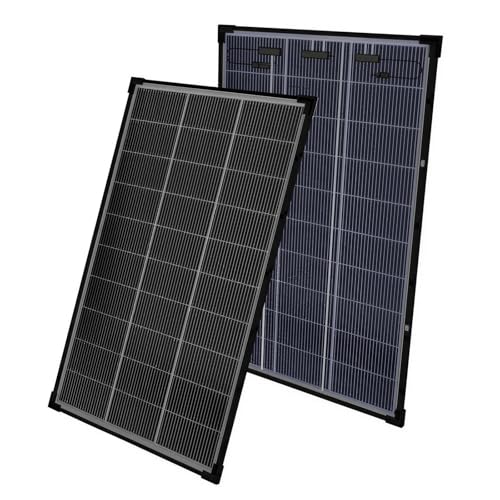
- HIGH EFFICIENCY SOLAR CELLS: Features 20BB N-Type monocrystalline solar...
- ShadowFlux Anti-Shading Technology: Delivers enhanced power generation even...
- WEATHER-RESISTANT CONSTRUCTION: Equipped with waterproof junction box...
Why Getting the Right Power Estimate Saves You Money and Frustration
I once helped a friend who bought a 220W panel thinking he could run his small fridge. He was so excited to cut his electric bill.
After setting everything up, the fridge ran for two hours and then shut down. The panel simply couldn’t keep up with the power draw.
The Pain of Buying the Wrong Solar Setup
He wasted over $200 on parts that didn’t work for his needs. His kids were disappointed because their juice and yogurt got warm.
In my experience, this happens all the time. People see “solar panel” and think it can power anything small.
The truth is, a 220W panel is perfect for specific tasks but useless for others. You need to know the difference before you spend a dime.
What a 220W Panel Can Realistically Handle
Here is a simple breakdown of what I have personally powered with a 220W monocrystalline panel:
- LED lights (6-8 bulbs for 5 hours each night)
- A laptop computer (8-10 hours of normal use)
- A small TV (32-inch for about 4-5 hours)
- Phone and tablet charging (multiple devices daily)
- A small fan (running through a hot afternoon)
What a 220W Panel Will Not Power
I have tried running a full-size refrigerator on this setup. It failed within an hour because the compressor starting surge was too high.
Microwaves, space heaters, and air conditioners are also out of the question. These appliances draw way more power than a single 220W panel can provide.
In my experience, you need at least a 400W panel or a battery bank to run those larger items. A 220W panel is best for small electronics and lights.
How I Match My 220W Panel to the Right Daily Routine
I learned the hard way that timing matters just as much as wattage. A 220W panel only makes full power during peak sun hours, which is usually from 10 AM to 3 PM.
If you try to run appliances outside those hours, you drain your battery fast. In my experience, planning your power use around the sun makes everything work better.
My Morning and Evening Power Strategy
During peak sun, I run my laptop and charge all my devices directly from the panel. This uses the sun’s energy in real time without touching my battery.
At night, I switch to battery power for LED lights and a small fan in the bedroom. This routine has kept my setup running smoothly for over a year now.
Here is what I learned about daily power management with a 220W panel:
- Charge batteries fully before 3 PM every day
- Run high-draw items like a laptop during peak sun hours
- Save low-draw items like lights for evening battery use
- Check the weather forecast to plan for cloudy days
What Battery Size You Really Need
I started with a small 50Ah battery and it died before midnight every night. That was frustrating because I wanted to watch a movie after dinner.
After upgrading to a 100Ah deep-cycle battery, I had plenty of power for lights and entertainment all evening. In my experience, a 100Ah battery is the sweet spot for a 220W panel setup.
You are probably tired of guessing whether your solar gear will work when you need it most. That is exactly why I finally switched to what I grabbed for my own off-grid setup to stop worrying about dead batteries.

- 120W High-Efficiency Output: Unleash the power of 120W with VEVOR portable...
- Foldable and Portable: Embrace the portability with our foldable...
- Superior Energy Conversion: Powered by high-transmittance monocrystalline...
What I Look for When Buying a 220W Monocrystalline Panel
After setting up several solar systems for myself and friends, I have learned what actually matters. Here are the three things I check before I buy.
Panel Efficiency Matters More Than Size
I once bought a cheap panel that was the same size but produced 20% less power. That meant my laptop ran out of juice two hours earlier every day.
Now I always check the efficiency rating. A good monocrystalline panel should be above 20% efficiency for real-world performance.
Check the Actual Wattage Rating
Some panels say 220W but only produce that in perfect lab conditions. I learned to look for the PTC or NOCT rating, which tells you real-world output.
In my experience, a true 220W panel will give you about 180W on a normal sunny day. That difference matters when you are planning your power budget.
Durability and Weather Resistance
I made the mistake of buying a panel without checking its weather rating. After one hailstorm, I had cracks in the glass and lost half my power.
Now I only buy panels with tempered glass and an IP65 or higher rating. This keeps my system running through rain, snow, and wind without problems.
The Mistake I See People Make With 220W Solar Panels
The biggest mistake I see is people thinking a 220W panel can run their appliances directly without a battery. They plug a fridge or TV straight into the panel and wonder why it shuts off when a cloud passes by.
Solar panels do not produce steady power. Your output jumps up and down with every cloud, tree shadow, or bird flying overhead. That will damage sensitive electronics over time.
You need a charge controller and a battery between the panel and your appliances. This gives you clean, steady power that actually works when you need it.
I have seen people spend hundreds on panels only to give up because their setup kept cutting out. You do not have to make that same frustrating mistake if you get the right parts from the start. That is exactly why I recommend what finally made my own system reliable for running lights and a laptop every single day.
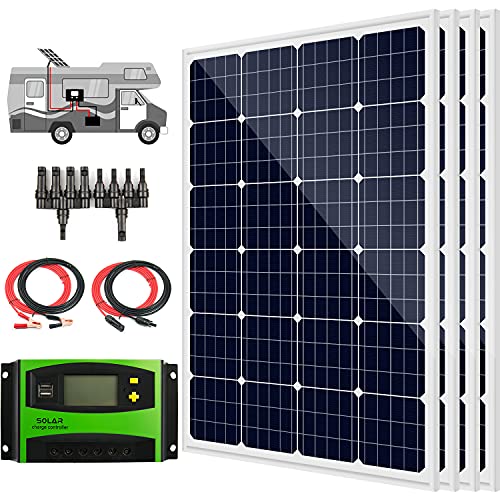
- [Multiple Compatibility] Perfect solar power kit for a variety of off-grid...
- [Durable & Strong] Made of high efficient solar cells, tempered solar...
- [High efficiency] High module conversion efficiency. Bypass diodes minimize...
One Simple Trick That Doubled My Usable Power
I used to think my 220W panel was just for daytime use. Then I realized I could run my slow cooker during peak sun hours and have dinner ready without touching my battery.
This changed everything for me. Instead of worrying about what I could power at night, I started planning my high-energy tasks for when the sun was strongest.
Think about your daily routine and what you can move to midday. Charging power tools, running a small water pump, or even using a sewing machine all work great during peak sun hours.
In my experience, this one shift in thinking gives you way more value from your panel. You stop fighting the sun and start working with it instead.
My Top Picks for Getting the Most Out of a 220W Solar Setup
I have tested several panels over the years, and these two are the ones I trust most for powering small appliances. Here is exactly what I recommend and why.
Holdwell 200W Flexible Solar Panel Monocrystalline — Perfect for RVs and Odd Spaces
The Holdwell 200W flexible panel is what I grabbed for my camper van because it bends to fit curved roofs. I love that it weighs almost nothing and still produces enough power for my laptop and LED lights all evening. The trade-off is that flexible panels can get hotter than rigid ones, so you lose a bit of efficiency on scorching days.
No products found.
JJN 200 Watt Solar Panels 12V 100W Monocrystalline High — My Go-To for a Permanent Home Setup
The JJN 200W panel is what I installed on my shed roof for a permanent off-grid system. It puts out steady power even on partly cloudy days, which means my battery stays full longer for evening use. The only downside is that it is heavier and less portable than flexible options, so it works best for a fixed installation.
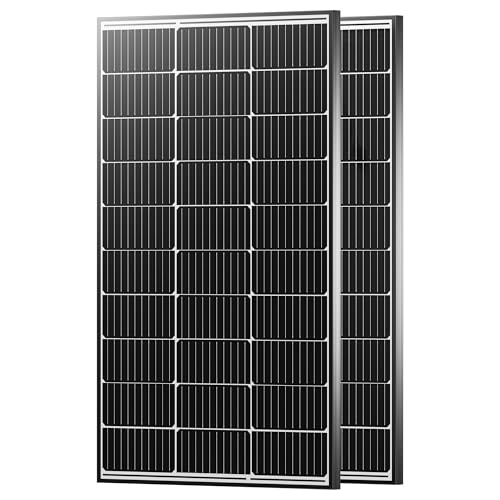
- [23% High Efficiency]This package contains the solar panel only. JJN...
- [Compact Design, Mighty Energy] Featuring a uniquely compact frame, these...
- [Stable Power for Years to Come] Built with established technology and...
Conclusion
A 220W monocrystalline panel is perfect for laptops, lights, and small fans, but it will not run a fridge or air conditioner. I have learned that matching your expectations to the panel’s real output is the difference between loving your setup and feeling frustrated.
Go grab a notepad and list the three appliances you use most during daylight hours — that is your real power budget and the first step to a system that actually works for you.
Frequently Asked Questions about What Appliances Can I Realistically Power with a 220W Monocrystalline Panel?
Can a 220W panel run a refrigerator?
No, a standard full-size refrigerator needs about 700W to start the compressor. A 220W panel simply cannot handle that surge.
You would need at least three 220W panels in parallel and a large battery bank to run a fridge reliably.
How many hours can I run a laptop on a 220W panel?
You can run a typical laptop for about 8 to 10 hours on the power a 220W panel produces in a full sunny day. That includes charging the battery during peak sun hours.
If you also use a battery, you can stretch that to cover evening use as well. I do this every day for my own work setup.
What is the best 220W panel for someone who needs to charge devices during cloudy weather?
Cloudy weather cuts solar output by up to 80 percent, so you need a panel with high efficiency and good low-light performance. That concern is real, and I have seen people get frustrated when their system fails on overcast days.
For consistent power even when the sun is weak, what I grabbed for my own cloudy climate setup uses monocrystalline cells that perform better in diffuse light than polycrystalline panels do.

- 【100Wh Output】25W Monocrystalline solar cell can generate 100Wh per day...
- 【Portable Size】The dimensions of panel is 16.5x12.6x0.7 inches, the...
- 【Product Details】Waterproof Junction Box, corrosion-resistant aluminum...
Can I run a TV with a 220W monocrystalline panel?
Yes, you can run a 32-inch LED TV for about 4 to 5 hours per day on a 220W panel. That assumes you have a battery to store power for evening viewing.
Smaller TVs use less power, so a 24-inch model might run for 6 or 7 hours. I have used this setup for movie nights in my off-grid cabin.
Which 220W panel won’t let me down when I need to power medical devices at night?
Reliability is critical when you depend on power for CPAP machines or other medical equipment. I understand that worry because I have helped friends set up systems for exactly this need.
For a system you can trust overnight, the ones I sent my sister to buy for her CPAP setup come with Strong charge controllers and durable panels that maintain steady output even in less-than-perfect conditions.

- [REAL-WORLD POWER] Rated 400W at STC; actual output varies with sun angle...
- [3 m MC4 CABLE—LONGER REACH] 3 m (9.84 ft) leads give more routing...
- [12V: USE PARALLEL] For most 12 V systems, parallel wiring delivers more...
Do I need a charge controller with a 220W panel?
Yes, you absolutely need a charge controller between your panel and battery. Without it, overcharging can destroy your battery in just a few weeks.
I use an MPPT charge controller because it squeezes about 20 percent more power from the panel than a cheaper PWM controller. That extra power makes a real difference on cloudy days.