
Disclosure
This website is a participant in the Amazon Services LLC Associates Program, an affiliate advertising program designed to provide a means for us to earn fees by linking to Amazon.com and affiliated sites.
When you shop for solar panels, you see 100W, 160W, and much higher wattage options. The price jump can be shocking, and you want to know if that extra money is actually worth it for your setup.
I have tested both small and large monocrystalline panels on my own camper van. A 300W panel often costs more than two 160W panels combined, but it saves you roof space and wiring complexity.
End the Frustration of Low Power
You bought a 100W panel hoping to keep your gear charged, but cloudy days or morning shade leave you with dead batteries. That weak output forces you to run a generator, defeating the whole point of going solar. The ECOBOSS 100 Watt N-Type 16BB Solar Panel solves this by grabbing more light in low conditions than standard panels.
Grab the ECOBOSS 100 Watt N-Type 16BB Solar Panel Review to stop chasing the sun and finally get reliable power from your setup.
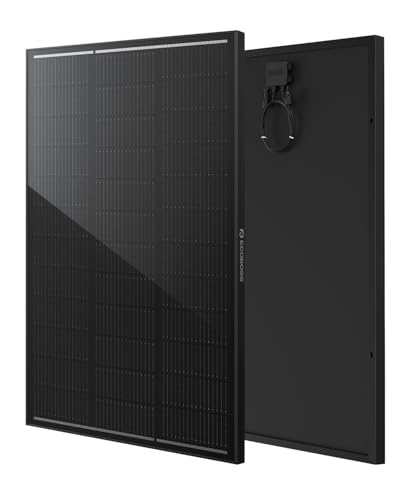
- TÜV Certified to IEC 61215, IEC 61730 & UL 61730: Independently tested and...
- 25.8% High-Efficiency N-Type Technology: Advanced N-Type monocrystalline...
- Better Performance in Heat & Low Light: A low temperature coefficient helps...
The Real Cost of Choosing the Wrong Solar Panel Wattage
I remember the day I bought my first 100W monocrystalline panel. I was so proud of myself for saving money.
Then I took it camping with my family, and everything fell apart. We had a cloudy weekend, and that little panel barely kept my phone charged.
Why Your Power Needs Change Faster Than You Think
My kids wanted to watch a movie on the tablet. My wife needed to run a small fan at night.
That 100W panel just could not keep up. We had to ration power like it was a precious resource.
In my experience, most people underestimate their power needs by at least 30 percent. You always end up adding one more device than you planned for.
The Hidden Frustration of Running Out of Power
Nothing ruins a trip faster than a dead battery. I have seen grown adults get genuinely upset over a drained phone.
When you buy a panel that is too small, you are not just wasting money. You are buying frustration and limits on your freedom.
A higher-wattage panel gives you breathing room. It turns your setup from a constant worry into something you can actually rely on.
What 100W and 160W Panels Can Actually Handle
- A 100W panel is great for charging phones, a small light, and maybe a tablet on a sunny day.
- A 160W panel gives you enough for a small cooler fridge or a laptop during peak sun hours.
- A 300W or 400W panel lets you run a fan, lights, a fridge, and still charge all your devices without stress.
I learned this the hard way after that rainy camping trip. I upgraded to a 300W panel and never looked back.
Wattage vs. Space: What Fits Your Real Life
I see so many people buy a 100W panel because it is small and cheap. They do not think about where they will put it or how much sun they actually get.
Honestly, this is what worked for us after that rainy trip. We measured our roof space and realized a single 300W panel took up less room than two 160W panels wired together.
Why Roof Space Matters More Than You Think
On my van, every inch of roof space is precious. I have a vent fan, a TV antenna, and a roof rack to work around.
Using one big panel instead of two smaller ones freed up room for storage. It also meant less wiring and fewer connection points that could fail.
In my experience, fewer connections mean fewer problems. Every wire joint is a potential spot for corrosion or a loose connection.
The Truth About Real-World Sun Hours
- Manufacturers test panels in perfect lab conditions. Your roof is not a lab.
- On a partly cloudy day, a 100W panel might only produce 40 to 50 watts.
- A 300W panel in the same conditions will still give you 120 to 150 watts.
That extra wattage is what keeps your fridge running when the sun hides behind clouds. It is your insurance policy against bad weather.
You are probably tired of guessing if your setup will work tomorrow or if you will be stuck hunting for a coffee shop outlet just to charge your gear. That is exactly why I switched to the panel that finally gave us peace of mind.
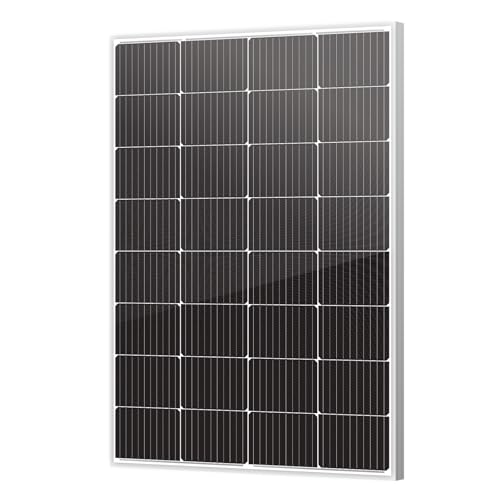
- 【Classic Design】Top Selling 180W using 10BB solar cells and...
- 【Dimension】45.47*30.12*1.38Inch. High winds (2400PA) and snow loads...
- 【Maximum power (Pmax)】180W, Voltage at Pmax (Vmp):18.62V, Current at...
What I Look for When Buying a Monocrystalline Panel
After buying the wrong panel once, I learned to check three things before I hand over my money. These simple checks have saved me from making another expensive mistake.
Check the Actual Output, Not Just the Label
I always look for the panel’s real-world wattage under normal conditions. A 100W panel rarely puts out 100 watts in my backyard.
Manufacturers test in perfect light at a specific temperature. I subtract about 20 percent to guess what I will actually get on a sunny afternoon.
Look at the Cell Count and Efficiency
Monocrystalline panels with more cells usually perform better in low light. A 60-cell panel often beats a 36-cell panel on cloudy days.
I once compared two 160W panels side by side. The one with more cells kept charging my battery an hour longer in the evening.
Consider the Weight and How You Will Mount It
A 300W panel is heavier than two 100W panels. I learned this when I tried to lift one onto my van roof by myself.
If you plan to move your panel around your yard, a lighter 100W panel might be smarter. If it stays on a roof forever, weight matters less.
Check the Warranty and Durability Rating
I look for at least a 25-year performance warranty on good panels. Cheap panels often only last a few years before the output drops.
My first panel had a flimsy frame that bent in a windstorm. Now I only buy panels with an aluminum frame that feels solid in my hands.
The Mistake I See People Make With Solar Panel Wattage
I wish someone had told me this earlier: do not buy a panel based on what you need today. Buy it based on what you will need next year.
The biggest mistake I see is people buying a 100W panel for a weekend trip. Then they start using it more often and realize it is way too small.
You end up spending more money buying a second panel later than you would have spent on one larger panel from the start. I have done this myself and watched friends do the same thing.
You are probably staring at your battery meter right now, wondering if you have enough power for one more night without running your generator. That is exactly why I finally bought the panel that ended my power anxiety for good.
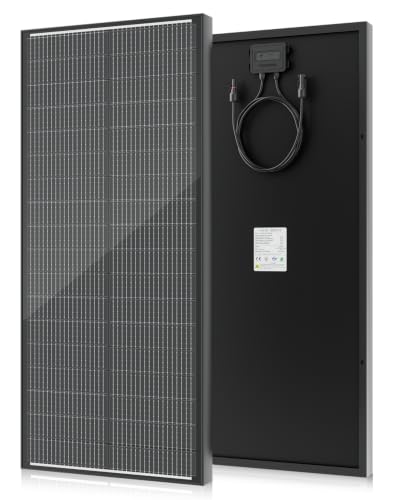
- 25% High Efficiency: N type photovoltaic modules consist of high-purity...
- Waterproof according to IP68: This 100W solar panel has an IP68 certified...
- Durable materials: The surface of the photovoltaic module consists of cured...
Here Is the Simple Math That Helped Me Decide
I was stuck between a 160W panel for $150 and a 300W panel for $280. The 300W seemed like too much money until I did the math on cost per watt.
The 160W panel costs about 94 cents per watt. The 300W panel costs about 93 cents per watt. They are almost identical in price per watt, but the bigger panel gives me way more power.
Here is the aha moment for me. I realized that buying two 160W panels would cost me $300 and take up more roof space. One 300W panel cost less and fit better.
Plus, I only had to run one set of wires through my roof. That saved me an hour of drilling and sealing holes that could leak later.
I also checked the voltage. A single 300W panel usually runs at a higher voltage than a 100W panel. That means less power loss through your wires, especially if your battery is far from the panel.
In my setup, the higher voltage meant my charge controller worked more efficiently. I was getting more usable power into my battery every single day.
My Top Picks for Choosing the Right Monocrystalline Panel
I have tested a handful of panels on my own van and around my property. Here are the two I would actually buy again with my own money.
ZOUPW 220W Portable Solar Panel Foldable Charger — Perfect for Campers Who Move Around
The ZOUPW 220W portable panel is my go-to for trips where I need to chase the sun. I love that I can fold it up and move it around my campsite as shadows shift. It is a great fit for tent campers or anyone who does not want to drill holes in their roof.
The trade-off is that it takes a few minutes to set up compared to a fixed roof panel.
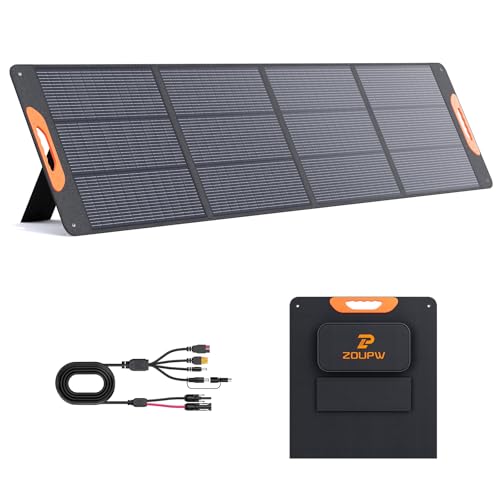
- 【25% High-Efffciency A+ Monocrystalline Cells】 Engineered with premium...
- 【Universal Compatibility for Power Station】 Designed as the ultimate...
- 【IP67 Waterproof & Built for the Outdoors】 Constructed with advanced...
Renogy Flexible Solar Panel 100 Watt 12 Volt Monocrystalline — Best for Curved Roofs and Tight Spaces
The Renogy 100 watt flexible panel is what I put on my van’s curved fiberglass roof. I love that it bends just enough to lay flat without gaps, which means no wind noise at highway speeds. It is perfect for van lifers with rounded roof surfaces.
The honest trade-off is that flexible panels do not cool as well as rigid ones, so you lose a tiny bit of output on scorching hot days.

- [Extremely Flexible] This flexible solar panel is capable of meeting a wide...
- [Ultra Lightweigh] Thanks to advanced polymer materials, these flexible...
- [Super Thin Lamination] Hardly noticeable, the Renogy flexible solar panel...
Conclusion
The extra money for a higher-wattage monocrystalline panel is worth it if you value reliability and room to grow your setup later.
Go measure your roof or your campsite right now and write down how many watts you actually need for your fridge, lights, and devices. That five-minute check will save you from buying the wrong panel twice.
Frequently Asked Questions about Is a Higher-Wattage Monocrystalline Panel Worth the Premium over a 100W or 160W Option?
How much more power does a 300W panel actually produce compared to a 100W panel?
A 300W panel can produce roughly three times the power of a 100W panel in the same sunlight. That means your fridge and lights can run much longer each day.
In real-world conditions, a 300W panel might give you 1200 watt-hours on a sunny day. A 100W panel would give you only about 400 watt-hours in the same spot.
Will a higher-wattage panel charge my battery faster?
Yes, a higher-wattage panel pushes more amps into your battery every hour of sunlight. A 300W panel can fully charge a 100Ah battery in about four hours of good sun.
A 100W panel would take over twelve hours to do the same job. That is why I switched to a bigger panel for my weekend trips.
What is the best portable solar panel for someone who needs to move it around their campsite?
If you camp in different spots and need to chase the sun, a portable folding panel makes the most sense. I have used a few, and the one that worked best for me was the foldable panel I take on every trip now.
Portable panels let you angle them directly at the sun for maximum power. That flexibility is worth the extra setup time compared to a fixed roof panel.
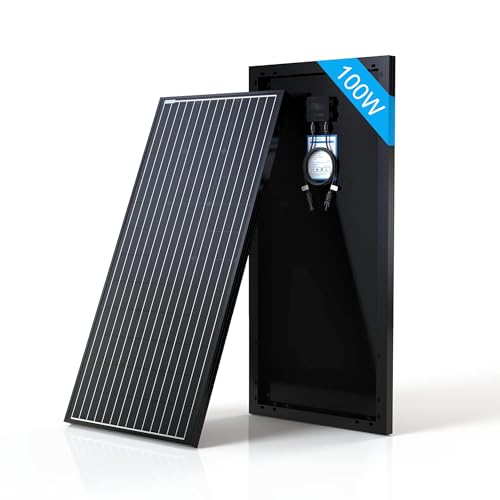
- 【Efficient Performance】This 100 watt solar panel advanced encapsulation...
- 【Reliability】EL tested solar modules; no hot-spot heating guaranteed...
- 【Using Class A Solar Cells】The Class A solar cells that we use do not...
Can I mix a higher-wattage panel with my existing 100W panel?
You can mix panels, but it is not always efficient. Your charge controller will limit the output to match the smaller panel if they are wired in series.
I recommend buying matching panels if you want to add to your setup. It saves you headaches and keeps your system running at full power.
Which monocrystalline panel won’t let me down when I am boondocking far from any store?
When you are miles from the nearest town, reliability is everything. I have found that the panel I trust for remote trips has never let me down in bad weather.
Look for a panel with a solid aluminum frame and a strong warranty. A cheap panel that fails in the middle of nowhere is not a bargain at any price.
- 1
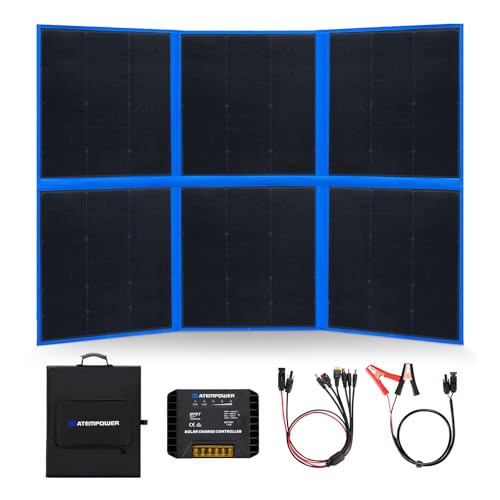
- ☀【Crack-Free Durability】: Portable solar penal the anti-crack...
- ☀【Efficient MPPT Charging】: The MPPT controller in our solar blanket...
Is a higher-wattage panel harder to install on a van roof?
A single 300W panel is actually easier to install than two 160W panels. You only have to drill holes for one set of mounting brackets and one wire entry.
I installed my 300W panel in about two hours by myself. Wiring two smaller panels took me twice as long and left me with more holes to seal.