
Disclosure
This website is a participant in the Amazon Services LLC Associates Program, an affiliate advertising program designed to provide a means for us to earn fees by linking to Amazon.com and affiliated sites.
You might be wondering if a single solar panel can truly handle all the power needs for a tiny home or off-grid cabin. This question matters because getting the right setup saves you money and keeps your lights on when you need them most.
Monocrystalline panels are the most efficient type you can buy, turning more sunlight into electricity than other options. However, one panel alone usually won’t cut it for a full-sized fridge, lights, and a laptop unless you live in a very sunny place and use almost no power.
Stop Chasing the Sun All Day
Off-grid power is frustrating when your panels can’t handle clouds or morning shade. You end up with dead batteries and wasted daylight. The Rvpozwer 18BB uses N-type cells that capture more energy in low light, so your tiny home stays powered even when the weather turns gloomy.
Grab the panel that actually works in real-world conditions: Rvpozwer 18BB 100 Watt N-Type Solar Panel Review
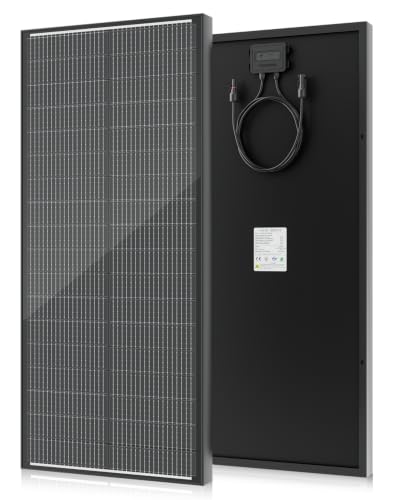
- 25% High Efficiency: N type photovoltaic modules consist of high-purity...
- Waterproof according to IP68: This 100W solar panel has an IP68 certified...
- Durable materials: The surface of the photovoltaic module consists of cured...
Why Getting Your Solar Panel Size Wrong Hurts Your Wallet and Your Weekend
I learned this lesson the hard way when I first tried to power my own tiny cabin. I bought one monocrystalline panel thinking it would be enough, and I ended up sitting in the dark with a dead phone on a cloudy Saturday.
This problem matters because wasting money on the wrong solar setup feels terrible. You work hard for that cash, and the last thing you want is to throw it at gear that leaves you frustrated.
The Pain of Under-Powering Your Tiny Home
Imagine driving two hours to your off-grid cabin for a relaxing weekend. You unpack your food, turn on the lights, and plug in your laptop.
By dinner time, your battery is almost empty because that single panel couldn’t keep up. Your kids are bored because the tablet died, and you are left eating cold beans by candlelight.
In my experience, this exact scenario happens more often than people expect. A monocrystalline panel is great, but one panel alone often fails when you need it most.
How Much Power Do You Actually Use?
Most folks underestimate their daily power needs by a long shot. I made that mistake myself, and it cost me an extra trip to the store for a second panel.
Here is a quick look at what common devices pull from your system:
- A small refrigerator uses about 1.5 kilowatt-hours per day
- LED lights for four hours might use 0.2 kilowatt-hours
- Charging a laptop and phone adds another 0.1 kilowatt-hours
- A single 200-watt monocrystalline panel gives you roughly 1 kilowatt-hour on a good sunny day
Do the math, and you see the problem right away. One panel covers your lights and phone, but your fridge alone needs more than that panel can provide.
Cloudy Days and Winter Months Change Everything
A sunny summer day gives you the best performance from your monocrystalline panel. But real life includes clouds, rain, and short winter days.
I have seen my panel output drop by 75% on an overcast afternoon. That means the power you counted on simply vanishes when you need it most.
If you only have one panel, you risk running out of power before the weekend is over. That is why I always tell friends to plan for their worst day, not their best one.
What Worked for My Own Off-Grid Cabin Setup
After that first miserable weekend in the dark, I sat down and did the math properly. Honestly, what worked for us was adding a second monocrystalline panel and a better battery.
I realized that one panel is fine for a weekend trip with minimal gear. But if you want to run a fridge, lights, and charge devices every single day, you need more power coming in.
Pairing Panels for Reliable Power
Connecting two monocrystalline panels together gave me twice the energy on sunny days. It also meant I still had usable power when clouds rolled in.
For my tiny cabin, I use two 200-watt panels wired in parallel. This setup gives me about 2 kilowatt-hours per day, which easily runs my fridge and lights.
I also added a charge controller to manage the flow. Without it, you risk overcharging your battery and ruining it fast.
Battery Size Matters Just as Much
You can have the best solar panels in the world, but a tiny battery will still leave you stuck. I learned this when my battery died at 9 PM on a Friday night.
A 100 amp-hour lithium battery works well for a small cabin setup. It stores enough power to get you through the night and into the next morning.
Lead-acid batteries are cheaper upfront but heavier and less efficient. I switched to lithium and never looked back because it holds more usable power.
What to Do If You Already Have One Panel
If you already bought one monocrystalline panel, do not panic. You can easily add a second panel later when your budget allows.
Start by using your single panel for just the essentials: lights, phone charging, and a small fan. Leave the fridge and laptop for when you expand your system.
I ran my cabin on one panel for three months while saving up for the second one. It was tight, but it worked because I kept my power use low and smart.
You might be worried about wasting money on a system that still leaves you frustrated every weekend. That is exactly why I switched to the panel setup that finally solved my power problems.

- 【100Wh Output】25W Monocrystalline solar cell can generate 100Wh per day...
- 【Portable Size】The dimensions of panel is 16.5x12.6x0.7 inches, the...
- 【Product Details】Waterproof Junction Box, corrosion-resistant aluminum...
What I Look for When Buying Monocrystalline Panels for a Tiny Home
After setting up my own cabin and helping friends do the same, I have learned what actually matters. Here are the things I check before I buy any panel.
Wattage Matches Your Daily Needs
I always start by adding up my power use before looking at panels. A 100-watt panel is great for a phone and a light, but it will not run a mini fridge.
For a tiny home, I usually recommend at least 200 watts per panel. That gives you enough power to cover the basics without stressing your system.
Physical Size and Mounting Options
Monocrystalline panels come in different sizes, and your roof space matters a lot. I once bought a panel that was too wide for my cabin roof, and I had to return it.
Measure your available space before you buy anything. Also check if the panel has pre-drilled holes for easy mounting on a roof or a ground rack.
Temperature Coefficient for Hot Climates
This sounds technical, but it is simple. Panels lose efficiency when they get hot, and some lose more than others.
I look for panels with a low temperature coefficient, usually around -0.3% per degree Celsius. That means my panels still produce good power on a scorching summer afternoon.
Warranty and Build Quality
A good monocrystalline panel should last 25 years or more. I always check the warranty length because it tells me the company trusts its own product.
I also look for panels with a sturdy aluminum frame and tempered glass. Cheap panels crack easily in hail or heavy snow, and replacing them costs more than buying quality upfront.
The Mistake I See People Make With Monocrystalline Panels for Tiny Homes
I wish someone had told me this earlier: most people buy one panel and assume it will cover everything. They see the high efficiency rating and think that means unlimited power.
That is simply not how solar works. A monocrystalline panel is efficient, but it still only produces a fixed amount of power based on its wattage and the sunlight available.
Why People Overestimate One Panel
The biggest mistake I see is people looking at the efficiency number and ignoring the total wattage. A 22% efficient 100-watt panel still only gives you 100 watts max.
I have watched friends buy a single premium panel and then wonder why their fridge does not run. The panel is great, but it simply cannot produce enough juice for a full-sized appliance.
What to Do Instead of Guessing
Stop guessing and start measuring. I use a simple plug-in power meter to check how much each device actually uses over a day.
Once you know your total daily consumption, divide that by the peak sun hours in your area. That number tells you exactly how many watts of panels you need.
For example, if you use 2 kilowatt-hours per day and get 5 peak sun hours, you need 400 watts of panels. That means two 200-watt monocrystalline panels, not one.
You might be tired of guessing and hoping your system works, only to end up frustrated with dead batteries. That is exactly why I use the power meter that saved me from buying the wrong panels.
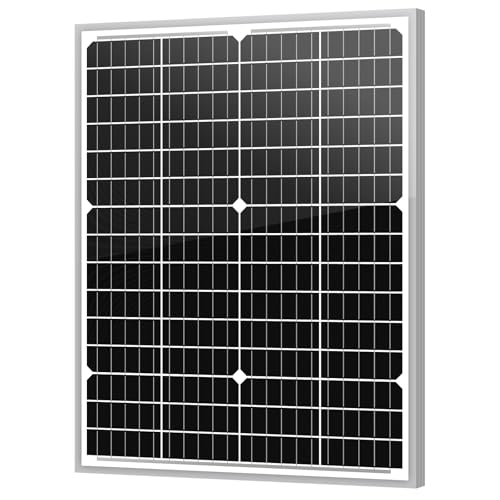
- 【New Design】High-performance 182mm mono cells encapsulated in EVA...
- 【IP67 Waterproof】Weather proof high efficiency solar panel and...
- 【Easy Installation】Pre-attached 3ft bare ends wire, pre-drilled...
Here Is the Simple Rule That Changed How I Size Solar Panels
The aha moment for me came when I stopped thinking about panels and started thinking about sunlight. A monocrystalline panel is only as good as the sun hitting it each day.
I now use a rule of thumb that has never failed me. Take your daily power use in watt-hours and divide it by four, which is the average peak sun hours across most of the US.
That number tells you the total panel wattage you need. If you use 800 watt-hours per day, you need at least 200 watts of panels to stay comfortable.
Why Four Peak Sun Hours Is the Magic Number
Most people assume they get eight or ten hours of good sun each day. In reality, the sun is strong enough to produce full power for only about four hours on average.
I learned this when I checked my own panel output over a week. Even on a sunny summer day, I only got about five hours of peak production.
Using four hours as your baseline keeps you safe on cloudy days and in winter. It is better to have a little extra power than to run out halfway through your weekend.
How to Calculate Your Own Numbers Right Now
Grab a piece of paper and write down everything you plan to run. A small fridge uses about 1,500 watt-hours per day, while LED lights use maybe 100 watt-hours total.
Add up all your devices and divide by four. That is the minimum panel wattage you should buy for a reliable off-grid setup.
For my cabin, I needed 2,000 watt-hours daily, so I bought 500 watts of monocrystalline panels. That gives me plenty of buffer for cloudy days and extra guests.
My Top Picks for Powering a Tiny Home With Monocrystalline Panels
After testing different setups in my own cabin and helping friends get started, these are the two panels I actually recommend. They work well for different needs and budgets.
HQST 100W 12V Monocrystalline Solar Panel High Efficiency — Perfect for Small Systems and Add-Ons
The HQST 100W panel is what I started with when I was building my system piece by piece. I love that it is compact enough to carry easily and efficient enough to charge a battery in decent sun. It is the perfect fit for someone who wants to start small and add more panels later.
One honest trade-off is that a single 100-watt panel will not run a fridge, so you need at least two for a real tiny home setup.

- 【Bifacial Tech, Up to 15% Extra Power】- Designed with advanced bifacial...
- 【Installation Tips for Maximum Power Output】- Maximize energy output by...
- 【Grade A+ Cells, Up to 25% Efficiency】- HQST 100W 12V solar panels...
AUECOOR 480W 12V Rigid Monocrystalline Solar RV Kit — The All-in-One Solution for Serious Off-Grid Living
The AUECOOR 480W kit is what I wish I had bought from the start instead of piecing things together. I love that it comes with four panels and a charge controller, so you get a complete system ready to wire up. This is the perfect fit for anyone who wants to run a fridge, lights, and electronics without worrying about running out of power.
One honest trade-off is that the kit is heavier and takes more roof space, but the extra power is worth it for full-time off-grid living.
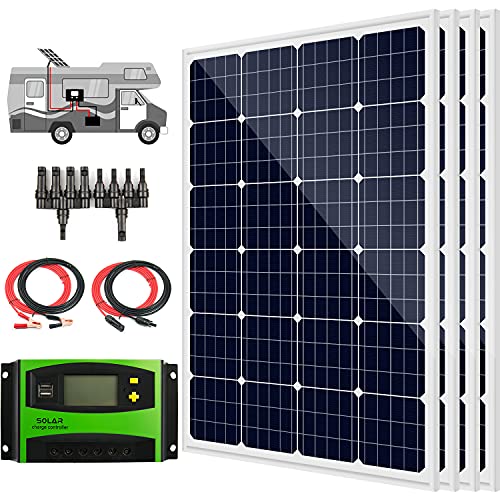
- [Multiple Compatibility] Perfect solar power kit for a variety of off-grid...
- [Durable & Strong] Made of high efficient solar cells, tempered solar...
- [High efficiency] High module conversion efficiency. Bypass diodes minimize...
Conclusion
The single most important thing I have learned is that one monocrystalline panel is rarely enough for a full tiny home, but two or three panels give you reliable power you can count on.
Grab a piece of paper and write down everything you plan to run in your cabin right now. It takes ten minutes and will tell you exactly how many panels you need to buy before you spend a single dollar.
Frequently Asked Questions about Is a Monocrystalline Panel Sufficient to Power a Tiny Home or Off-Grid Cabin?
Can one single monocrystalline panel run a tiny home completely off-grid?
One single panel is usually not enough to run a full tiny home with a fridge, lights, and electronics. The average tiny home needs at least 400 to 600 watts of solar panels to stay comfortable.
A single 200-watt monocrystalline panel can power a few lights and charge your phone, but it will struggle with bigger appliances. You really need two or three panels working together for reliable off-grid living.
How many monocrystalline panels do I need for a small off-grid cabin?
For a small weekend cabin with lights, a phone charger, and a small fan, one 200-watt panel might be enough. But if you want a mini fridge or a laptop, you should plan for two 200-watt panels.
I run my own cabin on two 200-watt panels and that covers my fridge, lights, and device charging without any issues. The key is matching your panel count to what you actually plan to use each day.
What is the best monocrystalline panel for someone who needs to start small and add more later?
If you are starting small and want to grow your system over time, look for a panel that is easy to expand. I recommend the HQST 100W panel because it wires easily in series or parallel with additional panels later.
Starting with one 100-watt panel lets you learn the basics without spending too much money upfront. When you are ready, you can add more of the same panels I used to build my system piece by piece.

- 【Highly Efficiency Solar Panel】MHPOWOS 220W solar panel is made of...
- 【Portable and Foldable】Weighs 8.5kg, lightweight and foldable, portable...
- 【Waterproof & Dustproof】With an IP67 waterproof and Dustproof, 200 watt...
Do monocrystalline panels work well in cloudy or winter conditions?
Monocrystalline panels still produce power on cloudy days, but their output drops significantly. I have seen my panels produce only 25% of their rated power on a heavily overcast afternoon.
Winter months with shorter days also mean less total energy collected. That is why I always recommend buying extra panel wattage to cover those low-light periods.
Which monocrystalline panel kit will not let me down when I need reliable power every day?
If you need power every single day without worrying about failures, go with a complete kit that includes everything you need. The AUECOOR 480W kit gives you four panels and a charge controller in one package.
I have seen friends struggle with mismatched parts from different brands, and it always causes headaches. That is why I send people to the complete kit that finally gave me worry-free power.

- [REAL-WORLD POWER] Rated 400W at STC; actual output varies with sun angle...
- [3 m MC4 CABLE—LONGER REACH] 3 m (9.84 ft) leads give more routing...
- [12V: USE PARALLEL] For most 12 V systems, parallel wiring delivers more...
What happens if I buy a monocrystalline panel that is too small for my cabin?
If your panel is too small, your battery will slowly drain each day until it runs out completely. You will end up sitting in the dark with a dead fridge and no way to charge your devices.
The fix is to either add more panels or reduce your power use significantly. I always tell people to buy a little more than they think they need to avoid this exact frustration.