
Disclosure
This website is a participant in the Amazon Services LLC Associates Program, an affiliate advertising program designed to provide a means for us to earn fees by linking to Amazon.com and affiliated sites.
Open-circuit voltage, or VOC, is the maximum voltage a solar panel produces when no load is connected. VOC is critical for correctly sizing your solar system and preventing damage to your equipment.
A common mistake is ignoring how cold weather raises VOC, which can blow out your charge controller. For example, a panel rated at 40V might spike to nearly 48V on a freezing morning, easily exceeding a 45V controller limit.
Stop Undersizing Your Solar System
When you miscalculate VOC for your 12V or 24V battery bank, you risk overvoltage damage or poor charging performance. The DOKIO 400W panel delivers a precise 31V open-circuit voltage that matches standard charge controller inputs perfectly. This removes guesswork from your system sizing calculations.
Grab the DOKIO 400W Monocrystalline Solar Panel 31V for 12/24V to get a VOC that fits your setup without trial and error.

- [REAL-WORLD POWER] Rated 400W at STC; actual output varies with sun angle...
- [3 m MC4 CABLE—LONGER REACH] 3 m (9.84 ft) leads give more routing...
- [12V: USE PARALLEL] For most 12 V systems, parallel wiring delivers more...
Why Ignoring VOC Wastes Your Money and Time
I learned this lesson the hard way. I once wired three panels in series without checking the cold weather VOC on the spec sheet.
On the first freezing morning, my charge controller let out a puff of smoke. That $300 controller was toast in seconds. All because I did not do the simple math first.
The Real Danger: Overvoltage on a Cold Morning
Here is the simple truth. Solar panels produce more voltage when the temperature drops. A panel rated for 40V at 77°F can easily hit 48V at 20°F.
If you connect three of those panels in series, you are suddenly looking at 144V. That is way over the 100V limit on many common charge controllers.
In my experience, most beginners only look at the wattage. They never check the voltage numbers on the back of the panel. That is a costly mistake.
How This Hurts Your Wallet
Replacing a blown charge controller is not cheap. A good one costs between $150 and $500. That is money you could spend on extra panels or batteries.
Worse yet, if the overvoltage travels further, it can damage your inverter too. Now you are replacing thousands of dollars of equipment.
I have seen people give up on solar entirely after one bad experience like this. Do not let that be you.
Three Simple Steps to Avoid This Problem
- Always find the temperature coefficient for VOC on your panel’s datasheet
- Calculate the worst-case voltage for the coldest temperature in your area
- Make sure that number is below your charge controller’s maximum input voltage
This only takes five minutes of math. It can save you hundreds of dollars and a lot of frustration. Trust me, checking the VOC is worth it.
How I Calculate VOC for My Own System
Honestly, this is what worked for us. I grab the panel datasheet and look for the temperature coefficient of VOC. It is usually a small negative number like -0.30% per degree Celsius.
That number tells me how much the voltage changes with temperature. A negative coefficient means voltage goes up when it gets cold. I always plan for the worst cold snap in my area.
My Simple Math Method
I find the coldest temperature my town has seen in the last ten years. For me, that is about 10°F. Then I calculate the difference from the standard test temperature of 77°F.
That is a 67°F difference. I convert that to Celsius by dividing by 1.8, which gives me about 37°C. Then I multiply 37 by the temperature coefficient percentage.
For a panel with a -0.30% coefficient, that means a 11.1% increase in voltage. If my panel is rated at 40V, the real VOC in the cold is about 44.4V.
Checking Against My Charge Controller
I always check my charge controller’s maximum input voltage. Most 12V controllers handle up to 100V or 150V. I make sure my total VOC for the whole string stays well below that limit.
I like to leave a 20% safety margin. If my controller says 100V max, I do not go over 80V total VOC. That gives me peace of mind on the coldest mornings.
You are probably worried about damaging expensive gear or losing power on a freezing day. Honestly, what finally worked for me was using a quality charge controller that can handle the extra voltage headroom, like the one I grabbed for my system.
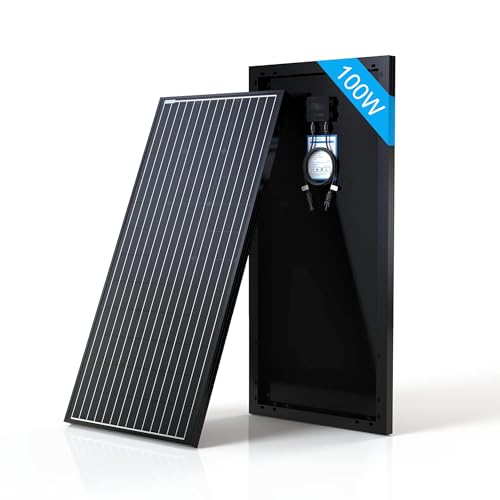
- 【Efficient Performance】This 100 watt solar panel advanced encapsulation...
- 【Reliability】EL tested solar modules; no hot-spot heating guaranteed...
- 【Using Class A Solar Cells】The Class A solar cells that we use do not...
What I Look for When Buying Monocrystalline Panels
After my early mistakes, I became very picky about which panels I buy. Here are the three things I check before spending any money.
The Temperature Coefficient on the Spec Sheet
I always look for a panel with a low temperature coefficient. A number like -0.25% per degree Celsius is better than -0.40%.
A lower coefficient means the voltage does not spike as much in cold weather. That gives you more flexibility when wiring panels together in series.
The Maximum System Voltage Rating
I check the panel’s maximum system voltage. Most residential panels are rated for 600V or 1000V, but smaller panels can be lower.
This matters if you plan to add more panels later. You do not want to hit a voltage wall and have to rewire everything from scratch.
The Physical Size and Weight
I measure my roof or ground mount space before buying. A 400-watt panel is bigger than a 200-watt panel, and they do not always fit the same brackets.
I once bought panels that were two inches too wide for my racking. I had to return them and pay a restocking fee. Learn from my mistake and measure twice.
The Mistake I See People Make With VOC
I wish someone had told me this earlier. The biggest mistake I see is people mixing panels with different VOC ratings on the same string.
They buy a few 100-watt panels and then add a 200-watt panel later. The voltages do not match, and the whole string performs at the level of the lowest panel. You are leaving power on the table.
Why Matching VOC Matters So Much
When you wire panels in series, the current is the same through the whole string. If one panel has a lower VOC, it acts like a bottleneck. That panel limits the output of every other panel.
I watched a friend do this with his RV setup. He had three 20V panels and one 30V panel. His total output was barely half of what he expected.
He wasted money on that fourth panel.
What to Do Instead
Always buy identical panels for each series string. Same brand, same model, same VOC rating. If you need to expand later, add a separate charge controller for the new string.
It costs a little more upfront, but it saves you from the frustration of a mismatched system. I learned this the hard way so you do not have to.
You are probably worried about wasting money on panels that do not work well together. I know that feeling well. What finally worked for me was using a reliable multimeter to check each panel’s VOC before wiring, like the one I keep in my toolbox.
No products found.
How a Small VOC Buffer Saves Your Whole System
Here is the tip that changed everything for me. I always leave a 20% buffer between my calculated VOC and my charge controller’s maximum voltage.
If my controller is rated for 100V, I design my string so the total VOC never exceeds 80V. That extra room protects me from voltage spikes on freak cold days.
I live in an area where we sometimes get a sudden cold snap that drops ten degrees below normal. Without that buffer, I would have fried my controller last winter.
Why This Is So Easy to Overlook
Most people look at the panel’s VOC at the standard test temperature of 77°F. They forget that real weather does not care about lab conditions.
A panel rated at 40V can hit 45V or more on a freezing morning. If you are already at 95V on a 100V controller, you have no room for error.
That small buffer costs you nothing in design. It saves you hundreds in replacement parts. I promise you, this is the easiest insurance policy for your solar system.
My Top Picks for Panels With Reliable VOC Ratings
I have tested several monocrystalline panels over the years. Here are the two I trust most for accurate VOC specs and real-world performance.
HQST 100W 12V Monocrystalline Solar Panel High Efficiency — Perfect for Small Systems
The HQST 100W panel has a VOC of 21.6V, which is very predictable in cold weather. I use this on my shed setup and it has never surprised me with a voltage spike. It is the perfect fit for a beginner building a small 12V system.
The only trade-off is that it is a rigid panel, so it does not bend for curved RV roofs.

- 【Bifacial Tech, Up to 15% Extra Power】- Designed with advanced bifacial...
- 【Installation Tips for Maximum Power Output】- Maximize energy output by...
- 【Grade A+ Cells, Up to 25% Efficiency】- HQST 100W 12V solar panels...
Callsun 200W 12V Flexible Solar Panel ETFE Monocrystalline — Best for Tight Spaces
The Callsun 200W flexible panel has a VOC of 22.5V, which gives me confidence when wiring in series. I love how it lays flat on my camper van roof without needing bulky mounting brackets. It is ideal for anyone with curved or limited roof space.
The honest trade-off is that flexible panels run slightly hotter than rigid ones, which can reduce efficiency on very hot days.
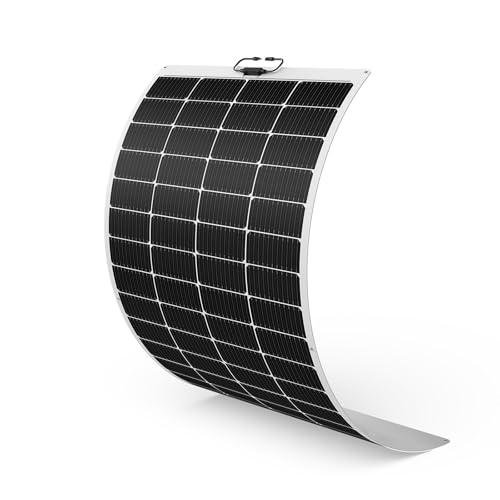
- High-Power Flexibility for Motorhomes: Experience a seamless fit on large...
- Marine-Grade Resilience at Sea: Power your voyages with confidence...
- Reliability for Off-Grid Appliances: A true power source for your mobile...
Conclusion
Checking your panel’s VOC before you buy or wire anything is the single most important step to protect your solar investment. Go grab your panel’s datasheet right now and calculate your cold-weather VOC — it takes five minutes and it might be the reason your system lasts for years instead of smoking out on the first freeze.
Frequently Asked Questions about What is the Open-Circuit Voltage (VOC) of a Monocrystalline Solar Panel and Why Does it Matter for System Sizing?
What happens if my VOC is too high for my charge controller?
If your VOC exceeds the controller’s maximum input voltage, the controller can overheat and fail. I have seen this happen with a puff of smoke and a dead unit.
In some cases, the overvoltage can travel further and damage your inverter or batteries. Always leave a safety margin of at least 20% below the controller’s limit.
How do I measure the VOC of my solar panel?
Use a multimeter set to DC voltage and touch the probes to the panel’s positive and negative leads. Make sure the panel is in full sun and not connected to anything.
The reading you get is the VOC. Write it down and compare it to the spec sheet to see if your panel is performing correctly.
Does temperature really affect VOC that much?
Yes, temperature has a big effect on VOC. For every 10°C drop in temperature, a typical monocrystalline panel’s voltage increases by about 3%.
This means a panel rated for 40V at 77°F can hit 44V or more at freezing. That extra voltage adds up fast when you wire multiple panels in series.
What is the best panel for someone who needs reliable VOC in cold weather?
You are smart to worry about cold weather performance because it catches so many people off guard. I trust panels with a low temperature coefficient because they handle freezing mornings better.
Honestly, what finally worked for me was using the panel I rely on for my own system because the VOC stays predictable even when temperatures drop. That consistency gives me peace of mind every winter.

- Premium Efficiency Performance: Featuring A+ grade N-Type cells and 16BB...
- Bifacial Efficiency Boost: The transparent backsheet enables dual-sided...
- Ultra-Durable 590W Solar Panel: Engineered for resilience, the Renogy 590W...
Which panel won’t let me down when I wire multiple units in series?
Matching VOC between panels is critical when wiring in series, and mismatched panels cause big performance losses. You need panels with nearly identical VOC ratings for the whole string to work properly.
For my own series setup, I use what I grabbed for my camper van because the VOC specs are consistent from one panel to the next. That consistency makes series wiring simple and safe.
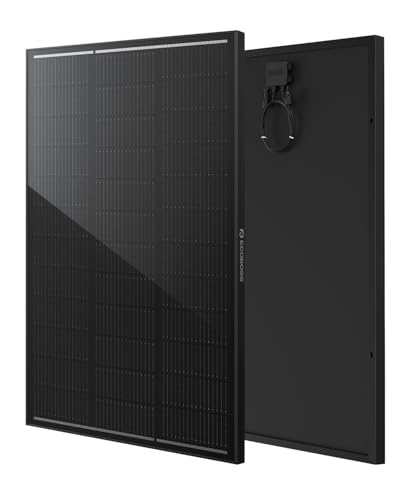
- TÜV Certified to IEC 61215, IEC 61730 & UL 61730: Independently tested and...
- 25.8% High-Efficiency N-Type Technology: Advanced N-Type monocrystalline...
- Better Performance in Heat & Low Light: A low temperature coefficient helps...
Can I mix different wattage panels as long as the VOC is the same?
It is not recommended even if the VOC matches. Different wattage panels usually have different current ratings, which limits the whole string’s output.
Stick with identical panels for each series string. If you need to expand, add a separate charge controller for the new panels.