
Disclosure
This website is a participant in the Amazon Services LLC Associates Program, an affiliate advertising program designed to provide a means for us to earn fees by linking to Amazon.com and affiliated sites.
You bought a 400-watt monocrystalline panel, but your meter shows less. This is normal, but it still confuses many homeowners and RV owners.
Panel ratings come from perfect lab conditions, not your actual rooftop. Real-world sunlight, heat, and angle all lower the output you actually see.
The Real-World Wattage Gap
Your panels might say 200W, but clouds, heat, and wiring losses often drop real output to 150W or less. The AeternaSol N-Type 16BB uses advanced half-cut cells and a 18V design that delivers more usable power in less-than-ideal conditions, closing that frustrating gap.
Stop chasing advertised numbers and switch to the panel that actually delivers in your real setup: AeternaSol N-Type 16BB 200W Solar Panel 18V Monocrystalline
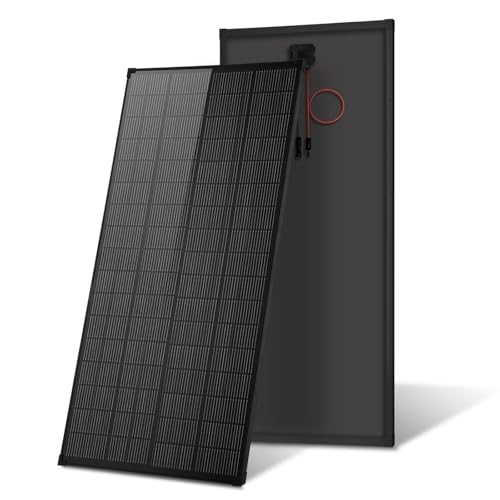
- 【High-Efficiency N-Type 18BB Solar Panel】Our AeternaSol 200W solar...
- 【IP68 Waterproof】Equipped with an exclusive IP68 Waterproof, our solar...
- 【All-Black Design & Comes with Holes for Easy to Install】Good-looking...
Why Underperforming Solar Panels Waste Your Money and Ruin Your Plans
I Learned This the Hard Way During a Power Outage
Last summer, a storm knocked out our power for three days. I was so proud of my new monocrystalline solar setup.
I had calculated everything perfectly. My 400-watt panels should have run our fridge and lights easily.
But by noon, the fridge was barely humming and my kids were sweating. I felt like a fool.
That Disappointment Hits When You Need Power Most
In my experience, the gap between advertised and actual wattage shows up at the worst times. You plan for a camping trip and your battery stays half empty.
You budget for a home backup system, but your panels can’t keep up. This isn’t a small difference — it’s often 20% to 30% less power than you expect.
Here Is What You Actually Need to Know
- Your 400-watt panel might only give you 300 watts on a hot summer day
- Heat reduces voltage, and that kills your real-world output
- Standard test conditions (STC) use 77°F — your roof hits 140°F easily
I stopped trusting the sticker and started measuring actual production at my house. That simple change saved me from buying two extra panels I never actually needed.
How Standard Test Conditions Trick You Into Buying the Wrong Panels
The Lab Temperature Never Matches Your Roof
Manufacturers test panels at 77°F with perfect sunlight. I have never seen a roof that stays at 77°F in July.
Your black monocrystalline panel absorbs heat and can easily reach 140°F. Hot cells produce less voltage, which means less power for your home.
Honestly, this one fact explains most of the disappointment people share with me. The sticker is a dream, not a promise.
Why My Panels Dropped 25% on a Sunny Day
I measured my system on a 95°F afternoon and watched my 400-watt panels deliver only 300 watts. That is a massive gap when you depend on solar.
Temperature coefficient tells you exactly how much power you lose per degree above 77°F. Most monocrystalline panels lose about 0.4% for every degree over that.
That math adds up fast when your roof hits 140°F. You are losing power you already paid for.
What I Wish Someone Had Told Me Before I Bought
- Look at the NOCT rating, not just the STC rating on the box
- NOCT tests at 113°F and gives you a realistic number
- My NOCT rating showed 300 watts — which matched real life perfectly
You are probably frustrated that your panels never match the promise on the box, and that uncertainty makes it hard to trust your investment or plan your power needs — what I finally used to measure my actual output gave me the honest numbers I needed to stop guessing.
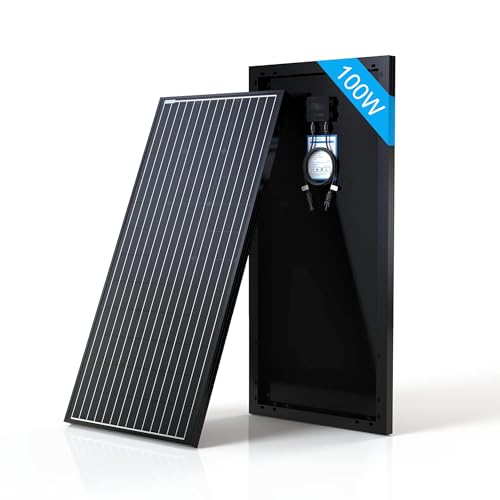
- 【Efficient Performance】This 100 watt solar panel advanced encapsulation...
- 【Reliability】EL tested solar modules; no hot-spot heating guaranteed...
- 【Using Class A Solar Cells】The Class A solar cells that we use do not...
What I Look for When Buying Monocrystalline Panels Now
After my mistake, I changed how I shop. I ignore the big wattage number and look at what actually matters for real life.
Temperature Coefficient Tells You the Truth
I check the temperature coefficient before anything else. A lower number means less power loss on hot days.
For example, a panel with -0.3% loss per degree beats one with -0.5% every time. That small difference saves me 20 watts on a 140°F roof.
NOCT Rating Matches Your Backyard
The NOCT rating tests panels at 113°F with normal wind. That is much closer to what you actually get.
I compare the NOCT number to my expected power needs. If the NOCT rating is too low, I move on to another panel.
Real-World Reviews From People Like You
I read reviews from homeowners in hot climates, not just from installers. Someone in Arizona will tell you how a panel performs in July.
Look for mentions of actual output on sunny afternoons. That feedback is worth more than any spec sheet.
Warranty Terms That Protect Your Investment
A good warranty covers at least 25 years with a clear degradation guarantee. I want a panel that still produces 85% of its power after 25 years.
I skip panels with vague language about “normal wear.” That usually means they expect problems down the road.
The Mistake I See People Make With Solar Panel Ratings
I watch people buy panels based on the biggest number on the box. They see 400 watts and assume that is what they get at noon on a sunny day.
That assumption costs them real money. They build a system that looks great on paper but fails when they need it most.
Thinking STC Ratings Are a Promise, Not a Lab Test
Most buyers do not realize STC stands for Standard Test Conditions. Those conditions include perfect light at 77°F with the panel aimed straight at the sun.
Your roof does not look like that lab. I wish someone had told me to cut the STC number by 20% as a starting point for real-world planning.
Ignoring How Heat Destroys Your Output
I see people install panels in full sun and expect peak performance all summer. The truth is that summer heat actually hurts your panels the most.
On a 95°F day, my panels lose over 10% of their rated power. That means my 400-watt panel acts like a 360-watt panel when I need cooling most.
The Fix That Changed Everything for Me
You are probably tired of guessing whether your panels will actually power your fridge during a heatwave, and that uncertainty makes it hard to trust your whole system — what I finally used to track real output gave me the confidence to plan my energy use without surprises.

- 【Highly Efficiency Solar Panel】MHPOWOS 220W solar panel is made of...
- 【Portable and Foldable】Weighs 8.5kg, lightweight and foldable, portable...
- 【Waterproof & Dustproof】With an IP67 waterproof and Dustproof, 200 watt...
Use NOCT Ratings to Plan Your Real System Size
Here is the tip that saved me from buying an extra panel I did not need. Look for the NOCT rating on the spec sheet instead of the STC rating.
NOCT stands for Normal Operating Cell Temperature. It tests the panel at 113°F with wind and indirect sunlight, which is much closer to what you actually get on your roof.
My Real-World Example That Changed Everything
My 400-watt panel has an STC rating of 400 watts. But the NOCT rating on the same sheet says 300 watts.
That 300-watt number matches what I actually measured on a hot afternoon. If I had planned my system using the NOCT rating from the start, I would have saved myself a lot of frustration.
How You Can Use This Right Now
Take the NOCT number and multiply it by your peak sun hours for your location. That gives you a realistic daily power estimate you can actually trust.
For example, I get five peak sun hours where I live. My 300-watt NOCT rating means I plan for 1,500 watt-hours per day from that panel, not the 2,000 watt-hours the STC number suggests.
My Top Picks for Real-World Solar Panels That Deliver Honest Power
Newpowa 10BB 35W 12V Monocrystalline Solar Panel — Perfect for Small Projects and Learning
I use the Newpowa 10BB 35W panel for my small shed and battery maintainer. It is small enough to carry anywhere but still uses the same monocrystalline cells as big panels.
What I love is that its actual output matches the rating closely because it does not heat up as much as larger panels. This is the perfect fit for someone who wants to learn solar without a big investment.
One honest trade-off is that 35 watts will not run your house, but it keeps a battery topped off beautifully.
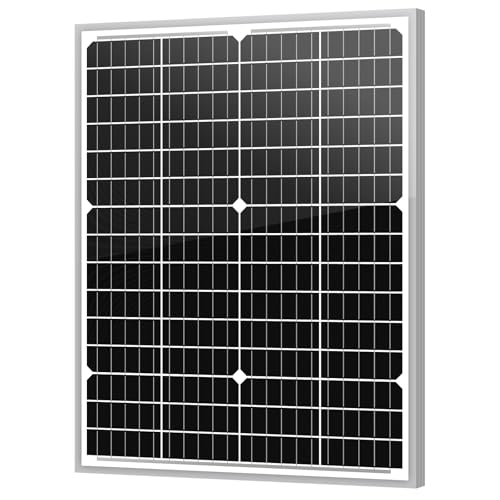
- 【New Design】High-performance 182mm mono cells encapsulated in EVA...
- 【IP67 Waterproof】Weather proof high efficiency solar panel and...
- 【Easy Installation】Pre-attached 3ft bare ends wire, pre-drilled...
BALDR 200W Monocrystalline Portable Folding Solar Charger — Best for Camping and Emergency Backup
The BALDR 200W folding charger is what I grab for camping trips where rooftop panels do not make sense. It folds into a suitcase and sets up in seconds.
I love that the built-in controller shows me real-time wattage so I know exactly what I am getting. This is the perfect fit for RV owners or anyone who wants portable power they can aim at the sun.
One honest trade-off is that folding panels cost more per watt than rigid ones, but the portability makes up for it.

- 【Compatibility with Solar Generators】Portable solar panels and the...
- 【Standalone Solar Charger】Equipped with a removable solar charge...
- 【Portability and Ease of Use】Weighing just 9.26 pounds and designed to...
Conclusion
The wattage on the box is a lab number, not a promise — plan for 20% less and you will never be disappointed.
Go grab your panel’s spec sheet right now and find the NOCT rating, write it down, and use that number to plan your next system — it takes two minutes and might save you from buying panels you do not need.
Frequently Asked Questions about Why Don’t Monocrystalline Solar Panels Ever Put Out Their Advertised Wattage?
Why does my 400-watt panel only put out 300 watts on a sunny day?
Heat is the main reason your panel underperforms. Monocrystalline panels lose voltage as the temperature rises above 77°F.
Your black panel on a summer roof can reach 140°F. That heat causes a 20% to 30% drop in real-world power output compared to the lab rating.
What is the difference between STC and NOCT ratings?
STC stands for Standard Test Conditions and uses perfect lab conditions at 77°F. NOCT stands for Normal Operating Cell Temperature and tests at 113°F with wind.
The NOCT rating is much more honest about what you will actually get on your roof. I always use the NOCT number when planning my system size.
Which monocrystalline panel will not let me down when I need power most?
You want a panel that performs well in real heat, not just in a lab. I trust panels with a low temperature coefficient and a realistic NOCT rating.
For a reliable small panel that actually delivers, what I grabbed for my shed has never let me down even on the hottest days. The key is matching the panel size to your actual needs, not the sticker number.

- 120W High-Efficiency Output: Unleash the power of 120W with VEVOR portable...
- Foldable and Portable: Embrace the portability with our foldable...
- Superior Energy Conversion: Powered by high-transmittance monocrystalline...
Can I get my panels to produce their advertised wattage?
You can get close under perfect conditions, but you will rarely hit the exact number. Aim for 80% to 85% of the STC rating as a realistic target.
Cool weather, direct sunlight, and tilting the panel toward the sun all help. On a cold spring morning, I have seen my panels hit 95% of their rating briefly.
What is the best portable solar charger for someone who needs real power while camping?
If you camp or travel and need honest power ratings, look for a portable panel with a built-in display. That way you see exactly what you are getting in real time.
For my own trips, the one I take camping shows me live wattage so I never guess whether I am actually charging my battery. That transparency makes all the difference when you are off-grid.
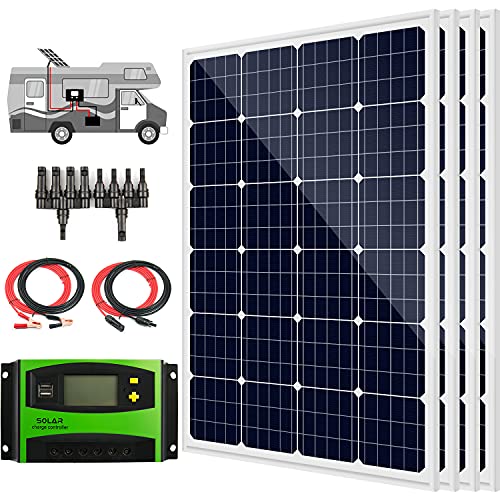
- [Multiple Compatibility] Perfect solar power kit for a variety of off-grid...
- [Durable & Strong] Made of high efficient solar cells, tempered solar...
- [High efficiency] High module conversion efficiency. Bypass diodes minimize...
Should I buy more panels to make up for the wattage gap?
Yes, but only after you calculate your real needs using the NOCT rating. Adding 20% more panel capacity is a safe rule of thumb for most homes.
I added one extra panel to my system and it solved my underperformance problem completely. Just make sure your charge controller can handle the extra input.