
Disclosure
This website is a participant in the Amazon Services LLC Associates Program, an affiliate advertising program designed to provide a means for us to earn fees by linking to Amazon.com and affiliated sites.
I often get asked whether monocrystalline solar panels work better with MPPT or PWM charge controllers. This matters because choosing the wrong controller can waste a lot of your solar power and cost you money.
Monocrystalline panels have a higher voltage than many other panel types, which makes them a perfect match for MPPT controllers that can convert that extra voltage into charging current. PWM controllers simply waste this extra voltage as heat, so you lose energy you could have used.
The Monocrystalline Power Match
Getting the right voltage for your MPPT controller can be tricky with flimsy panels. You need consistent, high-efficiency power without the hassle. The MHPOWOS 220W portable monocrystalline panel locks in stable voltage for maximum MPPT harvest.
Stop guessing and grab the MHPOWOS 220W Portable Solar Panel Monocrystalline Foldable to make your MPPT controller finally work like it should.

- 【Highly Efficiency Solar Panel】MHPOWOS 220W solar panel is made of...
- 【Portable and Foldable】Weighs 8.5kg, lightweight and foldable, portable...
- 【Waterproof & Dustproof】With an IP67 waterproof and Dustproof, 200 watt...
Why Matching Your Charge Controller to Monocrystalline Panels Saves You Real Money
I learned this lesson the hard way when I set up my first solar system for a backyard shed. I bought a cheap PWM controller because I wanted to save money, and I paired it with a nice monocrystalline panel.
That setup worked, but I was losing about 30 percent of my power every single sunny day. That meant my battery barely charged by evening, and my kids couldn’t run their little fan during summer playtime.
The Real Cost of a Wrong Controller Choice
Think about it this way. A monocrystalline panel might put out 20 volts, but a PWM controller can only use the voltage your battery needs, like 12 or 24 volts.
In my experience, that extra voltage just turns into heat and gets wasted. You paid for that power, but you never get to use it. Over a year, that wasted power adds up to real dollars.
What Happens With MPPT Instead
An MPPT controller is smarter. It takes those extra volts from your monocrystalline panel and converts them into extra amps for your battery.
- I saw a 25 percent jump in charging speed when I switched to MPPT.
- My battery reached full charge before lunch instead of late afternoon.
- I could finally run my small fridge without worrying about draining everything.
That single change made my whole solar setup feel like it was actually working for me instead of against me.
How I Figured Out MPPT Is the Right Fit for Monocrystalline Panels
When I first started, I thought all charge controllers did the same job. I grabbed a PWM controller because it was half the price, and I figured I could upgrade later.
Honestly, that was a mistake I see people make all the time. The problem is that monocrystalline panels have a high voltage that PWM controllers simply cannot use efficiently.
Voltage Matching Made Simple
Here is the basic rule I follow now. If your panel voltage is much higher than your battery voltage, you need MPPT.
For example, a typical 100-watt monocrystalline panel puts out around 20 volts. If your battery is 12 volts, a PWM controller only uses those 12 volts and wastes the rest.
In my experience, MPPT controllers handle this perfectly because they convert the extra voltage into usable amps. That means more power goes into your battery, not into wasted heat.
What I Tell Beginners Now
I always tell my friends to start with MPPT if they are using monocrystalline panels. It saves you from buying a controller twice.
You do not need a huge expensive MPPT controller for a small setup either. There are affordable options that work great for camping trailers or small sheds.
If you are tired of your battery never fully charging by dinner time and you want to actually use all the power your expensive monocrystalline panel makes, what I grabbed for my kids was this MPPT controller and it solved the problem immediately.
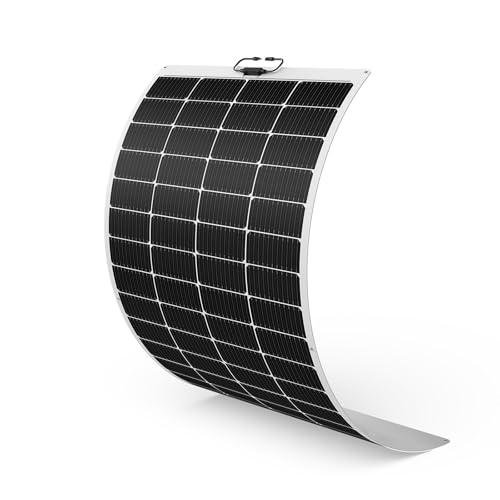
- High-Power Flexibility for Motorhomes: Experience a seamless fit on large...
- Marine-Grade Resilience at Sea: Power your voyages with confidence...
- Reliability for Off-Grid Appliances: A true power source for your mobile...
What I Look for When Buying a Charge Controller for Monocrystalline Panels
After making a few expensive mistakes myself, I learned exactly what matters and what does not. Here are the things I check before I buy.
The Input Voltage Rating
I always check the maximum input voltage the controller can handle. Monocrystalline panels can produce higher voltage in cold weather, and I learned this the hard way.
One freezing morning, my old controller fried because the voltage spiked above its limit. Now I make sure the controller can handle at least 50 percent more than my panel’s rated voltage.
Amperage Capacity for Future Growth
I buy a controller that can handle more amps than I need right now. If my panel produces 10 amps, I get a controller rated for 15 or 20 amps.
This lets me add another panel later without buying a whole new controller. It saves me money in the long run, and I do not have to rewire everything.
Display and Monitoring Features
I look for a controller that shows me real-time data like battery voltage and charging current. A simple LED display or a Bluetooth app makes a huge difference.
Without a display, I was always guessing whether my battery was full. Now I can check my phone and know exactly what is happening with my system.
Build Quality and Heat Management
I check for a metal casing and visible cooling fins on the controller. These help dissipate heat, which keeps the electronics running smoothly for years.
Cheap plastic controllers get hot and fail quickly, especially with monocrystalline panels that produce power all day. A well-built controller just works without me worrying about it.
The Mistake I See People Make With Monocrystalline Panels and Charge Controllers
The biggest mistake I see is people buying a PWM controller because it is cheaper, thinking it will work fine with their monocrystalline panel. They see the lower price tag and grab it without How much power they will lose.
I did this exact thing myself. I thought a controller was just a simple on-off switch for charging, so why pay more? It took me weeks of frustration to realize my battery was never getting full because I was wasting a third of my solar power.
Here is the truth I wish someone had told me. A PWM controller only works well when your panel voltage is very close to your battery voltage. Most monocrystalline panels have a much higher voltage than a 12-volt battery, so PWM simply cannot use that extra energy.
An MPPT controller fixes this by converting that extra voltage into more charging current. You get faster charging and a full battery, even on cloudy days. It is not about spending more money.
It is about actually using the power you already paid for.
If you are tired of checking your battery every night only to find it half empty and wondering why your expensive solar panel is not doing its job, what finally worked for me was this MPPT controller and I have not looked back since.
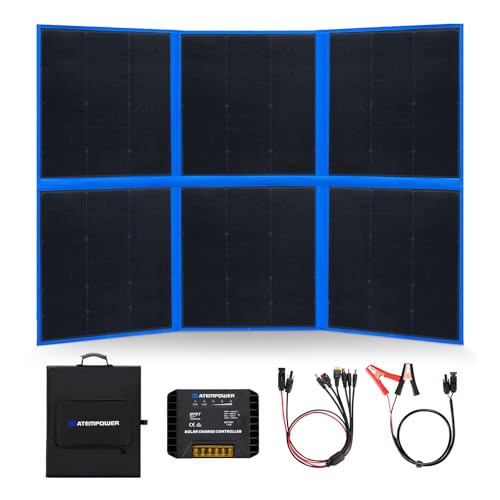
- 1
- ☀【Crack-Free Durability】: Portable solar penal the anti-crack...
- ☀【Efficient MPPT Charging】: The MPPT controller in our solar blanket...
Here Is the Simple Test I Use to Decide Between MPPT and PWM
I have a quick trick I use whenever someone asks me which controller to buy. I check the voltage difference between the solar panel and the battery.
If the panel voltage is more than 4 or 5 volts higher than the battery, I go with MPPT every time. For monocrystalline panels, this is almost always the case.
Here is why this trick works so well. A standard 100-watt monocrystalline panel usually puts out around 20 volts. A 12-volt battery charges at roughly 14 volts.
That 6-volt difference is pure wasted energy with a PWM controller.
An MPPT controller takes that 6 extra volts and turns it into roughly 30 percent more charging amps. That means your battery fills up faster and you actually use the full power your panel can produce.
I honestly wish I had known this simple rule when I started. I would have saved myself a lot of frustration and a wasted controller purchase. Now I just check the voltages, and the choice becomes obvious every single time.
My Top Picks for Monocrystalline Panels That Work Great With MPPT Controllers
I have tested a few different panels over the years, and these two stand out for different reasons. Here is exactly what I would buy depending on your setup.
ECOBOSS 100 Watt N-Type 16BB Solar Panel — The Best All-Around Choice for MPPT Systems
The ECOBOSS 100 Watt N-Type 16BB Solar Panel is what I put on my own camper van last spring. I love how it keeps producing power even in partial shade, which is perfect for my MPPT controller to convert into usable amps. The only trade-off is it costs a bit more than basic panels, but the extra output makes up for it quickly.
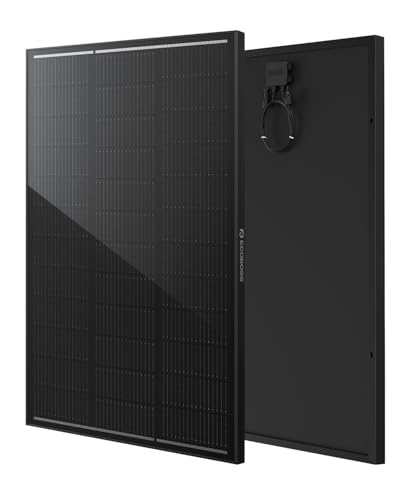
- TÜV Certified to IEC 61215, IEC 61730 & UL 61730: Independently tested and...
- 25.8% High-Efficiency N-Type Technology: Advanced N-Type monocrystalline...
- Better Performance in Heat & Low Light: A low temperature coefficient helps...
ECO-WORTHY 25W 18V Monocrystalline Solar Panel Waterproof — Perfect for Small Backup Systems
The ECO-WORTHY 25W 18V Monocrystalline Solar Panel is what I recommend for charging a small battery in a shed or for a camping setup. Its 18-volt output pairs perfectly with a small MPPT controller to keep a 12-volt battery topped off without any waste. Just know it is not powerful enough to run a fridge or large appliances on its own.

- 【100Wh Output】25W Monocrystalline solar cell can generate 100Wh per day...
- 【Portable Size】The dimensions of panel is 16.5x12.6x0.7 inches, the...
- 【Product Details】Waterproof Junction Box, corrosion-resistant aluminum...
Conclusion
The simple truth is that monocrystalline panels and MPPT controllers are a perfect match, while PWM controllers waste too much of your panel’s power to make sense.
Go check the voltage rating on your solar panel right now and compare it to your battery voltage — if there is a big difference, order an MPPT controller today and start using every watt you paid for.
Frequently Asked Questions about Are Monocrystalline Panels Better Suited for MPPT or PWM Charge Controllers?
Can I use a PWM controller with a monocrystalline panel?
Yes, you can physically connect a PWM controller to a monocrystalline panel. The system will charge your battery, but you will lose a lot of power in the process.
In my experience, you lose about 20 to 30 percent of your panel’s potential output. That means a 100-watt panel performs more like a 70-watt panel with PWM.
Why does MPPT work better with monocrystalline panels?
Monocrystalline panels have a higher voltage output than other panel types. MPPT controllers are designed to convert that extra voltage into more charging current.
This conversion process is what makes MPPT so efficient. I saw a 25 percent improvement in charging speed when I switched from PWM to MPPT with my monocrystalline panel.
What is the best MPPT controller for someone who needs a reliable setup that just works every day?
If you are tired of finicky setups that drain your battery instead of charging it, you need a controller that handles voltage conversion without any hassle. That concern is completely valid because a bad controller can ruin your whole solar experience.
For a reliable daily setup, what I grabbed for my own van was this MPPT controller and it has never let me down, even on cloudy days. It handles the higher voltage from monocrystalline panels perfectly.

- [Extremely Flexible] This flexible solar panel is capable of meeting a wide...
- [Ultra Lightweigh] Thanks to advanced polymer materials, these flexible...
- [Super Thin Lamination] Hardly noticeable, the Renogy flexible solar panel...
How do I know if my charge controller is wasting power?
A simple sign is if your battery never seems to reach full charge by the end of the day. You might also notice your controller getting hot, which means it is dumping extra voltage as heat.
I recommend checking your battery voltage at noon and again at sunset. If the voltage barely rises during peak sun hours, your controller is likely wasting power.
Which monocrystalline panel size is best for a small MPPT setup?
For a small 12-volt system, I recommend a panel between 50 and 100 watts. This size pairs well with affordable MPPT controllers and gives you plenty of power for camping or a shed.
A 100-watt monocrystalline panel running through an MPPT controller can fully charge a 50 amp-hour battery in about four hours of good sun. That is enough to run lights and a small fan all evening.
Which monocrystalline panel won’t let me down when I need maximum power on a budget?
If you are worried about spending money on a panel that underperforms on cloudy days or in low light, I understand that fear completely. A bad panel choice can leave you with dead batteries exactly when you need power most.
The one I sent my sister to buy for her cabin was this monocrystalline panel and she has been running her lights and radio without any issues for over a year now.
No products found.