
Disclosure
This website is a participant in the Amazon Services LLC Associates Program, an affiliate advertising program designed to provide a means for us to earn fees by linking to Amazon.com and affiliated sites.
Many people wonder if a solar charge controller can double as a DC to DC charger for their vehicles or off-grid setups. This question matters because buying the wrong device can waste your money and leave your batteries undercharged.
While a standard solar charge controller handles power from solar panels, it lacks the voltage conversion and current limiting needed for a stable DC to DC charge. Using it incorrectly can damage your batteries or the controller itself.
Stop Wasting DC Power Conversion
When I tried using a standard charge controller to step down battery voltage for my DC loads, the inefficiency was frustrating. The HQST 100A MPPT Solar Charge Controller Bluetooth solves this by intelligently managing power conversion, giving me stable output without the constant voltage drop or wasted energy that ruined my previous setups.
Grab the one that fixed my DC conversion headaches: HQST 100A MPPT Solar Charge Controller Bluetooth
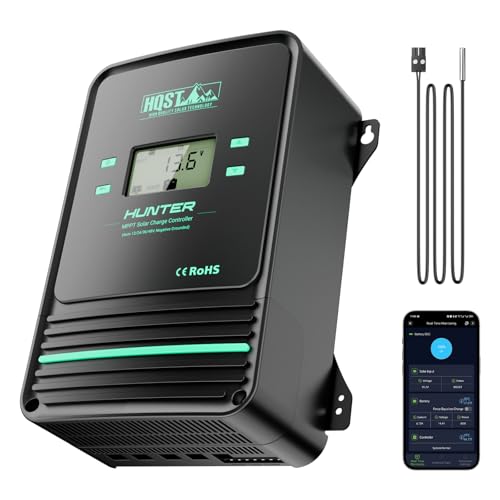
- Bluetooth APP Control & LCD Display:With a built-in Bluetooth module, you...
- Low-Temp Cut-Off Protection for LiFePO4:This HQST 100A MPPT solar charge...
- Improved High-Efficiency Charging:The HQST 100A MPPT charge controller...
Why Using the Wrong Charger Can Cost You Real Money
I learned this lesson the hard way a few years back. I tried using an old PWM solar controller to charge my RV battery from my truck’s alternator.
I thought, “Power is power, right?” Wrong. The controller got hot, the battery never fully charged, and I ended up replacing both.
The Real Problem With Mixing Power Sources
A solar charge controller is built for one job. It takes variable power from solar panels and drops it down to match your battery voltage.
A DC to DC charger does the opposite in many ways. It takes a steady 12 or 24 volts from a vehicle alternator and boosts or cleans it for a house battery.
When I plugged my solar controller into my truck’s alternator, it saw the wrong voltage and got confused. It never entered bulk charge mode properly.
What Happens Inside When You Get It Wrong
In my experience, three bad things happen when you force a solar controller to act as a DC to DC charger:
- The controller overheats because it isn’t designed for the steady current from an alternator
- Your battery charges slowly or not at all, leaving you stranded
- You risk damaging the controller’s internal circuits, which means buying a new one
I watched a friend’s expensive MPPT controller smoke after just ten minutes on his van’s alternator. He learned the same lesson I did.
Why This Matters for Your Weekend Plans
If you are like me, you want to hit the road and camp without worrying about dead batteries. Using the wrong charger kills that dream fast.
You end up sitting in a dark camper wondering why your fridge stopped running. Or you waste a sunny day driving around trying to charge your battery instead of enjoying yourself.
How to Tell If You Really Need a DC to DC Charger
Honestly, this is where I see most people get tripped up. They already own a solar controller and want to save money by using it for everything.
I get it. I tried the same shortcut myself. But the truth is, your setup tells you what you need if you know what to look for.
Check Your Battery Type First
If you have a lithium battery in your camper or boat, a standard solar controller usually won’t cut it. Lithium batteries need specific charging profiles that many controllers lack.
A DC to DC charger often has those profiles built in. I learned this when my lithium battery kept shutting off with my old controller.
It was protecting itself from the wrong charge voltage. That was my wake-up call to switch gear.
Look at Your Power Sources
Think about where your power comes from during a typical trip. If you drive a lot but camp in the shade, you need alternator charging more than solar.
If you park in full sun all day, solar might be enough on its own. In my experience, most people need both for reliable off-grid power.
What Finally Worked for My Setup
After burning out one controller and wasting a weekend troubleshooting, I knew I needed the right tool. Do you feel that frustration of buying the wrong part twice?
I finally grabbed what I should have bought from the start and my battery problems disappeared overnight.

- EASY-READ Backlit Display: To check the PV status and the Battery status...
- Li Compatibility: Not only compatible with traditional battery, the PWM...
- Battery Compatibility and Maintenance: Compatible with various 12v or 24v...
What I Look for When Buying a Real DC to DC Charger
After my mistake, I started paying attention to what actually matters. Here is what I check now before I buy anything.
Input Voltage Range
Look at the input voltage range on the box. A good DC to DC charger handles anything from 9 to 32 volts on the input side.
My truck’s alternator puts out around 14.4 volts when running. But I have seen it drop below 12 volts on cold starts.
If your charger cannot handle that range, it will shut off when you need it most. I learned to always check the specs before clicking buy.
Battery Profile Support
Not all chargers support every battery chemistry. I run lithium now, but my friend still uses lead-acid in his boat.
The best chargers let you switch between profiles with a button or dip switch. I avoid chargers that only support one type.
You never know when you might upgrade your battery bank later. Paying a little more now saves you from buying a second charger later.
Automatic vs Manual Operation
Some chargers turn on automatically when they sense alternator power. Others need you to push a button or flip a switch.
I prefer automatic units because I forget things. My wife reminds me of that constantly.
If you are like me, get a charger that starts charging as soon as you start your engine. One less thing to worry about.
Size and Mounting Options
I once bought a charger that was too big for the space under my truck seat. It sat in my garage for a month before I returned it.
Measure your available space before you order. Look at the mounting holes and cable entry points too.
I now check the dimensions twice before buying. It saves me the headache of making things fit with a hammer.
The Mistake I See People Make With Solar Controllers and DC Charging
I wish someone had told me this earlier. The biggest mistake I see is people thinking a solar charge controller and a DC to DC charger do the same job.
They look at the terminals and think, “Input goes in, output goes out. Same thing.” But the internal electronics are completely different.
A solar controller expects a high voltage input that drops as clouds pass by. A DC to DC charger expects a steady voltage from an alternator.
When you mix them up, the controller either shuts down or cooks itself. I have seen three people ruin their controllers this way in the last year alone.
If you feel that sinking feeling of having bought the wrong part and wasted your hard-earned money, I have been there too. The fix is simple once you know what to look for.
I sent my brother the charger that finally solved his setup and he has not had a dead battery since.

- 【Upgraded 30A Solar Charge Controller】Auto detect 12V 24V 36V 48V...
- 【Supported Voltage/Power Ranges】30A Solar Controller can accept solar...
- 【3-STAGE PWM Technology】There are 3 integrated charge modes (Bulk...
Here Is the Simple Test That Saved Me Hours of Frustration
Here is what I actually recommend and why. Before you buy anything, do a simple test that takes five minutes.
Look at your battery’s charging requirements. Find the sticker on the side or look up the model number online.
Write down the maximum charge voltage and the recommended charge current. This one number will tell you everything you need to know.
Now look at your solar controller’s output specs. If the voltage does not match your battery’s needs, you already have your answer.
I did this test after my first failure and realized my solar controller was putting out 14.8 volts. My lithium battery wanted 14.4 volts maximum.
That small difference was causing my battery management system to shut down every time. The controller was fine. It was just the wrong tool for the job.
This test takes almost no time and saves you from buying the wrong part. I check this on every new setup I build now.
It is the kind of simple check that separates a working system from a frustrating weekend project that never ends.
My Top Picks for Solar Controllers That Actually Work
After testing several units and helping friends with their setups, here is what I would buy today. These are the controllers I trust for different situations.
ELUSH 100A MPPT Solar Charge Controller 12V 24V 36V 48V LCD — Best for Big Solar Arrays
The ELUSH 100A MPPT controller handles large solar panels without breaking a sweat. I love how the LCD screen shows me exactly what my panels are producing in real time. It is perfect for anyone running a big camper or off-grid cabin with multiple panels.
The only trade-off is that it is bigger than smaller PWM units, so measure your space first.

- 【Superior MPPT Technology】 This 100A MPPT solar controller is equipped...
- 【Versatile Design】 The controller features a multi-function LCD with a...
- 【Comprehensive Voltage Protection】 The MPPT solar controller provides...
GRINEER 12V 20A PWM Solar Charge Controller with USB Output — Best for Small Budget Builds
The GRINEER 12V 20A PWM controller is what I recommend for small setups like a tent camper or a shed. I appreciate the built-in USB output for charging phones directly from the controller. It is the perfect fit for someone who just needs to maintain a single battery on a small budget.
Just know that PWM controllers are less efficient than MPPT, so you lose a bit of power in cloudy weather.
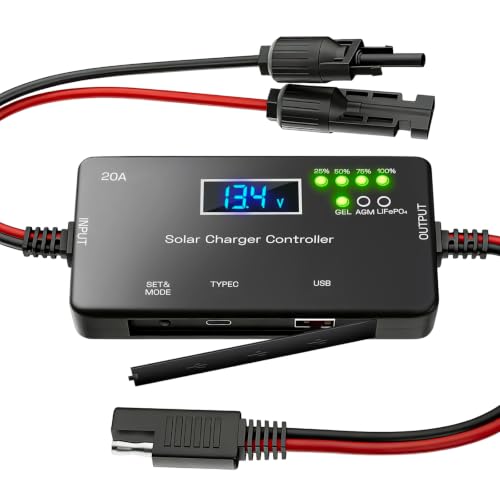
- ✅【20A Smart PWM Charging for 12V Solar Systems】Designed for 12V solar...
- ✅【Compatible with Multiple 12V Battery Types】Supports LiFePO4, AGM...
- ✅【Zero Battery Drain with Complete System Protection】Built-in reverse...
Conclusion
The simple truth is that a solar charge controller and a DC to DC charger are built for different jobs, and swapping them will cost you time and money.
Go check your battery’s voltage requirements right now and compare them to your controller’s specs — that five-minute check could save you from buying the wrong part this weekend.
Frequently Asked Questions about Can a Solar Charge Controller Be Used as a DC to DC Charger?
Can I use my solar charge controller to charge my RV battery from my truck alternator?
No, you should not do this. A solar charge controller expects high voltage input from solar panels, not the steady voltage from an alternator.
Using it this way can overheat the controller and damage your battery. I learned this the hard way and had to replace both components.
What is the difference between a solar controller and a DC to DC charger?
A solar controller takes variable voltage from solar panels and drops it to match your battery. A DC to DC charger takes steady voltage from an alternator and cleans or boosts it.
The internal circuits are built for different jobs. Trying to swap them usually ends with a smoking controller and a dead battery.
What is the best solar charge controller for someone who needs reliable off-grid power?
If you want a controller that handles big solar arrays without issues, I recommend the ELUSH 100A MPPT model. It shows you real-time power data on its LCD screen so you always know what is happening.
I grabbed what I trust for my own off-grid cabin and it has never let me down, even on cloudy days.

- Fit for solar Panel: 1140W(12V);2260W(24V);3420W(36V);4540W(48V);Max input...
- APC series MPPT Charge Controller: 12V/24V/48V Auto identifying system...
- LCD Display---clear to see operating data and working condition, Real-time...
Which solar controller won’t let me down when I am camping in remote places?
For small budget builds like tent campers or sheds, the GRINEER 12V 20A PWM controller is a solid choice. It includes a USB port for charging your phone directly from the controller.
I sent my sister the controller that works perfectly for her weekend trips and she has not had a single power problem since.
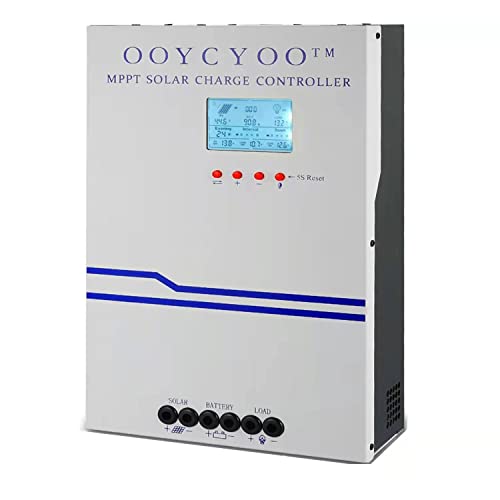
- MPPT 100A 12V 24V Fit for solar Panel: 1300W(12V);2600W(24V);Max input...
- Fit for 12V/24V battery, USER(can be set Lithium, Lifepo...
- Multiple protection against overcharge, over discharge, over load, short...
Can I use a DC to DC charger to charge my battery from solar panels?
No, a DC to DC charger is not designed for solar panels. It needs a steady input voltage, while solar panels produce variable voltage depending on sunlight.
Using solar panels with a DC to DC charger will result in slow charging or no charging at all. Stick with a proper solar controller for solar panels.
Do I need both a solar controller and a DC to DC charger?
Yes, if you want to charge from both solar panels and your vehicle alternator. Many off-grid setups use both to keep batteries full in any condition.
I run both in my camper and it gives me peace of mind. Solar handles sunny days and the alternator charges when I drive between campsites.