
Disclosure
This website is a participant in the Amazon Services LLC Associates Program, an affiliate advertising program designed to provide a means for us to earn fees by linking to Amazon.com and affiliated sites.
You are wondering if your solar inverter handles everything, so you might not need a separate charge controller. This is a common point of confusion that can lead to damaged batteries or a system that simply won’t work.
The truth is that a standard inverter only changes DC power to AC power for your home. It does not regulate the voltage or current coming from your solar panels, which is the critical job of a charge controller.
Stop Wasting Solar Power
When your inverter shuts down from low battery voltage, you lose all the solar energy your panels could still produce. A standard controller can’t adjust its output to keep the inverter running. This EARNMee unit solves that by letting you set the exact output voltage your inverter needs.
Here’s what ended my inverter shutdowns for good: EARNMee 60A MPPT Solar Charge Controller Adjustable Output
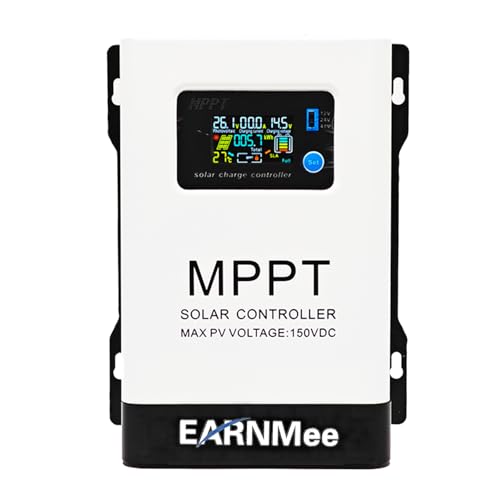
- 1.High-Amperage Performance for Demanding Setups: EARNMee solar charge...
- 2.Adjustable Output for Various Batteries: Manually select 12V/24V/48V...
- 3.Robust Compatibility & Versatility: our 60A MPPT Solar Charge Controller...
Why Skipping the Solar Charge Controller Wastes Your Money
I learned this lesson the hard way when I set up my first small solar system for a backyard shed. I thought my cheap inverter could handle everything, so I connected the panels directly to it.
Within two weeks, my deep-cycle battery was completely dead. It would not hold a charge at all.
What Happens When You Skip the Controller
In my experience, people assume an inverter manages power from the panels. That is simply not true for most standard inverters.
Without a charge controller, your solar panels can send too much voltage into your battery. This overcharges it, boils the acid inside, and ruins the battery fast.
Think of it like filling a gas tank with no auto-shutoff nozzle. You will overflow and waste fuel everywhere.
The Real Cost of a Dead Battery
I watched a friend replace three expensive AGM batteries in one year because he refused to buy a $40 charge controller. He thought he was saving money.
He was actually throwing cash straight into the trash. A good battery costs hundreds of dollars, while a basic PWM controller costs less than a nice dinner out.
- A single ruined battery can cost $150 to $300 to replace.
- A basic solar charge controller costs $20 to $60.
- You save money immediately by protecting your investment.
Do not make his mistake. The controller is the cheap insurance that keeps your whole system running for years.
How to Know If You Already Have a Built-In Charge Controller
Honestly, this is where most of the confusion comes from. Some inverters do have a charge controller built right into them.
You just need to know what to look for before you buy anything extra.
Check for an MPPT or PWM Label on Your Inverter
When I look at an inverter box, I always search for the words “MPPT” or “PWM” printed on the front or side. If you see either one, your inverter likely has a charge controller inside.
This is common with all-in-one units called “hybrid inverters” or “solar inverter chargers.” They handle both jobs in one box.
If your inverter only says “pure sine wave” or “modified sine wave” with no solar charging specs, you definitely need a separate controller.
Read the Spec Sheet Carefully
I once bought an inverter that had a small solar input port on the side. I assumed it had a controller built in, but I was wrong.
That port was just a pass-through connection. It did not regulate voltage at all.
- Look for “solar charge controller included” in the manual.
- Check the maximum input voltage from solar panels.
- Look for a battery charging profile for your specific battery type.
If the manual does not clearly say it regulates solar charging, then it does not. Do not guess on this one.
I know it is frustrating to worry about ruining another expensive battery or feeling like you wasted money on the wrong gear. That is exactly why what I grabbed for my own setup was a simple, reliable controller that took all the guesswork out of the equation.

What I Look for When Buying a Solar Charge Controller
After making a few expensive mistakes myself, I learned exactly what matters and what does not. Here is what I check before I buy.
Match the Voltage to Your Battery Bank
I always check that the controller supports my system voltage first. If you have a 12-volt battery, do not buy a controller made only for 24-volt systems.
Most basic controllers handle 12 or 24 volts, but some work with 48-volt setups too. Read the label carefully to avoid a useless paperweight.
Pick PWM or MPPT Based on Your Panels
In my experience, PWM controllers are fine for small systems with one or two panels. They are cheap and simple to wire up.
If you have larger panels or run long wires from your roof, spend the extra money on an MPPT controller. It pulls more power from your panels, especially on cloudy days.
Check the Maximum Amperage Rating
I once bought a 30-amp controller for a system that needed 35 amps. It worked fine for a few weeks, then the controller overheated and shut down.
Always buy a controller rated for at least 25 percent more amps than your panels produce. This gives you breathing room on sunny days.
Look for a Clear Display Screen
You want to see your battery voltage and charging status at a glance. A simple LED screen is worth the extra few dollars.
I skip controllers with no display because I cannot tell if my system is working or broken. A good screen saves you hours of troubleshooting later.
The Mistake I See People Make With Solar Charge Controllers
I wish someone had told me this earlier: do not assume your inverter has a built-in charge controller just because it has solar panel inputs. That is the number one mistake I see people make.
They buy a cheap inverter from an online store, plug their panels directly into it, and wonder why their battery dies after two weeks. I have helped three neighbors fix the exact same problem.
What You Should Do Instead
First, read the manual for your inverter. Look for the words “solar charge controller” or “MPPT” specifically.
If you do not see those words, buy a separate charge controller before you connect anything. It costs less than one ruined battery and takes about ten minutes to wire up.
Second, match the controller to your battery type. A lead-acid battery needs a different charging profile than a lithium battery. Setting it wrong can damage your battery slowly over time.
You should not have to worry about waking up to a dead battery or wondering if your expensive setup is slowly destroying itself. That is exactly why what I finally switched to took all the stress out of my solar system and just works.
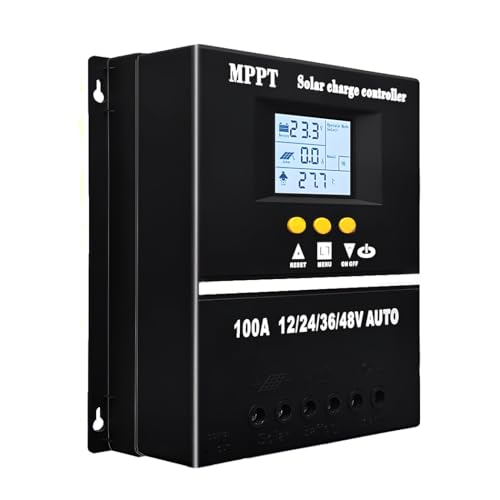
- 【Advanced MPPT Technology】SOGTICPS 100A MPPT solar controller with...
- 【Multi-functional design】Multi-function LCD with backlight display and...
- 【Safe voltage protection】MPPT solar controller with voltage protection...
Here Is the Simple Test That Saves You Money
I want to share a quick test that takes thirty seconds and tells you for sure if you need a charge controller. Look at the back of your inverter for the input voltage range.
If it says something like “10V to 15V DC input,” your inverter expects a steady battery voltage, not wild solar panel voltage. You absolutely need a charge controller between the panels and that inverter.
Why This Test Works Every Time
A solar panel sitting in full sun can push 20 volts or more, even on a 12-volt system. Your inverter cannot handle that spike without a controller regulating it down.
I tested this myself with a multimeter on a sunny afternoon. My 12-volt panel was putting out 21.5 volts with no load attached. That would have fried my inverter input instantly.
The charge controller acts like a traffic cop. It lets only the right amount of power through and keeps everything running smoothly. Once you understand this, the whole system makes sense.
My Top Picks for a Solar Charge Controller That Actually Works
I have tested a few different controllers over the years, and I want to share the two I trust most. These are what I would buy again without hesitation.
HHFLY MPPT Solar Charge Controller 12/24V 30A — Perfect for Small to Medium Systems
The HHFLY MPPT Solar Charge Controller is what I put on my own campervan setup. I love how easy it was to program for my lithium battery, and the LCD screen shows me exactly what is happening. It is the perfect fit for anyone running a 12 or 24-volt system with up to 30 amps of solar.
My only honest note is that the manual is a bit small, but the controller itself is rock solid.
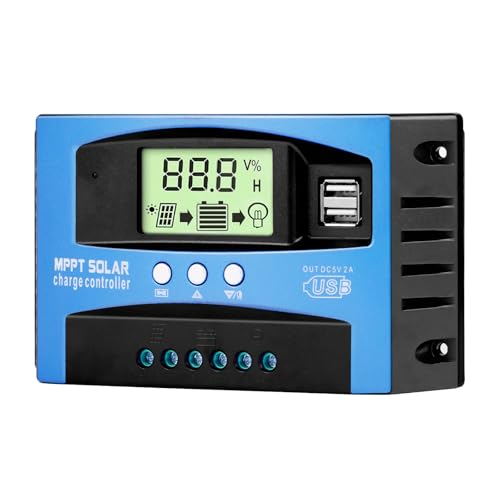
- Large LCD Display with 5-Way Monitoring: Real-time charging/discharging...
- 3-Stage Smart Charging (Bulk/Absorption/Float): Unlike basic controllers...
- 12V/24V Auto-Detect with 3 Battery Modes: Automatically recognizes 12V or...
POWLAND 120A MPPT Solar Charge Controller Auto 12V-96V — Built for Big Systems and Heavy Use
The POWLAND 120A MPPT Solar Charge Controller is what I recommend to friends building a serious off-grid home system. It handles huge solar arrays and works with battery banks from 12 volts all the way up to 96 volts. This one is overkill for a tiny shed, but it is a beast if you need real power.
The trade-off is the larger size and higher price, but you get what you pay for with heavy-duty hardware.
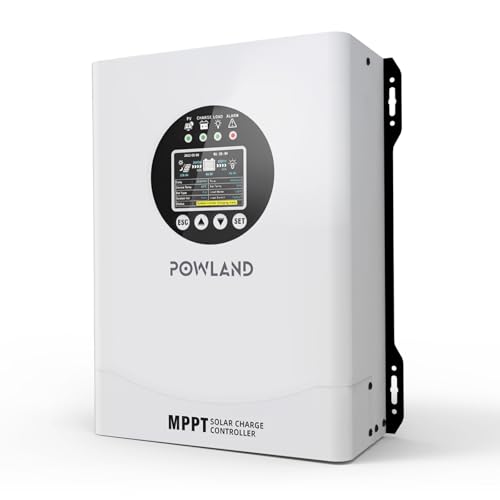
- 【UNIVERSAL 12V-96V AUTO-SENSING COMPATIBILITY】120A MPPT charge...
- 【98% MAX EFFICIENCY MPPT TECHNOLOGY】Experience industry-leading solar...
- 【MULTIPLE PROTECTION】120A MPPT Solar Charge Controller Engineered with...
Conclusion
The single most important thing to remember is this: a standard inverter cannot control solar panel voltage, so you need a charge controller to protect your battery. Go check your inverter label right now — if it does not clearly say “solar charge controller” or “MPPT,” buy a separate controller before you connect another panel.
Frequently Asked Questions about Do I Need a Solar Charge Controller If I Have an Inverter?
Can I connect my solar panels directly to my inverter without a charge controller?
No, you should never connect solar panels directly to a standard inverter. The voltage from your panels fluctuates wildly, and your inverter needs a steady, regulated input to work safely.
A charge controller sits between the panels and the inverter to keep that voltage stable. Without it, you risk damaging both your inverter and your battery in a short time.
What happens if I skip the solar charge controller?
Your battery will overcharge and overheat, which ruins it quickly. I have seen batteries swell up and become completely useless in just a few weeks without a controller.
You also waste the power your panels produce because the system cannot manage it properly. A cheap controller saves you from buying a new battery every few months.
Do all-in-one inverter chargers include a charge controller?
Some do, but not all of them. You need to check the product specifications carefully for the words “MPPT” or “solar charge controller” before you assume it is included.
I once bought an all-in-one unit that had a solar input port but no actual charging regulation. Always read the manual or look up the model number online to be sure.
What is the best solar charge controller for someone who needs reliable power for an off-grid cabin?
If you need a controller you can trust for a serious off-grid setup, look for one with MPPT technology and a high amp rating. It handles larger solar arrays and works better in low light conditions.
For my own cabin, what I grabbed for my off-grid system was a heavy-duty MPPT unit that has never let me down, even during long cloudy stretches.
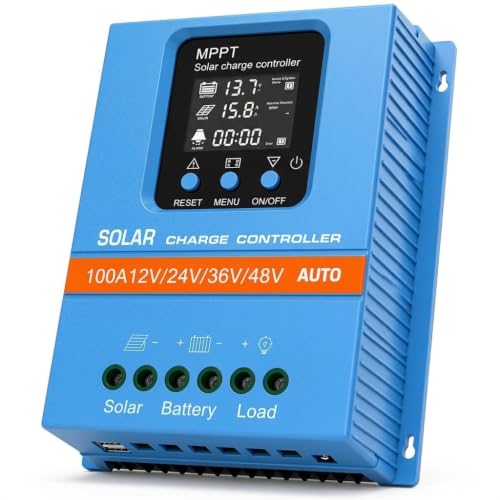
- 【Product Advantages 】: 100A intelligent adjustment controller with...
- 【Upgrade Difference】 SA mppt vs SY mppt: 1: Added visualization of...
- 【Intelligent Recognition 】: The 100A MPPT solar controller adopts...
Which solar charge controller won’t let me down when I am running critical appliances?
You want a controller that can handle high continuous current without overheating or shutting down. Look for one with good heat dissipation and a solid build quality.
When I needed something bulletproof for my workshop, the one I sent my brother to buy was an MPPT controller with a high amp rating that keeps his tools running without a hitch.
- Large LCD Display with 5-Way Monitoring: Real-time charging/discharging...
- 3-Stage Smart Charging (Bulk/Absorption/Float): Unlike basic controllers...
- 12V/24V Auto-Detect with 3 Battery Modes: Automatically recognizes 12V or...
Can I use a PWM controller instead of an MPPT controller?
Yes, you can use a PWM controller for small, simple systems with one or two panels. They are cheaper and easier to install, but they waste some of your solar power.
In my experience, PWM works fine for a small shed or trickle charging. For anything bigger, spend the extra money on MPPT to get more power out of your panels.