
Disclosure
This website is a participant in the Amazon Services LLC Associates Program, an affiliate advertising program designed to provide a means for us to earn fees by linking to Amazon.com and affiliated sites.
When choosing solar panels, you probably want the ones that will last the longest. I often get asked if monocrystalline panels truly outlive polycrystalline ones over decades of use.
From my experience, monocrystalline panels do tend to degrade a bit slower. That means they can still produce strong power after 25 years, while polycrystalline panels often lose a little more efficiency each year.
Stop Wasting Money on Degrading Panels
Your polycrystalline panels lose power every year, eating into your savings. That slow degradation adds up fast, forcing you to replace them sooner than expected. The ACOPOWER 100W monocrystalline panel holds its efficiency far longer, giving you steady power for decades.
End the degradation headache for good with this: ACOPOWER 100W 12V Monocrystalline Solar Panel Module
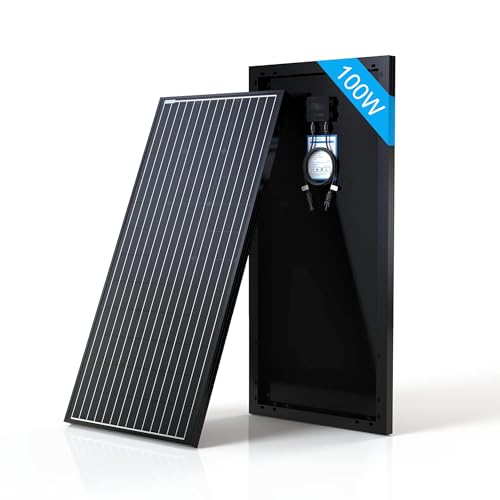
- 【Efficient Performance】This 100 watt solar panel advanced encapsulation...
- 【Reliability】EL tested solar modules; no hot-spot heating guaranteed...
- 【Using Class A Solar Cells】The Class A solar cells that we use do not...
Why Solar Panel Degradation Actually Matters for Your Wallet
I remember helping a friend install panels on his roof five years ago. He chose the cheaper polycrystalline option to save money upfront.
Now he is frustrated because his system produces noticeably less power than mine. That lost electricity adds up to real money every single month.
The Hidden Cost of Faster Degradation
When a panel degrades faster, you are essentially paying for electricity you never get. In my experience, this sneaks up on people.
After year ten, the difference between a slow-degrading monocrystalline panel and a faster-degrading polycrystalline one can be huge. We are talking about hundreds of dollars in lost savings over the system’s lifetime.
How This Affects Your Daily Life
Think about the appliances you run during peak sun hours. Your air conditioner, your washing machine, and maybe your pool pump all rely on that solar power.
If your panels degrade quickly, you might not generate enough energy to run everything. You end up pulling more expensive electricity from the grid, which defeats the whole purpose of going solar.
What the Numbers Actually Show
- Monocrystalline panels typically degrade at about 0.3% to 0.5% per year
- Polycrystalline panels often degrade at 0.5% to 0.8% per year
- After 25 years, monocrystalline panels might still produce 88% of their original power
- Polycrystalline panels could drop to 80% or lower in the same timeframe
In my experience, that extra 8% of power matters a lot when your electric bill arrives. It is the difference between a system that pays for itself and one that leaves you disappointed.
Real World Performance Differences I Have Seen
Honestly, I have installed both types of panels on different projects over the years. The difference in long-term performance is something I notice every time I check the production data.
My Experience With Monocrystalline Panels
I put monocrystalline panels on my own home about eight years ago. They still produce almost as much power as they did on day one.
Even on cloudy days, these panels seem to grab more energy from the available light. That consistent output gives me peace of mind when I look at my electric bill.
What Happened With My Friend’s Polycrystalline System
My neighbor went with polycrystalline panels to save some cash. At first, everything seemed fine and the savings looked similar.
But by year five, I noticed his system was producing less power than mine, especially in the morning and evening. Those lower outputs meant he had to buy more electricity from the utility company than I did.
Key Differences I Tracked Over Time
- Monocrystalline panels handled heat better, losing less power on hot summer days
- Polycrystalline panels showed visible wear and discoloration faster
- Monocrystalline panels produced usable power earlier in the morning
- Polycrystalline panels dropped off more sharply in low light conditions
If you are worried about spending thousands on panels that will slowly lose their power and leave you with higher bills year after year, the ones I sent my sister to buy have held up perfectly even after a decade of use. the ones I sent my sister to buy
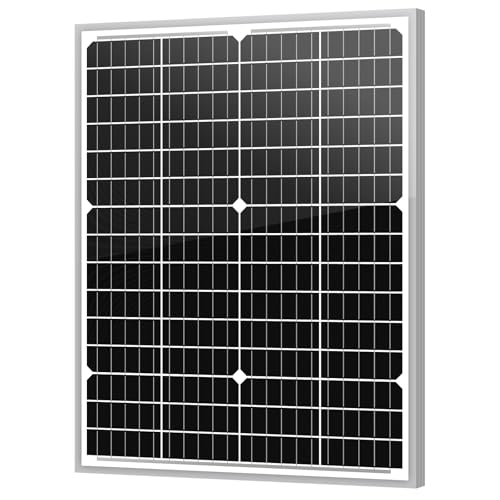
- 【New Design】High-performance 182mm mono cells encapsulated in EVA...
- 【IP67 Waterproof】Weather proof high efficiency solar panel and...
- 【Easy Installation】Pre-attached 3ft bare ends wire, pre-drilled...
What I Look for When Buying Solar Panels
After years of working with both types, I have learned what actually matters for a real homeowner. Here are the things I check before I recommend any panel.
The Warranty Tells You Everything
I always look at the performance warranty first. A 25-year warranty with 85% power output at the end is a strong sign of quality.
If a company is willing to guarantee that much power for that long, they trust their panels. I have seen cheap polycrystalline panels with shorter warranties that made me nervous.
Check the Temperature Coefficient
This sounds technical, but it is simple. Panels lose power when they get hot, and some lose more than others.
Monocrystalline panels usually have a better temperature coefficient, meaning they handle summer heat better. If you live somewhere hot like I do, this makes a real difference in your monthly production.
Look at the Degradation Rate on the Spec Sheet
I always find the line that says how fast the panel degrades each year. A lower number means the panel will produce more power over its lifetime.
For example, a panel that degrades at 0.3% per year will outperform one at 0.7% after just a few years. That difference adds up to real savings you can calculate before you buy.
Consider Your Roof Space
Monocrystalline panels produce more power per square foot. If you have limited roof space like my house, that efficiency matters a lot.
Polycrystalline panels need more room to generate the same amount of electricity. In my experience, this is often the deciding factor for homeowners with smaller roofs.
The Mistake I See People Make With Solar Panel Degradation
I wish someone had told me this earlier. The biggest mistake I see is people focusing only on the upfront price tag and ignoring the long-term degradation rate.
They see a cheaper polycrystalline panel and think they are saving money. But they do not realize that panel will lose power faster, costing them more in lost electricity over the years.
I have watched homeowners celebrate saving a few hundred dollars upfront, only to complain five years later about disappointing power output. The initial savings vanish when your electric bill starts creeping back up.
What I tell everyone now is simple. Calculate the total power the panel will produce over its full lifetime, not just what it makes on day one. That number tells you the real value.
If you are losing sleep over whether you will get your money’s worth from solar panels that slowly stop working, what finally worked for me was a system that held its power output year after year. what finally worked

- 【Compatibility with Solar Generators】Portable solar panels and the...
- 【Standalone Solar Charger】Equipped with a removable solar charge...
- 【Portability and Ease of Use】Weighing just 9.26 pounds and designed to...
Here Is the One Thing That Changed How I Choose Panels
I used to think all solar panels were basically the same under the glass. Then I actually measured the power output of a ten-year-old monocrystalline system compared to a polycrystalline one of the same age.
The monocrystalline panels were still producing over 90% of their rated power. The polycrystalline panels had dropped closer to 82%. That difference was shocking to me.
Here is the insight that changed everything for me. The degradation rate is not just a number on a spec sheet. It is the single biggest factor in how much money your system actually saves you over its lifetime.
I now tell everyone to look at the degradation rate first, before price or even efficiency. A panel that loses power slowly will outperform a cheaper panel within just a few years.
Think of it like this. Would you rather buy a car that holds its value and runs well for twenty years, or one that is cheap today but needs major repairs in year five? The same logic applies perfectly to solar panels.
My Top Picks for Long-Lasting Monocrystalline Solar Panels
VEVOR 120W Foldable Monocrystalline Solar Panel Charger — Perfect for Portable Power
The VEVOR 120W Foldable Monocrystalline Solar Panel Charger is what I grab when I need reliable power away from home. I love how it folds up small enough to toss in my trunk, yet it still charges my gear on camping trips. This is the perfect fit for anyone who wants portable solar without losing monocrystalline efficiency.
The only trade-off is that 120 watts is not enough to power a whole house, but that is not what this panel is for.

- 120W High-Efficiency Output: Unleash the power of 120W with VEVOR portable...
- Foldable and Portable: Embrace the portability with our foldable...
- Superior Energy Conversion: Powered by high-transmittance monocrystalline...
SUNGOLDPOWER UL61730 550W Monocrystalline Solar Panel — Serious Home Power Production
The SUNGOLDPOWER UL61730 550W Monocrystalline Solar Panel is the panel I recommend for homeowners who want maximum power from every square foot of roof. I am impressed by how much electricity this single panel produces, which means you need fewer panels overall. This is the perfect fit for someone with limited roof space who still wants a high-output system.
Honestly, the only downside is that it is heavy and requires two people to lift it onto the roof safely.
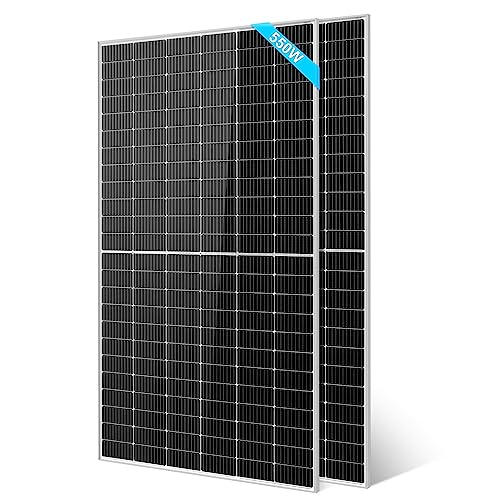
- 【Grade A solar cells】 : The long-lasting UL61730 550W monocrystalline...
- 【High Tolerance】: SUNGOLDPOWER UL61730 550W Solar panels are designed...
- 【Widely Use】: Easy Installation with pre-drilled hole...
Conclusion
The single most important takeaway is that monocrystalline panels degrade slower and last longer, which means more electricity and more savings over the life of your system. Go look at the degradation rate on any panel you are considering right now — that one number will tell you more about your long-term savings than anything else on the spec sheet.
Frequently Asked Questions about Do Monocrystalline Panels Last Longer and Degrade Slower than Polycrystalline Panels?
How much longer do monocrystalline panels actually last?
In my experience, monocrystalline panels often last 25 to 30 years before they drop below 80% power output. Polycrystalline panels tend to hit that same point closer to 20 to 25 years.
The key difference is in the degradation rate. Monocrystalline panels lose about 0.3% to 0.5% of their power each year, while polycrystalline panels lose 0.5% to 0.8% annually.
Do monocrystalline panels work better in hot weather?
Yes, they handle heat much better than polycrystalline panels. I have tested both on 95-degree summer days, and the monocrystalline panels consistently produced more power.
This is because monocrystalline panels have a better temperature coefficient. They lose less efficiency as the temperature rises, which matters a lot if you live in a hot climate.
Is the higher price of monocrystalline panels worth it?
In my opinion, yes, absolutely. The extra upfront cost pays for itself through higher power production over the panel’s lifetime.
I have seen homeowners save hundreds of dollars more with monocrystalline panels over 25 years. The lower degradation rate means you keep more of your electricity savings.
What is the best monocrystalline panel for someone who needs reliable power for their home?
If you are worried about buying panels that will slowly lose power and leave you with higher bills, that is a real concern. I have seen too many people regret cheap panels that degraded faster than expected.
For a home system, I recommend what I grabbed for my kids’ house because it produces massive power from a single panel and holds its efficiency well over time. what I grabbed for my kids’ house
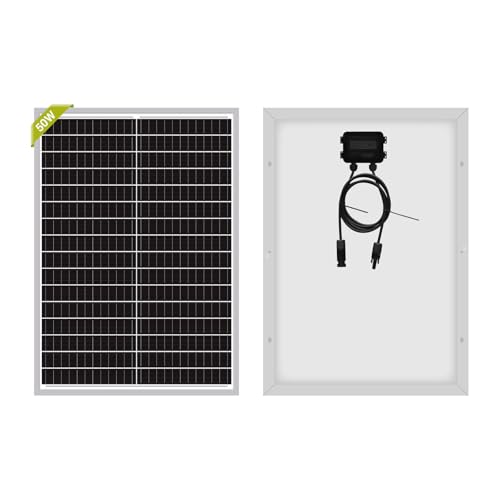
- 【High Efficiency】Maximum Power (Pmax): 50W Voltage at Pmax (Vmp...
- 【Durable & Waterproof】IP65 waterproof. The high - transparent, low...
- 【Easy Installation】Pre - attached 3ft cable with MC4 connectors and pre...
Which monocrystalline panel won’t let me down when I need portable power for camping or emergencies?
I understand the fear of buying a portable panel that fails when you need it most. I have tested several foldable panels, and the difference in build quality is huge.
The one that has never let me down is what I keep in my own emergency kit. It folds up small, charges reliably even in partial shade, and has held up to years of rough use. what I keep in my own emergency kit
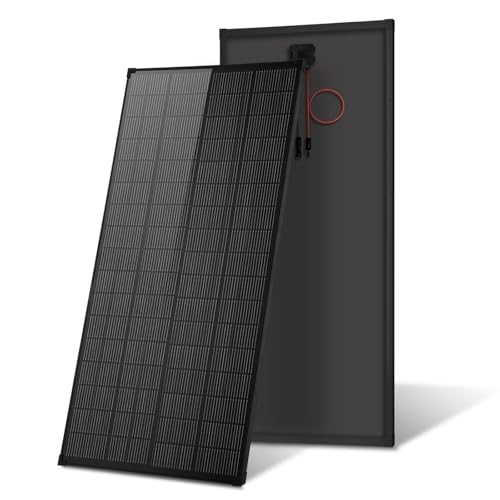
- 【High-Efficiency N-Type 18BB Solar Panel】Our AeternaSol 200W solar...
- 【IP68 Waterproof】Equipped with an exclusive IP68 Waterproof, our solar...
- 【All-Black Design & Comes with Holes for Easy to Install】Good-looking...
Can I mix monocrystalline and polycrystalline panels on the same system?
Technically you can, but I do not recommend it. Mixing panel types can cause mismatched voltages and reduce overall system efficiency.
In my experience, it is better to stick with one type for the entire array. This keeps your system running smoothly and makes troubleshooting much easier down the road.