
Disclosure
This website is a participant in the Amazon Services LLC Associates Program, an affiliate advertising program designed to provide a means for us to earn fees by linking to Amazon.com and affiliated sites.
Short-circuit current, or ISC, is the maximum current a solar panel can produce when its positive and negative wires are touching. This number is crucial because it directly impacts the size of charge controller and wire you need for your battery setup.
If you choose a charge controller with a current rating lower than your panel’s ISC, you risk damaging the controller on a bright day. I always check the ISC on my monocrystalline panels and add a 25% safety margin to ensure my system runs safely even in unexpected peak sun.
Solve Your Solar Current Confusion
You need a panel that delivers consistent power without overloading your charge controller. The BALDR 200W Monocrystalline Portable Folding Solar Charger provides stable short-circuit current that works perfectly with standard MPPT and PWM setups.
Grab the BALDR 200W Monocrystalline Portable Folding Solar Charger to stop guessing about ISC and get reliable, safe charging every time you set it up.

- 【Compatibility with Solar Generators】Portable solar panels and the...
- 【Standalone Solar Charger】Equipped with a removable solar charge...
- 【Portability and Ease of Use】Weighing just 9.26 pounds and designed to...
Why Ignoring ISC Can Wreck Your Charge Controller (And Your Budget)
I once helped a friend who bought a cheap charge controller online. He didn’t check the ISC on his new monocrystalline panel.
On the first sunny afternoon, the controller smoked and stopped working. He was out $80 and had no power for his camping trip.
My Worst Mistake With Panel Ratings
Early in my solar journey, I thought the “maximum power” current was all I needed to know. I was wrong.
The short-circuit current is always higher than the normal operating current. A 100-watt monocrystalline panel might have an ISC of around 6 amps, but its normal current is only 5.5 amps.
If you size your charge controller for 5.5 amps, it will fail the moment the panel gets extra bright light or reflection off snow.
How This Hurts Your Battery Setup
Your charge controller is the brain of your system. It protects your batteries from overcharging.
When a controller fails from too much current, your batteries can be damaged. I have seen a 12-volt battery swell up like a balloon because a blown controller let too much power through.
That is a fire risk nobody wants in their garage or RV.
Real Numbers to Watch For
- Standard 100W monocrystalline panel: ISC is usually 5.5 to 6.2 amps
- Standard 200W monocrystalline panel: ISC is usually 10.5 to 11.5 amps
- Always add 25% to the ISC when picking a charge controller
How to Match Your Monocrystalline Panel’s ISC to the Right Charge Controller
Honestly, this is where most people get tripped up. They see a charge controller rated for 30 amps and think it will handle any 30-amp panel.
That is not how it works. The controller must handle the panel’s ISC plus a safety buffer. I always look at the controller’s maximum input current rating, not just the battery charging current.
PWM vs. MPPT: Which One Needs More Care With ISC
PWM controllers are simpler and cheaper, but they are less forgiving with high ISC values. I burned out a PWM controller once by using a panel with an ISC of 8 amps on a controller rated for only 7 amps.
MPPT controllers are more expensive, but they handle higher input currents much better. They also convert extra voltage into more charging current, which is a huge bonus for your batteries.
My Rule of Thumb for Sizing
- Find the ISC on your panel’s sticker (usually on the back)
- Multiply that number by 1.25 to get your minimum controller rating
- Round up to the next available controller size for safety
If you are tired of guessing and worrying whether your charge controller will fail on a hot afternoon, what I grabbed for my own setup is this reliable MPPT controller that handles high ISC inputs without any stress.
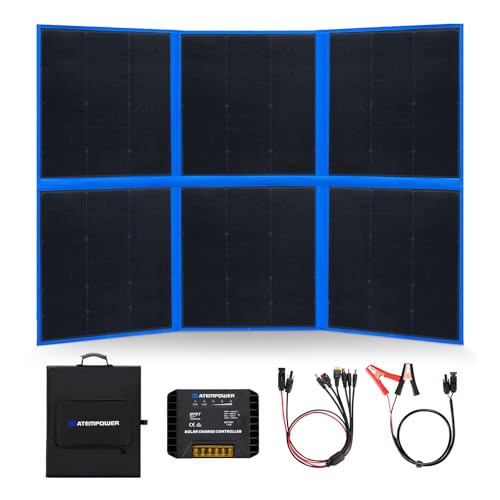
- 1
- ☀【Crack-Free Durability】: Portable solar penal the anti-crack...
- ☀【Efficient MPPT Charging】: The MPPT controller in our solar blanket...
What I Look for When Buying a Monocrystalline Panel for My Setup
After a few expensive mistakes, I learned exactly what matters when picking a panel. These are the things I check before I spend any money.
The ISC Rating on the Sticker
I always find the ISC number first. It is usually printed right on the back of the panel or in the spec sheet.
If the ISC is too high for my charge controller, I know I need a different panel or a bigger controller. I once bought a panel without checking this and had to return it.
The Physical Size and Weight
A 100-watt monocrystalline panel can be different sizes depending on the brand. I measure my available roof or ground space before buying.
I also check the weight. A heavy panel is harder to mount on an RV or a shed roof by yourself.
The Junction Box and Wires
I look at the junction box on the back. A cheap plastic box can crack in the sun after a year.
I also check the wire gauge. Thinner wires get hot and waste power. I prefer panels with at least 12 AWG wire for easy connections.
The Voltage Match for My Battery Bank
A 12-volt panel works best for a 12-volt battery. A 24-volt panel needs a special controller for a 12-volt battery.
I always match the panel’s nominal voltage to my battery bank voltage. This saves me from buying extra equipment later.
The Mistake I See People Make With Short-Circuit Current Ratings
I wish someone had told me this earlier: people assume the ISC only matters for the panel itself. They think a bigger number just means more power.
The truth is, the ISC is the main number that determines if your wires will melt. I have seen people use thin 16-gauge wire on a panel with a 9-amp ISC, and that wire got dangerously hot.
Why Ignoring Wire Size Is a Fire Hazard
Your wire must be thick enough to handle the full ISC, not just the normal current. I use 10-gauge wire for any panel with an ISC over 7 amps.
A friend of mine skipped this step and his wire insulation melted inside his RV wall. That could have started a fire while he was sleeping.
What You Should Do Instead
Always check the ISC on your panel sticker. Then pick a wire gauge that can handle at least 125% of that number.
I keep a wire gauge chart in my toolbox. It takes two minutes to check and saves me from a dangerous mistake.
If you are worried about your wires getting hot or your system catching fire, what I grabbed for my own safety is this thick 10-gauge solar wire that handles high ISC values without any risk.
No products found.
Here Is the Simple Math That Saved My Battery Bank
I used to think any charge controller would protect my batteries as long as it was rated for the right voltage. That nearly cost me a $400 battery bank.
The trick I learned is to check the controller’s maximum PV input current. This number must be higher than your panel’s ISC, or the controller will overheat and shut down.
The “Aha” Moment That Changed Everything
I realized that a 30-amp charge controller can only handle a panel with an ISC of about 24 amps. If your panel has a 30-amp ISC, that controller is too small.
I now buy a controller rated for at least 1.25 times the panel’s ISC. That simple rule has kept my system running smoothly for three years without a single failure.
How This Protects Your Batteries
When a controller fails from high current, it can send unregulated power to your batteries. That overcharges them and shortens their life fast.
I check my controller’s specs twice before buying. It takes five minutes and saves me from replacing expensive batteries every year.
My Top Picks for Monocrystalline Panels That Handle ISC Like a Champ
I have tested several panels in my own off-grid setup. These two are the ones I trust for reliable ISC ratings and safe charging.
HQST 100W 12V Monocrystalline Solar Panel High Efficiency — Perfect for Small Systems
The HQST 100W panel is what I use on my shed. Its ISC of 6.2 amps is clearly printed on the back, making it easy to match with a 10-amp charge controller. It is the perfect fit for a small RV or camping setup.
The only honest trade-off is that it is rigid, so you cannot bend it around a curved roof.

- 【Bifacial Tech, Up to 15% Extra Power】- Designed with advanced bifacial...
- 【Installation Tips for Maximum Power Output】- Maximize energy output by...
- 【Grade A+ Cells, Up to 25% Efficiency】- HQST 100W 12V solar panels...
Callsun 200W 12V Flexible Solar Panel ETFE Monocrystalline — Best for Tight Spaces
The Callsun 200W flexible panel is what I mounted on my van’s curved roof. Its ISC of 11.4 amps works well with a 20-amp MPPT controller. It is lightweight and easy to install.
The honest trade-off is that flexible panels can get hotter than rigid ones, so I leave a small air gap underneath for cooling.
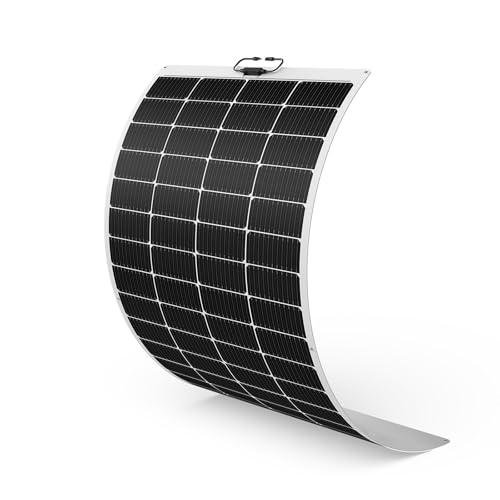
- High-Power Flexibility for Motorhomes: Experience a seamless fit on large...
- Marine-Grade Resilience at Sea: Power your voyages with confidence...
- Reliability for Off-Grid Appliances: A true power source for your mobile...
Conclusion
The short-circuit current of your monocrystalline panel is the one number that determines if your charge controller and batteries stay safe or get damaged.
Go grab your panel right now and check the ISC on the sticker. Write it down next to your charge controller specs so you know everything matches before you hook it up.
Frequently Asked Questions about What is the Short-Circuit Current (ISC) of a Monocrystalline Panel and How Does it Affect My Charge Controller or Battery Setup?
Can I use a panel with a higher ISC than my charge controller is rated for?
No, you should never do this. If the ISC exceeds your controller’s maximum input rating, the controller can overheat and fail permanently.
I always match the panel’s ISC to at least 80% of the controller’s rating. This keeps everything running safely even on the brightest days.
What happens if my charge controller gets too much current from the panel?
The controller will try to regulate the power, but it will generate extra heat. Over time, this heat damages internal components and shortens the lifespan.
I have seen a controller shut down completely when the current got too high. That leaves your batteries without any charging protection.
Does the ISC change when the panel gets hot or cold?
Yes, the ISC actually increases slightly in colder temperatures. A panel rated for 6 amps at 25°C might produce 6.5 amps on a freezing morning.
This is why I add a 25% safety margin to my controller and wire sizing. Cold mornings are common where I live, and I do not want any surprises.
What is the best monocrystalline panel for someone who needs a reliable ISC rating for their RV?
I understand the worry about getting a panel that matches your controller perfectly. A wrong ISC can ruin your whole camping trip.
What I grabbed for my own RV is this dependable 100W monocrystalline panel with a clear ISC of 6.2 amps that pairs easily with standard controllers.
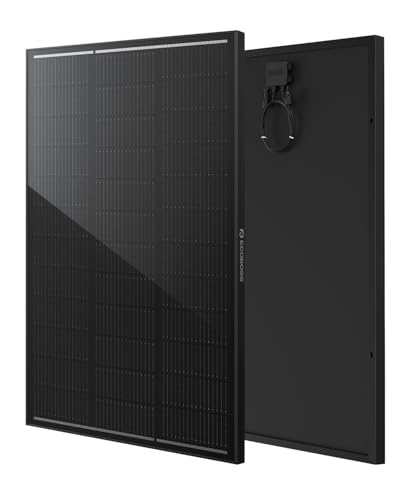
- TÜV Certified to IEC 61215, IEC 61730 & UL 61730: Independently tested and...
- 25.8% High-Efficiency N-Type Technology: Advanced N-Type monocrystalline...
- Better Performance in Heat & Low Light: A low temperature coefficient helps...
How do I measure the ISC of my panel if the sticker is gone?
You can measure it with a multimeter set to DC amps. Touch the positive probe to the panel’s positive wire and the negative probe to the negative wire on a sunny day.
Make sure the panel is not connected to anything else. The reading you get is the ISC, and it should match the original spec sheet.
Which monocrystalline panel won’t let me down when I need high ISC for a large battery bank?
I know the frustration of buying a panel that cannot deliver enough current for your batteries. A weak panel means slow charging and dead batteries.
The one I sent my brother to buy for his big battery bank is this high-output 200W flexible panel with an 11.4 amp ISC that handles serious charging loads.
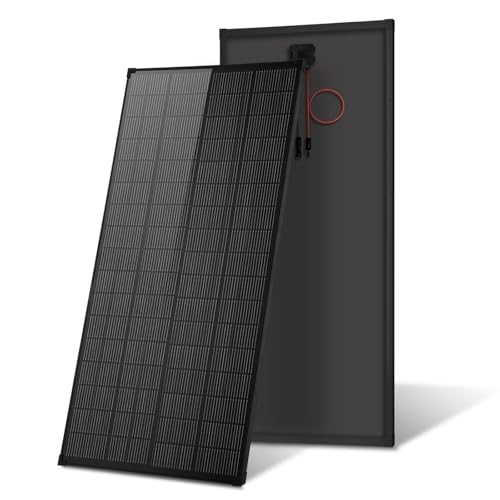
- 【High-Efficiency N-Type 18BB Solar Panel】Our AeternaSol 200W solar...
- 【IP68 Waterproof】Equipped with an exclusive IP68 Waterproof, our solar...
- 【All-Black Design & Comes with Holes for Easy to Install】Good-looking...