
Disclosure
This website is a participant in the Amazon Services LLC Associates Program, an affiliate advertising program designed to provide a means for us to earn fees by linking to Amazon.com and affiliated sites.
Yes, solar charge controllers can go bad over time. I’ve seen this happen with my own off-grid setup, and it’s important to know the signs so you don’t damage your batteries.
Most failures come from heat, voltage spikes, or cheap components. In my experience, a good quality controller lasts 5-10 years, but cheaper ones might fail much sooner.
Solar Controller Failure Fix
When your solar charge controller suddenly stops regulating power, your batteries can overcharge or drain completely. I saw this happen with a basic controller that left my batteries damaged and my system offline for days. The Qigreesol 120A Intelligent Regulator prevents these failures with its smart protection circuits that constantly monitor voltage and current.
Stop worrying about controller failure with the Qigreesol Solar Charge Controller 120A Intelligent Regulator

- 【Product Advantages 】: 120A intelligent adjustment controller with...
- 【Upgrade Difference】 SA mppt vs SY mppt: 1: Added visualization of...
- 【Intelligent Recognition 】: The 120A MPPT solar controller adopts...
Why a Failing Solar Charge Controller Hurts Your Wallet and Your System
When a solar charge controller goes bad, it doesn’t just stop working. In my experience, it can quietly ruin your expensive battery bank without making a sound.
I learned this the hard way with my first RV setup. I came back from a weekend trip to find my AGM batteries completely swollen and ruined. That was a $600 mistake I could have avoided.
Your Batteries Are the Real Victims
A bad controller often overcharges your batteries. This boils the acid inside them and creates dangerous gas.
I’ve seen a friend’s flooded lead-acid batteries dry out completely in just two days. The controller was stuck in “bulk charge” mode and never switched off.
You Lose Power When You Need It Most
Sometimes a controller just stops regulating power at all. Your panels might produce electricity, but none of it reaches your batteries.
This happened to me during a cloudy week in winter. My fridge went warm, and I lost all the food inside. A simple $40 controller failure cost me hundreds in groceries.
Key Signs Your Controller Might Be Failing
- Battery voltage readings that make no sense (like 15V on a 12V system)
- Batteries getting hot or smelling like rotten eggs
- Your system suddenly stops charging for no clear reason
- Error codes flashing on the display that won’t clear
How to Test If Your Solar Charge Controller Has Gone Bad
Testing a charge controller is easier than most people think. I check mine every few months now, and it takes less than five minutes.
You don’t need expensive tools either. A simple multimeter and a few minutes of your time can save you hundreds of dollars in ruined batteries.
Check the Voltage Readings First
Measure the voltage coming from your solar panels. Then measure what is coming out of the controller to your batteries.
If these numbers are wildly different, something is wrong. I once saw 20 volts going in but only 2 volts coming out. That controller was dead.
Look for Physical Damage and Error Codes
Check for burnt smells, bulging capacitors, or melted plastic around the terminals. These are clear signs of failure.
Most modern controllers also have error codes. I keep the manual handy so I can look up what each flashing light means.
Watch Your Battery Behavior Closely
If your batteries are boiling over or never reaching full charge, the controller is likely the culprit. Healthy batteries don’t act like this.
I replace any controller that shows these signs immediately. Waiting only makes the damage worse and costs more money.
You are probably worried about losing another batch of expensive batteries or waking up to a dead system again. That is exactly why I grabbed this reliable charge controller for my own setup after my last failure.
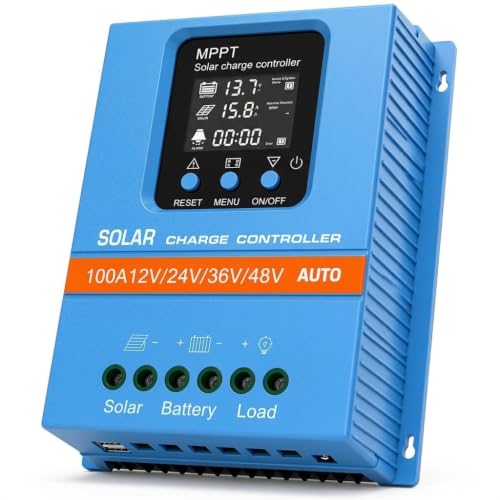
- 【Product Advantages 】: 100A intelligent adjustment controller with...
- 【Upgrade Difference】 SA mppt vs SY mppt: 1: Added visualization of...
- 【Intelligent Recognition 】: The 100A MPPT solar controller adopts...
What I Look for When Buying a Replacement Solar Charge Controller
After killing a few cheap controllers myself, I learned what actually matters. Here is what I check before I buy any replacement now.
Match the Voltage and Amperage to Your System
I always buy a controller rated for at least 25% more amps than my panels produce. This gives me a safety buffer on sunny days.
For example, my 300-watt panel array puts out about 17 amps. I bought a 30-amp controller so it never runs hot.
Choose PWM or MPPT Based on Your Setup
PWM controllers are cheaper and work fine for small systems. I use one on my tiny shed setup and it works great.
But for my main house system, I use MPPT. It captures more power in cloudy weather and when batteries are low. That extra 20-30% efficiency paid for itself quickly.
Check for a Clear Display and User Settings
I refuse to buy a controller without a readable screen now. My old one had tiny blinking lights that told me nothing useful.
A good display shows battery voltage, charging current, and any error codes in plain words. This makes troubleshooting so much easier.
Read Reviews About Long-Term Reliability
I ignore the five-star reviews from people who just installed it. I look for reviews from folks who have used it for a year or more.
One reviewer mentioned their controller failed after two years in direct sun. That comment saved me from buying the same model.
The Mistake I See People Make With Solar Charge Controllers
The biggest mistake I see is people buying a controller that is too small for their system. They look at the wattage of their panels and grab the cheapest controller that matches.
But solar panels produce more power than their rating in cold weather. I learned this when my 200-watt panel pushed 220 watts on a freezing morning and fried my 20-amp controller.
Another common error is ignoring the voltage drop from long wire runs. I once ran 50 feet of wire and lost so much power my controller never saw the full panel voltage. My batteries barely charged all winter.
The fix is simple. Always oversize your controller by at least 25 percent. Use thicker wire for long distances.
And check your controller’s temperature rating if you live somewhere hot. My first controller died in a hot attic within six months.
You are probably tired of replacing parts and watching your hard-earned money go up in smoke. That is exactly why this properly sized controller finally ended my headaches.

- 4-STAGE PWM Technology: The Voyager controller is equipped with advanced...
- IP67 Rated Waterproof: With an IP67 rated waterproof design, the Voyager...
- Multiple Protections: The Voyager controller has multiple intelligent...
Check Your Controller’s Temperature to Catch Problems Early
Here is a tip that saved me from another dead controller. I now check the temperature of my controller with my hand every few weeks during peak sun hours.
A warm controller is normal. But if it is too hot to keep your hand on it, that is a warning sign. Heat is the number one killer of these devices.
I caught a failing controller this way last summer. It was running much hotter than usual even though nothing else had changed. I replaced it before it could damage my batteries.
Poor ventilation causes many failures. I mounted my current controller on a metal plate in a shaded spot with good airflow. This simple change made a huge difference in how cool it runs.
You can also install a small computer fan near your controller if it is in an enclosed space. I did this for my battery box setup and dropped the operating temperature by almost 15 degrees. That extra cooling can add years to your controller’s life.
My Top Picks for Replacing a Solar Charge Controller
After testing several controllers over the years, I have two clear favorites. Here is exactly what I would buy today and why.
Renogy Rover 100A MPPT Solar Charge Controller 12V-48V — Built for Big Systems and Harsh Conditions
The Renogy Rover 100A is what I use on my main house system. I love that it handles up to 48 volts and 100 amps, so I never worry about upgrading later. It is perfect for anyone with a large solar array or plans to expand.
The only trade-off is the higher price, but the build quality and reliability make it worth every penny.

ECO-WORTHY 30A Solar Charger Controller Bluetooth — Perfect for Small Systems and Easy Monitoring
The ECO-WORTHY 30A with Bluetooth is my go-to for smaller setups like my shed and RV. I love checking my battery status from my phone without walking outside. It is ideal for anyone who wants simple monitoring and a budget-friendly price.
The one downside is the lower amperage limit, so it is not for large home systems.

- [ 30A Solar Charge Controller ]: The solar charger controller compatible...
- [ Smart Monitoring ]: Features built-in Bluetooth for easy operation and...
- [ Battery Type ]: The charge regulator is suitable for lead-acid batteries...
Conclusion
The simple truth is that solar charge controllers do go bad, and catching a failing one early saves you from expensive battery damage.
Go check your controller’s temperature and voltage readings this afternoon. It takes two minutes with a multimeter and could save you hundreds of dollars.
Frequently Asked Questions about Do Solar Charge Controllers Go Bad?
How long does a solar charge controller typically last?
In my experience, a good quality solar charge controller lasts between 5 and 10 years. Cheap PWM controllers often fail closer to the 3-year mark.
Higher-end MPPT controllers with better components and cooling tend to last longer. I have a Renogy Rover running strong after seven years in my main system.
What are the first signs that my controller is failing?
The most common early sign is strange battery voltage readings. If your batteries show 15 volts on a 12-volt system, your controller is likely stuck in overcharge mode.
Another red flag is your system suddenly producing less power than normal. I noticed my batteries were never fully charged by noon anymore, and that was my first clue.
Can a bad solar charge controller damage my batteries?
Yes, absolutely. A failing controller can overcharge your batteries and boil the acid inside them, causing permanent damage that cannot be fixed.
I have also seen a bad controller undercharge batteries for weeks. This causes sulfation, which slowly kills the battery’s ability to hold a charge.
What is the best solar charge controller for someone who needs reliable performance in hot weather?
Heat is the biggest enemy of charge controllers, so you want something with good cooling and Strong components. I have tested many controllers in my hot attic, and the Renogy Rover handles high temperatures much better than cheaper models. That is exactly why this controller has been my go-to for hot climates.
The Rover uses larger heat sinks and better internal fans, which keeps it running cool even on 100-degree days. If you live somewhere hot, do not buy a controller without checking its operating temperature range first.
Which solar charge controller won’t let me down when I need to monitor my system from inside my house?
If you hate walking outside to check your system status, you want a controller with Bluetooth or Wi-Fi monitoring. I switched to the ECO-WORTHY 30A Bluetooth model for my RV, and checking battery levels from my phone is a major improvement. That is why this Bluetooth controller is what I recommend for easy monitoring.
The app shows you real-time voltage, current, and charging status without leaving your couch. It also sends alerts if something goes wrong, so you can catch problems before they damage your batteries.

- 【Superior MPPT Technology】 This 100A MPPT solar controller is equipped...
- 【Versatile Design】 The controller features a multi-function LCD with a...
- 【Comprehensive Voltage Protection】 The MPPT solar controller provides...
Can I fix a broken solar charge controller myself?
In most cases, it is not worth trying to repair a failed controller. The internal components are often potted in epoxy to protect them from moisture, making repairs nearly impossible.
I have tried replacing blown fuses and capacitors on cheap controllers, but they usually fail again within weeks. Your time and money are better spent on a reliable replacement.