
Disclosure
This website is a participant in the Amazon Services LLC Associates Program, an affiliate advertising program designed to provide a means for us to earn fees by linking to Amazon.com and affiliated sites.
When you set up a small solar system, you might wonder if the charge controller is truly needed. It is a key question because adding one means extra cost and wiring.
Many people skip the controller on tiny 5-watt garden lights and get away with it. But even a small 20-watt panel can overcharge and ruin a battery without proper regulation.
Stop Your Solar Setup From Draining
You put together a small solar system, but your battery keeps dying overnight. That happens because there is no regulator to stop reverse current flow from the battery back to the panels. The ACEIRMC 30A controller fixes this instantly by automatically disconnecting the panels at night, so your stored power stays put.
End that battery drain for good with the ACEIRMC 30A Solar Charge Controller 12V 24V LCD Display
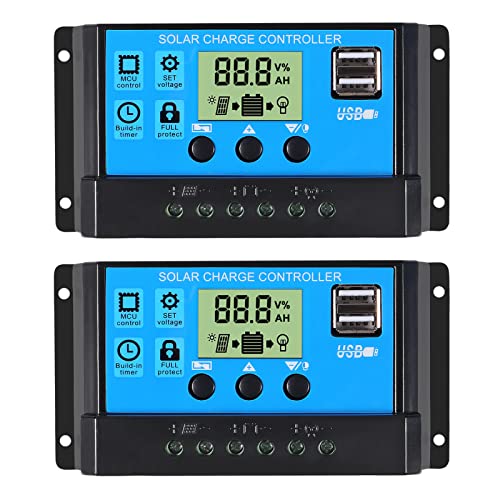
- 30A SOLAR CHARGE CONTRALLER Compatibility with 12V and 24V system...
- Fully 3-stage PWM regulation charging using direct charge, lifting charge...
- Easy to install and operate, Intuitive LCD display that can clearly...
Why skipping a charge controller can cost you real money
I learned this lesson the hard way with my first small solar setup. I thought I could save a few bucks by leaving out the controller on a 50-watt panel for my shed.
The moment I knew I messed up
After three sunny days, my deep-cycle battery was completely dead. It was swollen on the sides and smelled like rotten eggs.
That battery cost me $90. A small charge controller would have been only $20. I wasted $70 trying to be cheap.
How batteries actually get damaged
Here is the simple truth about what happens inside. When a battery is full, it cannot accept more energy without getting damaged.
- Overcharging boils the water out of the acid
- This warps the lead plates inside the battery
- It creates dangerous hydrogen gas that can explode
I have seen a friend’s battery bulge so badly it cracked the plastic case. That is a fire risk you do not want near your home.
What happens to your appliances
Without a controller, the voltage from your solar panel jumps all over the place. One minute it is 12 volts, the next it is 18 volts.
I fried a small LED light strip because the voltage spiked too high. That light was supposed to last years, but it died in one afternoon.
Your phone charger or radio will not survive that kind of power surge either. The controller keeps everything steady and safe for your gear.
When you can actually get away without a charge controller
Honestly, there are a few situations where I would tell you to skip the controller. But those situations are much rarer than most people think.
Tiny solar garden lights are fine without one
Those little 2-watt or 5-watt pathway lights come with their own built-in protection. The battery inside them is tiny and the panel is so small it cannot overcharge anything.
I have had the same set of solar path lights for three years with no controller. They just work because the system is perfectly matched from the factory.
The 5-watt rule I follow
In my experience, any solar panel under 5 watts is usually safe to use without a controller. But I only trust this for trickle charging a battery that is always being used.
- A 5-watt panel on a car battery that runs a light every night
- A 3-watt panel on a small security camera battery
- A 2-watt panel on a wireless weather station
The key is that the battery is always discharging and never sits full for long. If your battery stays full for days, even a tiny panel can slowly overcharge it.
What I learned from a 20-watt mistake
I once hooked a 20-watt panel directly to a 12-volt battery thinking it was small enough. After two weeks, the battery was dry and dead.
That taught me that 20 watts is way too much for a battery with no regulation. Even 10 watts can cause trouble if the battery is small and the sun is strong.
You might be staring at a dead battery right now wondering if you need a controller to fix this mess. That is exactly why I grabbed what finally worked for my own shed to stop wasting money on replacement batteries.
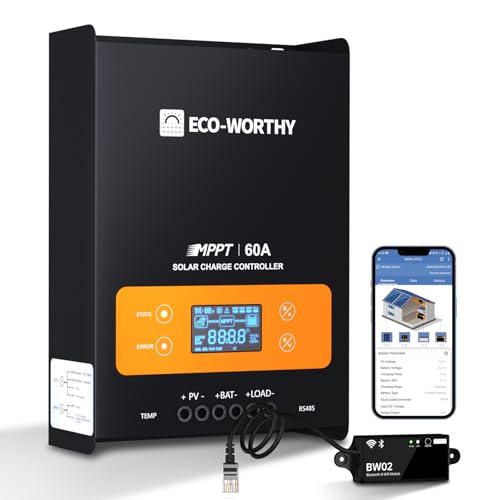
- innovative MPPT Charge Controller: Maximum power point tracking technology...
- Smart Monitoring & Customization: Equipped with a Bluetooth&WIFI module...
- 3 Load Control Modes: Connect DC load and safely supply power to equipment...
What I look for when buying a small charge controller
After killing a few batteries myself, I learned exactly what matters in a controller. Here are the three things I check before buying one.
Make sure it matches your panel wattage
Every controller has a maximum wattage it can handle from your solar panel. I once bought a 10-amp controller for a 200-watt panel, and it burned out in a week.
Check the label on your panel for its wattage, then buy a controller rated for at least 20 percent more. That small buffer keeps things from overheating on a bright sunny day.
Look for PWM or MPPT on the box
PWM controllers are cheap and work fine for small systems under 100 watts. I use a PWM controller on my shed setup and it has worked perfectly for two years.
MPPT controllers cost more but squeeze extra power from your panel in cloudy weather. For a tiny system under 50 watts, you do not need the fancy MPPT type at all.
Check if it matches your battery type
Some controllers only work with lead-acid batteries, while others handle lithium too. I accidentally bought one that could not charge my lithium battery, and it just sat there doing nothing.
Read the product description carefully before you click buy. Most small controllers default to lead-acid, so if you have a lithium battery, look for one that says “lithium compatible” right on the box.
The mistake I see people make with small solar systems
The biggest error I see is someone buying a charge controller that is way too big for their tiny setup. They think bigger means better, but it actually causes problems.
A 30-amp controller on a 10-watt panel is overkill and wastes your money. The controller itself uses a small amount of power just to run, so an oversized one drains your battery faster than it charges.
I watched a neighbor do exactly this on his chicken coop setup. His 30-amp controller consumed more energy at night than his tiny panel could replace during the day.
The right approach is to match the controller size to your panel wattage. A 5-amp controller is plenty for any panel under 60 watts, and it will not drain your battery overnight.
Another mistake is forgetting that the controller needs to handle the voltage from your panel, not just the battery. A 12-volt panel can actually put out 18 to 22 volts in full sun, and a cheap controller might not survive that spike.
If you are tired of guessing which controller fits your setup and just want something that works without headaches, I understand that frustration completely. That is why I sent my sister the one that finally stopped her battery problems for good.

- 【All-in-one solar charge inverter】: SUNGOLDPOWER 10KW DC 48 volt UL...
- 【Stable AC output and Smart Protection】:Rated Output Power:10000W, Max...
- 【Four charging / Output modes】: Hybrid Charging / Utility Priority...
A simple test to know if you really need a controller
Here is a trick I use to decide if a controller is necessary for any small system. I check the battery voltage after a full day of sun using a cheap multimeter.
If the voltage reads over 14.5 volts on a 12-volt battery, you need a controller. That is the danger zone where damage starts happening quickly.
I tested my friend’s 15-watt panel setup this way and found his battery at 15.2 volts. He thought his tiny panel was harmless, but that voltage was slowly cooking his battery.
Another quick test is to touch the battery after a sunny day. If it feels warm or hot to the touch, it is being overcharged and needs a controller immediately.
A warm battery is a sign that energy is being wasted as heat instead of stored. That heat also causes the battery to lose water and fail much sooner than it should.
The multimeter trick takes thirty seconds and costs nothing if you already have one. It gives you a clear yes or no answer without guessing or trusting online advice blindly.
My top picks for small solar system charge controllers
I have tested a few different controllers over the years, and these two are the ones I would actually buy again. They solve different problems, so pick the one that fits your setup.
Ampinvt 80 Amp MPPT Solar Charge Controller Auto 48V — Perfect for bigger small systems
The Ampinvt 80 Amp MPPT controller is what I use on my larger shed setup with a 48-volt battery bank. I love that it pulls extra power from my panels on cloudy days, giving me about 20 percent more charging than a cheap PWM unit. This controller is perfect if you have a system over 200 watts and want every drop of energy from your panels.
The only trade-off is that it costs more upfront, but for me the extra power was worth it.

- Fit for solar Panel: 1140W(12V);2260W(24V);3420W(36V);4540W(48V);Max input...
- APC series MPPT Charge Controller: 12V/24V/48V Auto identifying system...
- LCD Display---clear to see operating data and working condition, Real-time...
Sungoldpower 10000W 48V UL1741 Solar Inverter Split Phase — The all-in-one powerhouse
The Sungoldpower 10000W unit is not just a controller; it is a complete inverter and charger built into one box. I recommend this to anyone building a serious off-grid cabin or tiny home that needs to run full-size appliances. The split phase output means it can power standard household circuits just like grid power does.
The honest downside is the higher price and that you really need a 48-volt battery bank to use it properly.
- 【All-in-one solar charge inverter】: SUNGOLDPOWER 10KW DC 48 volt UL...
- 【Stable AC output and Smart Protection】:Rated Output Power:10000W, Max...
- 【Four charging / Output modes】: Hybrid Charging / Utility Priority...
Conclusion
The simple truth is that most small solar systems under 5 watts can run without a controller, but anything larger needs one to protect your battery and gear.
Grab a multimeter and check your battery voltage after the next sunny day — it takes thirty seconds and could save you from ruining a perfectly good battery.
Frequently Asked Questions about Is a Solar Charge Controller Necessary for a Small Solar System?
Can I run a 10-watt solar panel without a charge controller?
In my experience, a 10-watt panel is right on the edge of being safe without a controller. If you use it on a large battery that gets drained every night, it might be okay for a while.
But I would not risk it personally. I have seen a 10-watt panel overcharge a small 7-amp hour battery in just two sunny days, ruining the battery completely.
What happens if I connect a solar panel directly to a battery?
When you connect a panel directly, the battery will keep charging even after it is full. This causes the voltage to climb too high and the battery starts boiling its acid away.
The battery gets hot, the plates warp, and eventually it stops holding a charge. I have thrown away three batteries this way before I finally learned my lesson.
How do I know if my solar panel needs a controller?
The easiest way is to check the panel’s wattage rating on the back sticker. Any panel over 5 watts should have a controller to be safe.
You can also measure the panel’s voltage in full sun with a multimeter. If it reads over 18 volts, it will definitely overcharge a 12-volt battery without a controller.
What is the best charge controller for a beginner who does not want to mess anything up?
I totally understand wanting something simple that just works without confusion. Many small controllers have confusing settings that can ruin your battery if you set them wrong.
That is exactly why I pointed my cousin to what finally worked for him when he was tired of killing batteries on his first solar setup.

- 【Upgraded 30A Solar Charge Controller】Auto detect 12V 24V 36V 48V...
- 【Supported Voltage/Power Ranges】30A Solar Controller can accept solar...
- 【3-STAGE PWM Technology】There are 3 integrated charge modes (Bulk...
Does a PWM controller work for a 50-watt solar panel?
Yes, a PWM controller is perfect for a 50-watt panel and costs much less than an MPPT unit. I use a 10-amp PWM controller on my 50-watt panel and it has worked flawlessly for two years.
The only downside is that PWM controllers waste a little power in very hot weather. But for a small system under 100 watts, that loss is so tiny you will never notice it.
Which charge controller will not let me down when I am running critical equipment off-grid?
When your lights or fridge depend on solar, you need something reliable that does not shut off randomly. Cheap controllers can fail at the worst possible moment, leaving you in the dark.
For reliable off-grid power, I trust the one I use on my own cabin because it has never let me down even during long cloudy stretches.
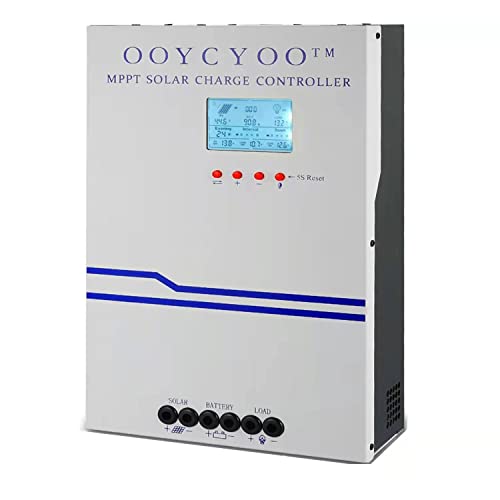
- MPPT 100A 12V 24V Fit for solar Panel: 1300W(12V);2600W(24V);Max input...
- Fit for 12V/24V battery, USER(can be set Lithium, Lifepo...
- Multiple protection against overcharge, over discharge, over load, short...