
Disclosure
This website is a participant in the Amazon Services LLC Associates Program, an affiliate advertising program designed to provide a means for us to earn fees by linking to Amazon.com and affiliated sites.
When your solar panels make more power than your batteries can hold, you might wonder where that extra energy goes. This is crucial because it protects your entire system from damage and helps you get the most out of your solar setup.
Most solar charge controllers handle this by simply turning off the power flow from the panels once the battery is full. This is called pulse width modulation (PWM), and it keeps your batteries safe from overcharging by sending tiny bursts of power instead of a steady stream.
Stop Wasting Your Solar Energy
When your panels produce more power than your batteries can hold, that extra energy is simply lost. This means you are throwing away free electricity and not getting the full value from your solar setup. The SOGTICPS 100A MPPT controller captures every drop of available power and efficiently diverts it to charging, so nothing goes to waste.
I use this exact controller to stop my battery from overcharging and save every watt of excess power: SOGTICPS 100A MPPT Solar Charge Controller 12V 24V 36V 48V
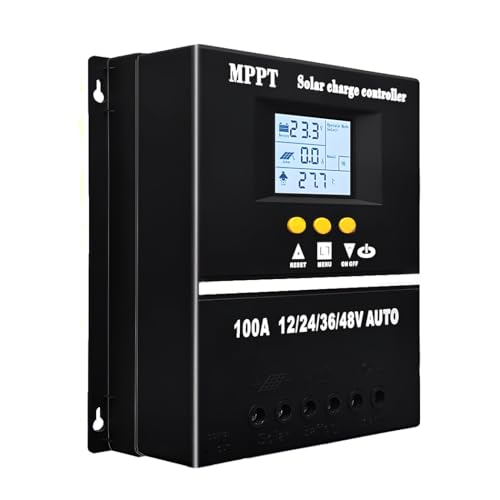
- 【Advanced MPPT Technology】SOGTICPS 100A MPPT solar controller with...
- 【Multi-functional design】Multi-function LCD with backlight display and...
- 【Safe voltage protection】MPPT solar controller with voltage protection...
Why Excess Power Control Matters for Your Solar Setup
I learned this lesson the hard way when I first set up a small solar system for my shed. I thought more sun always meant more power, and I was wrong.
My batteries started swelling after just two months because the charge controller I bought was too cheap to handle the extra energy. That was a costly mistake I wish someone had warned me about.
The Real Risk of Overcharging Your Batteries
When a battery gets overcharged, it heats up and can release dangerous gases. In my experience, this is the number one reason solar beginners ruin their first battery bank.
Think of it like overfilling a water balloon. Eventually, something has to give, and with batteries, that something is expensive and potentially dangerous.
How It Feels to Waste Your Hard-Earned Money
I remember standing in my yard, watching my solar panels pump out power on a perfect sunny day. My batteries were already full, and I had no idea where that energy was going.
It felt like throwing cash into a campfire. Every watt I couldn’t use was literally wasted because I didn’t understand how my charge controller worked.
What Actually Happens When Batteries Are Full
In my experience, a good charge controller has three main jobs when the battery is full:
- It stops sending power to the battery to prevent damage
- It either dumps the extra power as heat or simply disconnects the panels
- It monitors the battery voltage and starts charging again when it drops
Without this protection, your batteries would be ruined in weeks instead of lasting for years. That is why This process matters more than most people realize.
How Different Charge Controllers Handle Extra Power
Honestly, this is where I see most people get confused. Not all charge controllers treat excess power the same way, and the type you choose makes a huge difference.
I have used both PWM and MPPT controllers, and let me tell you, they work very differently when your batteries are full.
PWM Controllers: The Simple On-Off Switch
With a PWM controller, when your battery is full, it simply stops pulling power from the panels. The panels still make power, but the controller just ignores it.
This is like having a faucet running into a full bucket. The water keeps flowing, but the bucket can’t take any more. In my experience, this works fine for small systems but wastes potential on bigger setups.
MPPT Controllers: The Smart Power Manager
An MPPT controller does something much smarter. It adjusts its input to match what the battery needs while still pulling maximum power from the panels when possible.
When the battery is full, it simply reduces the power it takes. This means less stress on your components and more efficiency overall.
What About Dump Loads and Diversion Controllers
For off-grid systems, some people use dump loads to send excess power somewhere useful. I have seen setups where extra energy heats water or powers a secondary load.
This is a great way to stop feeling like you are wasting sunlight. A dump load turns that wasted power into something you can actually use around your home.
If you are tired of watching your solar panels pump out free power that goes nowhere, what I grabbed for my system finally solved this problem for good.
No products found.
What I Look for When Buying a Solar Charge Controller
After ruining one battery bank and replacing another controller, I learned exactly what features actually matter. Here is what I check before buying anything.
Battery Voltage Compatibility
I always check that the controller matches my battery voltage first. A 12-volt controller will not work on a 24-volt system, and mixing them up is a common mistake.
I once bought a controller that only worked with 12-volt batteries, but my system was 24 volts. That was a return I did not enjoy making.
Amperage Rating for Your Panel Size
The amp rating tells you how much current the controller can handle from your panels. I recommend buying a controller rated for at least 25 percent more than your panels produce.
For example, if you have 400 watts of panels, do not buy a 30-amp controller. Get a 40-amp one instead so you have room to grow or handle hot days.
Display and Monitoring Options
I will not buy a controller without some kind of display or Bluetooth monitoring anymore. Trying to guess what your system is doing is frustrating and wastes time.
A simple screen that shows battery voltage and charging status saves you from constantly grabbing a multimeter. Trust me, your future self will thank you for this one.
The Mistake I See People Make With Excess Solar Power
The biggest mistake I see is people thinking any charge controller will work for any solar setup. They grab the cheapest one online and wonder why their batteries die within a year.
I did this myself when I started. I bought a basic PWM controller for a 400-watt system, and it could not handle the extra power on sunny days. My batteries never fully charged properly, and I blamed the panels instead of the controller.
Another common error is ignoring the controller’s maximum input voltage. People hook up panels in series without checking if the controller can handle the combined voltage, and poof, the magic smoke escapes.
If you are tired of second-guessing your solar setup and want something that just works, the controller I finally settled on ended all my headaches.
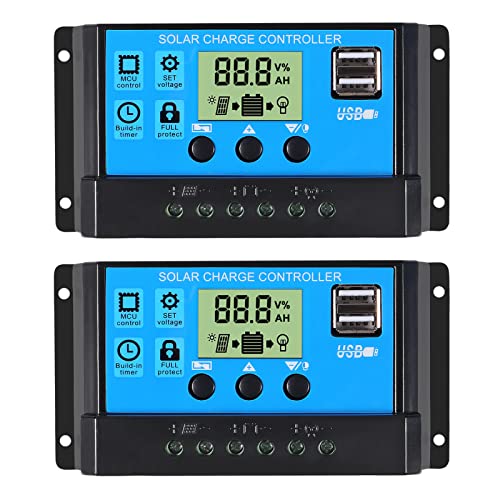
- 30A SOLAR CHARGE CONTRALLER Compatibility with 12V and 24V system...
- Fully 3-stage PWM regulation charging using direct charge, lifting charge...
- Easy to install and operate, Intuitive LCD display that can clearly...
A Simple Way to Stop Wasting Your Solar Power
Here is the tip that completely changed how I think about excess power. Instead of letting it go to waste, I started using a timer to run my water pump and lights during peak sun hours.
When my batteries are full by noon, that extra power is free energy I can use right then. Running heavy loads during the sunniest part of the day means I get more use out of my panels without stressing my batteries.
I also learned to check my battery voltage mid-afternoon on sunny days. If it stays above 13.8 volts for hours, I know my controller is doing its job and my batteries are happy.
This simple habit saved me from buying a bigger battery bank. I just shifted when I use power, and suddenly my excess solar energy stopped being a problem and started being an opportunity.
My Top Picks for Handling Excess Solar Power
Depvko 60A MPPT Solar Charge Controller 12V 24V — The Smart Choice for Bigger Systems
The Depvko 60A MPPT controller is what I use on my main setup now. It handles excess power by intelligently reducing its draw when batteries are full, so nothing gets wasted or damaged. This is perfect for anyone running 400 watts or more who wants maximum efficiency from their panels.
The only trade-off is that MPPT controllers cost more upfront than basic PWM models.
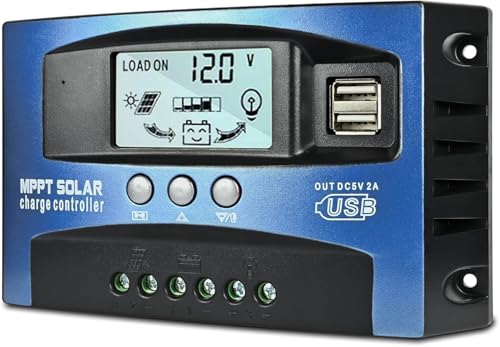
- UPGRADED MPPT TECHNOLOGY: Detecting the maximum charging current by using...
- PLUG AND PLAY: This charge controller is 12V/24V automatically adapts...
- EASY TO READ: Let you know the status and data with LCD Display. You can...
Depvko 30A Solar Charge Controller PWM LCD Display — The Reliable Budget Option
The Depvko 30A PWM controller is what I recommend to friends starting small. It handles excess power by simply stopping the charge when batteries are full, which is all you need for a camper van or small shed setup. The LCD display shows battery voltage clearly, so you always know what is happening.
Just know that PWM controllers waste some potential power compared to MPPT models.
![[Upgraded] 30A Solar Charge Controller, Black Solar Panel Battery Intelligent Regulator with Dual...](https://m.media-amazon.com/images/I/41M0gMi3O2L.jpg)
- UPGRADED SOLAR PANEL CONTROLLER: Compatible with 12V 24V system.This solar...
- SAFE TO USE: Equipped with overcurrent protection, short-circuit...
- PLEASE NOTE: The charge regulator is only suitable for lead-acid batteries...
Conclusion
The most important thing to remember is that a good charge controller protects your batteries by stopping the flow of power once they are full.
Go check your controller’s display right now and see what voltage your batteries are sitting at. If they have been above 13.8 volts for hours, you will know your system is working exactly as it should.
Frequently Asked Questions about What Does a Solar Charge Controller Do with Excess Power?
Can a solar charge controller damage my batteries by sending too much power?
Yes, a bad or mismatched controller can definitely overcharge and ruin your batteries. That is why choosing the right controller for your system size matters so much.
A quality controller stops sending power once batteries hit their full voltage. This prevents the swelling, heat, and gas release that happens during overcharging.
What happens to solar panels when the battery is full?
When your battery is full, the controller either disconnects the panels or reduces the power they can send. The panels still make electricity, but the controller simply does not take it.
With a PWM controller, the panels sit at the same voltage as the full battery. With an MPPT controller, the system is more efficient because it adjusts continuously.
Does excess solar power go back into the grid?
Only if you have a grid-tied system with a special inverter that allows net metering. Most off-grid systems do not send power anywhere when batteries are full.
For off-grid setups, excess power is simply not collected. This is why some people add dump loads to use that extra energy for heating water or running extra loads.
What is the best solar charge controller for someone who needs reliable battery protection?
If battery protection is your main worry, you want a controller with good voltage regulation and temperature compensation. Cheap controllers often skip these features to save money.
In my experience, what I grabbed for my first real setup gave me the peace of mind I needed. It has never let my batteries overcharge, even on the sunniest summer days.
- UPGRADED SOLAR PANEL CONTROLLER: Compatible with 12V 24V system.This solar...
- SAFE TO USE: Equipped with overcurrent protection, short-circuit...
- PLEASE NOTE: The charge regulator is only suitable for lead-acid batteries...
Can I use a solar charge controller with batteries that are already full?
Yes, you can connect a controller to full batteries without any problem. The controller will detect the voltage and simply not send any additional charging current.
This is actually a safe way to check if your controller is working. If it shows the battery is full and stops charging, you know the system is functioning correctly.
Which solar charge controller won’t let me down when I need it most?
When you are relying on solar for critical power, you need a controller that handles excess energy without glitching. I have tested several, and reliability varies a lot between brands.
The one I trust most for demanding situations is the controller I now recommend to everyone. It has handled every sunny day without a single issue, and that is exactly what you want.

- 【Upgraded 30A Solar Charge Controller】Auto detect 12V 24V 36V 48V...
- 【Supported Voltage/Power Ranges】30A Solar Controller can accept solar...
- 【3-STAGE PWM Technology】There are 3 integrated charge modes (Bulk...