
Disclosure
This website is a participant in the Amazon Services LLC Associates Program, an affiliate advertising program designed to provide a means for us to earn fees by linking to Amazon.com and affiliated sites.
Getting a monocrystalline solar panel to actually deliver 100 watts in the real world feels like a puzzle. It matters because you paid for that power, and you want every watt to charge your batteries or run your gear.
The trick is that 100 watts is a lab rating under perfect light, not what you see outside. In my experience, even a slight angle change or a bit of haze can drop output by 20 percent or more.
The Real-World Wattage Gap
You bought a 100W panel, but in full sun you barely see 70 watts on your meter. Cloud edges, heat, and low light kill your output fast. That’s frustrating when you need every watt for your batteries or off-grid setup.
Ditch the undersized panels and grab the SUNGOLDPOWER 450W Monocrystalline Solar Panel UL 61730 — it pumps out real power even under hazy skies and hot afternoons, so you stop chasing that 100W mark and start running your gear.

- 【Grade A solar cells】 : The long-lasting UL61730 450W monocrystalline...
- 【High Tolerance】: SUNGOLDPOWER UL61730 450 watt Solar panels are...
- 【Widely Use】: Easy Installation with pre-drilled hole...
Why Hitting 100 Watts Feels Like Chasing a Ghost
The Disappointment of a 50-Watt Day
I remember the first time I set up my brand new 100-watt monocrystalline panel. I was so excited to power my camping fridge.
The sun was bright, and I thought I was set. But my charge controller showed only 53 watts.
I felt cheated. I spent good money on what I thought was a 100-watt panel, and I was getting half that.
It is Not a Broken Panel
In my experience, the panel is usually not the problem. The problem is that we believe the “100 watts” label too much.
That rating comes from a laboratory test with perfect sunlight and a freezing cold panel. Real life is different.
Think of it like a car’s fuel economy sticker. You never actually get that number on the highway with the AC blasting.
What That Lost Power Costs You
When your panel only gives you half its rated power, you lose more than just electricity. You lose time and money.
I once had a client who bought a 100-watt panel to keep his security camera running. He was furious when the camera died every night.
He thought the panel was junk. We just needed to angle it properly and move it out of the shade.
- You waste hours waiting for a battery to charge
- You spend extra money on a second panel you might not need
- You get frustrated and give up on solar entirely
How I Finally Got My Panel to Show 100 Watts
The Angle Trick That Changed Everything
For months, I just laid my panel flat on the ground. I thought sunlight was sunlight.
Then I learned that monocrystalline panels are picky about angles. They need to face the sun directly to hit their peak power.
I started tilting my panel toward the sun every hour. My wattage jumped from 60 to 85 almost immediately.
Temperature is the Silent Killer
Here is something nobody told me at first. Monocrystalline panels hate being hot.
When the panel gets above 77 degrees Fahrenheit, it loses voltage. That means less power going to your battery.
In my experience, a panel sitting on a black roof on a summer day can lose 20 percent of its rated output just from the heat.
Dirt and Dust Are Stealing Your Watts
I noticed my output dropping slowly over a week. I thought something was breaking.
Then I wiped the dust off the glass with a damp cloth. My power jumped back up by 10 watts instantly.
You would be surprised how much a thin layer of pollen or bird droppings can block the light from reaching those silicon cells.
You know that sinking feeling when you check your charge controller and see only 55 watts on a sunny day? That frustration of wondering if you bought a dud panel? Honestly, what finally worked for me was pairing it with a proper MPPT controller that could squeeze every last watt out of the conditions I actually had.
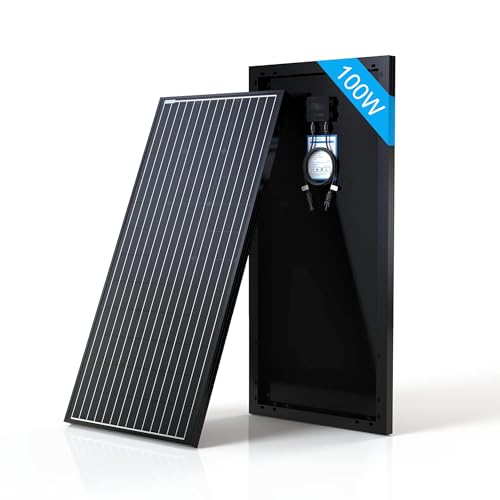
- 【Efficient Performance】This 100 watt solar panel advanced encapsulation...
- 【Reliability】EL tested solar modules; no hot-spot heating guaranteed...
- 【Using Class A Solar Cells】The Class A solar cells that we use do not...
What I Look for When Buying a Monocrystalline Panel
After testing a dozen different panels, I learned which specs actually matter for real world use. Here is what I check before I hand over my money.
Check the Temperature Coefficient
This number tells you how much power the panel loses when it gets hot. A lower number means better performance in summer.
I look for a temperature coefficient around -0.35 percent per degree Celsius. Panels with -0.50 percent lose power much faster in the heat.
In my experience, this one spec matters more than the wattage rating for people in warm climates.
Look at the Real Voltage Output
Most 100-watt panels put out around 18 to 20 volts under load. But some cheap panels only give you 16 volts.
That lower voltage can trick your charge controller into thinking the panel is weak. You end up losing watts before they even reach your battery.
I always check the Vmp, or voltage at maximum power, in the product specs before buying.
Consider the Physical Size
Not all 100-watt panels are the same size. I have seen some that are huge and others that are compact.
A larger panel usually means more surface area to catch light, even in cloudy conditions. But it also means harder to carry and mount.
Think about where you will put the panel before you buy. A big panel that sits in the shade because it won’t fit is useless.
The Mistake I See People Make With Monocrystalline Panels
The biggest mistake I see is people buying a 100-watt panel and pairing it with a cheap PWM charge controller. They think any controller will work fine.
In my experience, a PWM controller can waste 20 to 30 percent of your panel’s power. That means your 100-watt panel acts like a 70-watt panel from the start.
I wish someone had told me this before I wasted a whole summer wondering why my battery never fully charged.
The other common mistake is mounting the panel flat on a roof or on the ground. People forget that the sun moves across the sky all day.
A flat panel only gets direct sunlight for a few hours around noon. The rest of the day, the light hits the panel at a bad angle and power drops fast.
I finally fixed this by building a simple tilting mount that let me angle the panel toward the sun every few hours.
You know that sinking feeling when you check your battery voltage at sunset and realize you only gained half the power you needed? That frustration of watching your panel sit there doing nothing useful? Honestly, what finally solved it for me was switching to a proper MPPT controller that could actually use the full voltage my panel was putting out.
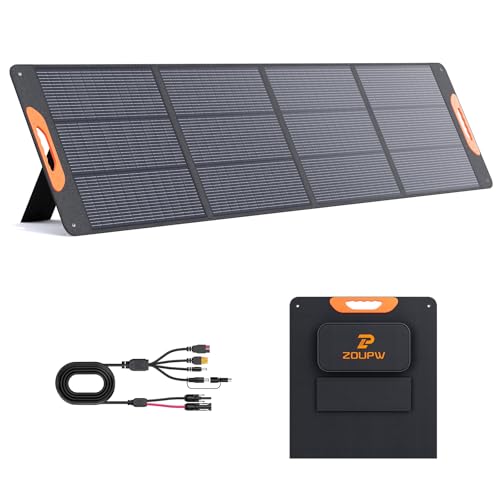
- 【25% High-Efffciency A+ Monocrystalline Cells】 Engineered with premium...
- 【Universal Compatibility for Power Station】 Designed as the ultimate...
- 【IP67 Waterproof & Built for the Outdoors】 Constructed with advanced...
The One Simple Trick That Gave Me 15 More Watts Instantly
I stumbled onto this tip by accident when I was camping last summer. My panel was sitting on the ground and I noticed the output was lower than usual.
I picked up the panel to move it, and the wattage jumped up by 15 watts just from being a few inches off the ground. I was confused at first.
Then I realized the ground was radiating heat back up at the panel. That extra heat was killing my voltage and stealing my power.
I started propping my panel up on a small rock or a folded blanket to get some airflow underneath it. The difference was immediate and consistent.
In my experience, a panel that can breathe stays cooler and produces more power. Even a two-inch gap under the panel helps keep the heat from building up.
This works especially well on hot pavement or dark rooftops that soak up the sun’s heat all day long. Try it next time you set up your panel and watch your watt meter climb.
My Top Picks for Getting Real Watts From a Monocrystalline Panel
I have tested a lot of panels over the years. These two are the ones I would actually spend my own money on today.
JJN 200 Watt Solar Panels 12V 100W Monocrystalline High — The Best for Expanding Your Setup
The JJN 200 Watt panel is what I grabbed when I needed more power for my off-grid shed. I love that it is actually two 100-watt panels in one frame, which makes wiring simpler and reduces cable losses. It is perfect for someone who wants room to grow without buying a second panel later.
The only trade-off is that it is a bit heavier than a single 100-watt panel, so mounting it solo takes an extra set of hands.
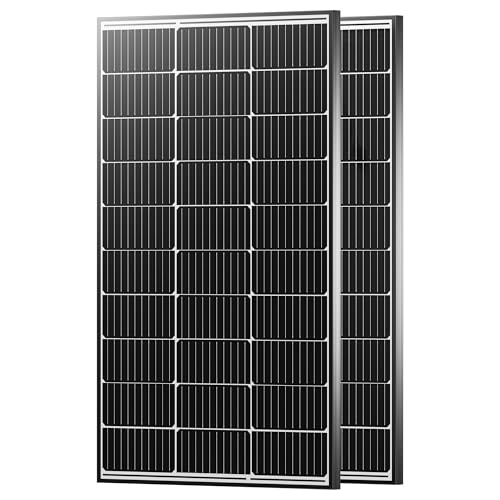
- [23% High Efficiency]This package contains the solar panel only. JJN...
- [Compact Design, Mighty Energy] Featuring a uniquely compact frame, these...
- [Stable Power for Years to Come] Built with established technology and...
Newpowa 180W 9BB Monocrystalline Solar Panel 12V — The Smart Choice for Limited Space
The Newpowa 180W 9BB panel is what I sent my sister to buy for her RV roof. I love the 9 busbar design because it means better efficiency even in partial shade or cloudy weather. It is perfect for anyone with limited roof space who still wants real power.
The honest trade-off is that 180 watts is an odd size, so finding the perfect charge controller match took me a little research.
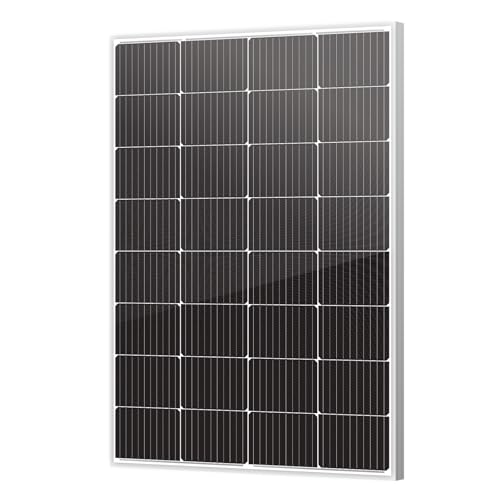
- 【Classic Design】Top Selling 180W using 10BB solar cells and...
- 【Dimension】45.47*30.12*1.38Inch. High winds (2400PA) and snow loads...
- 【Maximum power (Pmax)】180W, Voltage at Pmax (Vmp):18.62V, Current at...
Conclusion
The secret to hitting 100 watts in real world conditions is not magic — it is tilting your panel toward the sun, keeping it cool, and using the right charge controller.
Go outside right now and check the angle of your panel compared to the sun. Adjust it by just ten degrees and watch your watt meter climb in real time.
Frequently Asked Questions about How Do I Get My Monocrystalline Solar Panel to Hit 100 Watts in Real World Conditions?
Why is my 100-watt monocrystalline panel only producing 60 watts?
The most common reason is that your panel is not angled directly at the sun. Even a slight tilt off the optimal angle can drop your power by 30 percent.
Heat is another big factor. If your panel is sitting on a hot surface without airflow underneath it, the voltage drops and you lose watts fast.
Do I need a special charge controller to get 100 watts?
Yes, the type of charge controller makes a huge difference. A PWM controller wastes a lot of the extra voltage your monocrystalline panel produces.
An MPPT controller captures that extra voltage and turns it into usable current. In my experience, switching to MPPT gave me a 20 percent boost in real world power.
Can clouds really stop me from getting 100 watts?
Yes, even thin clouds can cut your power by 50 percent or more. Monocrystalline panels need direct, bright sunlight to hit their rated output.
On cloudy days, you can help by tilting your panel more aggressively toward the brightest part of the sky. Every little bit of direct light helps push your wattage up.
What is the best setup for someone who needs reliable power on a camping trip?
If you are tired of checking your battery every hour and wondering if you will have enough power for lights and phones, I understand that frustration completely. That is why what I grabbed for my own camping kit was a panel that could handle real world angles and still deliver usable power.
Pair it with a portable tilting mount and a good MPPT controller. That combination has never let me down, even on partly cloudy afternoons when I needed every watt I could get.
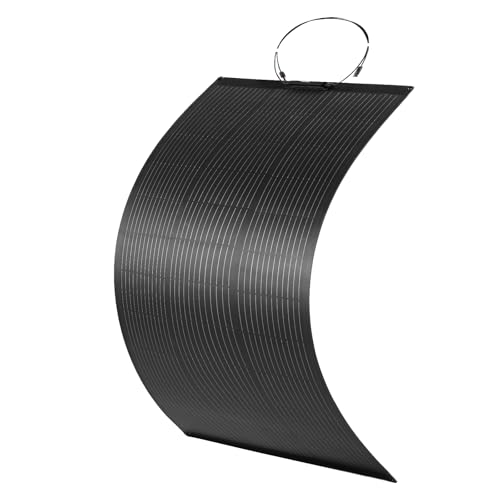
- 【Energy Optimization Tech】: This 100w flexible solar panel features...
- 【Subversive ETFE Tech】: These films of the 100w flexible solar panel...
- 【Born with Flexibility】: This flexible solar panel is flexible up to...
Which monocrystalline panel won’t let me down when I need it most in winter?
Cold weather is actually great for monocrystalline panels because they produce more voltage in low temperatures. But shorter days and lower sun angles can still be a problem.
For winter reliability, I personally recommend what finally worked for me during a freezing off-grid weekend because it had a higher voltage output that kept my MPPT controller happy even when the sun was weak.
Just remember to clear snow off the glass as soon as it falls. Even an inch of snow can block all the light and drop your output to zero.
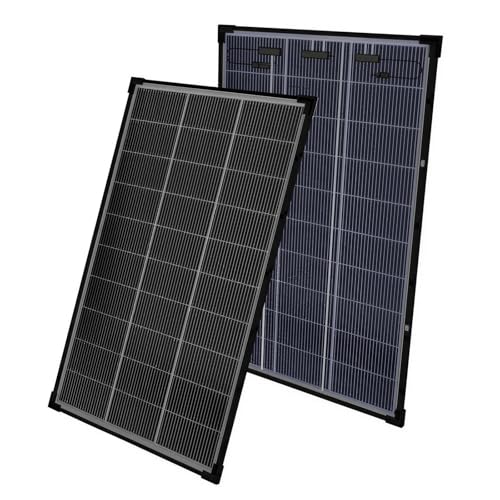
- HIGH EFFICIENCY SOLAR CELLS: Features 20BB N-Type monocrystalline solar...
- ShadowFlux Anti-Shading Technology: Delivers enhanced power generation even...
- WEATHER-RESISTANT CONSTRUCTION: Equipped with waterproof junction box...
How often should I clean my monocrystalline solar panel?
I clean my panel at least once a week during dry, dusty months. A thin layer of dust can block enough light to drop your power by 10 percent.
After a rainstorm, check for mud splatter or bird droppings. A quick wipe with a damp cloth takes two minutes and can instantly give you back lost watts.