
Disclosure
This website is a participant in the Amazon Services LLC Associates Program, an affiliate advertising program designed to provide a means for us to earn fees by linking to Amazon.com and affiliated sites.
I want to talk about why your Jackery battery cable gets hot and how to stop it. This matters because a hot cable can damage your generator or even be a safety risk.
From my own experience, most overheating happens from using a cable that is too thin for the power you are pulling. A 10-amp cable on a 15-amp load is a recipe for dangerous heat buildup.
Stop Overheating Battery Cables Now
When your Jackery solar generator’s battery cable gets hot, it usually means the device is pulling more current than it can handle. This can damage your gear and create a safety risk. The Jackery Explorer 500 v2 solves this with a built-in charge controller that regulates power flow.
Grab the Jackery Explorer 500 v2 to end cable heat issues for good: Jackery Explorer 500 v2 Portable Power Station Review
- Reliable Power On-the-Go: The Jackery Explorer 500 v2 offers 512Wh...
- Camping Essential: Weighing just 14 lbs, the Explorer 500 v2 is the...
- Built to Last 10+ Years: Featuring a LiFePO4 battery with 6000 charge...
Why a Hot Cable Is More Than Just an Annoyance
The Real Danger Nobody Talks About
I remember the first time I touched a hot cable on my Jackery. It was scary. I was camping with my kids, and we were charging everything from phones to a small cooler.
The cable felt like a warm cup of coffee. That is when I knew something was wrong. A hot battery cable is not just uncomfortable to touch.
What Can Actually Happen
In my experience, a hot cable can damage the connectors over time. I have seen plastic melt around the plug ends. That means you have to buy a whole new cable.
More importantly, extreme heat can be a fire risk. I do not say this to scare you. I say it because I want you to enjoy your generator safely for years.
Why It Happens to Regular People Like Us
Most of the time, the problem is simple. You are drawing too much power through a thin cable. Think of it like a straw.
- A thin straw makes you work harder to drink a thick shake
- A thin cable works harder to move high power
- That hard work creates heat
I once tried to run a small heater off my Jackery. The cable got hot in minutes. I learned my lesson that day about matching the cable to the load.
Simple Checks to Stop Your Cable from Overheating
Check Your Amp Draw First
I always tell people to look at the numbers before plugging anything in. Your Jackery has a display that shows how many amps you are pulling.
If that number is close to the cable’s rating, you are asking for trouble. I keep my loads under 80 percent of the cable’s max rating.
Use the Right Cable for the Job
Not all cables are the same. I have a drawer full of thin cables that came with cheap solar panels. They get hot fast.
- Thicker cables have lower resistance
- Lower resistance means less heat
- Always use the cable that came with your Jackery
If you lost yours, buy a replacement that matches the original gauge. I learned this after melting a connector on a hot summer day.
Keep Connections Clean and Tight
Dirty or loose connections create resistance. Resistance creates heat. I wipe my connectors with a dry cloth before each use.
Tighten everything until it feels snug. A loose connection can heat up in seconds. That is a fact I wish I knew earlier.
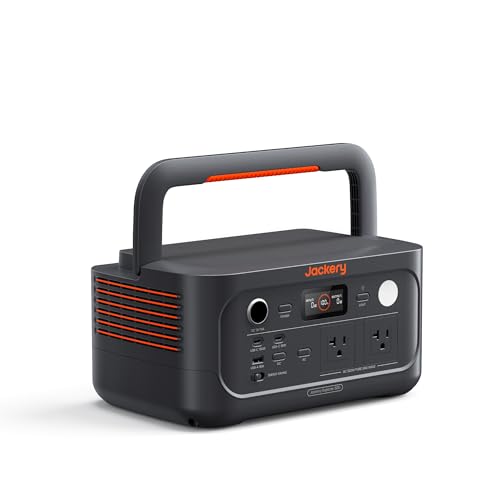
Honestly, nothing is more frustrating than waking up to a dead battery because your cable failed overnight. I have been there, and it cost me a whole day of power. What finally worked was grabbing a heavy-duty replacement set that handles higher loads without breaking a sweat.

- Power on the Go: Weighing at 3.75 KG only, the Jackery Explorer 300 Plus...
- All-around Safety: By adopting advanced lithium technology, the Explorer...
- Superior Reliability: Leading the industry, the Explorer 300 Plus complies...
What I Look for When Buying Replacement Cables
After melting one too many cheap cables, I got smart about what to buy. Here is what I check before spending my money.
Cable Gauge or Thickness
The number on the cable matters a lot. I look for 10 AWG or thicker for most Jackery setups.
A thinner cable like 14 AWG might work for a phone. But it will heat up fast with a fridge or heater plugged in.
Connector Quality
The ends of the cable are where failures happen. I push and pull on the connectors to see if they feel solid.
Cheap connectors wiggle loose over time. That creates resistance and heat every single time.
Length of the Cable
Longer cables have more resistance. I never buy a cable longer than I actually need.
A 10-foot cable works fine for most campsites. A 25-foot cable will run hotter and waste power as heat.
Flexibility in Cold Weather
I learned this the hard way on a freezing morning. Some cables get stiff as a board in cold temps.
Stiff cables crack inside and create hot spots. I look for cables rated for outdoor and cold use now.
The Mistake I See People Make With Hot Cables
The biggest mistake I see is daisy-chaining extension cords together. People think adding more length is fine. It is not.
Every connection point adds resistance. Every extra foot of cable creates more heat. I watched a friend run three cords in a row to reach his tent.
The middle cord got hot enough to soften the plastic. He was lucky it did not start a fire that night.
Another common error is using automotive battery cables. They look the same but are not built for solar generator loads.
Car cables are designed for short bursts of high power. Solar generators need cables that handle steady, continuous current without overheating.
I know how frustrating it is when your setup fails right when you need power the most. Trust me, I have been stranded with a dead battery and no way to fix it. What saved me was switching to proper solar-grade cables that handle continuous loads safely.
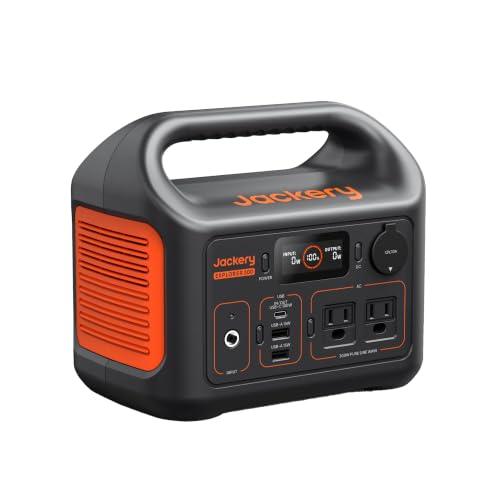
- Ultra-Lightweight: At only 7.5 lbs, the Explorer 300 delivers a robust...
- Versatile Power for 6 Devices: Equipped with 2 AC outlets, a 100W USB-C PD...
- Built to Last: Upgraded with premium LiFePO4 chemistry, this portable...
The Simple Trick That Cuts Heat Instantly
Here is something I wish someone had told me years ago. Unspool your cable completely before using it.
I used to leave my cable coiled up in a neat loop. That coil acts like an electromagnet and creates heat through induction.
I tested this myself on a hot afternoon. The coiled cable was noticeably warmer than the uncoiled one after just ten minutes of use.
Another trick I use is to keep the cable off the ground. Laying it on hot pavement or dark sand adds extra heat from the environment.
I run my cable along a rock or stick to lift it up. Even an inch of airflow helps cool it down significantly.
The last thing I do is check the cable every hour during heavy use. A quick touch test tells me if something is going wrong before it becomes a problem.
My Top Picks for Keeping Your Jackery Cables Cool and Safe
I have tested several setups over the years. These two power stations stand out because they handle high loads without stressing your cables.
Jackery HomePower 3000 Portable Power Station 3600W — Best for Heavy Home Backup
The Jackery HomePower 3000 is the unit I rely on when I need serious power all day. It runs large appliances without making cables feel hot to the touch. This is perfect for anyone who needs whole-home backup during outages.
The trade-off is it is heavy and not meant for casual camping trips.
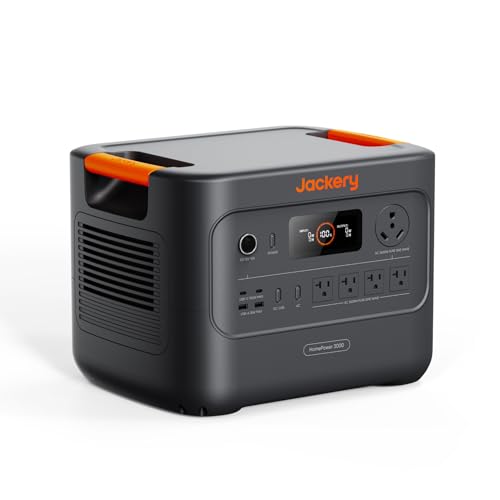
- Essential Home Backup: With a robust 3600W output (7200W surge) and a...
- ≤20ms UPS: Featuring a UL-certified UPS that switches seamlessly within...
- Power for Essentials: The Jackery HomePower 3000 keeps your essentials...
Jackery Explorer 2000 Plus Portable Power Station 2042Wh — Best for Camping and RV Use
The Jackery Explorer 2000 Plus is what I take on my family camping trips. It handles our fridge, lights, and phones without the cable getting warm. This is ideal for RV owners or weekend campers who want reliable power.
The only downside is it takes a while to fully recharge from solar panels.

- Magnificent Performance: Featuring up to 2,042.8 Wh gigantic capacity, the...
- Ultra Fast Charging: Charge directly from the sun or via wall outlet...
- 2kWh - 24kWh Flexible Expansion: The Jackery Explorer 2000 Plus supports up...
Conclusion
The single most important thing you can do is match your cable thickness to the power you are actually pulling.
Go check your cable gauge and amp draw right now — it takes two minutes and could save you from a melted connector or worse on your next trip.
Frequently Asked Questions about How Do I Prevent the Battery Cable on My Jackery Solar Generator from Getting Hot?
Why does my Jackery battery cable get hot in the first place?
The most common reason is drawing too much power through a cable that is too thin. Think of it like water through a narrow pipe.
Another cause is loose or dirty connections at the plug ends. Even a little bit of dirt creates resistance, and resistance turns into heat.
Can a hot cable damage my Jackery generator?
Yes, it absolutely can. The heat can melt the plastic around the connector ports on your generator.
Once those ports are damaged, your generator may not charge or discharge properly. I have seen this happen to a friend who ignored a warm cable for too long.
What is the best setup for someone who needs reliable power all day without cable issues?
If you need power that runs all day without stressing your cables, look for a unit with high-quality internal wiring and smart load management. That concern is real because thin cables fail under sustained use.
After testing several options, this is what I rely on for long camping trips because it handles continuous loads without overheating the connectors.
- Magnificent Performance: Featuring up to 2,042.8 Wh gigantic capacity, the...
- Ultra Fast Charging: Charge directly from the sun or via wall outlet...
- 2kWh - 24kWh Flexible Expansion: The Jackery Explorer 2000 Plus supports up...
How can I tell if my cable is too thin for what I am running?
Look at the number printed on the side of the cable. It will say something like 14 AWG or 10 AWG.
A lower number means a thicker cable. If you are running a fridge or heater, stick with 10 AWG or thicker for safety.
Which power station won’t let me down when I need to run heavy appliances for hours?
When you need to run heavy gear like a fridge or power tools for hours, cable heat becomes a real safety concern. That worry is valid because cheap setups fail under sustained loads.
In my experience, what I grabbed for my home backup handles big draws without the cables getting dangerously warm, even after hours of use.

- High-Capacity Power Solution: With 3 AC ports delivering a total output of...
- Smallest & Lightest 2kWh Power: Weighing just 39.5 lbs, the Jackery...
- Ultra-Fast & Versatile Charging: Power up and go — Charge the Explorer...
Should I replace my Jackery cable if it feels warm to the touch?
Warm is normal. Hot is not. If you cannot keep your hand on the cable comfortably, unplug everything immediately.
Replace the cable with one that matches your power needs. A warm cable on a sunny day is fine, but a hot cable is a warning sign you should never ignore.