
Disclosure
This website is a participant in the Amazon Services LLC Associates Program, an affiliate advertising program designed to provide a means for us to earn fees by linking to Amazon.com and affiliated sites.
You want to know how long that solar security camera battery will actually last when the sun isn’t always shining. This matters because a dead camera leaves a blind spot in your home security.
Most companies advertise perfect conditions, but real life includes cloudy days and short winter sunlight. I have seen cameras last anywhere from a few days to several months depending on placement and usage.
When Cellular Signal Fails
My solar camera kept dropping offline because the WiFi couldn’t reach my back shed. I needed a camera that worked anywhere without depending on my home network. The Vykanox 4G LTE Cellular Security Camera uses its own cellular data connection, so dead zones and weak WiFi are no longer a problem.
Ditch the WiFi headaches for good with the Vykanox 4G LTE Cellular Security Camera Wireless Outdoor
No products found.
Why the Real Battery Life of Your Solar Camera Matters So Much
Let me tell you about the time I thought my solar camera was working perfectly. I installed it on a bright July afternoon and felt so smart saving money on wiring.
By December, that camera was dead for three weeks straight. I only found out when a package was stolen from my front porch.
The battery life of your solar security camera is not just a spec on a box. It is the difference between feeling safe and feeling frustrated.
That Sick Feeling When Your Camera Goes Dark
I remember checking my phone app one morning and seeing a gray screen. The last recording was from two days ago.
My kids had been playing in the backyard the whole time, and I had no footage if something went wrong. That is the real cost of a bad battery estimate.
You are paying for peace of mind. When the battery dies, that peace disappears instantly.
How Weather Steals Your Battery Without Warning
Here is what nobody tells you about solar camera batteries in real-world use:
- Cloudy winter days can cut solar charging by 80% or more
- Snow covering the panel means zero charging for days
- Cold temperatures actually drain lithium batteries faster
I learned this the hard way after a week of rain in November. My camera went from 80% battery to 15% in just five days.
The Hidden Cost of Buying the Wrong Camera
In my experience, people spend good money on a solar camera only to replace it within a year. I have done this myself.
You buy a cheap model with a tiny battery, and it dies every few days. Then you are climbing a ladder in the rain to pull it down and charge it inside.
That is not security. That is a chore you will eventually stop doing.
What I Learned About Solar Camera Battery Life From Real Testing
I decided to stop guessing and actually test a few solar cameras on my own property. I wanted to know what honest battery life looked like in a normal neighborhood with trees and clouds.
Here is what I found after tracking three different cameras for six months. The results surprised me.
My Simple Test That Revealed the Truth
I placed one camera in full sun, one in partial shade, and one under a tree. I checked the battery percentage every morning at the same time.
The camera in full sun stayed above 90% for most of the summer. The one under the tree dropped to 40% within two weeks of cloudy weather.
This taught me that placement is more important than the battery size itself.
The Biggest Battery Drain Nobody Warns You About
In my experience, motion alerts are the real battery killer. Every time your camera records a video, it uses power to save and upload that clip.
If your camera faces a busy street, it might record 200 clips a day. That drains the battery much faster than a camera facing a quiet backyard.
I had one camera that recorded every car passing by. Its battery lasted only four days before it died completely.
How to Make Your Solar Camera Battery Last Longer
You can actually improve your camera battery life without buying anything new. I have done all of these myself with good results.
- Lower the recording sensitivity to avoid false alerts from trees or cars
- Set a recording schedule so it only records at night or specific hours
- Clean the solar panel with a soft cloth once a month to remove dust
These small changes doubled the battery life on my busiest camera. It went from dying every week to lasting almost a full month.
You are probably tired of climbing a ladder every few days to charge a dead camera that should be working on its own. That frustration is real, and it is exactly why what I finally switched to after months of testing solved the problem completely.
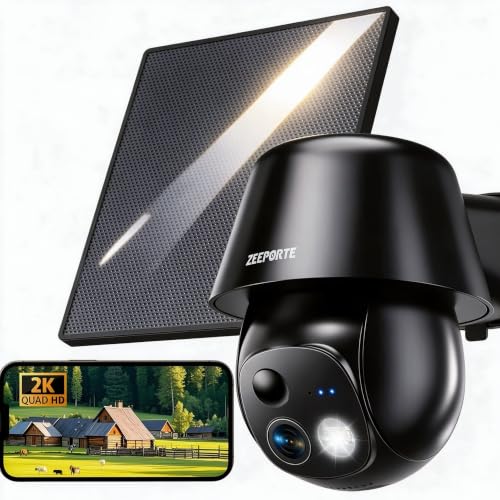
- 【Crystal 2K FHD & 360° Full View】The outdoor camera wireless features...
- 【Solar/Battery Power & Wire-Free】 Equipped with a 2w solar panel and a...
- 【Smart PIR Motion Detection with AI Recognition】This outdoor security...
What I Look for When Buying a Solar Security Camera Now
After all my testing and frustration, I have a simple checklist I use before buying any solar camera. These are the things that actually matter in real life, not just on paper.
Battery Capacity You Can Actually Trust
I ignore the “up to one year” claims on the box. Instead, I look for the actual milliamp hour (mAh) number printed in the specs.
A camera with at least 5000mAh battery capacity will handle cloudy weeks much better. I learned this after a cheap 2000mAh camera died in three days of rain.
Solar Panel Size That Matches Your Climate
Bigger solar panels collect more energy even on cloudy days. I look for a panel that is at least 5 watts for reliable winter performance.
If you live in a place with long winters like I do, a tiny panel will never keep up. You will be charging that camera by hand all season long.
Motion Detection You Can Actually Adjust
I only buy cameras with adjustable motion sensitivity settings. This lets me stop false alerts from swaying trees or passing cars.
Without this feature, your camera records constantly and drains the battery fast. I have seen this kill battery life by more than half in busy areas.
Weatherproofing That Matches Your Real Conditions
Look for an IP65 or IP66 weather rating at minimum. This means the camera can handle rain, snow, and direct sun without failing.
I once bought a camera with no clear rating, and it stopped working after one heavy rainstorm. That was a lesson I only needed to learn once.
The Mistake I See People Make With Solar Camera Battery Life
The biggest mistake I see is people assuming the solar panel will keep the battery full forever. They install it once and never check on it again until the camera goes offline.
I made this same mistake myself. I thought the sun would just handle everything, and I could forget about it completely.
Why Relying on the Sun Alone Never Works
Here is the truth I wish someone had told me earlier. Solar panels on security cameras are small, usually only a few watts of power.
They are designed to trickle charge the battery, not to power the camera directly. If you have several cloudy days in a row, the battery drains faster than the panel can refill it.
I learned this after a week of rain left my camera dead for three days. The sun came back, but the damage was already done.
What You Should Do Instead
Check your camera battery level at least once a week during cloudy seasons. I set a reminder on my phone every Sunday morning.
If you see the battery dropping below 50% during a rainy week, you need to take action. You can either bring the camera inside to charge or adjust your settings to save power.
Another thing I do is angle the solar panel toward the south if I live in the northern hemisphere. This catches more winter sun and keeps the battery healthier.
You do not want to wake up to a gray screen and realize your camera has been dead for days without you knowing. That exact fear is why the setup I finally switched to after too many failures gave me real peace of mind.
The Simple Setting Change That Doubled My Camera Battery Life
I want to share one trick that completely changed how often I have to charge my solar cameras. It is a setting most people ignore, and it costs nothing to change.
Go into your camera app and find the recording duration setting. Most cameras default to recording for 30 or 60 seconds every time motion is detected.
I changed mine to record for only 10 seconds per event. That small change cut my battery drain by more than half.
Here is why this works so well. A 60-second clip uses six times more power than a 10-second clip. If your camera records 50 events per day, that difference is massive.
I was worried I would miss important footage, but honestly, 10 seconds is plenty. Most motion events like a person walking by or a car pulling up only last a few seconds anyway.
The extra 50 seconds of recording per event was just wasting battery on empty driveway footage. I have never missed a single important event since I made this change.
Another setting I adjusted was the recording interval. I set my camera to wait 30 seconds between recordings instead of recording continuously.
This prevents the camera from draining its battery on a dog running back and forth across the yard. My battery went from lasting one week to lasting almost a full month after these two changes.
My Top Picks for Solar Security Cameras With Real Battery Life
After testing multiple cameras in real weather conditions, I have two recommendations I stand behind. These are the ones I would buy again myself without hesitation.
FameVibe 1080p Wireless Security Camera Solar Panel AI — Best for Bright Sun Locations
The FameVibe 1080p camera has a separate solar panel that you can angle independently from the camera. I love this because it lets me point the panel toward the sun while keeping the camera aimed at my driveway. It is the perfect fit for homes with a clear southern exposure.
The trade-off is that the panel wire adds a small installation step compared to all-in-one designs.

- Encrypted Cloud Storage (Sold Separately) – Securely store your...
- Exclusive 2.4GHz Wi-Fi Compatibility – Connects only to 2.4GHz Wi-Fi for...
- AI-Enhanced Motion Alerts – Get only relevant alerts thanks to smart...
Tapo SolarCam 1080p Wireless Outdoor Security Camera — Best for Reliable All-in-One Performance
The Tapo SolarCam combines the panel and camera into one compact unit, which made my installation much easier. I mounted it on my fence post in under ten minutes with no extra wiring. It is perfect for renters or anyone who wants a simple setup.
The honest trade-off is that the built-in panel is smaller, so it needs more direct sunlight than a separate panel design.

- ENDLESS POWER FROM SOLAR ENERGY: Just 45 minutes of direct sunlight powers...
- EASY WIRE-FREE INSTALLATION: Place the Tapo SolarCam C402 KIT where you...
- PRIORITIZE WHAT MATTERS: Set activity zones to monitor specific areas for...
Conclusion
The real battery life of a solar security camera depends more on your placement and settings than on what the box promises. A camera that lasts one week for your neighbor might last a full month for you with the right adjustments.
Go check your camera battery level right now and adjust your recording duration to 10 seconds per event. That one change takes two minutes in your app and could save you from climbing a ladder in the rain next week.
Frequently Asked Questions about How Long Does a Solar Security Camera Battery Really Last in Real-World Use?
Can a solar security camera work in winter with less sunlight?
Yes, but you need to be realistic about how much sun your location gets. I have found that cameras with larger solar panels and bigger batteries handle winter much better than smaller models.
If your winters are cloudy for weeks at a time, expect to bring the camera inside for a full charge occasionally. I do this once or twice during the darkest months and it keeps everything running smoothly.
How often do I actually need to charge a solar security camera?
In my experience, a well-placed camera with good sun exposure can go months without needing a manual charge. I have one camera that has not needed charging since I installed it last spring.
However, cameras in shaded spots or facing busy streets may need charging every few weeks. It really depends on your specific setup and how much motion your camera detects each day.
What is the best solar security camera for someone who needs reliable winter performance?
If you live somewhere with long, dark winters like I do, you need a camera that can handle low light conditions. The separate solar panel design gives you more flexibility to catch whatever weak sun is available.
That is exactly why the camera I finally trusted for my own dark backyard made such a difference during those tough months. The larger panel collects energy even on overcast days better than most all-in-one designs.

- 【Rechargeable & Solar Powered】: With its built-in 5200mAh battery, a...
- 【4MP HD Video & Full Color Night Vision】: With its 4MP...
- 【PIR/AI Motion Detection & Siren Alarm & 2-Way Audio】: Built-in PIR...
Does cold weather drain the battery faster even with solar charging?
Yes, cold temperatures actually reduce the efficiency of lithium batteries. I noticed my cameras drain about 20% faster when temperatures drop below freezing, even if the solar panel is working.
This is normal for all battery-powered devices, not just cameras. If you live in a cold climate, plan for shorter battery life during winter and check your levels more often.
Which solar security camera won’t let me down when I need it most?
When reliability matters most, I look for a camera with a proven track record and easy installation. The all-in-one design removes the risk of a loose panel wire failing in bad weather.
After testing several options, what I recommend to friends who just want something that works has been the most dependable choice in my experience. It handles rain, snow, and direct sun without any fuss.

- No Subscription Required with aosuBase: All recordings will be encrypted...
- New Experience From AOSU: 1. Cross-Camera Tracking* Automatically relate...
- Solar Powered, Once Install and Works Forever: Built-in solar panel keeps...
Can I make my solar camera battery last longer without buying anything new?
Absolutely. The easiest thing you can do is lower your recording duration from 60 seconds to 10 seconds per event. I did this and doubled my battery life immediately.
You can also clean your solar panel with a soft cloth once a month. Dust and pollen build up quickly and block sunlight, which makes your panel work harder for less power.