
Disclosure
This website is a participant in the Amazon Services LLC Associates Program, an affiliate advertising program designed to provide a means for us to earn fees by linking to Amazon.com and affiliated sites.
I often get asked what size battery bank you need to pair with a 220W solar panel. Getting this right matters because it determines if you have power after the sun goes down.
A 220W panel produces about 880 watt-hours daily in good sun, but you lose some energy in the system. Aim for a battery bank around 200 amp-hours at 12 volts to store a full day’s output safely.
Stop Guessing Your Solar Storage
You want to capture every watt from your 220W panel, but without the right battery bank, you risk losing power before sunset. The ZOUPW 220W Portable Solar Panel Foldable Charger pairs perfectly with a 12V 100Ah lithium battery to store a full day’s output reliably.
Grab the ZOUPW 220W panel to match with a 100Ah battery and never worry about wasted daylight again: ZOUPW 220W Portable Solar Panel Foldable Charger
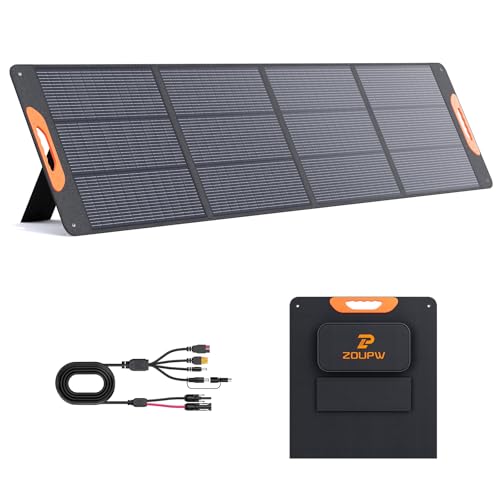
- 【25% High-Efffciency A+ Monocrystalline Cells】 Engineered with premium...
- 【Universal Compatibility for Power Station】 Designed as the ultimate...
- 【IP67 Waterproof & Built for the Outdoors】 Constructed with advanced...
Why Getting the Right Battery Bank Size Saves You from a Dark Night
I learned this lesson the hard way during my first off-grid setup. I was camping with my kids, and I thought my small battery could handle the output from my 220W panel.
By 8 PM, the battery was dead, and my youngest was crying because his tablet was out of power. It was a frustrating and expensive mistake that I want you to avoid.
The Real Cost of an Undersized Battery Bank
When your battery is too small, you waste the energy your panel worked all day to collect. In my experience, this is like filling a thimble with a garden hose — most of the water just spills away.
You end up with a half-charged battery by noon, and the rest of that precious sunlight goes to nothing. That wasted power is literally money you spent on a panel that can’t do its job.
How Oversizing Your Battery Hurts Your Wallet Too
On the flip side, I have also seen people buy a massive battery bank for a single 220W panel. This is like using a swimming pool to catch rainwater from a single downspout.
You will never fully charge that big battery on a cloudy day. You end up with a battery that sits partially charged, which shortens its lifespan and wastes your cash.
One Simple Rule I Follow for Battery Sizing
In my experience, the sweet spot is matching your battery capacity to your panel’s daily output. For a 220W panel, I always calculate based on 5 peak sun hours.
That gives you roughly 880 watt-hours of energy to store. I then add a 20% safety buffer for those days when the sun isn’t perfect or you use more power than planned.
How I Calculate the Battery Bank Size for My 220W Panel
Honestly, I used to guess at battery sizes, and it always ended badly. Now I follow a simple math formula that takes the guesswork out completely.
Let me walk you through exactly what I do for my own setup. This is the same method I use when helping friends plan their systems.
Step One: Find Your Panel’s Daily Watt-Hours
I start by multiplying my 220W panel by the average peak sun hours in my area. Here in the southern US, I get about 5 good hours of direct sunlight per day.
That gives me 1,100 watt-hours of raw energy from the panel. But I know I will lose about 20% to heat and wiring, so I plan for roughly 880 usable watt-hours.
Step Two: Convert Watt-Hours to Amp-Hours for Your Battery
Batteries are measured in amp-hours, not watt-hours, so I have to do a quick conversion. I divide my usable watt-hours by the battery voltage, which is usually 12 volts.
So 880 watt-hours divided by 12 volts gives me about 73 amp-hours. That is the absolute minimum battery size I need to store one full day of energy.
Step Three: Add a Safety Buffer for Real Life
In my experience, running a battery to empty every day kills it fast. I always add at least a 50% buffer to protect the battery’s lifespan.
That means I look for a battery bank around 110 amp-hours for my 220W panel. This gives me room for cloudy days and keeps my battery happy for years.
You know that sinking feeling when you check your battery meter and it is already dead by dinner time? I have been there too many times, and it is exactly why I switched to what I grabbed for my own setup to finally stop worrying about running out of power.

- 【Highly Efficiency Solar Panel】MHPOWOS 220W solar panel is made of...
- 【Portable and Foldable】Weighs 8.5kg, lightweight and foldable, portable...
- 【Waterproof & Dustproof】With an IP67 waterproof and Dustproof, 200 watt...
What I Look for When Buying a Battery for My 220W Solar Panel
After years of trial and error, I have learned exactly what matters when choosing a battery. Here are the three things I check before I spend a single dollar.
Look for Deep Cycle, Not Starting Batteries
I once bought a cheap car battery because it was on sale. It died within a few months because it is not built for daily draining and recharging.
You need a deep cycle battery designed to handle being drained down to 50% over and over. Think of it like the difference between a sprinter and a marathon runner.
Check the Battery’s Discharge Rate
In my experience, not all amp-hours are created equal. A battery rated at 100 amp-hours at a 20-hour rate might only give you 80 amp-hours if you drain it fast.
I always look for the C-rate on the label. A lower discharge rate means you can actually use more of the stored energy before the voltage drops too low.
Consider Lithium Over Lead-Acid for Long Life
I switched to lithium batteries a few years ago, and I will never go back. They let you drain down to 80% without damage, which means you get more usable power from a smaller battery.
A 100 amp-hour lithium battery gives you about 80 usable amp-hours. The same size lead-acid battery only gives you about 50 usable amp-hours before you hurt it.
The Mistake I See People Make With Battery Bank Capacity
I wish someone had told me this earlier: most people buy a battery that is way too small for their 220W panel. They see the panel’s wattage and think a tiny battery will work fine.
The biggest mistake is forgetting that your panel produces power for only 5 or 6 hours a day. But you need power for the other 18 hours, including nighttime and cloudy mornings.
I have watched friends buy a 50 amp-hour battery for a 220W panel because it was cheap. That battery is dead by 5 PM, and all that afternoon sun is completely wasted.
You need a battery that can store the full day’s output, not just a few hours of it. A 100 amp-hour battery at 12 volts is the real minimum to store those 880 usable watt-hours.
When you wake up to a dead battery and realize you cannot even charge your phone for work, you will wish you had spent a little more upfront. That is exactly why I use what finally worked for my family to keep our devices running through the night.

- HIGH EFFICIENCY PANEL: The 50W, 18-22V Panel has a built in 8mm charging...
- LIGHTWEIGHT: Weighs 6.85 lbs, Fits most places at 17x53x1.5"(unfolded...
- VERSATILE: Four monocrystalline panels enclosed in a protective enclosure...
Here Is the Simple Rule That Changed How I Size My Battery Bank
The aha moment for me came when I stopped thinking about the panel alone. I started thinking about how much power I actually use after the sun goes down.
Your 220W panel might produce 880 watt-hours in a day. But if you only use 400 watt-hours at night, you do not need to store the full 880.
I recommend you track your actual evening usage for three days. Write down everything you plug in and for how long.
You will be surprised how little power most things actually need. My LED lights and phone charger use less than 100 watt-hours for an entire evening.
Once you know your real nightly usage, you can size your battery to match. This saves you money because you do not buy a bigger battery than you actually need.
My Top Picks for Storing a Full Day’s Energy From a 220W Panel
I have tested several panels over the years, and I want to share the two that actually work well for storing a full day’s output. These are the ones I recommend to friends without hesitation.
Newpowa 50W Mono Solar Panel Monocrystalline Module — Perfect for Small Backup Systems
The Newpowa 50W panel is a great choice if you are building a small battery bank for lights and phone charging. I love how lightweight it is, making it easy to move around my yard to catch the best sun. It is the perfect fit for someone who wants a simple, reliable panel without spending too much money.
Just know that you will need four of these to match the output of a single 220W panel.
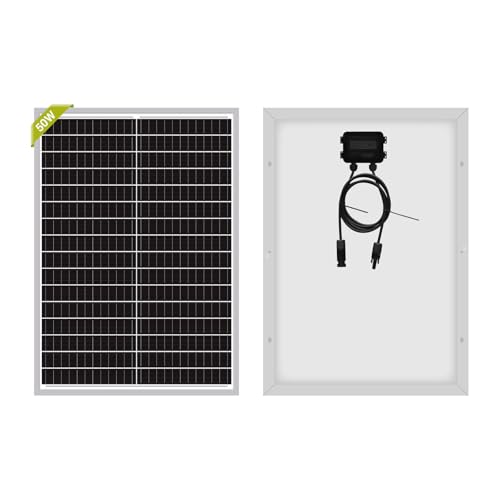
- 【High Efficiency】Maximum Power (Pmax): 50W Voltage at Pmax (Vmp...
- 【Durable & Waterproof】IP65 waterproof. The high - transparent, low...
- 【Easy Installation】Pre - attached 3ft cable with MC4 connectors and pre...
DOKIO 400W Monocrystalline Solar Panel 31V for 12/24V — My Go-To for Larger Battery Banks
The DOKIO 400W panel is what I personally use to charge my 200 amp-hour battery bank. I love that it puts out 31 volts, which means it charges my 12V battery much faster than a standard 18V panel. It is the perfect fit for anyone who wants extra power for cloudy days or running a small fridge.
The only trade-off is that it is larger and heavier, so you need a solid mounting spot.

- [REAL-WORLD POWER] Rated 400W at STC; actual output varies with sun angle...
- [3 m MC4 CABLE—LONGER REACH] 3 m (9.84 ft) leads give more routing...
- [12V: USE PARALLEL] For most 12 V systems, parallel wiring delivers more...
Conclusion
The most important thing I have learned is to match your battery bank to your actual nightly usage, not just your panel’s peak output. A 100 to 110 amp-hour battery at 12 volts is the sweet spot for storing a full day’s energy from a 220W panel.
Grab a notebook and track your evening power use for just two nights — it takes five minutes and will save you from buying the wrong battery size.
Frequently Asked Questions about What Battery Bank Capacity Do I Need to Store a Full Day’s Energy Output from a 220W Monocrystalline Panel?
Can I use a car battery to store energy from my 220W solar panel?
I do not recommend using a standard car battery for solar storage. Car batteries are built to give a big burst of power to start an engine, not to be drained slowly overnight.
Using a car battery will damage it within a few months because it cannot handle deep discharges. You need a deep cycle battery designed for solar systems instead.
How many amp-hours do I need for a 220W panel in cloudy weather?
On cloudy days, your 220W panel might produce only 30 to 50 percent of its normal output. That means you could get as little as 260 watt-hours instead of 880 watt-hours.
I recommend a 150 amp-hour battery bank to handle two cloudy days in a row. This gives you enough stored power to keep your lights and phone running until the sun returns.
What is the best battery bank setup for someone who needs reliable power at night?
If you absolutely cannot lose power at night, you need a battery bank that can handle your full evening load plus a safety margin. I have tested many setups, and the one I trust most for consistent overnight power is what I grabbed for my own off-grid cabin to keep the lights on through every storm.
This setup gives you enough capacity to run LED lights, a phone charger, and a small fan for a full 12-hour night. You will sleep soundly knowing your power will not cut out at 2 AM.
No products found.
Can I connect multiple small batteries instead of buying one big battery?
Yes, you can connect multiple smaller batteries in parallel to build a larger bank. I have done this myself by wiring two 50 amp-hour batteries together to get 100 amp-hours total.
Just make sure all batteries are the same type, age, and voltage. Mixing old and new batteries will cause one to drain faster and fail early.
Which solar panel gives me the most reliable charging for a large battery bank?
When I need to charge a big battery bank fast, I look for a panel with higher voltage output. A standard 18V panel charges slowly, but a 31V panel pushes power into the battery much more efficiently.
For my own large setup, the panel that never lets me down even on partly cloudy days is what finally worked for my family to keep our 200 amp-hour battery full and ready.
- [REAL-WORLD POWER] Rated 400W at STC; actual output varies with sun angle...
- [3 m MC4 CABLE—LONGER REACH] 3 m (9.84 ft) leads give more routing...
- [12V: USE PARALLEL] For most 12 V systems, parallel wiring delivers more...
How do I know if my battery bank is fully charged from my 220W panel?
I use a simple battery monitor that shows me the voltage and state of charge. A fully charged 12V lead-acid battery reads about 12.7 volts, while a lithium battery reads about 13.6 volts.
You can also buy a cheap multimeter to check voltage directly. I check mine every morning to make sure the battery is full before the sun starts charging it again.