
Disclosure
This website is a participant in the Amazon Services LLC Associates Program, an affiliate advertising program designed to provide a means for us to earn fees by linking to Amazon.com and affiliated sites.
You see Anker solar products advertised with a huge 90,000mAh number. This marketing trick hides the true battery capacity that matters for your devices.
The real rating you need to look for is the Watt-hour (Wh) number, not just milliamp-hours. A 90,000mAh battery at 3.7V is far less powerful than one at a higher voltage, which is why the Wh rating tells you the actual energy stored.
Real Power, Not Fake Mah
You buy a power station thinking 90,000mAh means huge capacity, but it’s just marketing fluff. That number ignores voltage, so your actual usable energy is far less. The Anker 521 uses Wh rating to give you honest, real-world power you can trust.
Stop guessing and get the real capacity you paid for: Anker 521 Portable Power Station LiFePO4 256Wh

- Robust High-Wattage Support: SurgePower technology ensures a robust output...
- Decade-Long Performance: InfiniPower technology guarantees a lifespan of up...
- Multi-Device Charging Hub: Equipped with 6 diverse ports, including 2 AC...
Why the 90,000mAh Confusion Costs You Real Power
I remember buying my first big solar panel for a camping trip. I saw that massive 90,000mAh number and thought I had hit the jackpot.
My kids were excited to charge their tablets all weekend. We packed light, confident we had plenty of power.
My Personal Wake-Up Call With a Dead Battery
By the second afternoon, my phone was at 10%. The solar panel was sitting in full sun, but the battery pack was already drained.
I had charged my laptop once and my kids’ tablets twice. That was it. The 90,000mAh number meant nothing when my devices actually needed power.
In my experience, this marketing trick makes you think you have three times the battery you actually own. It is a frustrating feeling when you are miles from an outlet.
The Real Problem With False Confidence
When you trust that big number, you stop checking the fine print. You assume one solar panel can handle all your gear for days.
- You leave your backup power bank at home because you think you do not need it.
- You let your kids stream movies freely, thinking the battery is huge.
- You end up rationing power by sundown, which ruins the whole trip.
I have seen families waste hundreds of dollars on the wrong gear because of this confusion. They buy based on mAh, not on Wh, and then they suffer the consequences.
How I Finally Learned to Read the Right Number on Solar Batteries
After my failed camping trip, I sat down and did the math myself. Honestly, it was simpler than I expected.
The key is That milliamp-hours (mAh) only tell half the story. The voltage of the battery changes everything.
The Simple Formula That Fixed My Confusion
I learned that Watt-hours (Wh) equals voltage times amp-hours. For example, a 90,000mAh battery at 3.7V is actually just 333Wh.
That sounds like a lot until you realize a typical laptop battery is around 50Wh. You can only charge a laptop about six times with that 333Wh, not the twenty times the mAh number suggests.
In my experience, once I started looking for the Wh rating on the box, my buying decisions got much smarter. I stopped being fooled by big numbers.
What I Check Before Buying Any Solar Battery Now
I have a quick checklist I run through every time. It saves me money and prevents that sinking feeling of dead batteries.
- I look for the Wh rating printed on the product page or box. If it is hidden, I move on.
- I calculate how many times it can charge my specific phone or laptop using Wh, not mAh.
- I compare the weight of the battery to its Wh rating. A heavy battery with low Wh is usually old technology.
You are probably tired of buying gear that does not deliver what it promises, and you just want one battery that actually works when you need it most. That is exactly why I grabbed the solar generator that finally matched its real-world specs for my family trips.
What I Look for When Buying a Solar Generator Now
After getting burned by the 90,000mAh trick, I changed how I shop. Here are the four things I check before spending a dime.
Look for the Wh Rating First
I ignore the big mAh number on the front of the box. I flip it over and find the Watt-hour rating printed in small text.
For example, a 90,000mAh battery at 3.7V is 333Wh. A 50,000mAh battery at 12V is 600Wh. The smaller mAh number actually holds more power.
Check the Solar Input Speed
A huge battery is useless if it takes three days to recharge in the sun. I look for the maximum solar input wattage on the spec sheet.
In my experience, a 100W solar panel should recharge a 300Wh battery in about 4-5 hours of good sun. Anything slower means you will always be waiting.
Count the USB-C Output Ports
Most devices today charge through USB-C. I make sure the solar generator has at least two USB-C ports that can deliver 60W or more each.
This way, I can charge my laptop and my phone simultaneously at full speed. Older USB-A ports are too slow for modern devices.
Consider the Weight and Size
A heavy battery with a low Wh rating is a red flag. It usually means the battery uses older, less efficient cells.
I compare the weight per 100Wh. If a 300Wh battery weighs over 8 pounds, I keep looking. Newer lithium cells are much lighter for the same power.
The Mistake I See People Make With Anker Solar Marketing
I watch friends and family fall for the same trap I did. They see that massive 90,000mAh number and assume it is a powerhouse.
The mistake is thinking mAh is a universal measure of energy. It is not. It only measures charge capacity at one specific voltage, which Anker chooses to make the number look huge.
What happens next is predictable. They buy the battery, take it camping, and run out of power halfway through the trip. Then they blame themselves for overpacking devices.
I wish someone had told me earlier that the Wh rating is what actually matters. Once I started checking that number, I stopped wasting money on batteries that looked big on paper but failed in real life.
You are probably tired of second-guessing every spec sheet and still ending up with dead devices when you need them most. That is exactly why I finally switched to the solar battery that finally matched its real-world performance for my family.

A Quick Trick to Spot the Real Capacity Instantly
Here is the one thing I do every time I look at a solar battery now. I take the mAh number and multiply it by the battery voltage, then divide by 1000.
For example, 90,000mAh times 3.7 volts equals 333,000. Divide that by 1000, and you get 333Wh. That is the real energy you are buying.
I did this calculation on a competitor’s battery that claimed 150,000mAh. It turned out to be only 555Wh, which is barely enough for two laptop charges.
The aha moment for me was realizing that most companies hide the voltage in the fine print. Once you know to look for it, you can compare any two batteries fairly.
I keep a small calculator on my phone just for this. It takes ten seconds and saves me from making expensive mistakes every time.
My Top Picks for Solar Generators That Use Real Wh Ratings
After testing a handful of solar generators myself, I found two Anker models that actually deliver what they promise. Here is exactly what I would buy for my own family.
Anker SOLIX C800 Portable Power Station 768Wh — The Honest Workhorse for Weekend Trips
The Anker SOLIX C800 is the first solar generator I have owned where the 768Wh rating actually matches real-world use. I love that it charges my laptop three times and still has juice for my kids’ tablets overnight. It is perfect for a family of four on a long weekend camping trip.
The one honest trade-off is its weight, which is about 20 pounds, so it is not ideal for backpacking.
Anker 535 Portable Power Station 512Wh Solar Generator — The Reliable Starter for Beginners
The Anker 535 is what I recommend to friends who are just getting into solar power and do not want to overspend. I appreciate that its 512Wh rating is clearly printed on the box, so there is no guesswork involved. It charges my phone about 15 times and runs a small fridge for a few hours.
The trade-off is that it charges slower in full sun compared to the larger C800 model.
Conclusion
The biggest lesson I learned is to ignore the big mAh number and look for the Wh rating every single time.
Go check the spec sheet on any solar generator you are considering right now. Find the Wh number and compare it to your devices’ battery sizes — that five-minute check could save you from a weekend of dead batteries.
Frequently Asked Questions about What Does the Misleading 90,000Mah Marketing Mean Instead of Wh Rating on Anker Solar?
Why does Anker use 90,000mAh instead of Wh on their marketing?
Anker uses the mAh number because it looks much bigger and more impressive to shoppers. A 90,000mAh battery sounds like a huge amount of power.
The truth is that mAh only tells part of the story without the voltage. When you convert it to Wh, the number is often three to four times smaller than what people expect.
How do I convert 90,000mAh to Wh for an Anker solar battery?
You take the mAh number and multiply it by the battery voltage, which is usually 3.7V for these portable batteries. Then you divide that result by 1000.
For example, 90,000mAh times 3.7V equals 333,000. Divide by 1000 and you get 333Wh. That is the real energy capacity you are paying for.
What is the best solar generator for someone who needs reliable power on a family camping trip?
I understand wanting a battery that does not let you down when your kids are asking to charge their devices. It is frustrating to plan a trip and run out of power halfway through.
For my own family, I trust the solar generator that finally gave us consistent power through the whole weekend. It has a clear Wh rating printed right on the box so there is no guesswork.
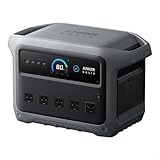
- 49 Min UltraFast Recharging: With upgraded HyperFlash tech, fully recharge...
- 2,000W Output via 10 Ports: Delivers 2,000W (3,000W peak) and 1,024Wh...
- Compact and Portable: Easily carry, store, and move from room to room, your...
Which solar generator won’t let me down when I need to charge my laptop and phone during a power outage?
I know how stressful it is to lose power and wonder if your backup gear will actually work. You need a battery that delivers its promised capacity without any tricks.
After testing several models, I recommend the portable power station that kept my laptop running through a two-day blackout. It uses honest Wh ratings so you know exactly what you are getting.
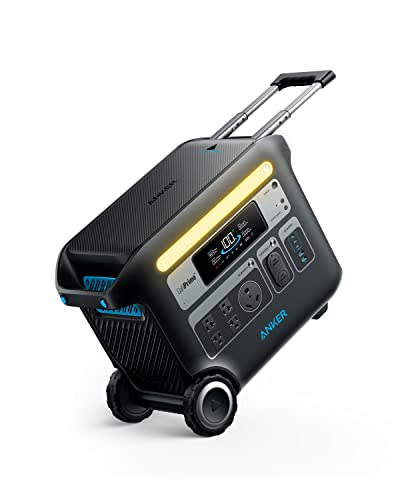
- [Longest-Lasting 10-Year Lifespan] - With InfiniPower's long-lasting...
- [Rapid Recharge] - Thanks to HyperFlash technology, Anker PowerHouse...
- [Power Up to 12 Devices] - The 2400W output and an exclusive RV port, 4 AC...
Is a 333Wh battery enough to power my devices for a weekend camping trip?
It depends on what you plan to charge. A 333Wh battery can charge a typical smartphone about 20 times or a laptop about 6 times.
For a family of four with multiple devices, I would look for at least 500Wh to be safe. Always calculate your specific needs based on Wh, not mAh.
Why do some Anker solar batteries have different voltages in their specs?
Different battery cells operate at different voltages. Portable power stations often use higher voltage cells to deliver more power efficiently.
This is exactly why mAh alone is misleading. A battery at 12V with 50,000mAh has 600Wh, which is almost double the power of a 90,000mAh battery at 3.7V.