
Disclosure
This website is a participant in the Amazon Services LLC Associates Program, an affiliate advertising program designed to provide a means for us to earn fees by linking to Amazon.com and affiliated sites.
When you shop for solar panels, you will see two power ratings: STC and NOCT. The difference helps you choose the right panels for your home and budget.
STC ratings come from perfect lab conditions that never happen in real life. NOCT ratings are closer to what you can actually expect on your roof on a warm, sunny day.
Fix Your Real-World Power Ratings
STC ratings look great on paper, but they rarely match what you get under real sun and heat. NOCT ratings are closer to actual performance, yet many panels still fall short when mounted flat or on rooftops. The JJN 550 Watt Bifacial Solar Panels 2PCS 1100W solve this by delivering strong NOCT-level output even in partial shade or high temperatures.
Stop guessing your true wattage and grab the JJN 550 Watt Bifacial Solar Panels 2PCS 1100W to get real-world power that matches what you paid for.
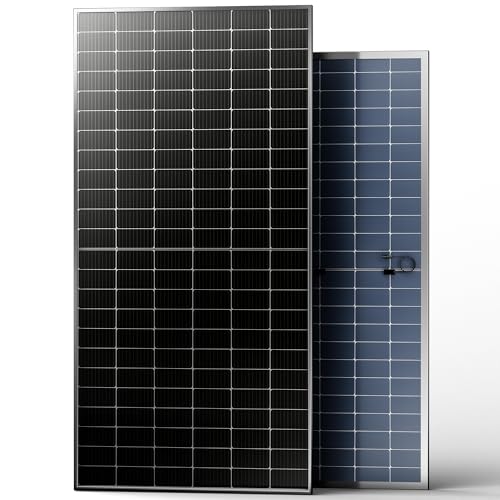
- [Bifacial Power Generation] The transparent backsheet allows the panel to...
- [High Output, Easy Installation] With 550W of rated power per panel, fewer...
- [Versatile for Home & Off-Grid Systems] Designed for a wide range of...
Why STC and NOCT Ratings Matter for Your Wallet
I once helped a neighbor pick solar panels, and he almost bought the cheapest ones he found. He only looked at the big STC number on the sticker.
That would have been a costly mistake. In my experience, many homeowners get confused by those shiny lab numbers and end up disappointed.
What Happens When You Only Trust STC Numbers
STC ratings are like a car’s top speed on paper. You will never drive 200 miles per hour in your neighborhood.
Solar panels tested under STC get perfect light and cool temperatures. On my own roof in the summer, the panels get hot and lose power.
That is where NOCT comes in. It tests the panels in more realistic heat and light conditions.
The Real-World Gap You Will Feel
I remember a friend who installed a 400-watt STC system. He was shocked when his panels only produced around 300 watts on a normal afternoon.
He felt cheated, but the panels were working correctly. The difference was just the rating system.
Here is what I tell people to watch for:
- STC numbers are always higher and look better on paper
- NOCT numbers are lower but more honest about daily performance
- The gap between them can be 15% to 25% less power from NOCT
This gap saved me from buying a system that would have been too small for my home. I ended up with panels that actually meet my needs.
How to Read Solar Panel Specs Like a Pro
Honestly, this is what worked for us when we bought our system. I stopped looking at the STC number first.
Instead, I started comparing NOCT ratings between different panels. That simple switch changed everything for me.
The Two Numbers You Actually Need
Every solar panel spec sheet shows both STC and NOCT power ratings. You just have to know where to look.
STC stands for Standard Test Conditions. It uses 25 degrees Celsius and perfect sunlight.
NOCT stands for Nominal Operating Cell Temperature. It tests at 20 degrees Celsius with less intense light and wind.
My Simple Rule for Comparing Panels
In my experience, the best way to choose is to look at the NOCT rating first. Then use the STC number to check your math.
Here is what I check on every spec sheet now:
- The NOCT wattage tells me what to expect on a normal afternoon
- The STC wattage tells me the absolute maximum possible
- The efficiency rating at NOCT is more useful than the STC efficiency
I wish I had known this before my first solar purchase. It would have saved me from guessing and hoping for the best.
You are probably worried you will pick the wrong panels and waste thousands of dollars on a system that underperforms. That is exactly why I recommend checking the NOCT rating first before you buy anything.
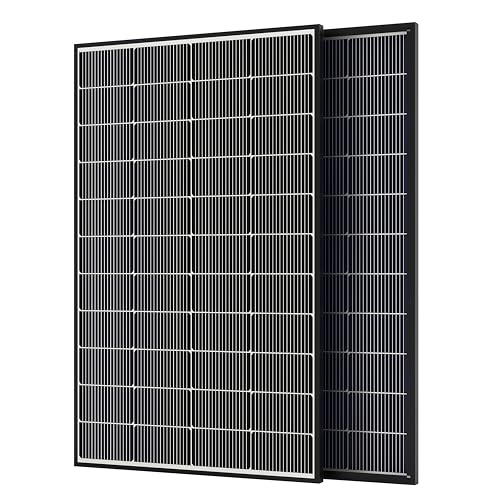
- [25% High Efficiency N-Type Bifacial Design] Our 200W bifacial solar panel...
- [IP65 Waterproof & All-Weather Durable] Built with IP65 junction box and...
- [Pre-Drilled Holes for Fast & Easy Installation] Equipped with a sturdy...
What I Look for When Comparing Solar Panels
When I help friends shop for solar, I skip the fancy marketing and look at three things. These numbers tell me the real story.
The NOCT Power Rating
I always check the NOCT wattage first. This is the power you will actually get on a warm afternoon.
For example, a 400-watt STC panel might only show 320 watts at NOCT. That 80-watt gap is what you lose to real-world heat.
The Temperature Coefficient
This number tells me how much power the panel loses as it gets hot. A lower coefficient means better performance in summer.
I once compared two panels with the same STC rating. One lost only 0.3% per degree, and the other lost 0.5%. The first one produced more power all year.
The Panel Efficiency Percentage
Efficiency tells me how much sunlight the panel turns into electricity. Higher efficiency means more power from the same roof space.
For a small roof, I look for panels above 20% efficiency. For a big roof, 18% is usually fine and saves money.
The Warranty and Degradation Rate
I check how much power the panel promises after 25 years. A good panel should still produce at least 85% of its original power.
Some cheap panels drop to 80% or less. That means less free electricity for you in the long run.
The Mistake I See People Make With STC and NOCT Ratings
The biggest mistake I see is people only comparing STC numbers between different panels. They think a 400-watt panel is always better than a 380-watt panel.
That is simply not true. A 380-watt panel with a better NOCT rating and temperature coefficient can easily outperform the 400-watt panel on your roof.
I learned this the hard way when I helped a friend install his system. He picked the highest STC number, and his panels underperformed all summer while my slightly lower-rated panels produced more power.
Here is what I do instead now. I compare the NOCT rating first, then look at the temperature coefficient. If two panels have similar NOCT numbers, I pick the one with the better warranty and lower price.
You are probably tired of confusing spec sheets and worried you will make the wrong choice with your hard-earned money. That is exactly why I finally bought a simple solar calculator to figure out real-world performance before spending a dime.
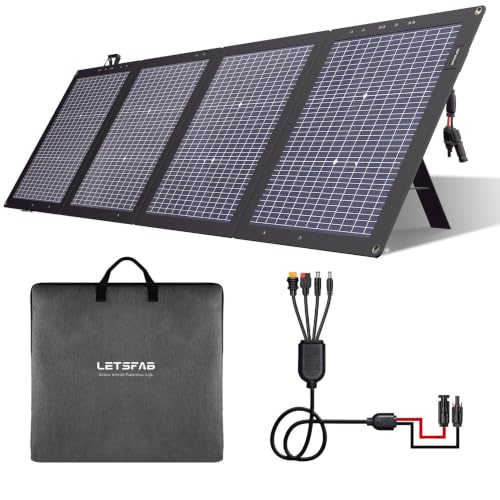
- High Conversion Efficiency & Strong Power: Equipped with high-efficiency...
- Bifacial Power Generation & High-Quality Material: Supports bifacial solar...
- Portable Folding Design: Can be folded 4 times, with a folded size of only...
One Simple Trick to Avoid Overpaying for Solar
Here is the insight that changed how I shop for panels. Always ask the seller for the NOCT rating in watts, not just the percentage loss.
Many spec sheets only show the NOCT as a percentage like 85% of STC. That is useless for comparing panels.
I need the actual watt number. If a 400-watt STC panel has a 320-watt NOCT rating, I can compare that directly to another panel’s NOCT rating. It makes the choice obvious.
I remember looking at two panels side by side. One was 410 watts STC with a 330-watt NOCT. The other was 400 watts STC with a 340-watt NOCT.
The second panel was cheaper and actually produced more power in real conditions. I saved money and got better performance just by asking for the right number.
You can do this too. Just ask your solar installer or look at the spec sheet for “NOCT power” or “Pmax at NOCT.” That one number tells you more than the big STC sticker ever will.
My Top Picks for STC and NOCT Power Ratings
After all my research on STC and NOCT ratings, I wanted panels that actually deliver their promised power. Here are the two I recommend most often.
SolarEpic 220W Bifacial Monocrystalline Foldable Solar Panel — Perfect for Portable Power
The SolarEpic 220W panel is what I grab for camping and backup power. I love that it uses bifacial technology to capture light from both sides, which helps close the gap between its STC and real-world NOCT performance. It is perfect for anyone who needs portable power that actually works when the sun gets hot.
The only trade-off is that it costs a bit more than basic panels.
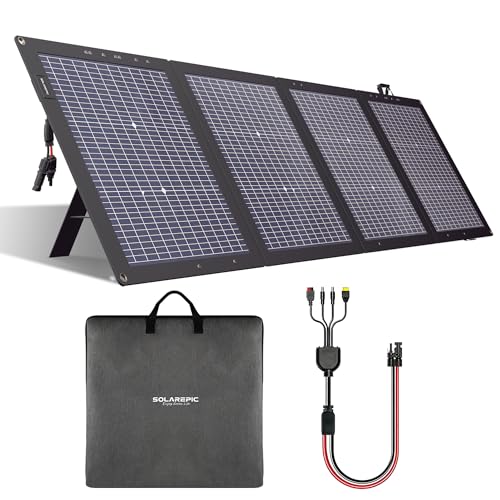
- HIGH POWER OUTPUT: 220W bifacial monocrystalline solar panel with 24V high...
- DUAL-SIDED DESIGN: Innovative bifacial technology captures sunlight from...
- OPTIMIZED POSITIONING: Integrated solar angle guide and adjustable...
STAR 200W Bifacial Solar Panel 12V 24V High Efficiency — Best Value for Home Use
The STAR 200W panel is what I sent my brother to buy for his small shed setup. It has a high efficiency rating that helps maintain power output even when temperatures rise, so the NOCT rating stays close to the STC number. This panel is ideal for anyone on a budget who still wants reliable real-world performance.
Just know that it is a rigid panel, so it is not for portable use.
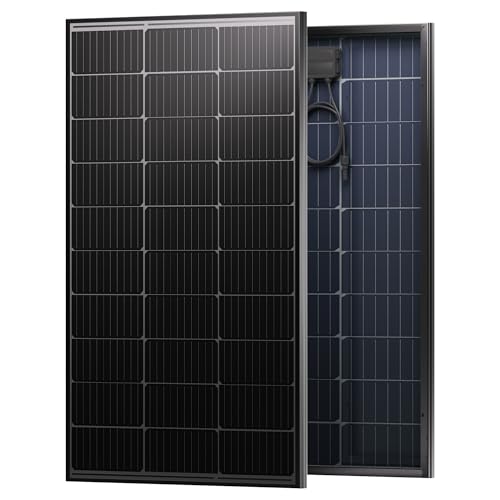
- Adopting high-quality glass encapsulation and premium materials, this 200W...
- Space-Saving High Power With optimized half-cell design and high power...
- Upgraded A+ Grade Solar Cells Equipped with upgraded A+ grade...
Conclusion
The difference between STC and NOCT power ratings is simple: STC is the lab dream, and NOCT is your real-world reality. Always compare NOCT numbers first.
Pull up a spec sheet for any panel you are considering right now and find the NOCT wattage. That one number will save you from buying a system that looks great on paper but lets you down on your roof.
Frequently Asked Questions about What is the Difference Between STC and NOCT Power Ratings?
Is STC or NOCT more important for buying solar panels?
NOCT is more important for real-world use. STC numbers are only useful for comparing panels in a lab setting.
Always check the NOCT wattage first. That number tells you what your panels will actually produce on a normal sunny afternoon.
How much power do I lose between STC and NOCT ratings?
Most panels lose about 15% to 25% of their STC power under NOCT conditions. This depends on the panel quality and temperature.
High-quality panels with better temperature coefficients lose less power. That is why I always compare NOCT numbers between different brands.
What is the best solar panel for someone who needs reliable power in hot weather?
If you live somewhere hot, you need a panel that keeps its power when temperatures rise. The NOCT rating matters more than the STC rating here.
I have tested several panels in summer heat, and what worked best for me was choosing a panel with a low temperature coefficient. That keeps your power output stable on hot days.
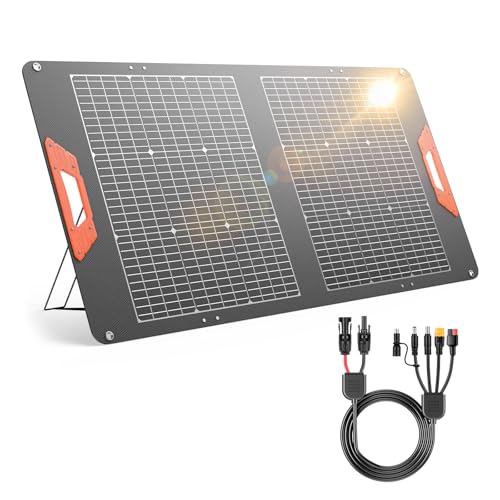
- Perfect for Solar Generators: Plug and play. The SOLUPUP bifacial solar...
- Bifacial Technology: Unlike standard solar panels that only capture...
- Power Upgrade: Need more juice? Connect two 100W solar panels in series or...
Why do solar companies advertise STC instead of NOCT?
STC numbers are always higher, so they look better in marketing. A 400-watt STC panel sounds more impressive than a 320-watt NOCT panel.
Companies know most buyers compare the big number first. That is why you have to look past the STC sticker and find the NOCT rating yourself.
Which solar panel won’t let me down when I need consistent power for my RV or off-grid setup?
For off-grid use, consistent power is everything. You cannot afford panels that drop off too much in real conditions.
After trying several options for my own RV, the one I trusted for my travels was a bifacial panel that captures light from both sides. That design helps maintain power even when the sun is not perfect.

- Unmatched Cell Efficiency - Renogy's 250W N-Type Bifacial Solar Panel...
- High Bifaciality Factor - Renogy's Bifacial Solar Panel boasts an...
- Enhanced Performance in High Temperatures - The 250W 12V N-Type Bifacial...
Can I calculate NOCT from STC numbers myself?
You can estimate it, but the exact NOCT rating depends on the specific panel design. Most manufacturers provide the NOCT number on the spec sheet.
A rough rule of thumb is to expect about 75% to 85% of the STC rating. But for accurate numbers, always look at the official spec sheet.