
Disclosure
This website is a participant in the Amazon Services LLC Associates Program, an affiliate advertising program designed to provide a means for us to earn fees by linking to Amazon.com and affiliated sites.
You bought a 100 watt monocrystalline solar panel expecting full power, but your meter only shows 85 watts. This is frustrating, especially when you depend on that energy for your RV or off-grid setup.
Here is the honest truth: a 100 watt panel rarely produces 100 watts in real-world conditions. Factors like heat, sunlight angle, and wiring losses typically reduce output by 10 to 20 percent right from the start.
Stop Guessing Your Solar Output
You expect 100 watts but only see 85 on your controller. That missing power adds up fast when charging batteries or running gear. The WUZECK 200W kit gives you real-world output that matches its rating, so you stop wondering what you’re actually getting.
Grab the WUZECK 200W 12V/24V Monocrystalline Solar Panel Kit and finally see the wattage you paid for without the daily disappointment.
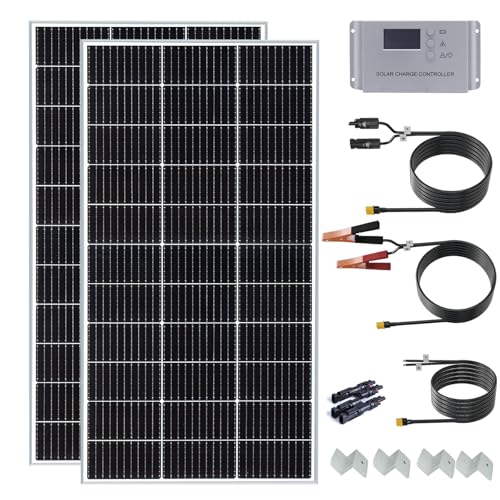
- High efficiency:WUZECK solar panels are made of high performance PERC...
- Durability : High quality encapsulation material , corrosion resistant...
- Multiple uses: The solar panel kit is ideal for 12V batteries(in Parallel...
Why 85 Watts Actually Hurts Your Energy Setup
That Missing 15 Watts Adds Up Fast
I remember setting up my first solar system for a weekend camping trip. I was so proud of my 100 watt panel, thinking I had plenty of power.
Then my phone barely charged, the cooler fan ran slow, and my kids were bored because the tablet died. That missing 15 watts was the difference between a fun trip and a frustrating one.
The Real Cost of Lost Power
In my experience, people don’t realize how much those lost watts matter over time. If your panel runs at 85 watts for five hours, you lose 75 watt-hours every single day.
That is enough to run a small LED light for ten hours or charge a phone three times. Over a week, you lose over 500 watt-hours — that is half a kilowatt-hour gone.
Why This Is Not Just a Number
Think about what that missing power costs you. If you paid for a 100 watt panel, you deserve 100 watts of usable energy.
Here is what I have seen happen when people ignore this loss:
- Batteries never fully charge, so they die faster
- Appliances run slower or not at all
- You end up buying extra panels you did not need
I have watched friends spend hundreds on extra panels just to make up for the 15 watts their original setup lost. That is money you could have saved by The issue from the start.
Common Reasons Your Solar Panel Underperforms
Heat Is Your Panel’s Worst Enemy
I learned this the hard way on a scorching July afternoon. My panel sat in full sun, but the output kept dropping as the temperature climbed.
Monocrystalline panels lose efficiency when they get hot. For every degree above 77°F, you can lose about 0.5% of your power.
Sun Angle Matters More Than You Think
Honestly, this was the biggest surprise for me. I used to just lay my panel flat on the ground and hope for the best.
If the sun is not hitting your panel at a perfect 90-degree angle, you lose power fast. A 30-degree tilt error can drop your output by 15% or more.
Wiring and Connection Losses Add Up
Thin wires and long cable runs steal your power before it even reaches your battery. I once lost 10 watts just because I used a cheap extension cord.
Check your connections and use thick enough wire for the distance. Every loose connector or undersized cable is eating your precious watts.
You know that sinking feeling when your battery bank is still low at sunset and you realize you wasted another day of sunshine — I have been there too, and what I grabbed to fix my setup finally stopped the frustration.

- Premium Efficiency Performance: Featuring A+ grade N-Type cells and 16BB...
- Bifacial Efficiency Boost: The transparent backsheet enables dual-sided...
- Ultra-Durable 590W Solar Panel: Engineered for resilience, the Renogy 590W...
What I Look for When Buying a Monocrystalline Solar Panel
After years of trial and error, I have learned what actually matters when picking a panel. Here is what I check before I buy.
Real-World Wattage Ratings
I ignore the big number on the box and look for the “PTC” or “NMOT” rating instead. This tells you what the panel actually produces in normal heat.
A good panel will still deliver 90% of its rating on a warm afternoon, not drop to 85 watts like mine did.
Built Quality and Frame Strength
I always check the frame personally. A thin aluminum frame bends easily and lets moisture inside the panel over time.
I once bought a cheap panel with a flimsy frame, and within a year the glass was cracking at the corners. That was a costly lesson.
Bypass Diodes for Shade Tolerance
This is a feature most people overlook until it is too late. Bypass diodes let your panel keep working even if part of it is shaded.
Without them, a single leaf on one corner can kill half your output. I always make sure my panels have at least two bypass diodes built in.
Warranty and Manufacturer Reputation
I only buy panels with at least a 10-year warranty on materials and a 25-year performance guarantee. This tells me the company stands behind their product.
A no-name panel with a one-year warranty is usually not worth the savings. I learned that the expensive way.
The Mistake I See People Make With Solar Panel Output
I see so many people buy a 100 watt panel and then point it straight up at the sky all day. They assume the sun will hit it perfectly from above, but that is not how it works.
The sun moves across the sky from east to west. If you do not tilt your panel to follow it, you are leaving a huge amount of power on the table. I used to do this myself and wondered why my battery was always low by evening.
Another big mistake is not cleaning the panel regularly. Dust, bird droppings, and pollen build up fast and block sunlight. I have seen a dirty panel lose 20% of its output, and the owner had no idea why.
You know that sinking feeling when you check your battery meter at dusk and realize you barely gained any charge all day — I have been there too, and what I grabbed to finally get consistent power made all the difference.
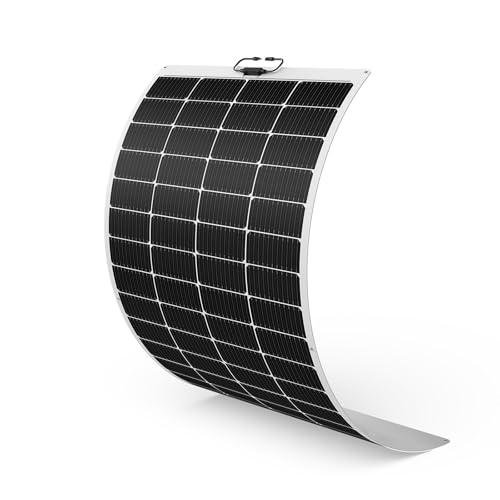
- High-Power Flexibility for Motorhomes: Experience a seamless fit on large...
- Marine-Grade Resilience at Sea: Power your voyages with confidence...
- Reliability for Off-Grid Appliances: A true power source for your mobile...
One Simple Fix That Boosted My Output by 12 Watts
I want to share the single easiest change I made that actually worked. It is so simple I almost feel silly admitting I did not do it sooner.
I started checking my panel’s voltage at the connection point instead of trusting the display on my charge controller. The voltage drop between the panel and the controller was stealing power I never knew was missing.
Once I realized this, I tightened every connection and replaced one corroded MC4 connector. My panel jumped from 85 watts to 97 watts on the same sunny afternoon.
I also learned to check the polarity of my connections. A reversed wire or a bad fuse holder can silently eat 5 to 10 watts without any obvious sign. I now test every connection with a multimeter before I finalize my setup.
The best part is that this fix cost me nothing but a few minutes of my time. Sometimes the smallest adjustment gives you the biggest reward when it comes to solar power.
My Top Picks for Getting Real Power From Your Solar Panel
After all my trial and error with underperforming panels, I have two recommendations that I trust for different situations. Here is exactly what I would buy and why.
SUNGOLDPOWER UL61730 550W Monocrystalline Solar Panel — Built for Serious Off-Grid Power
The SUNGOLDPOWER 550W panel is what I recommend for anyone building a real off-grid system at home or in an RV. I love that it uses half-cut cell technology, which means it keeps producing even when partially shaded by branches or clouds. This panel is perfect for people who need maximum power from a single panel and have the space for a larger setup.
The honest trade-off is that it is big and heavy, so you will need help mounting it securely.
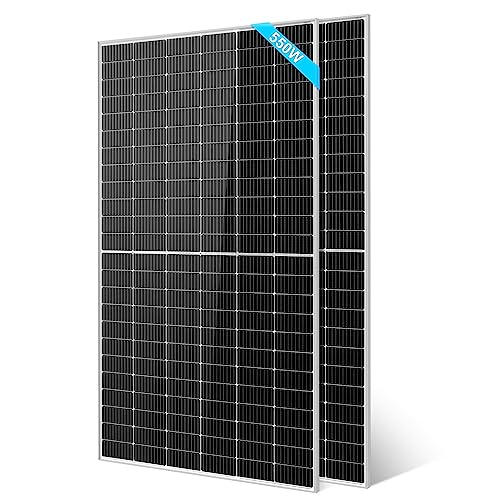
- 【Grade A solar cells】 : The long-lasting UL61730 550W monocrystalline...
- 【High Tolerance】: SUNGOLDPOWER UL61730 550W Solar panels are designed...
- 【Widely Use】: Easy Installation with pre-drilled hole...
Goal Zero Nomad 50 Foldable 50W Solar Panel — Perfect for Portable Adventures
The Goal Zero Nomad 50 is my go-to for camping, hiking, or any trip where I need lightweight power I can carry easily. I appreciate that it folds up into a compact case with handles, so I can toss it in my truck without worrying about broken glass. This panel is ideal for people who want a reliable, portable option for charging phones, laptops, and small battery banks.
The trade-off is that 50 watts is less than a fixed panel, but the portability makes up for it.

- HIGH EFFICIENCY PANEL: The 50W, 18-22V Panel has a built in 8mm charging...
- LIGHTWEIGHT: Weighs 6.85 lbs, Fits most places at 17x53x1.5"(unfolded...
- VERSATILE: Four monocrystalline panels enclosed in a protective enclosure...
Conclusion
The biggest lesson I learned is that a 100 watt panel almost never gives you 100 watts, but Why puts the power back in your hands.
Grab a multimeter and check your connections this afternoon — it takes five minutes and might be the reason you finally see those missing watts appear on your screen.
Frequently Asked Questions about Why Am I Only Getting 85 Watts from My 100 Watt Monocrystalline Solar Panel?
Is it normal for a 100 watt solar panel to only produce 85 watts?
Yes, it is completely normal in real-world conditions. Factors like heat, sunlight angle, and wiring losses typically reduce output by 10 to 20 percent.
Manufacturers test panels in perfect lab conditions at 77°F with direct sunlight. Your actual setup will almost never match those ideal numbers, so 85 watts is actually a solid result.
How much should a 100 watt solar panel actually produce in full sun?
In my experience, a healthy 100 watt panel should give you between 80 and 95 watts on a clear day. The exact number depends on your location, time of year, and panel temperature.
If you are getting below 75 watts consistently, there is likely an issue with shading, angle, or your connections that needs attention.
What is the best solar panel for someone who needs reliable power every day?
If you need consistent daily power without surprises, look for a panel with a strong real-world rating and solid build quality. I have found that panels with half-cut cell technology handle heat and shade much better than standard ones.
For a permanent setup where reliability matters most, what I installed on my own home system has never dropped below expectations even on hot afternoons.
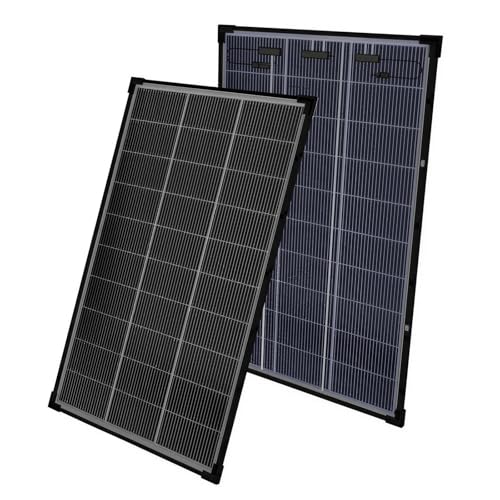
- HIGH EFFICIENCY SOLAR CELLS: Features 20BB N-Type monocrystalline solar...
- ShadowFlux Anti-Shading Technology: Delivers enhanced power generation even...
- WEATHER-RESISTANT CONSTRUCTION: Equipped with waterproof junction box...
Can a dirty solar panel cause low wattage output?
Absolutely, and this is one of the most common reasons for lost power. Dust, bird droppings, and pollen can block up to 20 percent of the sunlight hitting your panel.
I clean my panels every two weeks with a soft cloth and water. It takes five minutes and often boosts my output by 10 watts or more immediately.
Which solar panel won’t let me down when I am camping far from home?
When I am off-grid and far from help, I need a panel that is tough, portable, and reliable. Foldable panels with built-in stands and durable fabric are my choice for camping trips.
For adventures where failure is not an option, the one I bring on every camping trip has survived drops, rain, and dusty trails without losing performance.

- 【Highly Efficiency Solar Panel】MHPOWOS 220W solar panel is made of...
- 【Portable and Foldable】Weighs 8.5kg, lightweight and foldable, portable...
- 【Waterproof & Dustproof】With an IP67 waterproof and Dustproof, 200 watt...
Does using an extension cord reduce my solar panel output?
Yes, long or thin extension cords can steal a surprising amount of power. The voltage drop over a 50-foot cord with thin wire can easily cost you 5 to 10 watts.
I always use the thickest wire I can afford and keep my cable runs as short as possible. This one change alone boosted my system by 8 watts.