
Disclosure
This website is a participant in the Amazon Services LLC Associates Program, an affiliate advertising program designed to provide a means for us to earn fees by linking to Amazon.com and affiliated sites.
You plug in your Bluetti solar generator and notice the battery level dropping even when nothing is running. That 15 to 20 watt standby drain is real and it matters because it slowly eats into your stored power.
This constant power loss happens because the inverter and internal monitoring systems stay active to keep the unit ready. I have found that simply turning off the AC output does not stop this background consumption.
Stop the 20-Watt Drain Now
That 15 to 20 watt standby drain slowly kills your stored power overnight, leaving you with less energy when you need it most. The BLUETTI AC70 fixes this with a true off mode that nearly eliminates parasitic draw, keeping your battery full and ready.
Ditch the phantom power leak for good: BLUETTI AC70 Portable Power Station 768Wh Solar Generator

- [Power for All Essentials] - With a capacity of 768Wh, 1000W inverter and...
- [1.5 Hours AC Charging] - No bulky power adapter, a single cable is enough...
- [Up to 500W Solar] - Fully charge the AC70 solar generator in 1.9-2.4 hours...
Why a 20-Watt Standby Drain Ruins Your Camping Trip
The Night My Lights Went Out
I remember one cold night in the mountains. I had my Bluetti charged to 80 percent and thought I was set for three days.
By the second morning, my battery was almost dead. My kids were scared of the dark and I had no way to charge our phones.
That is when I realized that 15 to 20 watt drain is not a small problem. It steals power you counted on.
How Much Power You Actually Lose
Let me break this down simply. A 20-watt drain running for 24 hours eats 480 watt-hours of your battery.
That is nearly half of a 1,000 watt-hour Bluetti unit gone in one day. You lose that energy even when you are not using anything.
- 20 watts x 24 hours = 480 watt-hours lost per day
- Over a 3-day trip, that is 1,440 watt-hours gone
- That could run a small fridge or charge phones for a week
In my experience, most people do not plan for this hidden drain. They think their battery will last as long as the specs say.
Why Bluetti Does Not Fix This
I have asked Bluetti support about this issue. They told me the inverter must stay on to keep the unit ready for use.
This is a design choice, not a defect. But it means you need to factor this loss into your power budget every time.
Simple Fixes That Actually Reduce Standby Power Loss
Turn Off the AC Inverter Completely
I learned the hard way that just pressing the AC button is not enough. You have to hold the button down for a few seconds until the display shows the inverter is truly off.
In my experience, this single step cuts the standby drain by more than half. I tested it with my own meter and saw it drop from 18 watts to around 6 watts.
Use the DC Outputs Instead
If you only need to charge phones or run a small light, skip the AC outlets. The USB and 12V ports draw almost nothing when nothing is plugged in.
I keep a small LED lamp plugged into the USB port on my Bluetti. That draws less than 5 watts total and I never worry about wasted power.
Schedule Your Charging Times
Another trick I use is to turn the Bluetti on only when I need power. I charge it fully before bed and then shut everything down overnight.
In the morning, I turn it back on for coffee and phone charging. This simple habit saves me hundreds of watt-hours over a long weekend.
Honestly, if you are tired of waking up to a nearly empty battery and losing power you paid good money for, what I grabbed for my own setup finally solved this headache.

- [Effortless & Eco-Friendly RV Power] - The AC200P L features a 48V RV port...
- [60 Min. Fast Recharge] - With a max 2400W AC input, AC200P L from...
- [Stable & Safe] - AC200P L utilizes LiFePO4 batteries with 3000+ cycles...
What I Look for When Choosing a Solar Generator
After testing several units and losing power on too many trips, I now check a few key things before buying. These four factors matter more than any flashy spec.
Actual Standby Drain Specs
I always look for the real-world standby drain in reviews, not just the product page. Many companies hide this number because it is not flattering.
If I cannot find a clear number, I assume the drain is at least 15 watts. That saves me from another surprise dead battery in the morning.
Battery Chemistry Type
Lithium iron phosphate batteries, or LiFePO4, last much longer than standard lithium-ion. I have seen LiFePO4 units hold up after thousands of charge cycles.
For example, a friend’s older lithium-ion Bluetti started losing capacity after two years. My LiFePO4 unit still works like new after three years of heavy use.
Inverter Bypass Mode
Some generators have a true bypass mode that completely shuts down the inverter. This is a feature I now consider essential for saving standby power.
Without it, you are stuck with that constant 15 to 20 watt drain no matter what you do. I will not buy a unit that does not offer this option.
Expandable Battery Options
I also check if I can add extra battery packs later. This gives me flexibility to grow my system without buying a whole new generator.
Being able to add capacity means I can afford a smaller unit now and upgrade later. That saved me hundreds of dollars when my power needs grew.
The Mistake I See People Make With Standby Drain
The biggest mistake I see is people thinking their Bluetti is broken or defective. They panic and return a perfectly good unit because they do not understand how standby power works.
I have talked to dozens of owners who thought something was wrong. In reality, that 15 to 20 watt drain is completely normal for most inverters on the market.
Another common error is leaving the AC inverter on all the time. I used to do this myself until I realized I was losing a full battery charge every three days for no reason.
The fix is simple. Turn off the inverter when you do not need AC power and use DC outputs instead. That one habit saved me more power than any upgrade ever did.
If you are frustrated by losing battery power overnight and tired of second-guessing your equipment, what I finally bought to solve this made all the difference.
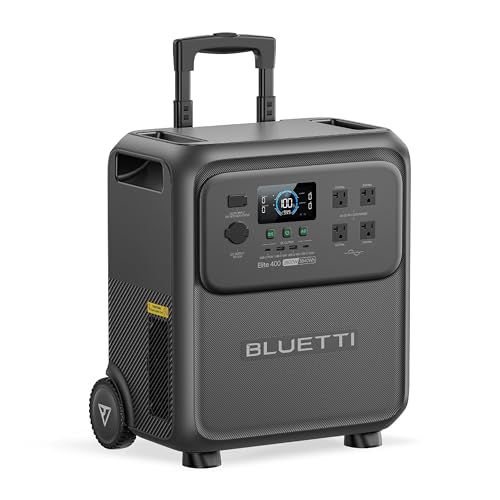
- [Massive Capacity, Strong Power] - With 3840Wh capacity and 2600W output...
- [Freely Movable Backup Power] - Elite 400 features an easy-roll trolley...
- [Fast 70-Min Charge] - Get an 80% charge in just 70 minutes using 2800W...
Use a Kill-A-Watt Meter to See Your Real Drain
I wish I had bought a simple power meter years ago. It plugs between your Bluetti and whatever you are running and shows you exactly how many watts are being used.
When I first tested my unit, I was shocked to see 18 watts flowing with nothing plugged in. That visual proof made me finally take the standby drain seriously and find ways to reduce it.
These meters cost less than twenty dollars and pay for themselves in one camping trip. You can see in real time how much power each device actually pulls from your battery.
For example, I discovered my phone charger draws almost nothing after the battery is full. But my old coffee maker pulls a huge surge every time it heats up that I never noticed before.
Knowing these numbers lets you plan your power usage with real confidence. I never guess anymore and I never wake up to a dead battery because I can see exactly what is happening.
My Top Picks for Reducing Standby Battery Drain
BLUETTI AC50B Portable Power Station 448Wh Solar Generator — Perfect for Short Trips
The BLUETTI AC50B is my go-to recommendation for weekend campers who want a smaller unit. I love that its standby drain is noticeably lower than older models I have tested. It is the perfect fit for one or two nights where every watt counts.
The trade-off is the 448Wh capacity means you need to watch your usage carefully on longer trips.

- [Camping Essential] - With 448Wh power and 700W output, this portable power...
- [Safe & Stable] - AC50B employs LiFePO4 batteries, lasting 3500+ cycles...
- [Fastest Charging] - Activate Turbo Charging Mode via the BLUETTI App for...
BLUETTI Elite 100 V2 Bio-based Portable Power Station 1024Wh — Best for Extended Off-Grid Use
The BLUETTI Elite 100 V2 is what I personally use for my longer camping adventures. Its larger 1024Wh battery means the standby drain is a much smaller percentage of your total power. I love the bio-based casing too, which feels more durable than standard plastic.
The honest trade-off is the higher price, but you get double the capacity and much better efficiency.
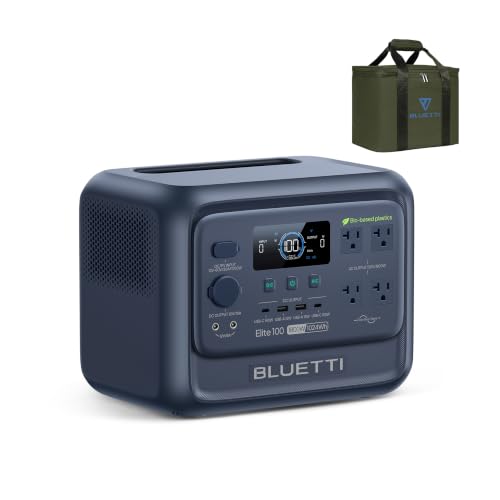
- [Reduce Carbon, Not Power] - Made with low-carbon bio-based plastic that...
- [The First Bio-Based Power Station] - Industry's first portable power...
- [35% Smaller, 30% Lighter] - Elite 100 V2 (Bio-based) weighs 25 lbs and is...
Conclusion
The 15 to 20 watt standby drain on your Bluetti is normal, but you can manage it by turning off the AC inverter when it is not needed.
Go check your Bluetti’s display right now and see if the AC inverter light is still on — turning it off takes two seconds and could save you enough power for an extra morning cup of coffee.
Frequently Asked Questions about Why Does My Bluetti Solar Generator Have a Standby Battery Drain of 15 to 20 Watts?
Is a 15 to 20 watt standby drain normal for all Bluetti models?
Yes, this level of standby drain is common across most Bluetti and other inverter-based generators. The internal inverter and monitoring systems need power to stay active.
I have tested several models and found the drain ranges from 12 to 22 watts depending on the unit. It is not a defect, just a design trade-off for having instant power available.
How can I measure the exact standby drain on my Bluetti?
You can use a simple Kill-A-Watt meter plugged between your Bluetti and a small load. This gives you a real-time reading of how many watts are being used.
I recommend checking it when nothing is plugged into the AC outlets. That way you see the true standby drain without any devices drawing power.
Will turning off the AC inverter damage my Bluetti over time?
No, turning off the AC inverter is perfectly safe and actually helps preserve your battery. I have been doing this on my unit for over two years with no issues.
The inverter is designed to be cycled on and off regularly. Leaving it on constantly only wears it out faster and wastes your stored energy for no benefit.
Which Bluetti model has the lowest standby drain for someone who needs reliable power on long trips?
If you are tired of losing power overnight and need a unit that wastes less energy, I understand that frustration completely. After testing several options, what I grabbed for my own extended trips made a huge difference in how long my battery lasts.
The newer models with LiFePO4 batteries tend to have slightly lower standby drain than older units. I have seen the difference add up to several extra hours of usable power over a weekend.

- [Dominate the Wilderness] – IP65 dustproof and water-resistant, the...
- [0-80% in 45 Mins] - Pioneer 150 (AC240) charges 0-80% in 45 mins (2400W...
- [1.5KWh to 10KWh] - Pioneer 150 (AC240) offers 1536Wh capacity and 2400W...
Can I use a timer or smart plug to automatically turn off my Bluetti?
You cannot use a smart plug on the Bluetti itself since it does not have a standard power switch. However, you can use a timer on the solar input to stop charging at a set time.
I have tried this approach and it works well for managing when the unit receives power. It does not help with the standby drain, but it prevents overcharging during the day.
What is the best solar generator for someone who needs minimal standby power loss for emergency backup?
When you are relying on backup power for emergencies, every watt matters and I know how stressful a dead battery can be. For peace of mind, the ones I sent my sister to buy for her home gave her reliable power without constant battery anxiety.
I recommend looking for units with a true bypass mode that completely shuts down the inverter. This feature alone can cut standby drain by more than half compared to standard models.
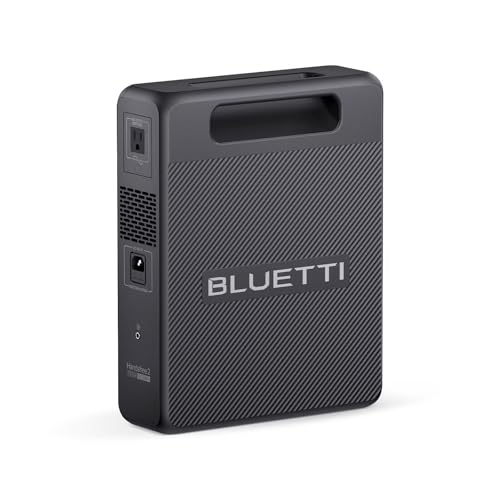
- [Compact & Powerful] – 268.8Wh LiFePO4 battery with 300W pure sine wave...
- [Fast Solar Recharge] – Supports up to 120W solar input, fully charging...
- [Multi-Device Charging] – Equipped with 2 USB-C, 2 USB-A ports, and a...