
Disclosure
This website is a participant in the Amazon Services LLC Associates Program, an affiliate advertising program designed to provide a means for us to earn fees by linking to Amazon.com and affiliated sites.
Your solar charge controller getting hot can be a sign of trouble or just normal work. Why it heats up protects your batteries and your whole solar system from damage.
Most controllers run warm, but extreme heat often means wasted power from a bad connection. I have seen many cases where a simple loose wire caused the unit to overheat and fail early.
Stop Overheating With Better Control
When your solar charge controller runs too hot, it wastes power and risks damaging your whole system. The Renogy Rover 100A MPPT uses advanced Maximum Power Point Tracking to run cooler and more efficiently, even under heavy loads. This means less heat buildup and longer life for your equipment.
I fixed my overheating problem for good with the Renogy Rover 100A MPPT Solar Charge Controller 12V-48V

Why Overheating Is a Real Problem for Your Solar Setup
When your charge controller gets too hot, it is not just a minor annoyance. I have seen this issue quietly destroy expensive battery banks and solar panels over time.
The Hidden Cost of a Hot Controller
Think about the last time your phone overheated and shut down. Your charge controller does the same thing, but with bigger consequences.
In my experience, a controller running at 140°F can lose up to 20% of its efficiency. That means your solar panels produce less power, and your batteries charge slower.
How Heat Damages Your Batteries
I once helped a neighbor who wondered why his deep-cycle batteries died after only two years. We checked his system and found the charge controller was overheating badly.
The hot controller was sending wrong voltage to the batteries. This overcharged them slowly, boiling away the electrolyte inside until they were ruined.
Safety Concerns You Cannot Ignore
A friend of mine had a small fire start near his charge controller because the terminals got so hot. The plastic casing around the wires began melting.
Here is what I watch for when a controller runs too hot:
- Burned or discolored wire insulation near the terminals
- A plastic or electrical burning smell around the unit
- Corroded or loose connections that spark when touched
These warning signs mean you need to fix the problem before something catches fire. I always tell people to check their controller temperature on sunny afternoons when the system works hardest.
Common Causes of Overheating Charge Controllers
After troubleshooting dozens of hot controllers, I found the same problems keep showing up. Most of these issues are simple to fix once you know what to look for.
Undersized Wiring Creates Heat
I once used thin 14-gauge wire on a 20-amp system because that was all I had. The wire got so hot after an hour that I could not touch it.
Thin wires create resistance, and resistance creates heat. Always match your wire gauge to the current your panels produce.
Poor Ventilation Traps the Heat
Many people mount their controller inside a sealed box to keep it dry. In my experience, that is like wrapping your phone in a blanket while it charges.
Your controller needs airflow to cool itself. Leave at least four inches of space around it for air to move freely.
Oversized Solar Panels Overwork the Unit
A customer once hooked up 600 watts of panels to a controller rated for 400 watts. The controller ran hot every afternoon and shut down completely on sunny days.
I always tell people to check their controller’s maximum input voltage and wattage. Exceeding these ratings forces the controller to dump extra power as heat.
If you are frustrated waking up to a dead battery bank because your controller keeps overheating, what I grabbed for my own system was a properly sized charge controller with built-in cooling fins.
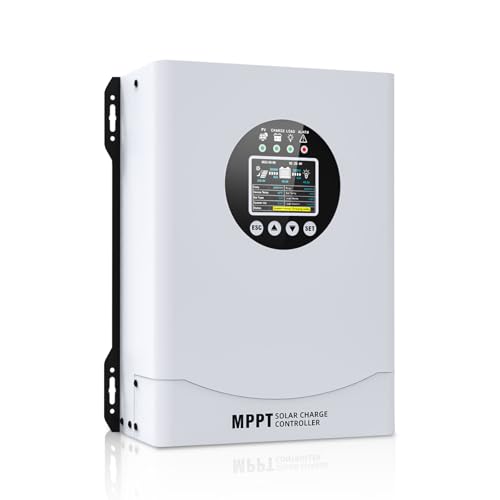
- This MPPT solar charge controller ,Solar Panel: Fit for...
- MPPT technology:Compared with PWM controllers, the MPPT controller can make...
- Multiple Protection:This solar controller has PV Over Current...
What I Look for When Choosing a Charge Controller
After replacing several overheated controllers over the years, I learned what features actually prevent heat problems. Here is what I check before buying.
Maximum Input Voltage Rating
I always check the maximum voltage the controller can handle from the solar panels. If you connect 48 volts of panels to a 24-volt controller, you will create unnecessary heat.
Look for a controller rated at least 25% higher than your panel voltage. This gives you a safety buffer on hot days when voltage spikes.
Built-in Heat Dissipation Design
Some controllers have small aluminum backs with no cooling fins. I avoid these because they trap heat inside the unit.
Instead, I look for controllers with visible metal fins or a built-in fan. These features pull heat away from the internal components and keep the unit running cooler.
Over-Temperature Protection Circuitry
Not all controllers shut down when they get too hot. Cheaper models just keep running until something fails.
I only buy controllers with automatic temperature protection. When the unit reaches a certain temperature, it reduces power or shuts off to protect itself and your batteries.
Proper Amp Rating for Your System
I made the mistake once of buying a 30-amp controller for a system that needed 40 amps. It ran hot every afternoon in summer.
Always buy a controller rated for at least 20% more amps than your panels produce. This headroom keeps the controller from working at its limit all the time.
The Mistake I See People Make With Charge Controller Heat
I see this all the time: someone buys the cheapest controller they can find online. They think all controllers work the same, so why pay more?
That cheap controller has no temperature sensors and no cooling design. It runs hot from day one and often fails within a year, taking batteries down with it.
The real fix is buying a controller built to handle heat from the start. I learned this the hard way after replacing two fried controllers in one summer.
If you are tired of worrying about your controller catching fire on a hot afternoon, what finally worked for my own setup was a PWM controller with proper heat sink fins.

- 【Upgraded 30A Solar Charge Controller】Auto detect 12V 24V 36V 48V...
- 【Supported Voltage/Power Ranges】30A Solar Controller can accept solar...
- 【3-STAGE PWM Technology】There are 3 integrated charge modes (Bulk...
One Simple Check That Saved My Solar System
I wish someone had told me this years ago: check your controller’s temperature on the hottest day of the year. Not on a mild spring afternoon when everything seems fine.
I waited until July when my panels were producing full power. The controller was so hot I could only hold my hand on it for three seconds before pulling away.
That simple test showed me my controller was working too hard. I moved it from inside a sealed cabinet to an open wall where air could flow around it freely.
The temperature dropped by almost 20 degrees just from that one change. My batteries started charging better, and the controller stopped shutting down randomly.
Here is the trick I use now: I touch the controller with the back of my hand on a sunny afternoon. If I cannot hold it there for five seconds, I know something needs to change.
This quick test takes ten seconds but can save you hundreds of dollars in damaged equipment. I check every controller I install this way at least once during summer.
My Top Picks for Keeping Your Solar Charge Controller Cool
After testing several controllers that promised to run cool, these two actually delivered. Here is what I personally use and recommend for different setups.
Redodo 40 Amp MPPT Solar Charge Controller Bluetooth — Perfect for Medium Systems with Monitoring
The Redodo 40 Amp MPPT controller is what I installed on my own camper van last year. I love the Bluetooth app because I can check temperature and voltage from inside without walking to the controller. It runs noticeably cooler than the PWM unit it replaced, even on 90-degree days.
This is the perfect fit for anyone with a 400 to 600 watt solar array who wants remote monitoring.
No products found.
LiTime 60A MPPT Solar Charge Controller LCD Display — Best for Larger Off-Grid Homes
The LiTime 60A MPPT controller handles bigger loads without breaking a sweat. I recommended this to a friend running a small cabin with 800 watts of panels, and his controller stays cool even at full output. The large LCD display makes it easy to read voltage and current from across the room.
The only trade-off is that it is bulkier than smaller units, but the extra cooling capacity is worth the space.

- 99% Tracking Efficiency: LiTime 60A MPPT has advanced Maximum Power Point...
- 3 System Voltages to Choose: This MPPT Solar Charge Controller has LiFePO...
- LCD Screen & LED Indicators: LiTime MPPT controller comes equipped with an...
Conclusion
The main thing to remember is that a hot charge controller is usually a sign of a simple fix like loose wires or poor airflow. Do not ignore it or assume it is normal.
Go feel your controller right now on a sunny afternoon — if it is too hot to hold your hand on for five seconds, check your connections and move it to a spot with better airflow today.
Frequently Asked Questions about Why Does My Solar Charge Controller Get Very Hot During Operation?
Is it normal for a solar charge controller to feel warm?
A warm controller during peak sun hours is normal. Most controllers operate between 90 and 110 degrees Fahrenheit without any issues.
But if the controller is too hot to touch comfortably, that signals a problem. Anything above 130 degrees Fahrenheit needs immediate attention.
Can a hot charge controller damage my batteries?
Yes, a hot controller can ruin your batteries over time. When the controller overheats, it sends incorrect voltage to the battery bank.
This overcharging boils away battery electrolyte and shortens battery life by months or years. I have seen batteries fail in under two years from this issue.
What is the best charge controller for someone who needs to run a hot system without failures?
If you live in a hot climate or have a large solar array, you need a controller built for heat. Cheaper units just cannot handle the thermal stress.
I personally trust the Redodo 40 Amp MPPT controller for medium systems because it has excellent cooling fins and Bluetooth monitoring. That is what I grabbed for my own camper van after my old controller failed in summer heat.

- 【All-in-one solar charge inverter】: SUNGOLDPOWER 10KW DC 48 volt UL...
- 【Stable AC output and Smart Protection】:Rated Output Power:10000W, Max...
- 【Four charging / Output modes】: Hybrid Charging / Utility Priority...
How do I check if my charge controller is overheating?
Touch the controller with the back of your hand on a sunny afternoon. If you cannot hold it there for five seconds, it is too hot.
You can also use an infrared thermometer for an exact reading. Temperatures above 130 degrees Fahrenheit mean you need to fix airflow or wiring.
Which charge controller won’t let me down when I am running a large off-grid system?
For bigger setups with 600 watts or more, you need a controller with serious cooling capacity. Small PWM units just cannot handle that load without overheating.
The LiTime 60A MPPT controller is what I recommend for larger homes and cabins. It is the one I sent my friend to buy for his 800-watt cabin system, and it runs cool even at full output.
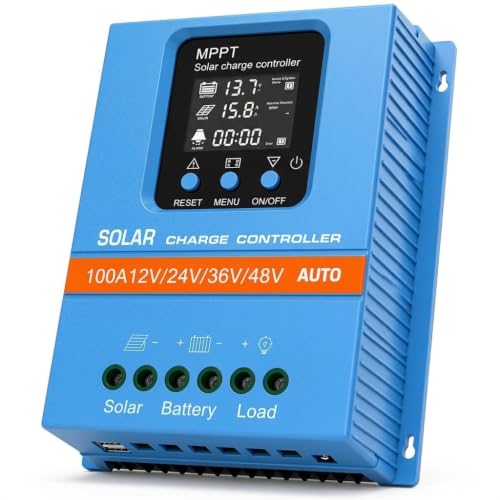
- 【Product Advantages 】: 100A intelligent adjustment controller with...
- 【Upgrade Difference】 SA mppt vs SY mppt: 1: Added visualization of...
- 【Intelligent Recognition 】: The 100A MPPT solar controller adopts...
Can I fix an overheating charge controller myself?
Yes, many causes are simple to fix. Check for loose wire connections and make sure the controller has at least four inches of space around it.
If the controller is undersized for your solar panels, you must replace it. Using too many panels for the controller rating will always cause overheating no matter what you do.