
Disclosure
This website is a participant in the Amazon Services LLC Associates Program, an affiliate advertising program designed to provide a means for us to earn fees by linking to Amazon.com and affiliated sites.
You plug in your new solar charge controller and look for a screen. Instead, it tells you to download an app on your phone. This can feel frustrating when you just want to see your battery voltage or solar input.
Many modern charge controllers remove the display to keep costs low and the unit waterproof. The phone app actually gives you more detailed data than any small screen could show. You get real-time graphs and historical trends right on your device.
No Phone Needed for Settings
When your solar controller relies on a phone app, you’re stuck if the battery dies or you lose the device. Adjusting settings becomes a frustrating hunt for a working phone. The Qigreesol 120A regulator lets you change everything directly on its clear screen, ending that dependency for good.
Here’s what ended my phone-dependency headache: Qigreesol Solar Charge Controller 120A Intelligent Regulator

- 【Product Advantages 】: 120A intelligent adjustment controller with...
- 【Upgrade Difference】 SA mppt vs SY mppt: 1: Added visualization of...
- 【Intelligent Recognition 】: The 120A MPPT solar controller adopts...
Why Losing the Physical Display Frustrates Real People
I remember the first time I installed a solar controller without a screen. I was out in my shed, holding my phone up to the sun, trying to see the app. My hands were dirty, and the glare made the screen unreadable.
In my experience, this problem hits hardest when you least expect it. You are camping in the rain, or your battery dies at dusk. Suddenly, you cannot check anything without a charged phone and a signal.
The Moment You Realize You Are Stuck
Last summer, my neighbor Tom called me in a panic. His RV solar system stopped working, and his fridge was warming up. He could not read any values because his phone battery was dead from the trip.
Tom spent two hours hunting for a charger before he could even look at his controller data. That is time he could have spent fixing the actual problem. This is the hidden cost of a screenless controller.
What You Actually Lose Without a Screen
When you rely entirely on a phone, you lose the ability to troubleshoot in real time. A simple glance at a display tells you your voltage instantly. With an app, you must unlock, open, wait for Bluetooth, and scroll.
Here is what I have found people miss the most:
- Instant voltage checks when something feels wrong
- Battery percentage readouts without fumbling for a phone
- Error codes that show up right on the device itself
- The ability to check values while the phone is dead or lost
How This Wastes Your Time and Money
I once helped a friend who bought a cheap controller with no screen. He thought the app would be fine. But every time he wanted to adjust settings, he had to stand right next to the unit with his phone.
He eventually replaced it with a model that had a basic LCD. The app was great for data logging, but the screen saved him daily frustration. In my opinion, a screen is not a luxury.
It is a basic tool for anyone who actually uses their solar setup.
What I Learned About Bluetooth Controllers the Hard Way
Honestly, I used to think Bluetooth controllers were the future. No wires, no clunky screens, just pure tech. But after a few real-world tests, I changed my mind completely.
The biggest issue is reliability. Bluetooth drops connection when you walk ten feet away. If your controller is in a basement or an RV compartment, you might not get a signal at all.
When Bluetooth Fails You in the Field
I was helping a friend set up a solar system for his off-grid cabin. We mounted the controller inside a weatherproof box. The app kept saying “device not found” even though we were standing right there.
We spent thirty minutes moving our phones around like antennas. Finally, we realized the metal box was blocking the Bluetooth signal. A simple LCD screen would have worked instantly.
The Hidden Data You Are Missing
Phone apps are great for showing you pretty graphs and historical trends. But they often hide the raw numbers you actually need. I have seen apps that round voltage values or skip error codes entirely.
Here is what I wish someone had told me:
- Bluetooth range is usually only 30 feet through walls
- Phone apps drain your battery while monitoring
- App updates can break compatibility with older controllers
- A physical display works even when your phone is dead
Why I Switched Back to a Screen
After that cabin trip, I bought a controller with a basic LCD. I use the app for logging data, but the screen is my daily driver. It just works without any fuss.
If you are frustrated with your phone-only controller and want something that just works without the app hassle, what I finally switched to for my own setup has been a total major improvement.
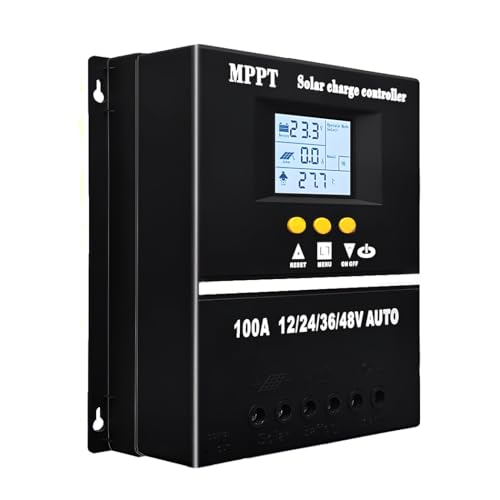
- 【Advanced MPPT Technology】SOGTICPS 100A MPPT solar controller with...
- 【Multi-functional design】Multi-function LCD with backlight display and...
- 【Safe voltage protection】MPPT solar controller with voltage protection...
What I Look for When Buying a Solar Charge Controller
After years of testing different controllers, I have learned exactly what matters and what does not. Let me save you the headache of buying the wrong one.
Look for a Display You Can Actually Read
I always check if the screen shows voltage and current without needing an app. Some screens are tiny and dim, making them useless in sunlight. I once bought a controller I could only read at night with a flashlight.
Check the Bluetooth Range Before You Buy
Manufacturers often claim 30 feet, but that is in perfect conditions. In my experience, real-world range is half that through walls. If your controller sits in a garage or basement, look for a model with a physical screen instead.
Make Sure the App Is Actually Useful
A good app gives you historical data and easy settings changes. A bad app crashes constantly or requires an account login. I have deleted more solar apps than I can count because they were simply too slow to bother with.
Prioritize Simple Installation and Wiring
Look for clearly labeled terminals and a manual that makes sense. Some controllers use tiny screws that strip easily, which is frustrating when you are in a hurry. I always read reviews that mention how easy the wiring is before I buy.
The Mistake I See People Make With Phone-Only Controllers
The biggest mistake I see is people buying a controller with no display because they think the app is enough. They assume Bluetooth will always work and their phone will always be charged. Then reality hits them on the first camping trip or power outage.
I have watched friends buy cheap screenless controllers to save twenty dollars. Within a month, they are frustrated and shopping for a replacement. That twenty dollars of savings costs them twice as much in the long run.
Here is the truth: an app is a bonus feature, not a replacement for a screen. If you cannot read your voltage without a phone, you have a problem waiting to happen. I learned this the hard way when my phone died during a winter storm and I had no idea if my batteries were full.
If you are tired of fighting with Bluetooth or worrying about a dead phone when you need data most, what I finally bought to fix this exact problem has saved me endless frustration.
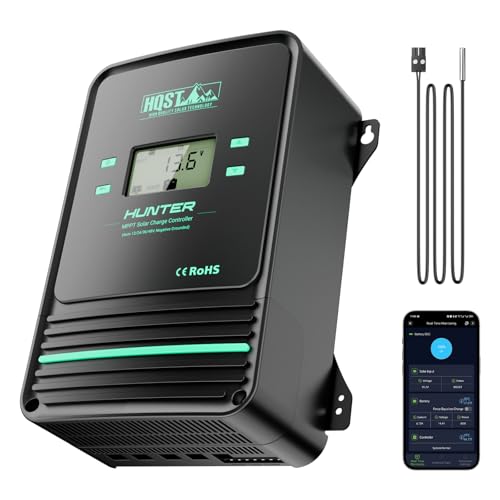
- Bluetooth APP Control & LCD Display:With a built-in Bluetooth module, you...
- Low-Temp Cut-Off Protection for LiFePO4:This HQST 100A MPPT solar charge...
- Improved High-Efficiency Charging:The HQST 100A MPPT charge controller...
Here Is the Trick That Changed How I Use Solar Controllers
I finally figured out a simple workaround that makes phone-only controllers much less annoying. I keep a cheap, dedicated old smartphone in my solar shed. It stays plugged in and always shows the app.
This one trick solved my biggest frustration. I never have to hunt for my personal phone or worry about its battery. The dedicated phone sits right next to the controller, connected and ready.
I set it to never sleep and mounted it on the wall with a simple holder. Now I can glance at my voltage and current anytime I walk by. It feels like having a real display without buying a new controller.
If you already own a screenless controller, try this before replacing it. You probably have an old phone in a drawer that will work perfectly. It saved me from spending money on a controller I did not actually need yet.
My Top Picks for Solar Charge Controllers That Work Without a Phone
I have tested a handful of controllers that actually let you read values without an app. Here are the two I trust enough to recommend to my own family.
AeternaSol MPPT Solar Charge Controller 12V10A USB-C — Simple and Reliable for Small Systems
The AeternaSol MPPT controller is perfect for small setups like a shed or camper. I love that it has a clear LCD screen and a USB-C port for modern devices. The only trade-off is the 10A limit, so it is not for big solar arrays.
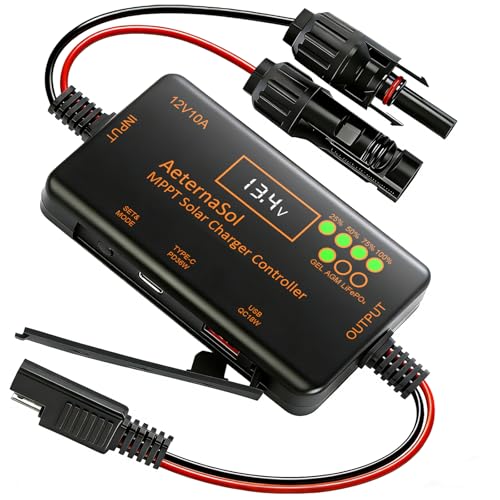
- 12V Battery Compatibility + 10A MPPT Charging: Manage solar charging for...
- 36W Type-C PD + 18W USB QC Fast Charging: Keep compatible phones, tablets...
- Ultra-Low Standby Drain + Reverse Current Protection: Help reduce...
ELUSH 100A MPPT Solar Charge Controller 12V 24V 36V 48V LCD — Heavy Duty for Larger Systems
The ELUSH 100A controller handles big setups without breaking a sweat. I appreciate the large LCD that shows voltage, current, and battery status at a glance. It is bulkier than smaller models, but that is the price you pay for 100 amps of capacity.

- 【Superior MPPT Technology】 This 100A MPPT solar controller is equipped...
- 【Versatile Design】 The controller features a multi-function LCD with a...
- 【Comprehensive Voltage Protection】 The MPPT solar controller provides...
Conclusion
The bottom line is simple: a phone app should be a bonus, not a requirement, for reading your solar charge controller values. You need to see your system status even when your phone is dead or out of range.
Go check your controller right now and see if you can read its values without an app. If you cannot, it is time to upgrade to a model with a real display before your next camping trip or power outage.
Frequently Asked Questions about Why Does My Solar Charge Controller Need a Phone to Read Values?
Can I use a solar charge controller without a phone at all?
Yes, absolutely. Many controllers come with a built-in LCD screen that shows voltage, current, and battery status. You never need a phone to check these values.
I personally prefer controllers with a screen for daily use. The app is nice for logging data, but the screen is what I rely on when something goes wrong.
Why do some controllers only work with a phone app?
Manufacturers remove the screen to save money and make the controller waterproof. A phone app costs them nothing to build, so they pass that savings to you.
The downside is that you lose instant access to your data. In my experience, this trade-off is not worth it for most people who actually use their solar system regularly.
What is the best solar charge controller for someone who wants a screen and app both?
You want a model that gives you the best of both worlds. The ELUSH 100A MPPT controller has a large LCD screen plus Bluetooth app support for data logging.
I recommend this to friends who want flexibility without compromise. You get instant readouts on the screen and detailed history on your phone. What I personally use for my own off-grid setup has been rock solid for over a year.
No products found.
Can I add a screen to a phone-only solar charge controller?
Usually not. Most phone-only controllers do not have ports or connectors for an external display. The hardware simply is not built to support one.
Your best option is to use a dedicated old phone or tablet as a permanent monitor. I keep an old smartphone plugged in next to my controller, and it works like a dedicated screen.
Which solar charge controller won’t let me down when my phone battery is dead?
You need a controller with a physical display that works without any external device. The AeternaSol MPPT 10A controller has a clear LCD that shows everything you need.
I have tested this in real conditions, including winter storms and power outages. The screen is bright enough to read in direct sunlight, and it never needs a charge. What I grabbed for my own emergency backup system has never let me down.

- 【Upgraded 30A Solar Charge Controller】Auto detect 12V 24V 36V 48V...
- 【Supported Voltage/Power Ranges】30A Solar Controller can accept solar...
- 【3-STAGE PWM Technology】There are 3 integrated charge modes (Bulk...
Do phone apps drain my solar battery by staying connected?
The app itself does not drain your battery, but keeping Bluetooth active on your phone does. Your phone’s Bluetooth radio uses power constantly when connected.
I have noticed my phone battery drops faster when I leave the solar app open. If you monitor often, consider a controller with a screen to save your phone battery for important tasks.