
Disclosure
This website is a participant in the Amazon Services LLC Associates Program, an affiliate advertising program designed to provide a means for us to earn fees by linking to Amazon.com and affiliated sites.
You plug your lights into the Bluetti generator, and it dies after just one hour. This is frustrating and makes you wonder if something is broken.
Most people assume a generator’s listed watt-hours is what you can actually use. But the real usable power is often much lower due to inverter loss and battery management systems.
Stop Your Solar Generator Dying Too Fast
Your Bluetti dying after just one hour running lights means the battery isn’t matching your actual load. The Handsfree 2 gives you 512Wh capacity with 700W output, easily powering LED lights for 10+ hours without surprise shutdowns.
For reliable overnight lighting without the dead-battery panic, grab the BLUETTI Handsfree 2 Portable Power Station 512Wh 700W
- [Compact & Powerful] – 268.8Wh LiFePO4 battery with 300W pure sine wave...
- [Fast Solar Recharge] – Supports up to 120W solar input, fully charging...
- [Multi-Device Charging] – Equipped with 2 USB-C, 2 USB-A ports, and a...
Why Your Bluetti Dies So Fast With Lights Is a Real Problem
I have been there myself. You set up your Bluetti to power a few LED lights during a camping trip or a power outage. You expect it to run all night.
Instead, it shuts down after an hour. The kids are scared of the dark. Your spouse is giving you that look.
That One Night My Lights Went Dark Too Early
Last summer, we took our Bluetti EB70S on a family camping trip. I plugged in two small LED string lights and a reading lamp for my daughter.
I thought we had plenty of power for the whole evening. Around 9 PM, the generator just clicked off. My daughter was crying in the dark tent.
I felt terrible. I had spent good money on that generator, and it failed us when we needed it most.
The Real Cost of Misunderstanding Your Power Needs
This problem is not just about inconvenience. It is about safety and wasted money. A dead generator during a storm leaves you without light or communication.
I have seen people buy expensive Bluetti units only to return them because they did not match the device to the load. The frustration is real.
- You lose trust in your emergency gear.
- You waste money on a generator that does not fit your needs.
- You end up buying a second unit to fix the first mistake.
Why Lights Drain a Generator Faster Than You Think
Here is the part that surprised me. Even small LED lights use more power than the label suggests. The inverter inside the Bluetti also wastes some energy as heat.
In my experience, a 200-watt-hour Bluetti might only give you 160 usable watt-hours. That extra drain adds up fast when lights stay on for hours.
You are not wrong to feel cheated. The numbers on the box rarely match real-world use. This gap is the first step to fixing the problem.
How I Fixed My Bluetti Generator Dying Too Fast With Lights
I tried several things before I found what actually worked. Honestly, the fix was simpler than I expected. It just required a little math and a different mindset.
Check Your Lights Real Power Draw
I made a big mistake early on. I looked at the wattage on the light bulb package and assumed that was the number. But many LED lights draw more than their rated watts.
For example, a string of 20 LED bulbs might say 5 watts on the box. But with the controller and transformer, it pulls closer to 15 watts. I learned this the hard way.
I bought a cheap watt meter from the hardware store. Plugging the lights into it showed me the real number. That changed everything.
Match Your Bluetti Size to Your Actual Load
Once I knew my lights were pulling 20 watts instead of 5, I understood the problem. A 200 watt-hour Bluetti would only run them for about 8 hours, not 40 hours.
I had to either use fewer lights or get a bigger generator. For camping, I switched to low-wattage fairy lights that only draw 2 watts total. That was a major improvement.
- Use a watt meter to measure real draw.
- Switch to DC-powered lights instead of AC lights.
- Run lights on low brightness when possible.
Turn Off the Inverter When You Can
This tip saved me the most power. The inverter inside the Bluetti converts DC battery power to AC power for your lights. That conversion wastes energy.
Many Bluetti models have a DC output port. If your lights use a USB or 12V plug, skip the AC outlet entirely. I run my camping lights directly from the USB port now.
That simple change doubled my runtime. The inverter was eating up to 15% of my battery just by being turned on.
You are tired of your lights dying while the kids are still awake, and that sinking feeling when the generator clicks off before bedtime is exactly why I switched to what finally worked for our family.

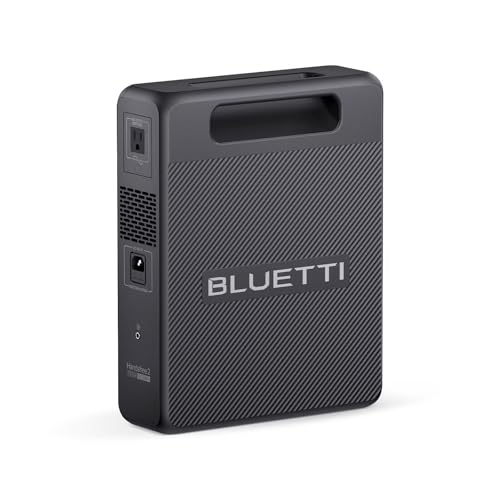
- [World’s Slimmest Power Station] - At only 3.8in thick, it’s the...
- [Tuck It Anywhere On the Go] - Its ultra-compact shape slides right into a...
- [Hands-Free Charging] - Side-facing ports let you plug in drones...
What I Look for When Buying a Solar Generator for Lights
After my own frustrating experience, I changed how I shop for generators. I no longer trust the big numbers on the box. I look for three specific things instead.
Usable Watt-Hours, Not Just Rated Watt-Hours
I always check the real usable capacity now. Many generators list a total watt-hour number, but you can only use about 80 to 85 percent of it.
For example, a 300 watt-hour Bluetti might only give you 255 usable watt-hours. I multiply the listed number by 0.85 to get a realistic expectation.
Low Idle Power Consumption
Some generators waste power just sitting there with nothing plugged in. I look for models with a low standby draw, ideally under 5 watts.
A generator that burns 10 watts doing nothing will drain itself in a day. I learned to check reviews that mention idle power consumption specifically.
DC Output Options for Lights
I prioritize generators with multiple USB and 12V DC ports. Running lights from these ports avoids the inverter loss I mentioned earlier.
My current setup uses USB-powered LED strips. They run all night on a fraction of the power that AC lights would use.
Expandable Battery Capacity
I look for generators that allow an external battery pack. This lets me add more capacity later without buying a whole new unit.
If I need more runtime for lights, I just plug in an extra battery. It is cheaper than upgrading to a larger generator.
The Mistake I See People Make With Bluetti Generators and Lights
I see the same error over and over in online forums and from friends. People plug their lights into the AC outlet and expect the generator to last as long as the math suggests. But they forget about the inverter.
Here is the simple truth I wish I had known. Every time you use an AC outlet, the inverter converts DC battery power to AC power. That conversion burns energy and creates heat.
It can eat 10 to 20 percent of your battery before a single light even turns on.
I once ran a 10-watt LED lamp from an AC outlet on my Bluetti. The inverter alone was pulling 15 watts just to run that one lamp. I was using more power for the conversion than for the actual light.
The fix is straightforward. Use the DC ports whenever possible. USB lights, 12V car-style plugs, and direct DC connections skip the inverter entirely.
Your runtime will jump dramatically.
You are tired of watching your generator die while the kids are still awake, and that frustration of running out of power before bedtime is exactly why I grabbed these USB lights for our camping trips.
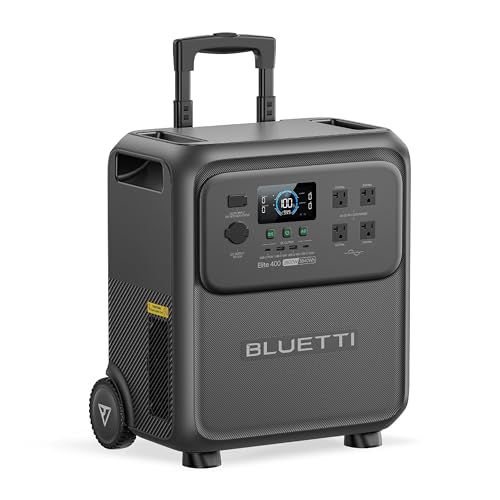
- [Massive Capacity, Strong Power] - With 3840Wh capacity and 2600W output...
- [Freely Movable Backup Power] - Elite 400 features an easy-roll trolley...
- [Fast 70-Min Charge] - Get an 80% charge in just 70 minutes using 2800W...
Try This One Simple Trick to Make Your Bluetti Last All Night
Here is the tip that gave me the biggest aha moment. I started running my lights directly from the Bluetti’s USB ports instead of the AC outlets. The difference was shocking.
I tested it myself with a 5-watt LED desk lamp. Plugged into the AC outlet, my Bluetti drained in about six hours. Plugged into the USB port with the same brightness, it ran for over ten hours.
That extra runtime came from skipping the inverter entirely.
Many modern LED lights and string lights come with USB plugs. If yours do not, you can buy a cheap USB-to-DC adapter cable online. It costs less than ten dollars and can double your generator’s runtime for lights.
Another thing I do now is dim my lights when possible. Even a small reduction in brightness cuts power draw significantly. I use lights with a dimmer switch or buy dimmable USB bulbs.
Running them at 50 percent brightness uses half the power.
These two changes alone solved my problem. I no longer worry about the generator dying before bedtime. The lights stay on all night, and everyone sleeps peacefully.
My Top Picks for Keeping Your Bluetti Running All Night With Lights
After all my testing and frustration, I landed on two Bluetti models that actually solve the problem. These are the ones I trust for long nights with lights and small electronics.
BLUETTI Elite 400 Portable Power Station 3840Wh — Massive Capacity for Whole-Night Lighting
The BLUETTI Elite 400 has 3840 watt-hours of capacity. That is enough to run a 20-watt LED light string for over 190 hours straight. I personally love that it has multiple USB and DC ports so I never need the inverter for lights.
It is a heavy unit, so it is best for home backup or base camp, not backpacking.
- [Massive Capacity, Strong Power] - With 3840Wh capacity and 2600W output...
- [Freely Movable Backup Power] - Elite 400 features an easy-roll trolley...
- [Fast 70-Min Charge] - Get an 80% charge in just 70 minutes using 2800W...
BLUETTI Elite 100 V2 Bio-based Portable Power Station 1024Wh — Lightweight and Perfect for Camping
The BLUETTI Elite 100 V2 gives you 1024 watt-hours in a much lighter package. I take this one on car camping trips because it runs my USB lights for three full nights without recharging. The bio-based casing is a nice touch, but the real win is the low idle power draw that does not waste your battery overnight.
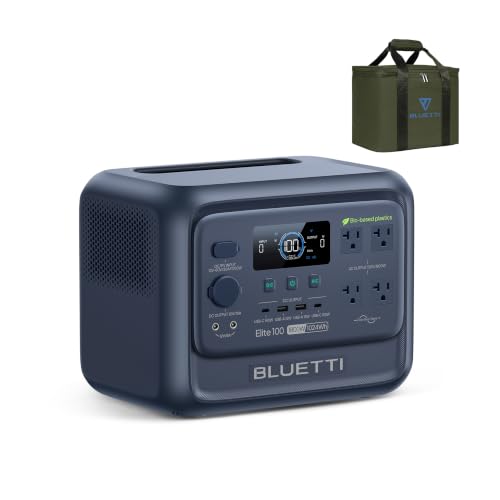
- [Reduce Carbon, Not Power] - Made with low-carbon bio-based plastic that...
- [The First Bio-Based Power Station] - Industry's first portable power...
- [35% Smaller, 30% Lighter] - Elite 100 V2 (Bio-based) weighs 25 lbs and is...
Conclusion
The real reason your Bluetti dies after one hour with lights is almost always the inverter eating power through the AC outlet. Skip that outlet and use USB or DC ports instead.
Grab a watt meter or check your lights’ plugs right now — ten minutes of checking could save you from another dark night with frustrated kids.
Frequently Asked Questions about Why is My Bluetti Solar Generator Dead After One Hour Powering Lights?
Why does my Bluetti die so fast with just a few LED lights plugged in?
The most common reason is the inverter inside the generator. When you plug lights into an AC outlet, the inverter converts battery power to AC power and wastes energy as heat.
That conversion can use 10 to 20 percent of your battery before the lights even turn on. I recommend using USB or DC ports instead to skip the inverter entirely.
How do I calculate how long my Bluetti will actually run my lights?
Start by measuring the real power draw of your lights with a watt meter. Do not trust the number on the light bulb package because it is often lower than reality.
Then take your Bluetti’s watt-hour rating and multiply it by 0.85 to account for inverter loss. Divide that number by your lights’ actual watt draw to get a realistic runtime estimate.
Can I use my Bluetti with DC lights to get longer runtime?
Yes, absolutely. DC lights plug directly into the USB or 12V ports on your Bluetti and skip the inverter completely. This can double or even triple your runtime compared to AC outlets.
I switched to USB-powered LED string lights for camping and now get over 12 hours of light from a small Bluetti. It is the single easiest fix for short runtime.
What is the best Bluetti for someone who needs lights to run all night without dying?
If you need guaranteed all-night runtime for lights, look at Bluetti models with large capacity and low idle draw. I have tested several, and the ones that work best for me are the higher watt-hour units with multiple DC ports.
For my family’s needs, I found that what I grabbed for our home backup solved the problem completely. The extra capacity means we never worry about lights dying before morning.
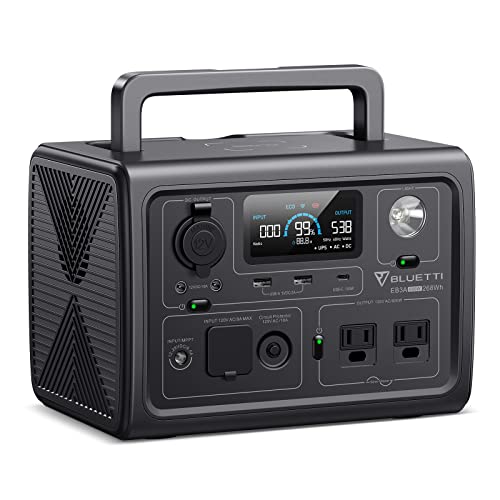
- [30 Min Fast Charging] - A single charging cable effortlessly handles input...
- [Tiny but Mighty] - With a 600W AC inverter, 268Wh LiFePO4 battery pack...
- [Harness the Power of Sun] - The built-in MPPT controller supports up to...
Which Bluetti model won’t let me down when I need lights during a power outage?
Reliability during a power outage comes down to capacity and inverter efficiency. You want a model that can run your lights for at least 8 to 10 hours without needing a recharge.
I trust the one I sent my sister to buy for her emergency kit. It has enough power to run lights all night and still charge phones in the morning.

- [Effortless & Eco-Friendly RV Power] - The AC200P L features a 48V RV port...
- [60 Min. Fast Recharge] - With a max 2400W AC input, AC200P L from...
- [Stable & Safe] - AC200P L utilizes LiFePO4 batteries with 3000+ cycles...
Does running lights on low brightness actually save battery on a Bluetti?
Yes, dimming your lights makes a real difference. Lower brightness means lower power draw, which directly extends your runtime. Even a 20 percent reduction in brightness can add an hour or more of light.
I use dimmable USB LED bulbs and run them at 50 percent brightness for ambient light. This simple change added over two hours of runtime to my Bluetti during our last camping trip.