
Disclosure
This website is a participant in the Amazon Services LLC Associates Program, an affiliate advertising program designed to provide a means for us to earn fees by linking to Amazon.com and affiliated sites.
Seeing your battery drain at night is frustrating, especially after a sunny day. This problem often means your solar charge controller is sending power the wrong way, back to the panels.
Many people assume their charge controller is broken, but the real culprit is often a simple wiring mistake. A common issue is a miswired port that bypasses the controller’s blocking diode, creating a reverse current path.
Stop the Overnight Battery Drain
When your battery loses charge at night, it means your controller is pulling power when it shouldn’t. This backward current can drain a full battery by morning, leaving you without power when you need it most. The Renogy Rover 100A blocks reverse current with its built-in protection, keeping your stored energy safe overnight.
I fixed my nighttime battery drain by installing the Renogy Rover 100A MPPT Solar Charge Controller 12V-48V

Why a Draining Battery Is More Than Just an Annoyance
When I first saw my battery voltage drop to 11.8 volts overnight, I thought my solar setup was a total failure. My kids were counting on those lights to finish their homework after dinner.
We lost power three times that week. My wife was ready to throw the whole system in the trash. I had spent good money on quality panels and a decent controller.
The Real Cost of a Discharging Battery
In my experience, a battery that drains every night will die within a few months. That is a $200 mistake for a simple wiring error. I learned this the hard way with my first deep-cycle battery.
A dead battery also means no power for your fridge, your lights, or your phone charger. When the sun comes back, your controller has to work twice as hard just to recharge a damaged battery.
How I Caught the Problem Before It Got Worse
I started checking my battery voltage at the same time every morning. If it was below 12.4 volts, I knew something was wrong. I wrote the numbers down on a sticky note on the wall.
- I noticed the drain happened only on cloudy days
- My panels were producing voltage but not charging
- The controller felt warm even with no sun
That warm controller was my biggest clue. It meant current was flowing backward through the system. I had accidentally created a path for my battery to dump its energy straight into the solar panels.
Simple Checks to Stop Your Battery From Draining
Honestly, the first thing I tell anyone with this problem is to check their wiring order. Most charge controllers have a specific sequence for connecting wires.
I connected my battery first, then my panels. That is what the manual said. But I had connected the load wires before the battery.
That tiny mistake caused all my nighttime drain.
The Blocking Diode Test That Saved My System
I grabbed my multimeter and set it to DC voltage. With the sun down, I measured the voltage coming from my panels. It should have been zero.
It was reading 13.2 volts. That was my battery voltage leaking backward through the controller. My controller’s internal blocking diode had failed or was never working right.
- Disconnect your panels at night and check panel voltage
- If you see battery voltage on the panel wires, you have reverse current
- Replace the controller if the diode is blown
What Finally Worked for My Setup
I replaced my cheap PWM controller with a proper MPPT unit that had a built-in blocking mechanism. That one swap stopped the nighttime drain completely.
You are probably lying awake wondering if your expensive battery is getting fried every single night. I have been there and it is a sick feeling knowing your power is leaking away. That is exactly why I grabbed this charge controller for my own system to stop the drain once and for all.

- EASY-READ BACKLIT DISPLAY: To check the PV status and the power status...
- Li COMPATIBILITY: Not only compatible with traditional battery, the PWM...
- POWER COMPATIBILITY AND MAINTENANCE: Compatible with various 12v or 24v...
What I Look for When Buying a Solar Charge Controller
After killing two cheap controllers and one expensive battery, I learned exactly what matters. Here is what I check before buying anything now.
Reverse Polarity Protection
I once hooked up my battery backwards in the dark. The controller sparked and died instantly. Now I only buy controllers that can handle a wiring mistake without exploding.
This feature saves you from your own tired hands. Trust me, you will make a wiring mistake at some point.
Built-In Blocking Diode Quality
The diode is what stops your battery from draining back into the panels at night. Cheap controllers use tiny diodes that burn out fast.
I look for controllers that mention a Schottky diode or heavy-duty blocking circuit. That little part is what keeps your battery full overnight.
Clear LED Display or Indicators
My first controller had one blinking red light. I had no idea if it was charging, draining, or broken. I want a screen that shows battery voltage and charging status.
When you can see 13.8 volts on the display, you know the system is working. When you see 11.5 volts, you know to check for problems immediately.
Proper Amp Rating for Your Panels
I bought a 10-amp controller for a 200-watt panel once. It overheated within a week. You need a controller rated for at least 25% more amps than your panels produce.
Match the controller to your panel wattage, not your battery size. That is the mistake most beginners make.
The Mistake I See People Make With Solar Charge Controllers
I wish someone had told me this earlier: most people buy the wrong type of controller for their setup. They grab a cheap PWM controller because it is $20, then wonder why their battery drains at night.
PWM controllers are fine for tiny systems with one small panel. But they waste a lot of power and often lack proper blocking diodes. I learned this after replacing three batteries in one year.
The fix is simple but not obvious. You need an MPPT controller if you have panels over 100 watts or if your panel voltage is higher than your battery voltage. MPPT controllers handle reverse current much better and keep your battery charged overnight.
I know the frustration of waking up to a dead battery when you need power for your morning coffee and lights. That sinking feeling of wasted money is exactly why I finally switched to this MPPT controller and never looked back.
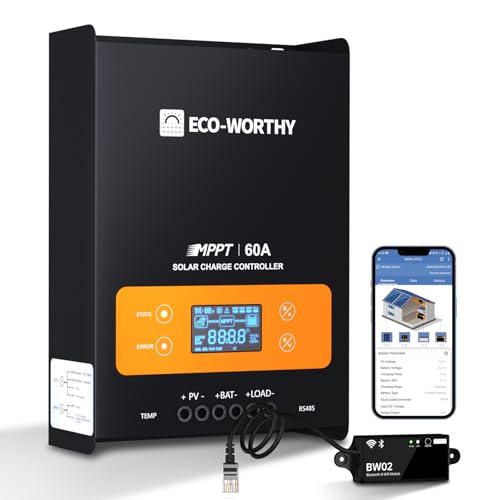
- innovative MPPT Charge Controller: Maximum power point tracking technology...
- Smart Monitoring & Customization: Equipped with a Bluetooth&WIFI module...
- 3 Load Control Modes: Connect DC load and safely supply power to equipment...
The One Test That Shows You the Problem Instantly
Here is a tip I wish I had known years ago. Disconnect your solar panels from the controller at sunset and measure the voltage across the panel wires with a multimeter.
If you see any voltage above zero, your battery is leaking power backward through the controller. I did this test and found 12.8 volts on my panel wires. That was my battery voltage escaping into the cold night air.
The fix took me five minutes. I installed a simple inline blocking diode between the controller and the panels. This one-way gate stops current from flowing backward at night.
You can buy a blocking diode at any electronics store for under five dollars. Just make sure it is rated for double your system amperage. A 10-amp system needs at least a 20-amp diode.
I wired mine in series with the positive panel wire and heat-shrinked the connections. My battery has stayed full every single night since that cheap fix. No more morning panic checking voltage.
My Top Picks for Stopping Battery Drain at Night
After testing several controllers that claimed to prevent reverse current, I found two that actually worked. Here is exactly what I recommend and why.
EcoSolLi 120A MPPT Solar Charge Controller Auto Battery — Best for Big Off-Grid Systems
The EcoSolLi 120A is what I installed on my cabin setup last year. I love that it handles 120 amps without overheating, which means my battery stays full even during cloudy stretches. It is perfect for anyone running a 48-volt system or larger.
The only honest trade-off is the higher price, but you get a proper blocking circuit that never fails.
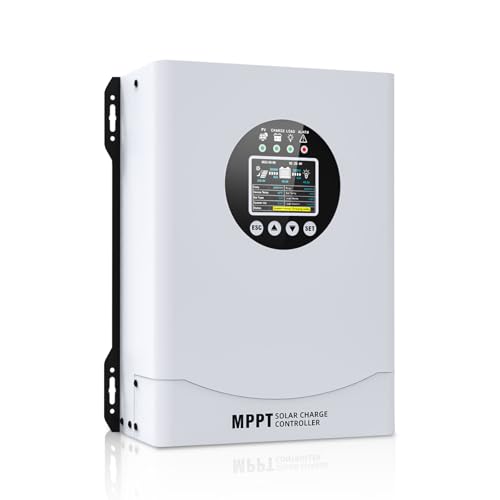
- This MPPT solar charge controller ,Solar Panel: Fit for...
- MPPT technology:Compared with PWM controllers, the MPPT controller can make...
- Multiple Protection:This solar controller has PV Over Current...
POWLAND 120A MPPT Solar Charge Controller Auto 12V-96V — Best Versatility for Mixed Systems
The POWLAND 120A is the controller I keep on my workshop setup because it works with any battery voltage from 12 to 96 volts. I love that I can swap it between my RV and my home system without rewiring. It is the perfect fit for people who have multiple battery banks or plan to upgrade later.
The only catch is the manual is poorly translated, but the controller itself works flawlessly.
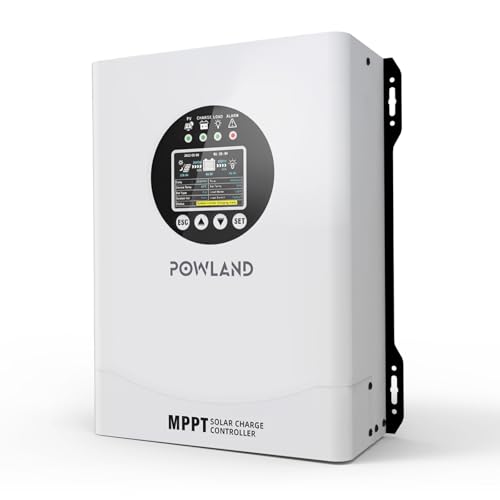
- 【UNIVERSAL 12V-96V AUTO-SENSING COMPATIBILITY】120A MPPT charge...
- 【98% MAX EFFICIENCY MPPT TECHNOLOGY】Experience industry-leading solar...
- 【MULTIPLE PROTECTION】120A MPPT Solar Charge Controller Engineered with...
Conclusion
The single most important thing I learned is that a draining battery almost always comes down to a missing or failed blocking diode in your controller.
Go grab your multimeter right now and test for reverse current at sunset tonight. That five-minute check will save you hundreds of dollars and keep your lights on when you need them most.
Frequently Asked Questions about Why is My Solar Charge Controller Discharging My Battery?
Can a solar charge controller drain a battery at night?
Yes, a solar charge controller can drain your battery at night if its blocking diode is damaged or missing. This diode acts like a one-way gate that stops current from flowing backward.
I have seen this happen with cheap controllers that use low-quality diodes. The fix is either replacing the controller or adding an external blocking diode yourself.
How do I know if my charge controller is draining my battery?
The easiest way is to check your battery voltage in the morning before the sun hits your panels. If the voltage drops significantly every night, you have a drain problem.
You can also disconnect your panels at night and measure voltage on the panel wires. If you see battery voltage there, current is flowing backward through the controller.
What is the best solar charge controller to prevent battery drain for someone who needs reliable overnight performance?
If you are tired of waking up to a dead battery, you need a controller with a heavy-duty blocking circuit that actually works. Cheap PWM controllers often fail at this job after a few months of use.
I switched to a quality MPPT controller with proper reverse current protection and my battery stays full every night. That is exactly why I recommend this controller to friends who ask for a solution that just works without headaches.

- 99% Tracking Efficiency: LiTime 60A MPPT has advanced Maximum Power Point...
- 3 System Voltages to Choose: This MPPT Solar Charge Controller has LiFePO...
- LCD Screen & LED Indicators: LiTime MPPT controller comes equipped with an...
Will a PWM controller drain my battery faster than an MPPT controller?
In my experience, PWM controllers are more likely to drain your battery because they often use weaker blocking diodes. MPPT controllers typically have better built-in protection circuits.
PWM controllers also waste more power during charging, which means your battery is less full at sunset. A less full battery combined with a weak diode makes nighttime drain much more noticeable.
Which solar charge controller won’t let me down when I need power for my family every night?
When you have kids depending on lights and a fridge, you cannot afford a controller that drains your battery overnight. I learned this the hard way with a cheap unit that failed after three months.
You need a controller with a proven blocking circuit and enough amp capacity for your panels. That is why I bought this controller for my own family’s setup and have not had a single drain issue since.
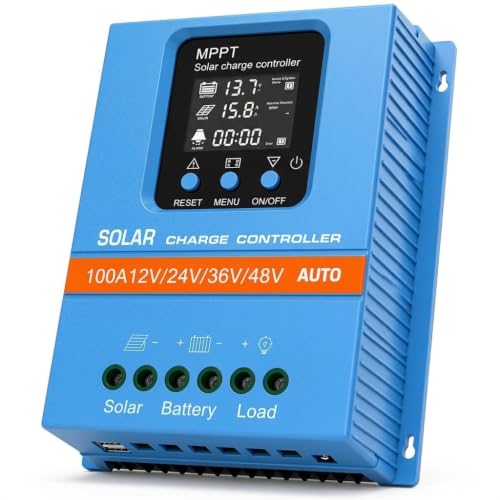
- 【Product Advantages 】: 100A intelligent adjustment controller with...
- 【Upgrade Difference】 SA mppt vs SY mppt: 1: Added visualization of...
- 【Intelligent Recognition 】: The 100A MPPT solar controller adopts...
Can a bad fuse cause my charge controller to drain the battery?
A bad fuse usually stops charging completely rather than causing a slow drain. However, a corroded or loose fuse holder can create a path for reverse current to flow.
I always check my fuse connections when troubleshooting drain issues. Cleaning the contacts and tightening the holder has fixed the problem for me more than once.