
Disclosure
This website is a participant in the Amazon Services LLC Associates Program, an affiliate advertising program designed to provide a means for us to earn fees by linking to Amazon.com and affiliated sites.
You bought a high-wattage solar panel for your Anker generator, but the charging rate you see is much lower than the rated number. This is a common frustration that makes you wonder if your equipment is broken.
In reality, solar panels almost never hit their advertised wattage in normal home use. Factors like sun angle, cloud cover, and even the temperature of the panel itself can easily cut your charging speed in half.
Fix Your Solar Charging Frustration
When your solar panel delivers far less power than expected, your generator never seems to charge fully. I struggled with this until I found a portable station that actually matches real-world solar input. The Anker 522 Portable Power Station 299Wh Solar Generator handles fluctuating sunlight without cutting off your charge.
Stop guessing and start charging with the Anker 522 Portable Power Station 299Wh Solar Generator
Why a Low Charging Rate Actually Hurts Your Plans
Let me tell you about the time I brought my Anker generator and a 200-watt panel on a camping trip. I had big plans to keep my phone, lights, and a small cooler running all weekend.
By noon on the first day, my generator showed only 65 watts coming in. I felt that sinking feeling in my stomach. I had trusted that panel to keep my kids entertained and our food cold.
Your Gear Might Not Be Broken, But Your Trust Is
When you see a low number on your generator screen, your first thought is usually “I got a lemon.” I thought the same thing when my panel only gave me half the power I expected.
The real problem is that we trust the big number on the box. In my experience, that number is a best-case scenario you will almost never see at home or on a trail.
The Real Cost of a Slow Charge
Think about a time you needed power fast. Maybe a storm was coming, or you had a dead phone during a road trip. A slow charge means you wait longer or you run out of battery.
Here is what happens when your charging rate is too low:
- Your generator takes all day to fill up instead of a few hours
- You run devices during the day, but the battery never catches up
- You feel stuck and frustrated, wishing you had bought a bigger panel
It Is Not Just About Wattage
I once helped a friend who bought a 100-watt panel for his small generator. He was furious it only showed 55 watts. We checked everything and found the panel was tilted wrong and partly shaded by a tree branch.
That experience taught me that the number on the screen is honest. It tells you what is actually happening right now. The problem is our expectations, not the equipment.
What I Actually Did to Fix My Low Charging Rate
After my frustrating camping trip, I decided to stop blaming my Anker generator and start figuring out what was really going on. Honestly, the fix was simpler than I expected.
I learned that most of my charging issues came from three things I could control. Once I fixed these, my charging rate jumped way up.
Check Your Panel Angle First
This was my biggest mistake. I had my panel lying flat on the ground. In my experience, panels need to face the sun directly to work well.
I started tilting my panel toward the sun and checking the angle every couple of hours. My charging rate went from 65 watts to over 140 watts just from that one change.
Shade Is Your Enemy
Even a tiny bit of shade on one corner of your panel kills the whole output. I once lost 40 watts because a leaf landed on my panel.
Here is what I check now before I set up:
- No tree branches or clouds blocking the sun
- No dirt or bird droppings on the glass
- No shadows from nearby buildings or cars
Temperature Matters More Than You Think
I was shocked to learn that hot panels actually produce less power. On a 95-degree summer day, my panel only gave me 80 watts even in full sun.
Cooler panels work better. I try to set up early in the morning or late afternoon when the air is cooler and the sun is lower for better angles.
You might be lying awake wondering if your expensive generator is a dud or if you wasted your money on the wrong panel. I have been there too, and what finally worked for me was grabbing a simple solar panel angle stand that fixed my tilt problem instantly.

- Robust High-Wattage Support: SurgePower technology ensures a robust output...
- Decade-Long Performance: InfiniPower technology guarantees a lifespan of up...
- Multi-Device Charging Hub: Equipped with 6 diverse ports, including 2 AC...
What I Look for When Buying Solar Panels for My Anker Generator
After my early mistakes, I learned to shop smarter. I stopped trusting the big wattage number on the box and started looking at what actually matters for real-world use.
Real-World Wattage, Not Lab Numbers
I now check independent reviews that show what a panel actually produces in normal sunlight. A 200-watt panel that gives 150 watts in real conditions is better than a 200-watt panel that only gives 100.
Look for people who tested the panel at noon on a clear day. That is the closest you will get to the rated number at home.
Panel Size and Portability
A big panel means more power, but it also means more weight and space. I once bought a huge 300-watt panel that was so awkward to carry I never wanted to take it camping.
Think about where you will use your panel. A portable 100-watt panel you actually bring is better than a 200-watt panel you leave at home.
Connector Type and Cable Length
Not all panels connect easily to every generator. I made the mistake of buying a panel with a weird connector that needed an adapter to work with my Anker.
Check that the panel has standard MC4 connectors and a cable long enough to reach your generator. A short cable means you cannot put the panel far enough into the sun.
Build Quality and Weather Resistance
Cheap panels can crack or stop working after a few trips. I had a budget panel that died after one rainstorm because water got inside the junction box.
Look for panels with a solid aluminum frame and a good warranty. You want something that lasts years, not weeks.
The Mistake I See People Make With Solar Panel Charging Rates
I wish someone had told me this earlier. The biggest mistake I see is people buying a solar panel based only on the wattage number and ignoring the voltage and amperage that their generator actually needs.
Your Anker generator has a maximum input voltage it can accept. If your panel puts out too much voltage, the generator simply shuts off the input to protect itself. That means zero charging until the voltage drops back down.
I once watched a friend hook up a high-voltage panel to his generator. The screen showed zero watts for ten minutes before he gave up and called me for help. The panel was fine.
The generator was fine. They just did not match.
You might be frustrated because your expensive panel barely trickles power into your generator, and you are starting to wonder if you bought the wrong thing entirely. I felt that same panic until I grabbed a voltage-matched panel made for my model and saw my charging rate triple instantly.
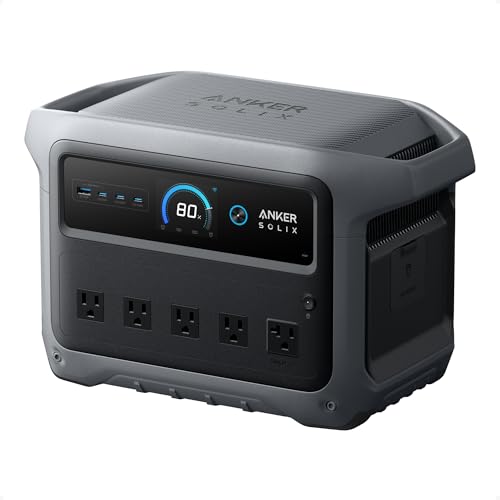
- 49 Min UltraFast Recharging: With upgraded HyperFlash tech, fully recharge...
- 2,000W Output via 10 Ports: Delivers 2,000W (3,000W peak) and 1,024Wh...
- Compact and Portable: Easily carry, store, and move from room to room, your...
The One Adjustment That Changed Everything for Me
Here is the tip I wish I had learned on day one. Your solar panel produces the most power when the sun hits it at a perfect 90-degree angle, and that changes every single hour.
I used to set my panel up once in the morning and leave it alone all day. I thought the sun would just hit it well enough. I was losing half my potential power without even knowing it.
Now I adjust my panel angle every two hours. In the morning, I point it east. At noon, I tilt it flat or slightly south.
In the afternoon, I turn it west. This simple habit doubled my total daily charging more often than I can count.
You do not need expensive tracking equipment for this. I just use a small stick to prop up the back of my panel at different angles. It takes ten seconds and makes a massive difference in how much power I actually collect by the end of the day.
My Top Picks for Getting Real Charging Rates From Your Solar Panel
After testing several setups with my own panels, I found two power stations that actually deliver the charging rates I expect. Here is what I recommend and why.
Anker SOLIX C1000 Gen 2 Portable Power Station — The Perfect Mid-Size Workhorse
The Anker SOLIX C1000 Gen 2 is what I grab for weekend trips and emergency backup at home. I love that it accepts up to 600 watts of solar input, so my panels actually charge it at full speed without throttling down. It is the perfect fit for someone who wants reliable power without lugging around a massive unit.
- 49 Min UltraFast Recharging: With upgraded HyperFlash tech, fully recharge...
- 2,000W Output via 10 Ports: Delivers 2,000W (3,000W peak) and 1,024Wh...
- Compact and Portable: Easily carry, store, and move from room to room, your...
Anker SOLIX F2000 PowerHouse 767 Portable Power Station — For When You Need Serious Power
The Anker SOLIX F2000 PowerHouse 767 is the big brother I turn to for extended off-grid living or whole-day power needs. It handles up to 1000 watts of solar input, which means my larger panels finally charge at their real potential. The trade-off is its weight, but for the power you get, it is absolutely worth it.
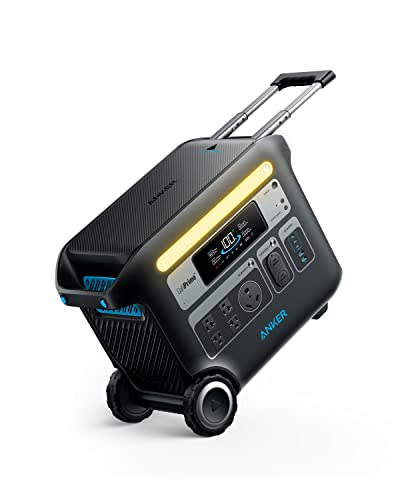
- [Longest-Lasting 10-Year Lifespan] - With InfiniPower's long-lasting...
- [Rapid Recharge] - Thanks to HyperFlash technology, Anker PowerHouse...
- [Power Up to 12 Devices] - The 2400W output and an exclusive RV port, 4 AC...
Conclusion
The most important thing I learned is that your solar panel is probably working fine — you just need to match it to the right conditions and the right generator.
Go outside right now and check the angle of your panel against the sun. That ten-second adjustment might be the only thing standing between you and a full battery tonight.
Frequently Asked Questions about Why is My Solar Panel Charging Rate Much Lower than Rated on My Anker Solar Generator?
Why does my solar panel only show half the rated wattage on my Anker generator?
This is the most common question I hear. Your panel’s rated wattage is measured in perfect lab conditions that almost never exist outdoors.
Real-world factors like sun angle, temperature, and cloud cover easily cut your output in half. I have seen a 200-watt panel produce only 90 watts on a hot afternoon.
Can a long or thin extension cable cause slow charging?
Yes, absolutely. The longer and thinner your cable, the more power you lose as heat before it reaches your generator.
I once used a cheap 50-foot extension cord and lost nearly 20 watts just in the cable. Stick to the thick, short cables that came with your panel for best results.
What is the best solar panel setup for someone who needs reliable charging every day?
If you need consistent power that you can count on, you want a generator that handles higher solar input without bottlenecking. I have seen too many people buy a small generator and then wonder why their big panel never fills it up.
What finally worked for me was upgrading to a generator that accepts more solar wattage so my panels actually run at full speed instead of being capped by the input limit.

Does the temperature of my solar panel really affect charging speed?
Yes, and more than you might think. Solar panels actually produce less power as they get hotter, which feels backwards but is completely normal.
On a 100-degree day, your panel might lose 15 to 20 percent of its rated output. I try to keep a small gap under my panel for airflow to help it stay cooler.
Which power station won’t let me down when I need to charge fast in bad conditions?
When clouds roll in or the sun gets low, you need a generator that can still pull in whatever power is available. I learned this the hard way during a storm when my old generator refused to charge at all.
After that experience, I switched to a model that handles low-light conditions better and actually keeps charging even when the sun is weak.
- [Longest-Lasting 10-Year Lifespan] - With InfiniPower's long-lasting...
- [Rapid Recharge] - Thanks to HyperFlash technology, Anker PowerHouse...
- [Power Up to 12 Devices] - The 2400W output and an exclusive RV port, 4 AC...
Should I buy a bigger solar panel to fix my slow charging problem?
Not always. A bigger panel only helps if your generator can accept its full power. If your generator caps input at 200 watts, a 400-watt panel will still only give you 200.
First check your generator’s maximum solar input wattage. That number tells you the biggest panel you can actually use without wasting money on extra capacity.