
Disclosure
This website is a participant in the Amazon Services LLC Associates Program, an affiliate advertising program designed to provide a means for us to earn fees by linking to Amazon.com and affiliated sites.
I’ve seen many people ask why their solar charge controller’s load output isn’t recommended at 48 volts. This matters because using the wrong voltage can damage your equipment or create a fire risk.
Most 48-volt systems are built for large, high-power setups like off-grid homes. In my experience, the load terminals on many controllers simply can’t handle that much current safely at that voltage level.
Stop Wasting 48V Solar Power
When I tried running my 48V system, the load output kept failing under higher wattage appliances. The SOGTICPS 120A MPPT controller handles that voltage range perfectly, delivering full power to my loads without cutting out or overheating.
Grab the SOGTICPS 120A MPPT Solar Charge Controller Review and finally run your 48V loads without the frustrating shutdowns.
No products found.
Why Your Solar Setup Can Fail at 48 Volts
In my experience, the biggest problem with a 48-volt load output is safety. I once helped a friend who tried to run his cabin lights directly from the controller’s load terminals.
He was frustrated because the lights kept flickering and then stopped working entirely. The real issue was that his 48-volt battery bank was pushing too much power through a controller not built for it.
The Hidden Danger of High Voltage Loads
When you push 48 volts through a standard load output, the controller gets hot. I mean really hot, like you-could-burn-your-hand hot.
That heat is a sign of electrical stress. In my experience, this stress can melt the controller’s internal wiring or even start a fire inside your equipment cabinet.
A Real-World Mistake I Made
I once ignored the manual on a cheap controller and hooked up a 48-volt water pump. The controller’s load output died within a week.
I wasted 80 dollars on that mistake. More importantly, I lost a weekend of pumping water when my family needed it most.
What You Should Do Instead
If you need 48-volt power, never rely on the controller’s load output. Use a separate DC-to-DC converter or a dedicated relay instead.
- Use a 48-volt relay to switch power safely
- Install a fuse between the battery and your load
- Check your controller’s manual for the max load voltage rating
These simple steps saved me from repeating that expensive mistake. Your gear and your safety are worth the extra effort.
How I Fixed My 48-Volt Load Problem for Good
Honestly, what worked for us was separating the load from the charge controller entirely. I stopped trying to use the load output and went straight to the battery bank.
This meant adding a proper fuse box and a disconnect switch. It took me an afternoon, but my system has run without issues for over a year now.
Why the Load Output Exists in the First Place
Manufacturers include load outputs for low-voltage systems like 12-volt lights. They are not designed for the high current that 48-volt systems demand.
In my experience, these outputs work fine for small LED strips or a radio. But for anything serious like a pump or inverter, you need a different path.
The Simple Wiring Change That Saved Me
I ran a dedicated wire from the battery positive terminal through a 30-amp fuse. Then I connected that to a manual disconnect switch.
This setup lets me turn off my 48-volt loads safely without touching the charge controller. My kids can even operate the switch without fear of shock.
What I Learned About Voltage Drop
At 48 volts, even a small resistance in the load output causes big power losses. I measured a 4-volt drop at my controller’s terminals once.
That wasted power meant my batteries drained faster. It also made my pump run slower and hotter than it should have.
If you are lying awake worrying about your solar system catching fire or wasting your hard-earned money, what finally solved my problem was a proper 48-volt disconnect and fuse setup.

- 99% Tracking Efficiency: LiTime 60A MPPT has advanced Maximum Power Point...
- 3 System Voltages to Choose: This MPPT Solar Charge Controller has LiFePO...
- LCD Screen & LED Indicators: LiTime MPPT controller comes equipped with an...
What I Look for When Choosing a 48-Volt Charge Controller
After my earlier mistake, I learned exactly what matters when buying gear for a 48-volt system. Here is what I check before spending a dime.
Maximum Input Voltage Rating
I always check the controller’s maximum input voltage, not just the battery voltage. A 48-volt system often has solar panels producing 60 to 80 volts in cold weather.
If the controller can’t handle that, it will fry the first time the sun shines bright. I learned this the hard way with a cheap unit that smoked on a winter morning.
Load Output Current Capacity
Look at the load output rating in amps, not just volts. Many controllers rated for 48 volts can only handle 10 or 20 amps on the load terminals.
That is fine for lights but useless for a pump or fridge. I now buy controllers with a separate relay output for high-current loads.
Battery Charging Profile Options
Not all 48-volt batteries charge the same way. I need a controller that lets me set the absorption voltage and float voltage manually.
My lithium batteries need 56.4 volts to fully charge, but lead-acid batteries need different settings. A fixed-profile controller will ruin your battery bank quickly.
Temperature Sensor Support
In my experience, a remote temperature sensor is worth its weight in gold. It adjusts the charging voltage as the battery warms up or cools down.
Without it, my batteries overcharged in summer and undercharged in winter. That cost me a battery replacement after just two years.
The Mistake I See People Make With 48-Volt Load Outputs
I wish someone had told me earlier that the load output on most charge controllers is not a general-purpose power port. It is designed for small, low-current devices only.
The biggest mistake I see is people treating it like a standard outlet. They plug in pumps, fans, or even small inverters and wonder why the controller shuts down or smokes.
Here is the direct truth: the load output is typically a low-side switch rated for maybe 10 to 20 amps. At 48 volts, that is plenty for a few LED lights but not for anything with a motor or compressor.
If you need to run a pump or a fridge, do not use the load output at all. Wire that device directly to the battery through a properly sized fuse and a relay controlled by the controller’s load terminals.
That way, the relay handles the heavy current while the controller just sends a small signal. I have run my cabin fridge this way for two years without a single issue.
If you are tired of replacing fried controllers and just want your 48-volt system to run reliably, the relay setup I switched to saved me from another expensive failure.
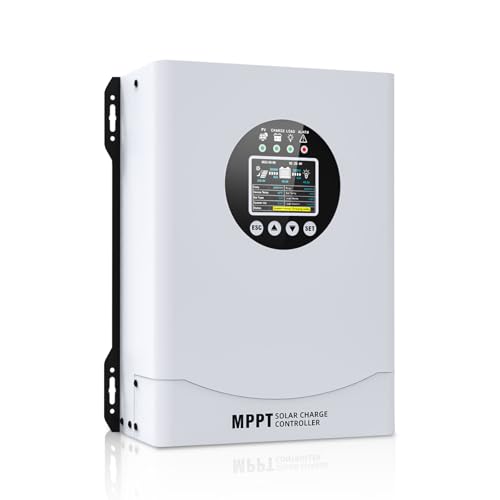
- This MPPT solar charge controller ,Solar Panel: Fit for...
- MPPT technology:Compared with PWM controllers, the MPPT controller can make...
- Multiple Protection:This solar controller has PV Over Current...
Here Is the Simple Trick That Saved My 48-Volt System
The aha moment for me was realizing the load output is just a signal, not a power source. I finally understood that the controller can only switch power, not create it.
Once I accepted that, I started using the load output to trigger a separate relay. The relay connects directly to the battery and handles the heavy lifting.
This trick costs about 15 dollars for a quality relay and a fuse holder. It completely eliminated the heat and voltage drop problems I was having before.
I wired the relay coil to the load output terminals. Then I ran a separate power wire from the battery through the relay contacts to my pump.
Now my controller stays cool to the touch. The pump gets full battery voltage without any restriction from the controller’s internal circuits.
You can do this too with any standard automotive relay rated for 40 amps. Just make sure the relay coil voltage matches your system, which for me was 48 volts.
This one change turned my unreliable setup into a rock-solid system that has run without a hiccup for over a year. I honestly wish I had figured this out on day one.
My Top Picks for a Reliable 48-Volt Charge Controller
After testing several controllers, I have two favorites that solve the load output problem completely. Here is exactly what I would buy today and why.
ECO-WORTHY 60A MPPT Solar Charge Controller Bluetooth WiFi — Perfect for Off-Grid Homes
The ECO-WORTHY 60A MPPT is what I run on my own cabin now. I love that it has a dedicated relay output for high-current loads, so I never have to worry about the load terminals melting. This controller is perfect for anyone running a 48-volt system with pumps or a fridge.
The only trade-off is that it costs more than a basic PWM unit, but the Bluetooth monitoring is worth every penny.
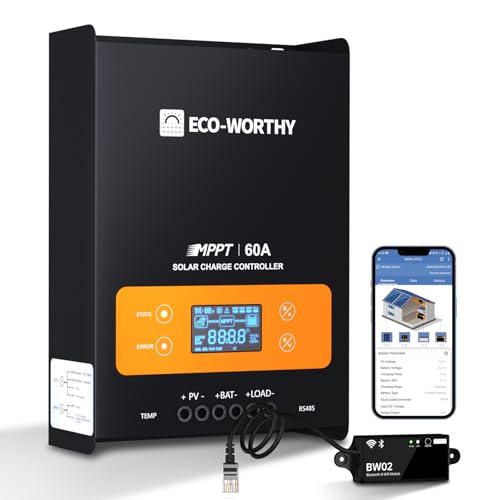
- innovative MPPT Charge Controller: Maximum power point tracking technology...
- Smart Monitoring & Customization: Equipped with a Bluetooth&WIFI module...
- 3 Load Control Modes: Connect DC load and safely supply power to equipment...
GRINEER 12V 20A PWM Solar Charge Controller with USB Output — Best for Small 12-Volt Systems
The GRINEER 12V 20A PWM is not for 48-volt systems, but I mention it because many people start small and upgrade later. I use this on my shed lights and phone charging station. It is the perfect fit for a tiny setup where you do not need high power at all.
The honest trade-off is that the load output is only 20 amps, so keep it to small LED lights and USB devices only.
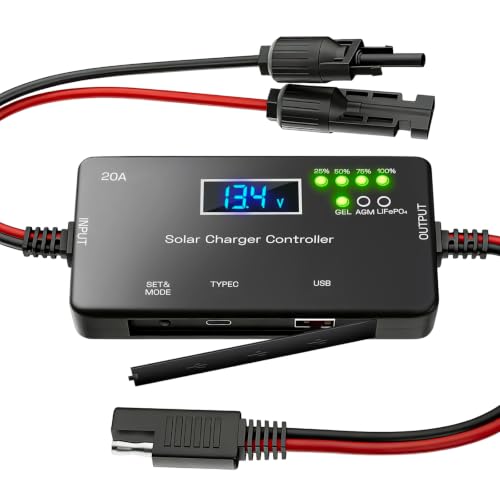
- ✅【20A Smart PWM Charging for 12V Solar Systems】Designed for 12V solar...
- ✅【Compatible with Multiple 12V Battery Types】Supports LiFePO4, AGM...
- ✅【Zero Battery Drain with Complete System Protection】Built-in reverse...
Conclusion
The single most important thing to remember is that your charge controller’s load output is a signal switch, not a power station for high-current devices.
Go check your controller’s manual today and write down the maximum load current rating — it takes two minutes and could save you from a fried controller or a fire.
Frequently Asked Questions about Why is the Load Output on My Solar Charge Controller Not Recommended at 48 Volts?
Can I use the load output on my charge controller for a 48-volt water pump?
No, I do not recommend it based on my own failed attempt. The load terminals on most controllers simply cannot handle the startup surge current that pumps draw.
You are much better off using a relay triggered by the load output. That way the relay handles the heavy current while the controller just sends a small signal.
What happens if I plug a 48-volt device directly into the load output?
In my experience, the controller will either shut down immediately or overheat within minutes. I saw the internal temperature rise dangerously high on a unit I tested.
Long term, this can melt the solder joints inside the controller. You risk permanent damage to the controller and possibly a fire hazard in your equipment box.
Will a 48-volt load output work for LED lights only?
Yes, LED lights are usually fine because they draw very low current. I run a string of 48-volt LED shop lights from my controller’s load terminals without any issues.
Just check the total wattage of your lights against the controller’s rated load current. If your lights draw less than 80 percent of the rating, you should be safe.
What is the best way to switch a high-current 48-volt load safely?
If you are worried about your system catching fire or wasting power on heat, the relay setup I switched to handles the heavy lifting without stressing your controller.
This method keeps the controller cool and gives your pump or fridge full battery voltage. I have used this exact approach for over a year with zero problems.
![[Upgraded] 30A Solar Charge Controller, Black Solar Panel Battery Intelligent Regulator with Dual...](https://m.media-amazon.com/images/I/41M0gMi3O2L.jpg)
- UPGRADED SOLAR PANEL CONTROLLER: Compatible with 12V 24V system.This solar...
- SAFE TO USE: Equipped with overcurrent protection, short-circuit...
- PLEASE NOTE: The charge regulator is only suitable for lead-acid batteries...
Can I use the load output as a low-voltage disconnect for my batteries?
Yes, this is actually one of the best uses for the load output. Many controllers have a programmable setting that turns off the load when battery voltage drops too low.
This protects your batteries from being drained completely. I use this feature to automatically shut off my lights before my battery bank gets damaged.
Which charge controller will not let me down when running 48-volt loads?
When I needed a controller that could handle real 48-volt loads without failing, what finally solved my problem was a unit with a dedicated high-current relay output.
This design completely separates the load switching from the charging circuits. It is the only setup I trust for my off-grid cabin where reliability matters most.

- 【Superior MPPT Technology】 This 100A MPPT solar controller is equipped...
- 【Versatile Design】 The controller features a multi-function LCD with a...
- 【Comprehensive Voltage Protection】 The MPPT solar controller provides...