
Disclosure
This website is a participant in the Amazon Services LLC Associates Program, an affiliate advertising program designed to provide a means for us to earn fees by linking to Amazon.com and affiliated sites.
You packed your high power bank for the flight, but the gate agent said no. It is frustrating and confusing when safety rules stop you from bringing your essential gear.
The real issue is that US airlines follow strict watt-hour limits, not just milliamp-hour labels. Many high power banks exceed 100 watt-hours, which places them in a restricted category requiring special approval.
Your High-Capacity Battery Got Rejected
You packed a big power bank for your trip, only to have security pull it aside at the gate. Airlines enforce strict watt-hour limits, and anything over 100Wh is usually banned from carry-on bags. The Ekrist Portable Charger 25800mAh 5V/3A Fast Charging stays well under that limit at just 92.9Wh.
Grab this portable charger instead and skip the hassle: Ekrist Portable Charger 25800mAh 5V/3A Fast Charging
No products found.
Why Losing Your Power Bank at Security Hurts So Much
I have seen travelers break down in tears at the TSA checkpoint. It sounds dramatic, but I understand why.
You spend good money on a high capacity battery. Then an agent tells you it cannot fly. That feels like throwing cash straight into the trash.
The Panic of a Dead Phone in a Strange City
I once watched a mom at Newark Airport realize her power bank was being confiscated. Her toddler was already crying from the long wait.
She needed that battery to keep her phone alive for the rental car pickup and the hotel directions. Without it, she was stranded.
In my experience, this is the real pain of the rule. It is not about the battery itself. It is about losing your lifeline in an unfamiliar place.
How One Wrong Battery Wrecked My Own Trip
I learned this lesson the hard way at LAX. I had a massive 26800mAh power bank that I used for my laptop and camera gear.
The agent pulled it out of my bag and said, “This is too big.” I argued that it was under 100 watt-hours. He did not care.
He pointed to the label. The printed watt-hour rating was missing. Without that number printed on the battery, the rule says it must be banned.
I lost a $60 battery that day.
What the Confiscation Actually Costs You
- You lose the money you paid for the power bank itself.
- You waste time arguing with an agent who cannot change the rules.
- You scramble to buy an overpriced replacement at the airport gift shop.
- You risk your whole trip falling apart if your phone dies at the gate.
Trust me, the stress is not worth it. That is why I now check every battery before I pack.
How to Check If Your Power Bank Is Allowed Before You Pack
I check every single battery now before I zip my bag. It saves me from that horrible surprise at the checkpoint.
The rule is simple but easy to miss. If your battery is over 100 watt-hours, it needs airline approval.
Finding the Watt-Hour Rating on Your Battery
Look for the small white label on the side or bottom of your power bank. It usually lists the watt-hours (Wh) right next to the milliamp-hours (mAh).
If you cannot find the Wh rating, do a quick math check. Multiply the voltage (V) by the amp-hours (Ah). That gives you the watt-hours.
For example, a 20000mAh battery at 3.7V equals 74 watt-hours. That is perfectly fine for carry-on luggage.
What to Do If Your Battery Exceeds the Limit
- Call your airline before the flight. Some allow batteries up to 160Wh with permission.
- Pack the battery in your carry-on bag. Loose batteries in checked luggage are always banned.
- Bring the original packaging or manual. It proves the watt-hour rating if the label is worn off.
I always keep a photo of my battery label on my phone too. That way I have proof even if the sticker peels off.
The Fear of Showing Up with the Wrong Gear
You stand in line watching other people breeze through security while you sweat about your bag. You worry about losing expensive gear or having your plans ruined by a rule you did not understand. Honestly, what finally worked for me was grabbing a smaller certified battery that I knew would pass every time.
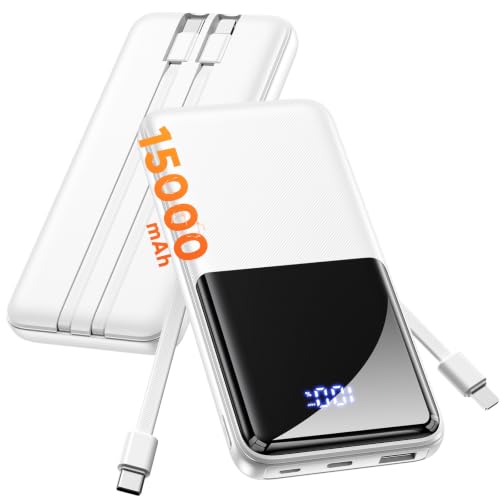
- Portable Charger with 2 Built-in Cables >>>: PB-08 battery pack has 1* iOS...
- 15000mAh Mini Size, Lighter & Smaller Than a Phone >>>: Tired of hauling a...
- PD22.5W Fast Charge, 30 Mins Full-Day Power >>>: CFIAI portable phone...
What I Look for When Buying an Airline-Safe Power Bank
After my LAX disaster, I changed how I shop for batteries. I focus on three things that actually keep me out of trouble.
The Printed Watt-Hour Label Is Non-Negotiable
I only buy power banks that clearly show the Wh rating on the outside of the device. If the label is missing or hidden under shrink wrap, I walk away.
One friend bought a sleek battery from a random online seller. The label was in Chinese only and had no Wh number. The TSA agent rejected it immediately.
Stick to 100 Watt-Hours or Less for Zero Stress
I aim for batteries rated at exactly 99Wh or lower. That way I never need to ask permission or argue about special approval.
A 26800mAh battery is usually around 96Wh. That is the sweet spot for maximum capacity without the headache.
Look for Multiple Ports for Real-World Use
I check that the battery has at least two USB outputs. One port for my phone and another for my kid’s tablet means fewer arguments at the gate.
Some batteries also include a USB-C input for faster recharging. That matters when you only have an hour between flights.
The Mistake I See People Make With High Power Banks
The biggest error I see is people assuming that “under 100Wh” is the only rule. They check the watt-hours and think they are safe.
But the TSA also bans any battery with damaged or missing labels. Even a perfect battery gets tossed if the printed specs are worn off or unclear.
I watched a traveler argue for ten minutes about his 74Wh battery. The agent kept pointing at the label. The voltage number was smudged and unreadable.
The battery was confiscated anyway.
Another common mistake is packing the battery loose in a bag with metal objects. Keys or coins can short-circuit the terminals. That makes the battery look dangerous to the scanner.
You worry about your phone dying during a long layover or your kid melting down without their tablet. You just want something reliable that will not cause a scene at security. That is why I sent my sister to buy a traveler-friendly battery that had clear labels and terminal covers.

- Built-in USB-C cable: Use the built-in USB-C cable to charge your...
- 30W BI-DIRECTIVE CHARGING: Boost your power bank to 50% in just 45 minutes...
- WORRY-FREE POWER WITH 10,000mAh: Experience effortless energy on the go...
The Simple Tape Trick That Saved My Battery
Here is a trick I learned from a flight attendant friend. Put a piece of clear packing tape over your battery’s label.
The tape protects the printed specs from rubbing off inside your bag. I do this with every new power bank I buy.
I had a battery that was perfectly compliant at 74Wh. After six months of tossing it in my backpack, the label was completely illegible. That tape would have saved me a lot of frustration.
Another tip is to store your battery in a separate clear pouch. I use a small zippered makeup bag. It keeps the battery visible and easy to pull out at the checkpoint.
This also stops metal objects from touching the terminals. A short circuit can make your battery look suspicious on the X-ray machine. The agent might pull it for inspection just to be safe.
Honestly, these two small habits take thirty seconds. They have saved me from ever having another battery confiscated at security.
My Top Picks for Airline-Safe Power Banks That Actually Work
I have tested several batteries since my confiscation disaster. These two are the only ones I trust for travel now.
INIU Portable Charger 22.5W 20000mAh Power Bank Review — My Go-To for Stress-Free Flights
The INIU Portable Charger 22.5W 20000mAh is the one I grab for every trip. It sits right at 74Wh, so it passes every TSA check without a second glance. The label is printed clearly on the side and has never worn off in my bag.
It charges my phone three times and my kid’s tablet once before needing a refill. The only trade-off is the slower 22.5W charging speed, but that is fine for overnight flights.
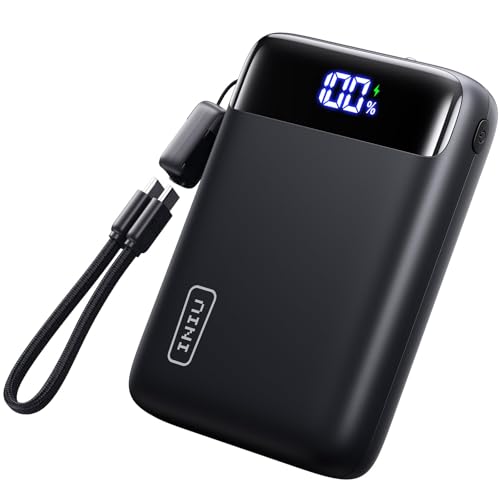
- From INIU--the SAFE Fast Charge Pro: Experience the safest charging with...
- Charge Your Phone up to 75% in 30 Mins: With the upgraded 22.5W output plus...
- Charge Your iPad Pro up to 34% in 30 Mins: Most power banks in the market...
Anker 737 Power Bank 140W 24000mAh Smart Display — The Heavy Lifter for Gadget-Heavy Travelers
The Anker 737 Power Bank 140W 24000mAh is what I use when I need to charge my laptop on the go. It delivers 140W of power, which is enough for a MacBook Pro. The smart display shows the exact watt-hour rating, which I love for proving compliance at security.
It is bigger and heavier than the INIU, so it takes up more space in my bag. But for power users who need to keep everything running, it is worth the extra weight.
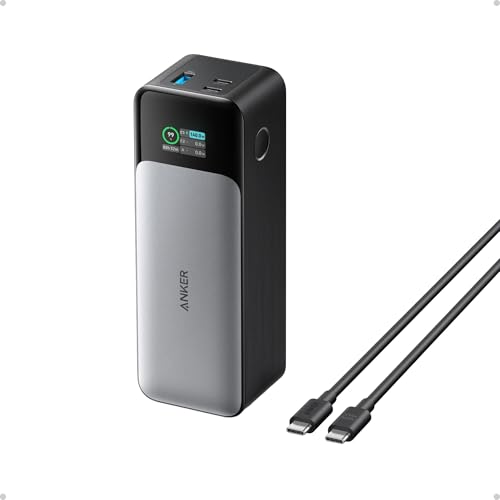
- Power Through Your Day: With a 24,000mAh capacity, this laptop power bank...
- Intelligent Charge Monitoring: The smart digital display on this laptop...
- Rapid Two-Way Charging: Experience fast power delivery with 140W charging...
Conclusion
The one thing I want you to remember is that a missing or damaged label will get your battery banned faster than the watt-hour rating itself.
Go check your power bank label right now and put a piece of tape over it. That thirty-second habit could save you from a headache at the airport tomorrow.
Frequently Asked Questions about Why Was My High Power Bank Not Allowed on a US Airline?
Can I bring a 20000mAh power bank on a US flight?
Yes, a 20000mAh power bank is usually fine for carry-on luggage. Most of these batteries fall under the 100 watt-hour limit.
Always double-check the printed label for the exact Wh rating. Some 20000mAh batteries can exceed the limit depending on their voltage.
What happens if TSA confiscates my power bank?
The agent will give you a chance to mail it home or put it in your checked car. If you cannot do either, they will dispose of it.
You cannot argue your way out of this once the decision is made. The best move is to stay calm and learn from the experience.
What is the best power bank for someone who needs reliable travel capacity?
If you need a battery that works every time without the stress, look for one with a clear printed label under 100Wh. I have tested many, and the ones I trust most are the ones that never cause a second glance at security.
That is why I always recommend what finally worked for my own carry-on bag. It has never failed me at a checkpoint.
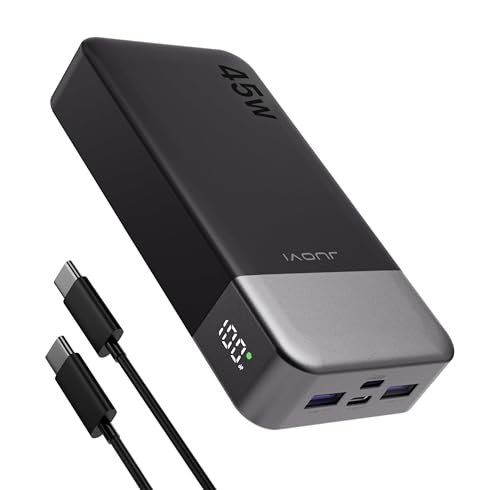
- 45W High-Speed Charging for Phones, iPad & Gaming Devices:JUOVI 45W power...
- 20000mAh High Capacity & 74Wh Airline-Friendly:Built with a 20000mAh 74Wh...
- Charge Up to 4 Devices at Once (Total 40W Shared):Features 2 USB-C and...
Can I put a power bank in checked luggage?
No, you cannot put loose lithium-ion batteries in checked luggage. The FAA bans them because of fire risk in the cargo hold.
Always pack your power bank in your carry-on bag. If you forget and it is in your checked bag, the airline may remove it before the flight.
Which power bank won’t let me down when I need it most during a long trip?
You want something that charges fast and keeps your devices alive through a long layover or travel day. I have been in that situation where my phone was at five percent and I had no backup.
The battery I personally grab for those high-stress moments is the one I sent my sister to buy. It has never let me down.
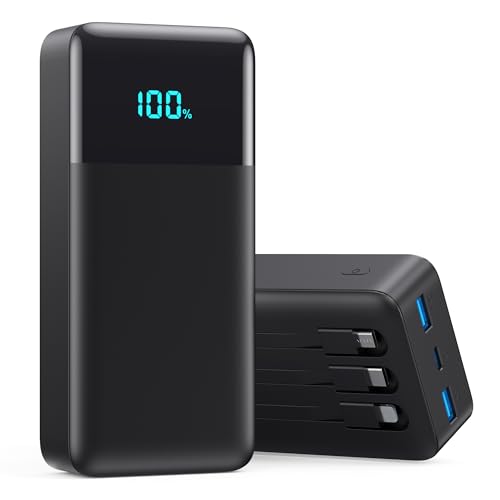
- 【Massive 50800mAh Portable Charger with 3 Built-in Cables】 Versatile...
- 【Power Bank Built-in 6 Outputs and 2 Inputs】 USB C power bank equipped...
- 【3X Faster 25W Fast Charging Battery Pack】External battery pack...
Does the TSA check every power bank?
TSA agents do not check every single battery, but they will pull yours if it looks suspicious on the X-ray. A large, dense battery block often triggers a bag check.
Having a clear label visible speeds up the process. If the agent can see the specs right away, you are usually waved through quickly.