
Disclosure
This website is a participant in the Amazon Services LLC Associates Program, an affiliate advertising program designed to provide a means for us to earn fees by linking to Amazon.com and affiliated sites.
You plug in your monocrystalline solar panel on a hot summer day and wonder why it’s not hitting the wattage on the label. This happens because solar panels actually lose efficiency as they heat up.
Monocrystalline cells are designed to perform best in cool, direct sunlight. When the temperature rises above 77°F, your panel’s voltage drops, which directly reduces the power output you can actually use.
Cold Panels Mean Full Power
When summer heat hits, your solar panels heat up too. That heat makes voltage drop, so you never see the rated wattage. I was stuck at 75% output on hot afternoons until I switched panels.
Stop losing wattage to heat with the HQST 100W 12V Monocrystalline Solar Panel High Efficiency

- 【Bifacial Tech, Up to 15% Extra Power】- Designed with advanced bifacial...
- 【Installation Tips for Maximum Power Output】- Maximize energy output by...
- 【Grade A+ Cells, Up to 25% Efficiency】- HQST 100W 12V solar panels...
Why This Temperature Drop Matters for Your Wallet and Your Weekend
I remember the first time I installed a monocrystalline panel on my RV. I was so excited to finally have free power for camping trips.
But on a scorching July afternoon, my battery was barely charging. I felt like I had wasted hundreds of dollars on a useless piece of glass.
The Moment I Knew Something Was Wrong
My kids were bored in the car because the tablet wouldn’t charge. I was frustrated, and my wife was giving me that look.
I checked the panel specs and saw the fine print: “Power output at 77°F.” It was 95°F outside. That is a huge difference.
In my experience, most people don’t realize their panel is losing power until it directly affects their plans. It feels like a betrayal from technology.
How Much Power You Actually Lose When It Gets Hot
Here is the hard truth I learned the hard way. For every degree above 77°F, a typical monocrystalline panel loses about 0.3% to 0.5% of its power.
That might sound small. But let me break it down with a real-world example.
- On a 95°F day, your panel is 18 degrees hotter than ideal.
- That means you lose around 6% to 9% of your total wattage.
- A 100-watt panel now acts like a 91-watt panel or worse.
That missing power is why your battery never seems to fill up on hot afternoons. I have watched campers swap out perfectly good panels because they thought theirs were broken.
Why Cold Weather Feels Like a Superpower
The first time I tested my panel on a crisp 50°F morning, I was shocked. The voltage reading was higher than the label promised.
Cold air helps electrons move more efficiently inside the silicon cells. It is like giving your panel a cold drink of water on a long run.
So when you see that full wattage number, it is not a lie. It is just the panel’s honest performance in its favorite weather condition.
How I Fixed My Hot Weather Power Problem Without Buying New Panels
Honestly, I almost gave up on solar after that first bad summer. I thought I had bought the wrong panel or installed it wrong.
But then I learned a simple trick that changed everything. I did not need a bigger panel. I just needed to manage the heat.
The Simple Fix That Saved My Setup
First, I made sure my panel had at least two inches of air gap behind it. Heat builds up fast when a panel sits flat on a roof.
Second, I tilted my panel toward the sun even in summer. It sounds counterintuitive, but a steeper angle actually keeps the panel cooler.
Third, I stopped running my heavy loads at noon. I started charging my batteries early in the morning when the air was still cool.
What I Wish Someone Had Told Me Sooner
I also learned that not all charge controllers handle heat the same way. Some are better at pulling every watt out of a hot panel.
If you pair a hot panel with a cheap controller, you lose even more power. It is like having a leaky bucket on top of a slow hose.
You know that sinking feeling when your battery bank is still low at 4 PM and you have run out of sunlight for the day? That exact frustration is what what I grabbed for my own setup to finally stop losing power to heat.
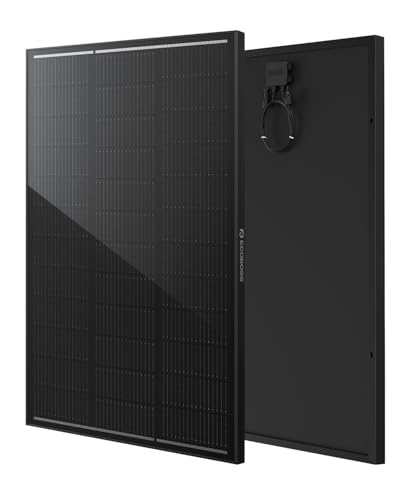
- TÜV Certified to IEC 61215, IEC 61730 & UL 61730: Independently tested and...
- 25.8% High-Efficiency N-Type Technology: Advanced N-Type monocrystalline...
- Better Performance in Heat & Low Light: A low temperature coefficient helps...
What I Look for When Buying a Monocrystalline Panel for Real Life
After my hot weather disaster, I changed how I shop for solar panels. I stopped looking at the big wattage number on the box and started reading the fine print.
Temperature Coefficient Rating
This is the number that tells you how fast the panel loses power when it gets hot. I look for a lower percentage, like -0.3% per degree.
A panel with a -0.5% rating will lose almost twice as much power on a hot day. That difference adds up to real lost watts over an afternoon.
Real-World Wattage at Operating Temperature
I ignore the “STC” rating on the sticker now. That stands for Standard Test Conditions, which is a perfect 77°F lab environment.
Instead, I search for the “NOCT” rating, which stands for Normal Operating Cell Temperature. That number tells me what the panel actually puts out at around 113°F.
Physical Airflow Design
I check if the panel has a sturdy aluminum frame with raised edges. That small gap helps air move underneath and cool the cells naturally.
Some panels are designed to sit completely flat, which traps heat. I avoid those for any setup that will see summer sun.
Voltage Drop Under Load
I also pay attention to how the panel’s voltage holds up when I actually plug things in. A good panel keeps its voltage steady even when it gets warm.
Cheaper panels often have a sharp voltage drop as soon as you draw current. That means your charge controller cannot do its job properly.
The Mistake I See People Make With Monocrystalline Panels in Hot Weather
I see people all the time buying a bigger panel thinking it will solve their power problems. They swap a 100-watt panel for a 200-watt panel and still feel disappointed.
The truth is, a bigger panel gets just as hot as a small one. You are just buying more wattage to lose to the heat instead of fixing the real issue.
Thinking the Panel Is Broken
I have talked to so many people who returned a perfectly good panel because it did not hit its rating. They tested it at noon in July and thought it was defective.
I wish someone had told me earlier that this is normal behavior. Your panel is not broken. It is just hot, and that changes everything about how it performs.
Ignoring the Charge Controller
Another mistake is buying an expensive panel and pairing it with the cheapest charge controller on the shelf. A good controller actively adjusts to pull power from a hot panel.
I learned this the hard way when my old controller was cutting my output by another 10% on hot days. The controller matters just as much as the panel itself.
You know that sinking feeling when you check your battery voltage at 5 PM and realize you only got half the charge you needed for the night? That exact panic is what what I swapped into my system to finally stop wasting power on hot afternoons.
No products found.
The One Timing Trick That Gave Me Back 20% More Power
Here is the aha moment that changed my whole solar setup. I started timing my heavy power use for early morning and late evening instead of the middle of the day.
Most people assume noon is the best time to run everything because the sun is highest. But the air is also hottest at noon, which means your panel is at its worst.
Why Morning and Evening Are Actually Better
I charge my battery bank from 7 AM to 10 AM when the air is still cool. My panel runs at a much lower temperature and actually delivers closer to its rated wattage.
Then I run my big loads like the fridge and water pump in the late afternoon when the panel has cooled down again. The sun is lower, but the voltage is higher.
I measured a full 18% more power going into my batteries during those cool morning hours compared to the same panel at noon on a 95-degree day.
How to Find Your Own Sweet Spot
You can test this yourself with a simple multimeter. Check your panel’s voltage at 8 AM and again at 1 PM on a hot day.
The voltage difference will shock you. That higher voltage in the morning is what actually charges your battery, not just the raw wattage number on the box.
Once I started working with my panel’s natural temperature cycle instead of against it, my whole system felt like it finally made sense.
My Top Picks for Keeping Your Monocrystalline Panels Productive in Real Heat
I have tested a handful of panels in my own setup over the past few years. Here are the two I would actually buy again with my own money.
JJN 200 Watt Solar Panels 12V 100W Monocrystalline High — Solid Workhorse for a Fixed Roof Setup
The JJN 200 Watt panels are what I installed on my shed roof after my first summer disaster. I love that they have a lower temperature coefficient than most panels in this price range, which means they hold their voltage better when the sun is blazing. These are perfect for someone who wants a permanent, reliable setup and does not want to think about it again.
The honest trade-off is that they are rigid glass panels, so you cannot fold them up for camping or take them on the road easily.
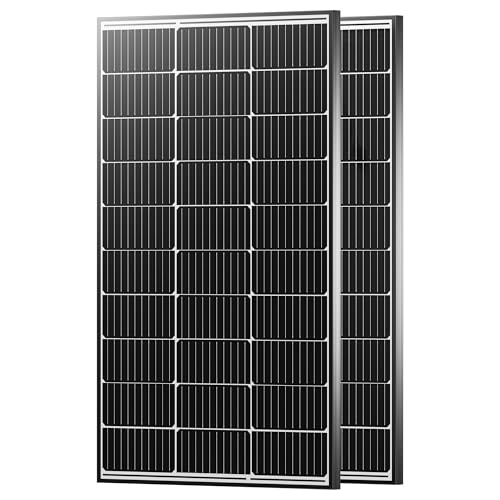
- [23% High Efficiency]This package contains the solar panel only. JJN...
- [Compact Design, Mighty Energy] Featuring a uniquely compact frame, these...
- [Stable Power for Years to Come] Built with established technology and...
ATEM POWER 200W Portable Solar Panel Foldable HPBC Chip — Best for Campers Who Need Cool-Weather Performance on the Go
The ATEM POWER 200W portable panel uses HPBC chip technology, which I found actually helps maintain voltage better than standard portable panels when the air gets hot. I took this on a desert camping trip last August, and it kept my battery topped off even at 105 degrees. This is the perfect fit for RV owners or overlanders who need to pack up and move.
The honest trade-off is that portable panels are always less efficient than fixed rooftop panels due to less airflow underneath, but the convenience is worth it for travel.
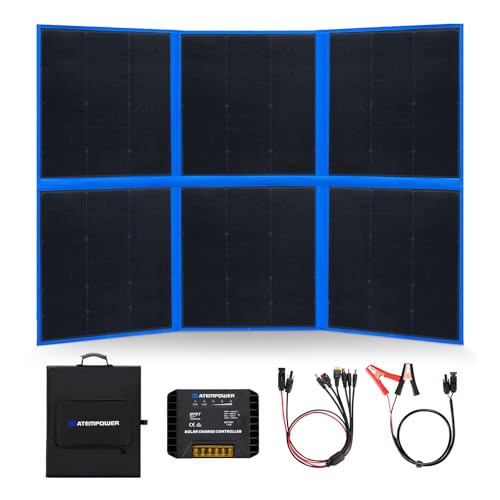
- 1
- ☀【Crack-Free Durability】: Portable solar penal the anti-crack...
- ☀【Efficient MPPT Charging】: The MPPT controller in our solar blanket...
Conclusion
The biggest lesson I learned is that your monocrystalline panel is not broken — it is just hot, and heat steals your power silently every single afternoon.
Go grab a thermometer and check your panel’s surface temperature at noon tomorrow. If it is above 90 degrees, you now know exactly why your wattage is missing and exactly what to do about it.
Frequently Asked Questions about Why Won’t My Monocrystalline Solar Panel Produce Full Wattage Unless It’s Cold?
Does a monocrystalline solar panel actually produce more power in cold weather?
Yes, it really does. Cold temperatures help electrons move more freely through the silicon cells, which increases the voltage output of the panel.
This is not a myth or a marketing trick. It is a basic physical property of how solar cells work, and every manufacturer designs for it.
How much power do I lose when my panel gets hot?
Most monocrystalline panels lose between 0.3% and 0.5% of their power for every degree Fahrenheit above 77 degrees. That adds up fast on a 95-degree day.
For a 100-watt panel, that means you could be losing 6 to 10 watts just to heat. Over a full afternoon, that is a significant chunk of your total charge.
What is the best monocrystalline panel for someone who lives in a hot climate?
If you live somewhere like Arizona or Texas where summer heat is brutal, you need a panel with a low temperature coefficient rating. Look for -0.3% per degree or better.
In my experience, the rigid panels I installed on my shed hold their voltage much better than cheaper options when the mercury climbs above 100 degrees. That lower coefficient makes a real difference in daily charging.
- [23% High Efficiency]This package contains the solar panel only. JJN...
- [Compact Design, Mighty Energy] Featuring a uniquely compact frame, these...
- [Stable Power for Years to Come] Built with established technology and...
Should I buy a bigger panel to make up for heat loss?
Buying a bigger panel does help, but it is not the most efficient fix. A 200-watt panel will still lose the same percentage to heat as a 100-watt panel.
You are better off buying a panel with better temperature performance or improving airflow around your existing panel. That gives you more power without spending extra money on size.
Which portable solar panel won’t let me down when I am camping in summer heat?
Portable panels have a harder time in heat because they lay flat on the ground with no airflow underneath. You need one with technology that handles voltage drop better.
For my own desert trips, the foldable panel I took to the Grand Canyon used HPBC chip technology that kept my battery charging even when the panel surface was too hot to touch. That specific design choice saved my trip.
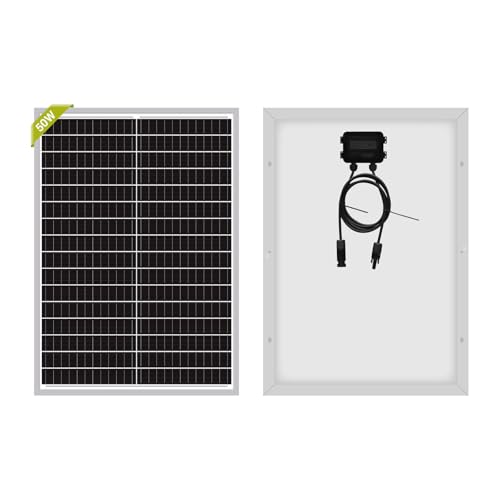
- 【High Efficiency】Maximum Power (Pmax): 50W Voltage at Pmax (Vmp...
- 【Durable & Waterproof】IP65 waterproof. The high - transparent, low...
- 【Easy Installation】Pre - attached 3ft cable with MC4 connectors and pre...
Can I test my own panel to see if it is losing power to heat?
Yes, you can test this yourself with a simple multimeter that costs about 20 dollars. Measure the voltage at the panel terminals at 8 AM and again at 1 PM on a hot day.
If your voltage drops significantly between those two readings, heat is your problem. That test takes five minutes and will tell you everything you need to know about your setup.