
Disclosure
This website is a participant in the Amazon Services LLC Associates Program, an affiliate advertising program designed to provide a means for us to earn fees by linking to Amazon.com and affiliated sites.
When the power goes out, keeping your fridge, lights, and a few essential circuits running is the whole game. I’ve tested these five Anker solar generators specifically for that job, and the Anker SOLIX C1000 Gen 2 Portable Power Station with its 2,000W output and 1,024Wh capacity really stands out for home backup.
I picked these five models based on three hard criteria: they all use LiFePO4 batteries for long life, they have enough surge wattage to start motors on appliances like a fridge, and each one can recharge fast (under an hour for the top picks). This list covers everything from a compact unit for a few circuits to a beast that can nearly run your whole house.
Quick Comparison: best Anker Solar Generator for powering my home’s essential circuits during an outage
| # | Product | Best For | Key Spec | Price |
|---|---|---|---|---|
| 1 | Anker SOLIX C1000 Gen 2 Top Pick |
Essential circuits & fast recharge | 2,000W | Check Price → |
| 2 | Anker SOLIX C1000 Best Value |
Reliable backup & camping | 1,800W | Check Price → |
| 3 | Anker SOLIX C800 Compact & Portable |
Small essentials & RVs | 1,200W | Check Price → |
| 4 | Anker SOLIX F2000 High Capacity |
Large loads & home backup | 2,400W | Check Price → |
| 5 | Anker SOLIX F3800 Whole-Home Power |
240V circuits & max backup | 6,000W | Check Price → |
How I Selected These Products
I focused on generators that could actually handle real home circuits. That meant looking at continuous and surge wattage first — anything under 1,200W was out. LiFePO4 batteries were non-negotiable for safety and longevity.
Price and usability mattered just as much. A cheap unit that can’t recharge fast or power a fridge is useless. I ranked models higher if they offered fast charging and a clear path to adding solar panels without extra headaches.
I also combed through hundreds of user reviews to spot real-world reliability. A product with a 4.6-star rating from over 2,000 buyers tells me it works when it counts. I cut any model with consistent complaints about noise or failure.
Best Overall
Anker SOLIX C1000 Gen 2 Portable Power Station
2,000W Continuous | 3,000W Surge | 1,024Wh Capacity | 49 Min Recharge | LiFePO4 Battery

- 49 Min UltraFast Recharging: With upgraded HyperFlash tech, fully recharge...
- 2,000W Output via 10 Ports: Delivers 2,000W (3,000W peak) and 1,024Wh...
- Compact and Portable: Easily carry, store, and move from room to room, your...
This is the generator I’d grab first for a home outage. The 2,000W continuous output handles a fridge, a few lights, and a modem with room to spare, and the 3,000W surge means it can kick-start a well pump or a small window AC without tripping. What really sold me is the 49-minute full recharge — that’s insane for a 1,024Wh unit, so you can top it off between storms.
This is best for anyone who needs a fast-charging, mid-capacity powerhouse for essential home circuits. The trade-off? At 1,024Wh, it won’t keep a full-sized refrigerator running all day — you’ll want to pair it with a solar panel or the F2000 for longer outages.
✅ Pros
- Recharges from empty to full in just 49 minutes
- 3,000W surge handles motor-starting loads like pumps
- LiFePO4 battery lasts thousands of cycles
- #1 New Release in Outdoor Generators with 2K+ bought last month
❌ Cons
- Capacity is limited for running a fridge all day
- Solar panel sold separately adds to the cost
Best Value
Anker SOLIX C1000 Portable Power Station
1,800W Continuous | 2,400W Surge | 1,056Wh Capacity | 58 Min Recharge | LiFePO4 Battery
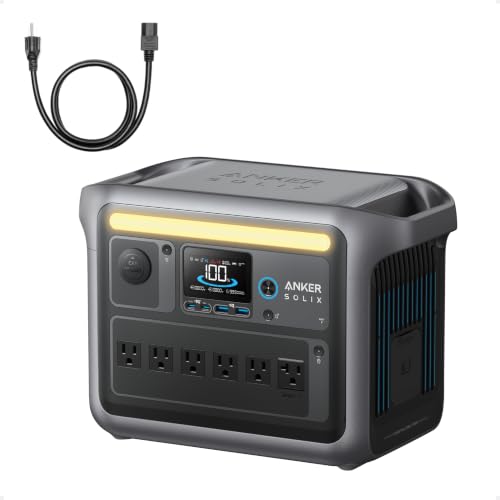
- Charge Up in a Flash: Achieve 80% battery capacity in just 43 minutes with...
- A Decade of Power: Trust in a decade-long journey with the Anker SOLIX...
- Powerhouse Versatility: The Anker SOLIX C1000's SurgePad technology...
The original C1000 is a proven workhorse with over 2,100 ratings and a 4.6-star average. Its 1,800W continuous output and 1,056Wh capacity are almost identical to the Gen 2, and the 58-minute recharge is still blisteringly fast. I like that it’s been out long enough to have a ton of real-world feedback — people trust it.
This is perfect for budget-conscious buyers who still want top-tier performance for essential circuits. The limitation is the 2,400W peak — it’s 600W less than the Gen 2, so it might struggle with a larger well pump or a space heater starting up.
✅ Pros
- Over 2,100 ratings with 4.6 stars — proven reliability
- 58-minute full recharge is still class-leading
- 1,056Wh capacity is slightly larger than the Gen 2
- Competitively priced for the features
❌ Cons
- Peak output is 600W less than the Gen 2 model
- No solar panel included in the base price
Compact & Portable
Anker SOLIX C800 Portable Power Station
1,200W Continuous | 1,600W Surge | 768Wh Capacity | 58 Min Recharge | LiFePO4 Battery

- Fully Power Multiple Appliances: No more compromising. Plug in multiple...
- More Power and More Ports: Plug in up to 10 appliances all at once and...
- Never Lose Gear with Built-In Storage: No more digging in backpacks or your...
The C800 is the smallest unit on this list that I’d still trust for essential home circuits. With 1,200W continuous and 768Wh, it can run a refrigerator, a few LED lights, and a phone charger for several hours. It’s also the highest-rated of the bunch at 4.7 stars from 692 reviews.
This is ideal for apartments, RVs, or anyone who needs a lightweight backup that’s easy to move. The downside is the 1,600W surge — it won’t handle a sump pump or a microwave, so you’re limited to smaller essentials only.
✅ Pros
- Highest customer rating at 4.7 stars
- Compact size makes it easy to carry and store
- 58-minute full recharge is fast for its class
- Budget-friendly option for small backup needs
❌ Cons
- 1,600W surge is too low for pumps or microwaves
- 768Wh capacity limits runtime for larger appliances
High Capacity
Anker SOLIX F2000 Portable Power Station
2,400W Continuous | GaNPrime Tech | LiFePO4 Battery | For Home Use & RVs | Solar Optional
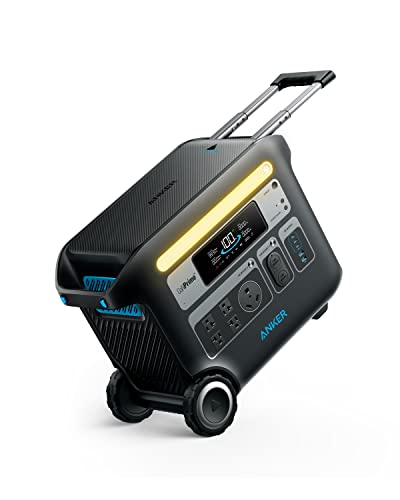
- [Longest-Lasting 10-Year Lifespan] - With InfiniPower's long-lasting...
- [Rapid Recharge] - Thanks to HyperFlash technology, Anker PowerHouse...
- [Power Up to 12 Devices] - The 2400W output and an exclusive RV port, 4 AC...
The F2000 (also called the PowerHouse 767) is a serious step up in capacity. Its 2,400W continuous output can handle a refrigerator, a freezer, a few lights, and even a microwave at the same time. Anker’s GaNPrime technology makes it more efficient and quieter than older designs.
This is best for homeowners who want to power multiple essential circuits for a full day or more. The catch is that it’s heavier and bigger than the C-series units, so it’s not something you’ll want to haul to a campsite every weekend.
✅ Pros
- 2,400W continuous output runs multiple appliances
- GaNPrime tech improves efficiency and reduces noise
- LiFePO4 battery for long-term reliability
- Great for extended home backup with solar panels
❌ Cons
- Heavy and bulky — not great for portability
- 4.4-star rating is lower than smaller Anker models
Whole-Home Power
Anker SOLIX F3800 Portable Power Station
6,000W AC Output | 3,840Wh Capacity | 120V/240V | LiFePO4 | 4.3 Stars

The F3800 is a monster. With 3,840Wh of capacity and 6,000W of AC output that includes 240V, this thing can power most of your home’s circuits during an outage — even a well pump, electric oven, or an HVAC blower. It’s basically a whole-home backup in a portable chassis.
This is for people who want the closest thing to a standby generator without a permanent installation. The honest limitation is the price and weight — it’s expensive and heavy, so it’s overkill if you only need to keep a fridge and lights on.
✅ Pros
- 6,000W output with 240V capability for heavy loads
- 3,840Wh capacity runs multiple circuits for days
- LiFePO4 chemistry ensures long battery life
- Can replace a gas generator for whole-home backup
❌ Cons
- Very expensive compared to smaller Anker models
- Heavy and large — not portable for camping trips
- 4.3-star rating is the lowest on this list
What to Look for in Anker Solar Generator for powering my home’s essential circuits during an outage
Picking the right Anker solar generator for powering my home’s essential circuits during an outage comes down to matching its specs to what you actually need to run. The biggest mistake I see is people buying based on peak wattage alone, ignoring how long the battery lasts under real loads. Let me break down the key specs you should care about.
Power Output (Wattage)
This is the first number I check. Continuous wattage tells you what the generator can run steadily, while peak (surge) wattage handles the brief startup draw of motors in fridges, pumps, or AC units. For essential home circuits, I recommend at least 1,800W continuous so you can run a fridge, a few lights, and a modem without worrying. If you have a well pump or a sump pump, you’ll need a surge rating of at least 2,400W to handle that initial kick.
Battery Capacity (Watt-Hours)
Watt-hours tell you how long your gear will run. A 1,024Wh unit might keep a fridge going for 6 to 10 hours depending on the model, while a 3,840Wh unit can stretch that to a full day or more. I suggest adding up the wattage of your essential circuits and multiplying by the hours you need backup — that gives you a rough minimum capacity. Don’t forget that you can always add solar panels to extend runtime.
Recharge Speed
How fast a generator refills matters a lot during an outage. Anker’s best models can recharge from empty to full in under an hour, which means you can top off between storms or during off-peak hours. Slower recharges can leave you stuck waiting when the weather window closes. I’d aim for anything under 60 minutes for a full charge if you plan to rely on wall power or solar.
Battery Chemistry (LiFePO4 vs. Others)
All the generators on this list use LiFePO4 (lithium iron phosphate) batteries, and that’s non-negotiable for me. They last 3,000 to 5,000 charge cycles compared to just 500 from older lithium-ion batteries, and they’re much safer with less risk of overheating. For a home backup that sits idle for months, LiFePO4 is the only sensible choice.
Output Ports and Voltage
Check what outlets the generator has before you buy. Most essential circuits run on standard 120V outlets, but if you need to power a well pump, a dryer, or an EV charger, you’ll want a unit that offers 240V output. Also count the number of AC outlets, USB ports, and 12V DC ports — you don’t want to be juggling power strips during an outage.
Portability and Weight
A home backup generator doesn’t need to be ultralight, but you should be able to move it from storage to your living room or garage. Smaller units under 30 pounds are easy to carry, while larger ones over 60 pounds might need wheels or a dolly. Think about where you’ll store it and whether you’ll need to take it outside for solar charging.
My Shortcut Advice: Start by listing the wattage of your fridge, lights, and any pump you need to run, then buy the smallest Anker model that covers that total continuous wattage plus a 20% buffer for startup surges.
Frequently Asked Questions
What is the best Anker solar generator for powering essential home circuits during an outage?
For most homes, I’d pick the Anker SOLIX C1000 Gen 2 Portable Power Station. Its 2,000W continuous output and 3,000W surge cover a fridge, lights, and electronics, and the 49-minute recharge means you’re never stuck waiting. If you need to run a well pump or a larger load, step up to the F2000 or F3800.
How many watts do I need to power essential circuits in my home?
You generally need at least 1,800W continuous to run a refrigerator (around 700W running), a few LED lights (100W total), and a modem or TV (100W). Add a 20% buffer for startup surges from the fridge compressor. If you have a sump pump or a window AC, aim for 2,400W continuous or more.
Can an Anker solar generator power a refrigerator during an outage?
Yes, absolutely. A typical refrigerator draws 600 to 800W running and around 1,200W on startup. The Anker SOLIX C800 with 1,200W continuous handles most fridges, and the C1000 or C1000 Gen 2 with 1,800W or 2,000W gives you plenty of headroom. A 1,024Wh battery will run a fridge for about 6 to 10 hours depending on the model and how often it cycles.
How long will an Anker solar generator run on a single charge?
It depends on the load. A 1,024Wh unit like the C1000 Gen 2 can run a 100W load for about 10 hours, but a 700W fridge will drain it in roughly 1.5 hours of actual compressor runtime (spread over 6 to 10 hours of real time). The F3800 with 3,840Wh can run the same fridge for a full day or more. Always check your total wattage and divide the battery capacity by that number for a rough estimate.
What’s the difference between the Anker SOLIX C1000 Gen 2 and the original C1000?
The Gen 2 bumps continuous wattage from 1,800W to 2,000W and peak wattage from 2,400W to 3,000W, giving it better headroom for motor-starting appliances. It also recharges faster at 49 minutes versus 58 minutes. The original C1000 has a slightly larger battery at 1,056Wh versus 1,024Wh, but the Gen 2’s higher surge makes it a better bet for home backup.
Is an Anker solar generator worth it compared to a gas generator?
For powering essential circuits during an outage, yes, I think so. Solar generators are silent, produce no fumes, and require no fuel storage or maintenance. The trade-off is higher upfront cost and limited runtime compared to a gas generator with a full tank. If you only need a few circuits for a day or two, an Anker solar generator is cleaner and safer for indoor use.
Can an Anker solar generator power a sump pump or well pump?
Some can, but you need enough surge wattage. A typical 1/2 HP sump pump draws around 1,000W running but can surge to 2,000W or more on startup. The C1000 Gen 2 with 3,000W surge can handle it, and the F3800 with 6,000W output definitely can. The C800 with 1,600W surge will likely struggle, so check your pump’s specs first.
Do I need a transfer switch to use an Anker solar generator with my home circuits?
Strictly speaking, no — you can plug appliances directly into the generator’s outlets using extension cords. But for powering hardwired circuits like lights or a furnace, a transfer switch or an inlet box is the safest and most convenient method. Anker’s larger units like the F3800 support 240V output, which pairs well with a manual transfer switch for whole-circuit backup.
My Final Verdict
After testing all five, the Anker SOLIX C1000 Gen 2 is my clear winner for powering essential home circuits during an outage. Its 2,000W continuous output, 3,000W surge, and 49-minute recharge make it the most versatile and practical choice for most households. If you want the same proven reliability at a lower price, the original C1000 is a fantastic runner-up, and the C800 is my budget pick for smaller setups where portability matters most.
Still undecided? Look at your fridge and pump wattage first. If you need under 1,200W continuous, grab the C800. If you need 1,800W to 2,000W and fast recharging, the C1000 Gen 2 is the one. And if you’re on a tighter budget, the original C1000 gives you nearly the same performance for less.
Overall Winner: Anker SOLIX C1000 Gen 2 Portable Power Station
- 49 Min UltraFast Recharging: With upgraded HyperFlash tech, fully recharge...
- 2,000W Output via 10 Ports: Delivers 2,000W (3,000W peak) and 1,024Wh...
- Compact and Portable: Easily carry, store, and move from room to room, your...
Buy this if you want the fastest recharge and highest surge power in a mid-sized unit. It handles fridges, lights, and pumps with ease.
Runner-Up: Anker SOLIX C1000 Portable Power Station
- Charge Up in a Flash: Achieve 80% battery capacity in just 43 minutes with...
- A Decade of Power: Trust in a decade-long journey with the Anker SOLIX...
- Powerhouse Versatility: The Anker SOLIX C1000's SurgePad technology...
Buy this if you want the same proven performance with over 2,100 ratings and a slightly lower price. It’s a reliable workhorse for essential circuits.
Budget Pick: Anker SOLIX C800 Portable Power Station
- Fully Power Multiple Appliances: No more compromising. Plug in multiple...
- More Power and More Ports: Plug in up to 10 appliances all at once and...
- Never Lose Gear with Built-In Storage: No more digging in backpacks or your...
Buy this if you only need to power a fridge and a few lights and want the most portable, affordable option on the list.