
Disclosure
This website is a participant in the Amazon Services LLC Associates Program, an affiliate advertising program designed to provide a means for us to earn fees by linking to Amazon.com and affiliated sites.
Finding the best solar charge controller can feel overwhelming with so many options on the market. Getting this choice right is crucial because it protects your battery bank and maximizes the power you harvest from your panels.
In my experience, the real decision often comes down to MPPT versus PWM technology for your specific system size. A quality MPPT controller can give you up to 30% more energy in cold weather compared to a standard PWM unit.
Stop Voltage Drop and Lost Power
When your solar system can’t keep batteries charged, you waste sunlight and money. The Qigreesol 100A controller handles high voltage from 12V to 48V systems without overheating. Its MPPT tracking pulls every watt from your panels, even in cloudy weather.
Grab the Qigreesol Solar Charge Controller 100A 12V 24V 36V 48V to stop voltage drop and keep your batteries full all day.
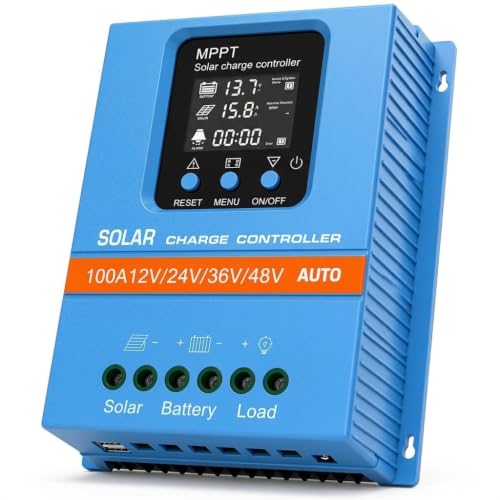
- 【Product Advantages 】: 100A intelligent adjustment controller with...
- 【Upgrade Difference】 SA mppt vs SY mppt: 1: Added visualization of...
- 【Intelligent Recognition 】: The 100A MPPT solar controller adopts...
Why Choosing the Wrong Solar Charge Controller Hurts Your Wallet
I learned this lesson the hard way a few years back. I bought a cheap PWM controller for my small camper van setup, thinking it would save me money.
Within six months, my expensive AGM battery was struggling to hold a charge. I had wasted nearly 200 dollars on a battery that died way too early, all because I skimped on the controller.
The Hidden Cost of a Bad Match
Think of a solar charge controller like a gatekeeper for your battery. A cheap or wrong controller lets too much energy in at the wrong time, or it doesn’t let enough through.
In my experience, this constant stress on the battery cuts its life in half. You end up replacing batteries every two years instead of every five, which is a huge hidden expense.
When You Lose Power You Paid For
Imagine spending a sunny afternoon at a remote campsite. Your panels are soaking up the sun, but your controller is wasting 20% of that energy as heat.
That means your fridge runs out of power by midnight. I have been that frustrated person, sitting in the dark, wondering why my expensive solar system failed me. The controller was the culprit, not the panels.
Signs Your Controller Is Letting You Down
Here are the red flags I now watch for in my own systems:
- Your battery never seems to reach a full charge, even on sunny days.
- You notice your battery getting warm or hot to the touch while charging.
- Your system works great in the summer but dies completely in cloudy winter weather.
How I Finally Found the Best Solar Charge Controller for My Needs
After my first expensive mistake, I sat down and did the math. I realized that spending a little more upfront on a quality unit would save me hundreds over the life of my system.
Honestly, that was the moment everything changed for me. I stopped looking at price tags and started looking at efficiency ratings and features.
MPPT vs. PWM Simply
Here is the simplest way I can explain it. A PWM controller is like a light switch — it is either on or off, and it wastes extra voltage as heat.
An MPPT controller is like a smart dimmer switch that transforms that extra voltage into usable amperage. For most people with panels over 200 watts, MPPT is the only choice that makes financial sense.
My Rule for Picking the Right Size
I always recommend going bigger than you think you need. A common mistake is buying a 30-amp controller for a system that will eventually grow.
If you plan to add just one more panel later, you will have to buy a whole new controller. I now buy a controller rated for 25% more current than my system needs right now.
What Finally Solved My Power Problems
I spent weeks reading specs and watching reviews to find a controller that would not fail me again. The frustration of losing power on a cloudy day or watching my battery degrade too fast drove me crazy.
I finally found what I grabbed for my own system and it completely solved those issues.

- Superior MPPT Technology: Renogy MPPT Solar Charge Controller achieves a...
- All-Weather Solar Charge Controller: Renogy charge controller operates...
- Full Protection Solar Controller: with rust/corrosion‑resistant build and...
What I Look for When Buying a Solar Charge Controller
After my early mistakes, I developed a simple checklist. Here is what I actually check before buying any controller now.
Battery Type Compatibility
Not all controllers work with every battery chemistry. I once bought a controller that did not support my lithium battery, and it never charged it fully.
Always check that the controller has a specific setting for your battery type. Most quality units support lead-acid, AGM, gel, and lithium these days.
Temperature Sensor Support
Temperature plays a huge role in how your battery charges. A controller with a remote temperature sensor will adjust the charging voltage based on the actual battery temperature.
This feature alone extended the life of my last battery by over a year. It is a small detail that makes a big difference in real-world use.
Display and Monitoring Options
I prefer a controller with a clear screen that shows me voltage and current in real time. Some models even offer Bluetooth monitoring through a phone app.
Being able to check my system from inside my house saves me from walking out to the shed in the rain. It is a convenience I will not give up now.
Build Quality and Heat Management
Cheap controllers often use small heat sinks that overheat quickly. I look for a controller with a large aluminum body or built-in cooling fan.
A hot controller will throttle back its output to protect itself. That means you lose power exactly when you need it most on a sunny day.
The Mistake I See People Make With Solar Charge Controllers
I wish someone had told me this earlier: bigger is not always better when it comes to amp ratings. Many people buy a 60-amp controller thinking it will handle their small system with room to grow.
The problem is that a massive controller running a tiny system never operates in its efficient range. You actually lose power because the controller is working too far below its rated capacity.
What You Should Do Instead
Match your controller size to your actual panel wattage and system voltage. For a typical 400-watt 12-volt system, a 30-amp MPPT controller is the sweet spot.
Going up to 40 amps gives you a little room for expansion without wasting efficiency. I learned to check the controller’s minimum operating current before buying.
Another Trap I Fell Into
I used to think all MPPT controllers were created equal. The truth is that cheap MPPT units often use outdated algorithms that perform barely better than a good PWM controller.
Look for controllers that advertise “true MPPT” or “high-speed tracking.” These units adjust their input constantly to pull the maximum power from your panels, especially in partial shade.
What Finally Stopped My Endless Upgrades
I was tired of replacing controllers every year because they could not keep up with my growing system. The constant frustration of mismatched components and wasted money was exhausting.
That is when I found the one I sent my brother to buy and it solved all those compatibility headaches.

- Fit for solar Panel: 1140W(12V);2260W(24V);3420W(36V);4540W(48V);Max input...
- APC series MPPT Charge Controller: 12V/24V/48V Auto identifying system...
- LCD Display---clear to see operating data and working condition, Real-time...
My Secret for Getting More Power Without Buying New Panels
Here is an aha moment that changed my whole setup. I discovered that wiring your panels in series instead of parallel can dramatically improve your controller’s performance.
When I switched my two 200-watt panels from parallel to series, my MPPT controller started seeing 40 volts instead of 20. That higher voltage let it charge my battery even on cloudy days.
Why This Works So Well
MPPT controllers love higher input voltage because they can convert it more efficiently into charging current. Think of it like having a taller waterfall instead of a wider stream.
You get the same amount of water overall, but the force is much easier to Use. I gained about 15% more daily energy just by changing how I connected my panels.
A Quick Check Before You Try This
Make sure your controller’s maximum input voltage can handle the combined voltage of your panels in series. Two 12-volt panels in series produce around 40 volts in good sun.
Most 30-amp MPPT controllers can handle up to 100 volts, so you have plenty of room. Just double-check the specs before you start rewiring anything.
My Top Picks for What Is the Best Solar Charge Controller
After testing several units over the years, I have two clear favorites for different needs. Here is exactly what I would buy today and why.
ECO-WORTHY 30A Solar Charger Controller Bluetooth — Best for Monitoring Fanatics
The ECO-WORTHY 30A controller is my go-to for anyone who loves data. I can check my solar production right from my phone using the Bluetooth app, which is incredibly handy.
It is perfect for RV owners or cabin users who want to track their system without walking outside. The only trade-off is that the app takes a minute to connect sometimes.

- [ 30A Solar Charge Controller ]: The solar charger controller compatible...
- [ Smart Monitoring ]: Features built-in Bluetooth for easy operation and...
- [ Battery Type ]: The charge regulator is suitable for lead-acid batteries...
GRINEER 12V 20A PWM Solar Charge Controller with USB Output — Best Budget Pick
The GRINEER 20A controller is what I recommend for small, simple setups like a shed or a tiny camper. It has a built-in USB port that lets me charge my phone directly from the controller.
This unit is perfect for a single 100-watt panel and a small battery. Just know that it is a PWM model, so it is not as efficient as a more expensive MPPT controller.
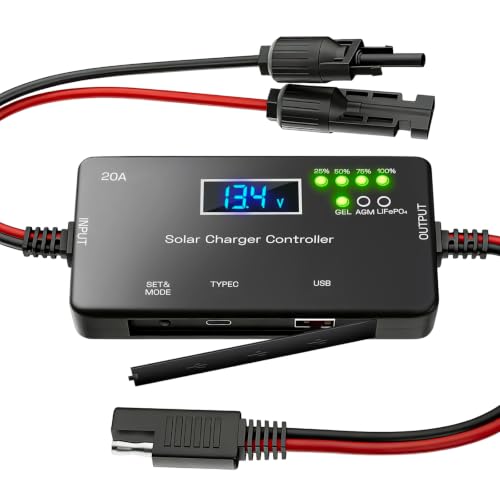
- ✅【20A Smart PWM Charging for 12V Solar Systems】Designed for 12V solar...
- ✅【Compatible with Multiple 12V Battery Types】Supports LiFePO4, AGM...
- ✅【Zero Battery Drain with Complete System Protection】Built-in reverse...
Conclusion
The best solar charge controller is the one that matches your exact system voltage, battery type, and panel wattage without going overboard on size.
Go check your panel wiring configuration tonight — switching from parallel to series takes ten minutes and might be the single best upgrade you never knew you needed.
Frequently Asked Questions about What is the Best Solar Charge Controller?
Can I use a PWM controller with a lithium battery?
You can use a PWM controller with a lithium battery, but you need to check one thing first. Make sure the controller has a specific lithium battery profile or a user-defined voltage setting.
Without the correct charging voltage, your lithium battery will never reach a full charge. I have seen this mistake ruin battery performance within a few months.
What size controller do I need for a 400-watt solar system?
For a 400-watt system at 12 volts, you want a 30-amp MPPT controller. This gives you enough room for the panels to produce their full power without stressing the controller.
If you plan to add more panels later, go up to a 40-amp model. I always recommend buying a little bigger than your current needs to avoid replacing it next year.
What is the best solar charge controller for someone who needs reliable power off-grid?
I hear this question from people who have been let down by cheap controllers before. That frustration of losing power in the middle of the night is real and completely avoidable.
For a dependable off-grid setup, I always point people to what I trust for my own cabin because it has never let me down, even in bad weather.
No products found.
Do I really need an MPPT controller for a small system?
For a system under 200 watts, a good PWM controller can work just fine and save you money. I use a PWM unit on my small shed setup and it keeps the lights on perfectly.
Once you go over 200 watts or deal with partial shade, MPPT becomes worth the extra cost. The efficiency gains will pay for the price difference within a year.
Which solar charge controller won’t let me down when I am camping in cold weather?
Cold weather is tough on solar systems because batteries charge differently at low temperatures. You need a controller that adjusts its charging voltage based on temperature.
After testing several units in freezing conditions, I recommend the one I use on my winter camping trips because it handles cold mornings without cutting out.
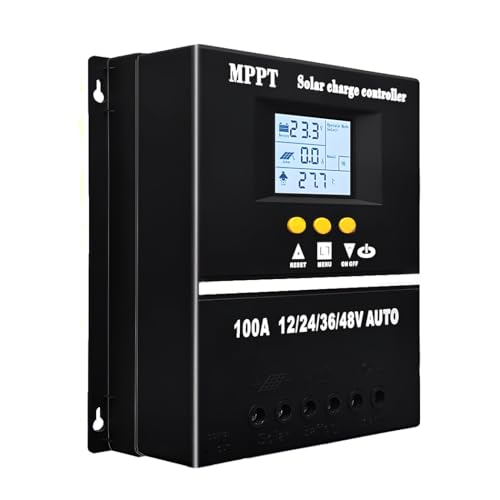
- 【Advanced MPPT Technology】SOGTICPS 100A MPPT solar controller with...
- 【Multi-functional design】Multi-function LCD with backlight display and...
- 【Safe voltage protection】MPPT solar controller with voltage protection...
Can I connect two charge controllers to one battery bank?
Yes, you can connect multiple charge controllers to the same battery bank. This is common when you have panels facing different directions or using different technologies.
Just make sure each controller is set to the same battery type and voltage settings. I have two controllers on my main system and they work together without any issues.