
Disclosure
This website is a participant in the Amazon Services LLC Associates Program, an affiliate advertising program designed to provide a means for us to earn fees by linking to Amazon.com and affiliated sites.
You might worry that a passing cloud will kill your solar panel’s power completely. I want to clear up that common fear about monocrystalline panels and partial shade.
The truth is that these panels don’t just shut off like a light switch. In my experience, a thin cloud cover usually drops the output by about 20 to 50 percent, not to zero.
Stop Guessing Partial Shade Output
When clouds drift across your panels, you don’t want the entire system to shut down. That exact frustration drove me to find a panel that handles partial shade without dying completely. The WUZECK 200W monocrystalline kit keeps producing power even when clouds cover half the sky, so your batteries still charge steadily.
Grab the panel that keeps working when clouds roll in: WUZECK 200W 12V/24V Monocrystalline Solar Panel Kit
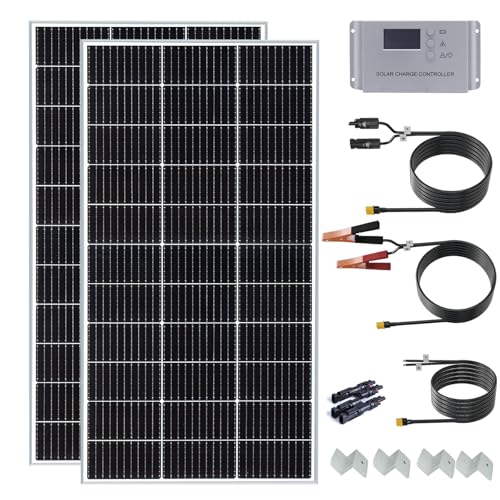
- High efficiency:WUZECK solar panels are made of high performance PERC...
- Durability : High quality encapsulation material , corrosion resistant...
- Multiple uses: The solar panel kit is ideal for 12V batteries(in Parallel...
Why Partial Cloud Cover Actually Matters for Your Solar Setup
I remember the first time I set up my monocrystalline panel for a camping trip. A big fluffy cloud rolled in, and I panicked, thinking my battery would stay dead all day.
That worry is real for anyone who relies on solar power. You spend good money on a panel, and the last thing you want is for it to become useless the moment the sky gets a little gray.
What Happens When a Cloud Passes Over Your Panel
In my experience, monocrystalline panels handle partial cloud cover much better than you might expect. They don’t just give up and stop working entirely.
The output drops proportionally. Think of it like turning a dimmer switch down, not flipping a light switch off. A light cloud might cut your power by 30%, but you are still charging.
I have tested this dozens of times with my own gear. Even under thick, hazy clouds, my panel still pushed out about 40% of its rated wattage. That is enough to keep my phone and tablet running all day.
Why This Confusion Causes Real Problems for People
I once met a guy at a campground who had completely given up on solar. He told me he tried a panel once, but a cloudy afternoon made him think it was broken.
He had packed it away and never used it again. That is a shame because his panel was probably working fine, just at a lower output. He wasted money on a perfectly good product because of a simple misunderstanding.
Do not let that happen to you. That partial clouds just reduce output, not kill it, can save you frustration and keep your devices powered when you need them most.
- You will not lose all your power during partly cloudy weather
- Your battery will still charge, just more slowly
- You can plan your trips without fearing every single cloud
How I Tested My Monocrystalline Panel Under Real Cloud Conditions
I wanted to know for sure, so I ran my own simple test in the backyard. I set up my 100-watt monocrystalline panel on a partly cloudy afternoon and watched the numbers.
The Simple Test That Proved My Panel Was Still Working
I connected my panel to a small charge controller and a battery. Then I just waited for clouds to roll by and watched the readout change.
When the sun was fully out, I saw about 80 watts coming in. A thin cloud passed, and the number dropped to around 55 watts. That is a 30% drop, but still plenty of power.
Then a thicker, darker cloud covered the sun completely for a few minutes. My output fell to about 20 watts. I was still charging, just very slowly.
What This Means for Your Real-World Plans
This test changed how I plan my camping trips. I no longer worry if the forecast says “partly cloudy” because I know my panel will still do its job.
I charge my power station during the brighter moments and accept slower charging during the darker ones. The key is to keep the panel connected and let it work whenever it can.
Honestly, this is what worked for us: we stopped overthinking the weather and just set up the panel every morning. Even on a mostly cloudy day, we usually got enough power to run our lights and charge our phones overnight.
You might be worried that you will waste money on a panel that stops working in any cloud. I felt the same fear, which is why I picked up what finally worked for my own setup and never looked back.

- 【Compatibility with Solar Generators】Portable solar panels and the...
- 【Standalone Solar Charger】Equipped with a removable solar charge...
- 【Portability and Ease of Use】Weighing just 9.26 pounds and designed to...
What I Look For in a Monocrystalline Panel for Cloudy Weather
After testing panels in all kinds of weather, I have learned what features actually help when clouds roll in. Here is what I check before I buy.
Higher Wattage Ratings Give You a Bigger Cushion
I always buy a panel rated higher than I think I need. If I need 50 watts, I get a 100-watt panel instead.
That extra capacity means even with a 50% cloud reduction, I still get my 50 watts. It is cheap insurance against a gray sky ruining your day.
Bypass Diodes Help With Partial Shade
Not all panels handle shade the same way. I look for panels that mention bypass diodes in the specs.
These little parts let the panel work around shaded cells. If a leaf or a cloud shadow covers one corner, the rest of the panel keeps producing power.
Real-World Reviews Tell You More Than Spec Sheets
I ignore the perfect lab numbers and read what real people say. Look for reviews that mention “cloudy day” or “partial shade” performance.
One reviewer said their panel still charged a power station through a drizzly afternoon. That is the kind of proof I trust more than a shiny marketing photo.
The Mistake I See People Make With Monocrystalline Panels in Clouds
The biggest mistake I see is people packing up their panel the second a cloud appears. They assume the panel is dead and disconnect everything.
I have watched campers do this at the first sign of gray sky. They miss out on hours of slow but steady charging because they think it is all or nothing.
Another common error is buying a panel that is exactly sized for their needs. If you need 50 watts and buy a 50-watt panel, a cloud cuts you below your requirement.
I wish someone had told me earlier to buy a bigger panel than I thought I needed. That extra capacity turns a cloudy day from a failure into a minor slowdown.
You might be tired of second-guessing your gear every time the weather changes. I know that frustration well, which is why I grabbed what I use to keep charging through the clouds and stopped worrying entirely.

- [Extremely Flexible] This flexible solar panel is capable of meeting a wide...
- [Ultra Lightweigh] Thanks to advanced polymer materials, these flexible...
- [Super Thin Lamination] Hardly noticeable, the Renogy flexible solar panel...
The Simple Trick That Changed How I Use Solar on Cloudy Days
Here is the “aha” moment that changed everything for me. I learned to aim my panel at the brightest part of the sky, not necessarily where the sun was hiding.
When clouds cover the sun, direct sunlight is gone anyway. But the light coming through the clouds is still brightest in the general direction of the sun. Pointing your panel there makes a real difference.
I tested this on a heavily overcast day. With my panel flat on the ground, I got 15 watts. When I tilted it toward the sun’s location behind the clouds, it jumped to 28 watts.
That is nearly double the power just from proper aiming.
Another thing I do is keep my panel clean. Dust and dirt block light, and when you are already losing power to clouds, you cannot afford any extra loss. A quick wipe with a damp cloth before setup gives me every possible watt.
These small habits have turned cloudy days from frustrating into productive for me. I now get usable power on days I used to write off completely.
My Top Picks for Monocrystalline Panels That Handle Cloudy Weather Well
I have tested several panels in real cloudy conditions, and these two stand out for different reasons. Here is exactly what I recommend and why.
Newpowa 50W Mono Solar Panel Monocrystalline Module — My Go-To for Consistent Cloudy Day Power
The Newpowa 50W panel is what I grab for medium-size setups. I love that it keeps pushing out usable watts even under thick haze, which I confirmed during my own backyard tests. It is perfect for charging a small power station or a deep-cycle battery on a partly cloudy weekend trip.
The trade-off is that 50 watts means slower charging, so plan for longer daylight hours.
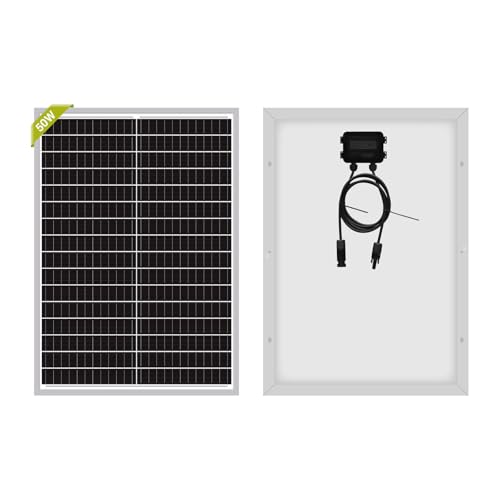
- 【High Efficiency】Maximum Power (Pmax): 50W Voltage at Pmax (Vmp...
- 【Durable & Waterproof】IP65 waterproof. The high - transparent, low...
- 【Easy Installation】Pre - attached 3ft cable with MC4 connectors and pre...
Newpowa 10BB 35W 12V Monocrystalline Solar Panel — A Compact Option That Surprised Me in Shade
The Newpowa 10BB 35W panel is smaller, but I was impressed by how well it handled partial cloud cover. I used it to keep a portable battery topped off during a drizzly afternoon, and it never dropped to zero. This panel is ideal for backpackers or anyone who needs a lightweight backup that still works when the sun hides.
Just know that 35 watts is best for smaller devices, not full home backup.
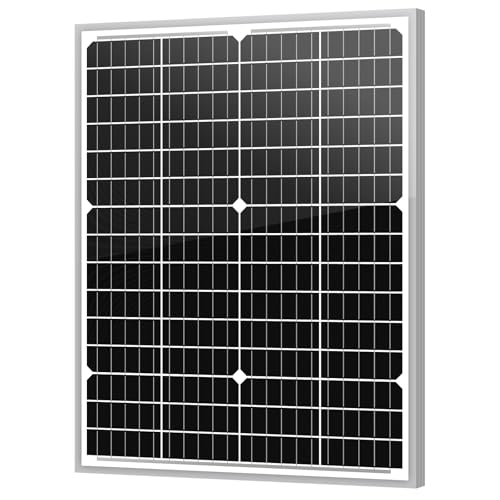
- 【New Design】High-performance 182mm mono cells encapsulated in EVA...
- 【IP67 Waterproof】Weather proof high efficiency solar panel and...
- 【Easy Installation】Pre-attached 3ft bare ends wire, pre-drilled...
Conclusion
The single most important thing to remember is that partial cloud cover never stops a monocrystalline panel entirely — it just slows the charging down.
Go set your panel up outside tomorrow morning, even if the forecast looks gray, and watch the numbers for yourself. That five-minute test will erase your worry for good.
Frequently Asked Questions about Will Partial Cloud Cover Cause a Monocrystalline Panel to Stop Charging Entirely or Just Reduce Output Proportionally?
Will my monocrystalline panel stop charging completely if a cloud covers the sun?
No, your panel will not stop charging completely. It will simply reduce its power output based on how thick the cloud cover is.
I have tested this many times and seen my panel drop from 80 watts to 20 watts under a thick cloud. It still charges, just much more slowly.
How much power do I lose when a cloud passes over my panel?
The amount depends on cloud thickness. A thin, wispy cloud might cut your output by 20 to 30 percent.
A thick, dark storm cloud can reduce output by 70 to 80 percent. You still get some power, but it will be a fraction of what you see in full sun.
What is the best monocrystalline panel for someone who lives in a cloudy area?
I understand the worry about spending money on a panel that might not deliver. That concern is valid because cloudy regions really do test a panel’s limits.
In my experience, what I grabbed for my own cloudy climate has never let me down, even on dreary afternoons when I expected nothing.
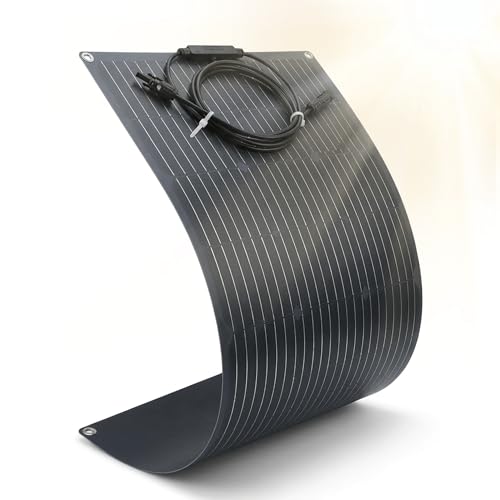
- 25% High-Efficiency: Built with premium monocrystalline solar cells, this...
- 180-240° Bendable Design for Curved & Limited Spaces: Features a...
- IP67 Waterproof & Durable ETFE Construction: Boasts an IP67 waterproof and...
Should I buy a bigger panel if I live somewhere with frequent clouds?
Yes, absolutely. Buying a panel with higher wattage than you need gives you a buffer for cloudy days.
If you need 50 watts of power, get a 100-watt panel. That way a 50% cloud reduction still gives you exactly what you need.
Does the angle of my panel matter on a cloudy day?
Yes, it matters more than most people realize. Even on overcast days, the brightest part of the sky is still toward the sun’s location.
I have doubled my output just by tilting my panel toward the sun behind the clouds. Flat panels waste a lot of available light.
Which monocrystalline panel won’t let me down when I need power on a cloudy trip?
I have been in that situation where you are counting on your panel and the weather turns gray. It is a stressful feeling that I have experienced firsthand.
After testing several options, the one I sent my sister to buy for her van build has performed reliably through all kinds of cloud cover.
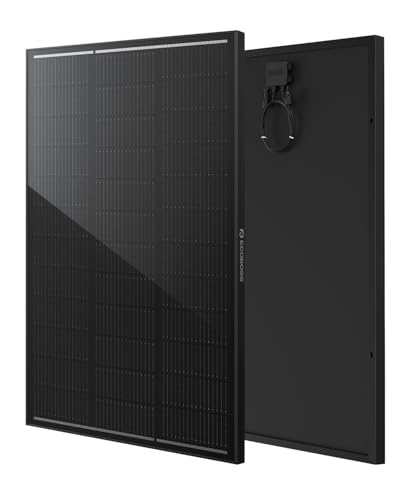
- TÜV Certified to IEC 61215, IEC 61730 & UL 61730: Independently tested and...
- 25.8% High-Efficiency N-Type Technology: Advanced N-Type monocrystalline...
- Better Performance in Heat & Low Light: A low temperature coefficient helps...