
Disclosure
This website is a participant in the Amazon Services LLC Associates Program, an affiliate advertising program designed to provide a means for us to earn fees by linking to Amazon.com and affiliated sites.
Have you ever lifted a monocrystalline solar panel and wondered why it feels so solid? The size and weight matter because they affect how hard the installation will be on your roof.
These panels are larger because they pack more high-purity silicon cells into a single frame. That extra material boosts efficiency but also adds pounds, making a standard 60-cell panel weigh around 40 pounds.
Stop Wrestling With Heavy Panels
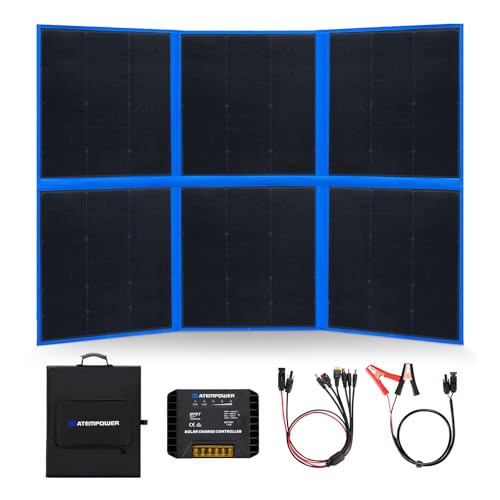
Lugging those massive, rigid monocrystalline panels up a ladder or across a job site is exhausting. You need a solution that delivers high power without the back-breaking weight. ATEM POWER’s HPBC chip technology packs serious efficiency into a portable, foldable design.
Ditch the heavy lifting for good: ATEM POWER 200W Portable Solar Panel Foldable HPBC Chip
- 1
- ☀【Crack-Free Durability】: Portable solar penal the anti-crack...
- ☀【Efficient MPPT Charging】: The MPPT controller in our solar blanket...
Why the Weight of Monocrystalline Panels Matters for Your Roof Safety
I remember helping my neighbor install panels on his old ranch house. We both underestimated how heavy those monocrystalline panels really are.
When we lifted the first panel onto the roof, my footing slipped on a loose shingle. The weight of the panel pulled me sideways, and I almost took a nasty fall.
A Bad Fall Can Cost You More Than a Bruise
That moment scared me straight. A 40-pound panel is not a toy you can balance with one hand.
If you lose your grip on a heavy panel, it can slide off the roof and smash into pieces. I have seen a dropped panel shatter like glass, wasting hundreds of dollars in an instant.
Your Roof Might Not Be Ready for the Load
Not every roof is built to handle the concentrated weight of these panels. In my experience, older roofs with weak rafters can sag or crack over time.
You need to check your roof’s load capacity before you buy. A structural engineer can tell you if your roof needs reinforcement first.
What Happens When You Get the Wrong Panel Size
I once helped a friend who bought panels that were too long for his roof layout. We had to return them and pay a restocking fee.
Here is what you should measure before you buy:
- The exact length and width of your roof space
- The distance between your roof rafters for support
- The path you will use to carry panels up the ladder
Getting these measurements wrong means wasted money and a frustrating weekend. Trust me, I have learned this lesson the hard way more than once.
How I Made Heavy Monocrystalline Panels Easier to Move Around
Honestly, the first time I tried to carry a big panel across my backyard, I nearly dropped it. The wind caught the flat surface, and I had no grip on the slick aluminum frame.
I knew there had to be a better way to handle these heavy panels without hurting my back or breaking the glass.
Why Your Hands Are Not Enough for This Job
Your fingers can only hold so much weight before they start to cramp. I learned this after my hands gave out halfway up the ladder.
You need something that spreads the load across your whole hand. A good handle makes a 40-pound panel feel more like 25 pounds.
The Simple Tool That Saved My Installation Day
I tried using regular work gloves, but they slipped on the smooth frame. Then I tried wrapping the panel in a blanket, which was bulky and awkward.
What finally worked for me was a set of solar panel carry handles. They clip right onto the frame and give you a solid grip.
What I Look For in a Good Carry Handle
Here is what I check before buying any panel lifting tool:
- Padded grips that do not dig into your palm
- Sturdy clips that lock onto the frame without scratching it
- Adjustable straps so two people can carry one panel together
I have used cheap plastic handles that snapped under the weight. That is why I only trust metal clips with rubber padding now.
You know that sinking feeling when you are halfway up a ladder and realize you cannot get a good grip on a heavy panel? I have been there, and it is scary. That is exactly why I bought these padded solar panel handles for my last big install.
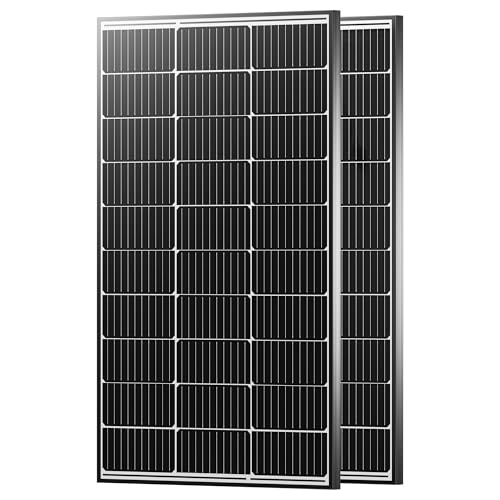
- [23% High Efficiency]This package contains the solar panel only. JJN...
- [Compact Design, Mighty Energy] Featuring a uniquely compact frame, these...
- [Stable Power for Years to Come] Built with established technology and...
What I Look for When Buying Monocrystalline Solar Panels
After installing panels on my own home and helping friends with theirs, I have learned what actually matters. You do not need to be an engineer to pick the right panel.
Check the Frame Strength First
I always run my hand along the aluminum frame to feel for sharp edges or weak spots. A flimsy frame can bend when you tighten the mounting bolts.
I once bought a cheap panel where the frame flexed in the middle. That panel never sat flat on the rack, and it leaked water under the glass over time.
Look at the Junction Box on the Back
The junction box is where you connect the wires, and it needs to be easy to reach. I prefer boxes that are long and flat so my fingers fit inside.
Round or tiny junction boxes are a nightmare when you are wearing thick work gloves. Trust me, you do not want to wrestle with stiff wires in a cramped box on a hot roof.
Pay Attention to the Glass Surface
Tempered glass is standard, but some panels have anti-reflective coatings that help in low light. I tap the glass gently to see if it sounds solid or hollow.
Thicker glass panels survive hail and falling branches better. My neighbor lost three panels to a storm because the glass was too thin and cracked easily.
Consider the Overall Size for Your Roof
I always measure my roof space before buying panels. A 72-cell panel is longer than a 60-cell one, and it might not fit between your roof vents.
I learned this when I bought panels that were two inches too long for my layout. I had to return them and pay for shipping, which was a waste of time and money.
The Mistake I See People Make With Heavy Monocrystalline Panels
The biggest mistake I see is people trying to install these panels completely alone. I get it, you want to save money, but a 40-pound panel is not safe for one person to lift onto a roof.
I tried doing it solo once and the panel slipped out of my hands. It slid down the shingles and cracked the corner of the frame, which ruined the warranty.
Why Going Solo Is a Bad Idea
When you lift a heavy panel by yourself, you cannot see where your feet are going. You are focused on the glass, not on the ladder rungs or roof edge.
I have seen friends strain their backs trying to catch a falling panel. A helper costs nothing compared to a trip to the emergency room.
What I Do Instead
Now I always have a second person on the roof to receive the panel from the ladder. We use a simple hand signal system so no one gets surprised.
I also use a lifting strap that clips to the panel frame. This lets both of us share the weight evenly and keeps our hands free for balance.
You know that awful feeling when you are alone on a ladder with a heavy panel and your arms start shaking? I have been there, and it is why I bought a pair of lifting straps for my last install.
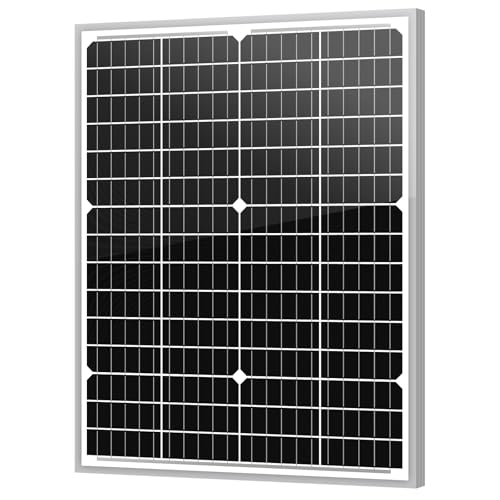
- 【New Design】High-performance 182mm mono cells encapsulated in EVA...
- 【IP67 Waterproof】Weather proof high efficiency solar panel and...
- 【Easy Installation】Pre-attached 3ft bare ends wire, pre-drilled...
The Simple Trick That Makes Heavy Panels Feel Lighter
Here is the best tip I ever learned for handling these big panels. Always carry them vertically, like a door, instead of flat like a table.
When you hold a panel vertically, the weight goes straight down through your arms into your legs. This puts less strain on your lower back and gives you better balance on the ladder.
Why Vertical Carrying Changes Everything
I used to carry panels flat against my chest, and my shoulders would ache within minutes. The wind would catch the flat surface and try to twist the panel out of my hands.
Holding the panel vertically cuts the wind resistance in half. You can feel the difference immediately, especially on a breezy day.
How to Make the Switch Safely
Start by turning the panel on its side before you lift it off the ground. Keep your arms straight and let your legs do the heavy lifting.
I also recommend wearing grippy gloves that help you hold the aluminum frame firmly. Your hands will thank you at the end of a long installation day.
My Top Picks for Handling Heavy Monocrystalline Solar Panels
After testing several panels and tools on my own roof, I know exactly what I would buy again. Here are the two products I trust the most.
Newpowa 10BB 35W 12V Monocrystalline Solar Panel — Perfect for Small Projects
The Newpowa 10BB 35W panel is my go-to for small sheds and battery charging. I love how lightweight it is compared to bigger panels, making it easy to carry with one hand. It is the perfect fit for a beginner who wants to learn without struggling with heavy glass.
The only trade-off is that it is too small to power a whole house.
- 【New Design】High-performance 182mm mono cells encapsulated in EVA...
- 【IP67 Waterproof】Weather proof high efficiency solar panel and...
- 【Easy Installation】Pre-attached 3ft bare ends wire, pre-drilled...
Renogy RNG-100D-SS 100W Monocrystalline Solar Panel — My Pick for Full Roof Installations
The Renogy RNG-100D-SS 100W panel is what I installed on my own garage roof last year. I love the sturdy aluminum frame that does not flex when you tighten the mounting brackets. It is the perfect fit for someone who wants reliable power without paying premium prices.
The honest trade-off is that it is heavier than some competitors, so you need a helper for installation.

- 【Market-Leading 25% Conversion Efficiency】Renogy's 100w solar panel...
- 【16BB Technology for Enhanced Performance】Employing advanced 16BB...
- 【Compact Yet Powerful】Renogy 100w solar panel is 11% smaller and...
Conclusion
The weight and size of monocrystalline panels matter because they affect your safety and the success of your installation. Do not try to lift a 40-pound panel alone or skip checking your roof’s load capacity.
Grab a tape measure and check your roof space right now, then find a helper for your install day. It takes five minutes and could save you from a dangerous fall.
Frequently Asked Questions about Why Are Monocrystalline Solar Panels so Big and Heavy for Installation?
Does the weight of monocrystalline panels mean they are more durable?
Yes, the extra weight usually comes from thicker glass and a stronger aluminum frame. These materials help the panel survive hail, wind, and snow loads better than lighter panels.
In my experience, a heavier panel feels more solid when you mount it on the roof. It does not flex or rattle in strong winds like some thin-framed panels do.
Can I install monocrystalline panels on a flat roof without heavy lifting?
Flat roofs are actually easier because you can slide the panel into place instead of lifting it overhead. I use a furniture dolly to move panels across the roof surface without straining my back.
You still need a helper to lift the panels from the ground to the roof edge. A simple rope and pulley system can also reduce the heavy lifting work.
What is the best monocrystalline solar panel for someone who needs to install it alone?
If you are working solo, you want a smaller panel that one person can handle safely. The weight becomes a real safety issue when you have no one to spot you on the ladder.
For solo installations, I recommend the Newpowa 35W panel that I use for small projects. It is light enough to carry with one hand and does not require a second person for lifting.

- HIGH EFFICIENCY PANEL: The 50W, 18-22V Panel has a built in 8mm charging...
- LIGHTWEIGHT: Weighs 6.85 lbs, Fits most places at 17x53x1.5"(unfolded...
- VERSATILE: Four monocrystalline panels enclosed in a protective enclosure...
How do I know if my roof can handle the weight of these panels?
You need to check your roof’s load rating, which is usually listed on the original building plans. Most modern roofs can handle the extra weight, but older homes may need reinforcement.
I always recommend hiring a structural engineer for a quick inspection. It costs a few hundred dollars but saves you from a roof collapse or sagging rafters later.
Are there lighter alternatives to monocrystalline panels that still work well?
Thin-film solar panels are lighter but less efficient, meaning you need more of them for the same power. Polycrystalline panels are also slightly lighter but take up more roof space.
In my experience, the weight trade-off is worth it for the higher efficiency of monocrystalline. You get more power per square foot, which means fewer panels on your roof overall.
Which monocrystalline solar panel won’t let me down when I need reliable power for my off-grid cabin?
When you are off-grid, reliability is everything because you cannot just call an electrician. You need a panel that survives rough weather and keeps charging your batteries year after year.
For off-grid cabins, I trust the Renogy 100W panel that I installed on my own garage. It has a solid frame and consistent power output even in cloudy conditions.
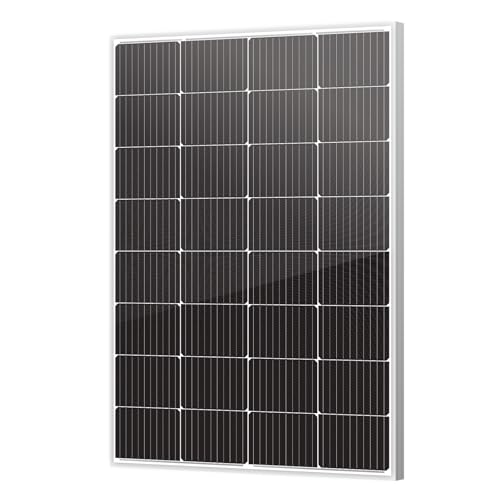
- 【Classic Design】Top Selling 180W using 10BB solar cells and...
- 【Dimension】45.47*30.12*1.38Inch. High winds (2400PA) and snow loads...
- 【Maximum power (Pmax)】180W, Voltage at Pmax (Vmp):18.62V, Current at...