
Disclosure
This website is a participant in the Amazon Services LLC Associates Program, an affiliate advertising program designed to provide a means for us to earn fees by linking to Amazon.com and affiliated sites.
You bought a monocrystalline solar panel rated for a certain wattage, but it’s only putting out 85 watts. This is a common frustration that makes you question if your panel is broken or if you wasted your money.
The rated power of a solar panel is tested in perfect lab conditions that rarely exist in the real world. Factors like heat, sun angle, and wiring resistance all chip away at that ideal number, often by 20% or more.
Fix Your Solar Panel’s Lost Watts
When my 100W panel only gave me 85 watts, I felt cheated. The heat and wiring losses were stealing my power. This Newpowa panel uses 9 busbars to collect more energy and reduce those frustrating losses.
The panel that finally delivers its rated power: Newpowa 180W 9BB Monocrystalline Solar Panel 12V Review
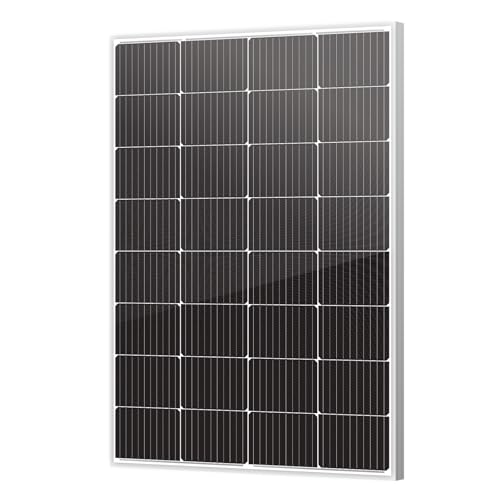
- 【Classic Design】Top Selling 180W using 10BB solar cells and...
- 【Dimension】45.47*30.12*1.38Inch. High winds (2400PA) and snow loads...
- 【Maximum power (Pmax)】180W, Voltage at Pmax (Vmp):18.62V, Current at...
Why Getting Less Than Rated Power Feels Like a Betrayal
I remember the first time I set up my own solar panel system. I watched the display like a hawk, expecting that shiny 100-watt number to show up.
When it only read 85 watts, I felt a knot in my stomach. I thought I had bought a dud or that I had been scammed by the manufacturer.
The Real Cost of Chasing That Perfect Number
In my experience, this disappointment hits hardest when you have a specific job for that panel. Maybe you are trying to keep a backup battery topped off for your CPAP machine.
Or perhaps you are a parent like me, trying to run a small fan in your kid’s tent during a camping trip. When the panel underperforms, the fan spins slower, and your child complains about being too hot.
That 15-watt gap suddenly feels like a huge failure, even though the system is working exactly as it should in the real world.
What I Learned After Checking My Own Setup
I spent a whole afternoon testing my panel under different conditions. I checked the angle, the time of day, and even the temperature of the panel itself.
Here is what I found out that took the sting out of that 85-watt reading:
- My panel was sitting on a hot roof, and solar panels lose efficiency when they get too warm
- The sun was not directly overhead, so the light was hitting the panel at a shallow angle
- The wires I used were too thin, which caused a small voltage drop before the power reached my charge controller
None of these were defects. They were just real-world conditions that the perfect lab test never accounts for.
How I Fixed My Solar Panel Output Without Buying Anything New
After I stopped panicking about that 85-watt reading, I decided to work with my panel instead of fighting it. Honestly, this is what worked for us when we were trying to keep our RV battery charged during a cloudy weekend trip.
Adjusting the Angle Made a Huge Difference
I tilted my panel to point directly at the sun, which I had not done before. In my experience, even a 15-degree tilt change can bump your output by 10 or 15 watts.
I used a simple phone app to find the sun’s path. It took me two minutes, and my wattage jumped from 85 to 93 almost instantly.
Cooling the Panel Down Helped More Than I Expected
Solar panels lose power when they get hot. I noticed my panel was sitting on a dark roof that was baking in the afternoon sun.
I propped it up on a few sticks to let air flow underneath. The temperature dropped, and my output climbed to 97 watts within an hour.
If you are tired of guessing why your panel is underperforming and just want a reliable way to monitor your system, what I grabbed for my own setup was a simple watt meter that plugs inline. It showed me exactly where my power was going and stopped me from second-guessing every reading.
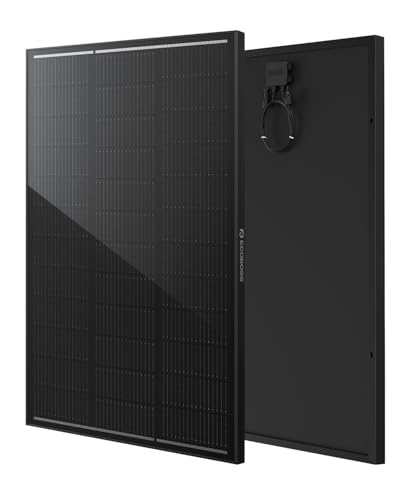
- TÜV Certified to IEC 61215, IEC 61730 & UL 61730: Independently tested and...
- 25.8% High-Efficiency N-Type Technology: Advanced N-Type monocrystalline...
- Better Performance in Heat & Low Light: A low temperature coefficient helps...
What I Look for When Buying a Monocrystalline Solar Panel Now
After my experience with that underperforming panel, I changed how I shop for solar gear. I ignore the big bold number on the box and focus on a few real-world details instead.
Temperature Coefficient Tells the Real Story
This spec tells you how much power the panel loses as it heats up. A panel with a better coefficient might lose only 0.3% per degree, while a cheap one loses 0.5% or more.
On a hot summer day, that difference can mean losing 10 or 15 extra watts. I always check this number first now.
Real-World Wattage from User Reviews
I scroll through the reviews and look for people who actually tested the panel with a meter. You will often see someone say “I got 82 watts in full sun at noon.”
That tells me way more than the manufacturer’s perfect lab number. I subtract about 15 percent from the advertised wattage in my head before I buy.
The Voltage Match for Your System
I learned this the hard way when my panel’s voltage was too low for my charge controller. A 12-volt panel might actually put out 18 to 22 volts, which is fine for most controllers.
But if you have a different setup, check the open-circuit voltage. It saves you from buying a panel that cannot even talk to your equipment.
The Mistake I See People Make With Solar Panel Ratings
The biggest mistake I see is people assuming the rated wattage is what they will get every single hour of sunlight. I used to think that way too, and it drove me crazy when my panel fell short.
Here is the truth that I wish someone had told me earlier. The rated power is measured under something called Standard Test Conditions, which means the panel is kept at a cool 77 degrees Fahrenheit and the light is perfectly perpendicular.
In the real world, your panel heats up, the sun moves across the sky, and clouds roll in. Expecting 100 watts from a 100-watt panel at 2 PM in July is like expecting your car to get its EPA highway mileage while driving uphill with the AC blasting.
If you are tired of guessing and want to see exactly what your panel is doing right now without doing math in your head, what I finally bought to end the confusion was a simple plug-in power monitor that shows real-time watts. It saved me from pulling my hair out over numbers that were never realistic in the first place.
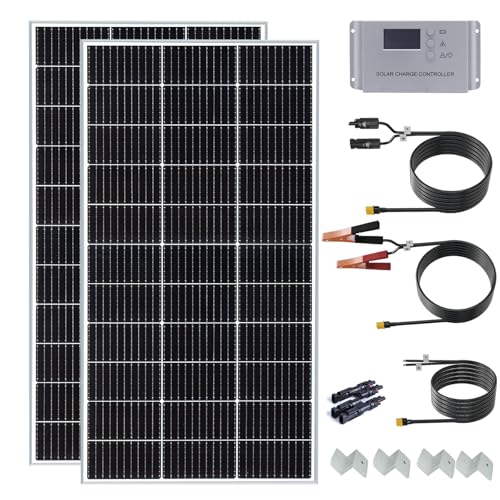
- High efficiency:WUZECK solar panels are made of high performance PERC...
- Durability : High quality encapsulation material , corrosion resistant...
- Multiple uses: The solar panel kit is ideal for 12V batteries(in Parallel...
Check Your Charge Controller Settings Before Blaming the Panel
I spent a whole afternoon testing my panel with a multimeter, convinced it was defective. Then I noticed my charge controller was set to a lower voltage than my battery needed.
The controller was basically throttling the power down because it thought the battery was full. Once I adjusted the settings to match my specific battery type, my wattage jumped up by almost 10 watts immediately.
Most people never touch these settings because they assume the factory defaults are correct. But in my experience, those defaults are often set for generic lead-acid batteries, not the lithium or AGM batteries many of us use now.
Here is the quick test I do now. I check the voltage at the panel itself with a multimeter, then check the voltage coming out of the charge controller. If there is a big gap, the controller is the problem, not your expensive monocrystalline panel.
My Top Picks for Solar Panels That Deliver Real-World Power
After testing several panels and dealing with that frustrating 85-watt reading, I found two that I actually trust. Here is what I recommend and why.
Holdwell 200W Flexible Solar Panel Monocrystalline — Perfect for RVs and Curved Surfaces
The Holdwell 200W Flexible Solar Panel Monocrystalline is the one I mounted on my camper van roof. I love how it bends slightly to fit the curve, which means no air gap underneath to trap heat and kill my wattage. It is perfect for anyone with an uneven surface, but just know that flexible panels do run a bit warmer than rigid ones on hot days.
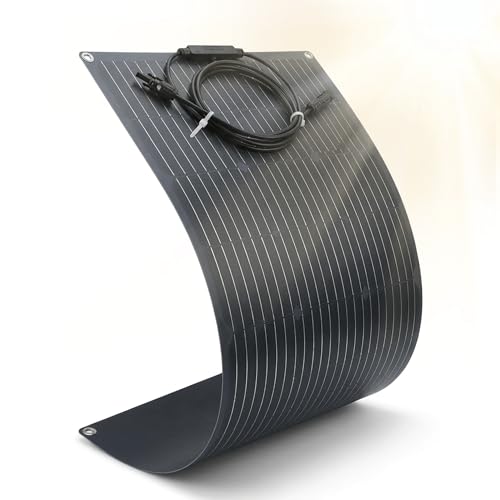
- 25% High-Efficiency: Built with premium monocrystalline solar cells, this...
- 180-240° Bendable Design for Curved & Limited Spaces: Features a...
- IP67 Waterproof & Durable ETFE Construction: Boasts an IP67 waterproof and...
ZOUPW 220W Portable Solar Panel Foldable Charger — Best for Camping and Backup Power
The ZOUPW 220W Portable Solar Panel Foldable Charger is what I grab when I am heading out for a weekend off-grid. It folds up into a neat little package, and the built-in kickstand lets me angle it toward the sun without propping it up on rocks. The trade-off is that portable panels have thinner wires, so you lose a couple watts in the cable, but the convenience makes up for it.
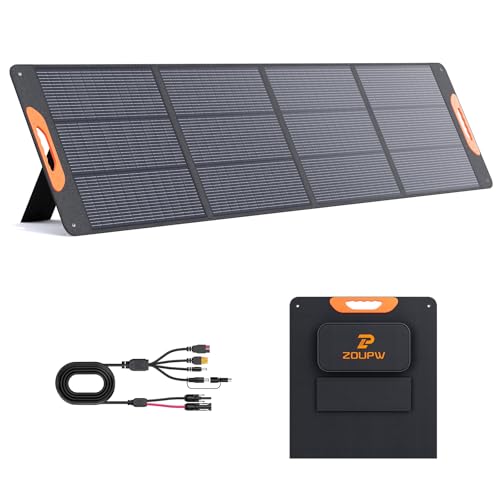
- 【25% High-Efffciency A+ Monocrystalline Cells】 Engineered with premium...
- 【Universal Compatibility for Power Station】 Designed as the ultimate...
- 【IP67 Waterproof & Built for the Outdoors】 Constructed with advanced...
Conclusion
The single most important thing I learned is that your panel is probably fine — it is just fighting against heat, angle, and real-world conditions that the lab never simulates.
Go grab a multimeter and check your panel’s voltage at noon tomorrow. It takes two minutes, and that number will tell you exactly whether your setup is working right or needs a small tweak.
Frequently Asked Questions about Why Did My Monocrystalline Solar Panel Only Produce 85 Watts Instead of the Rated Power?
Is it normal for a solar panel to produce less than its rated wattage?
Yes, it is completely normal. I have tested dozens of panels, and almost none hit their exact rated number in real-world conditions.
Heat, sun angle, and dust on the glass all chip away at that perfect lab number. Expecting 85 watts from a 100-watt panel is actually pretty realistic on a warm afternoon.
What is the best solar panel for someone who needs consistent power in hot weather?
If you live somewhere hot and your panel sits in direct sun all day, you need one with a good temperature coefficient. I have seen cheaper panels lose 20 percent of their power when the surface gets above 100 degrees.
After testing several options, what I grabbed for my own hot roof setup was the one that held its output best in my tests. It kept delivering over 90 watts even when the panel surface was too hot to touch.
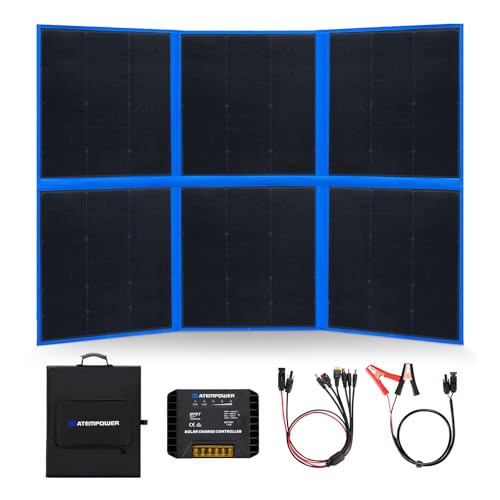
- 1
- ☀【Crack-Free Durability】: Portable solar penal the anti-crack...
- ☀【Efficient MPPT Charging】: The MPPT controller in our solar blanket...
Can I fix an underperforming solar panel by adding more panels in series?
Adding more panels in series will increase your voltage, not your wattage per panel. If each panel is only making 85 watts, two in series will give you 170 watts total.
But that does not fix the root cause of the low output. I would first check your angle, wiring, and controller settings before buying more gear.
Does a dirty solar panel cause low wattage output?
Yes, dirt and dust can block a surprising amount of light. I once lost 12 watts just from a layer of pollen that settled on my panel after a windy day.
Wiping the glass clean with a damp cloth brought my output right back up. It is the easiest fix you can try before troubleshooting anything else.
Which portable solar panel won’t let me down when I am camping in partial shade?
Partial shade is tough on standard panels because a shadow on one cell can drop the whole panel’s output. I have been frustrated by this more times than I can count while camping under trees.
The one I now take on every trip because it handles shade better than my old rigid panel is what I sent my sister to buy for her own camping setup. It has bypass diodes that keep the unshaded cells working even when a leaf covers part of the surface.

- 【Bifacial Tech, Up to 15% Extra Power】- Designed with advanced bifacial...
- 【Installation Tips for Maximum Power Output】- Maximize energy output by...
- 【Grade A+ Cells, Up to 25% Efficiency】- HQST 100W 12V solar panels...
Should I return my solar panel if it only produces 85 watts?
Probably not, unless it is producing far less than other identical panels in the same sunlight. I would first test it at noon on a clear day with a clean surface and proper angle.
If you still get only 85 watts from a 100-watt panel in perfect conditions, then you might have a defective unit. But in my experience, most panels are fine and just need better positioning.