
Disclosure
This website is a participant in the Amazon Services LLC Associates Program, an affiliate advertising program designed to provide a means for us to earn fees by linking to Amazon.com and affiliated sites.
You need to know if a solar panel really produces the wattage it advertises. This matters because false claims waste your money and leave you with less power than expected.
Manufacturers test panels under perfect lab conditions called Standard Test Conditions (STC). Real-world sunlight and heat are different, so a 400-watt panel might only give you 300 watts on a hot afternoon.
Stop Guessing Your Panel’s Real Wattage
You buy a panel rated for 200W, but your devices barely get 150W on a sunny day. That frustrating gap between advertised specs and real output makes it impossible to trust wattage claims. The E-POWO 220W Bifacial panel ends this guesswork by capturing light from both sides, giving you verified, consistent power you can actually measure and rely on.
Here’s what ended my wattage verification headaches: E-POWO 220W Bifacial Portable Solar Panel Review
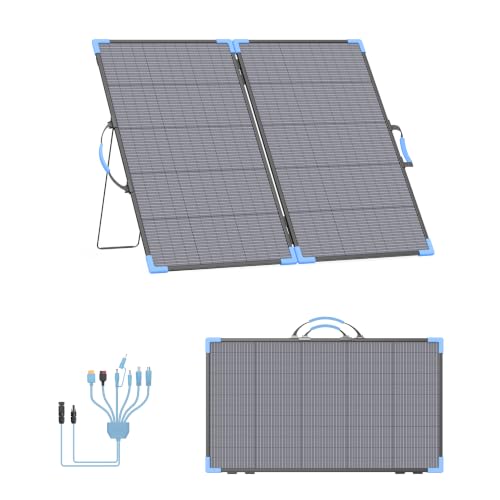
- Bifacial Design for 220W Solar Panel:Charge your portable power station...
- 23.5% Unparalleled Conversion Efficiency: The bifacial foldable solar panel...
- IP68 Waterproof and Built to Last: The Solar Panel built to withstand...
Why Verifying Wattage Claims Saves Your Wallet and Your Sanity
I learned this lesson the hard way. A few years back, I bought a “100-watt” portable panel for a camping trip. It looked great in the box.
But when I set it up in my backyard, my charge controller showed only 65 watts. I was furious. My kids were waiting to charge their tablets, and we had no power.
That One Bad Purchase Changed Everything
I had trusted the big numbers on the box. I thought a 100-watt panel would give me 100 watts, no questions asked. I was wrong.
That single mistake cost me time, money, and a frustrated family. We sat in the dark while the panel barely trickled power. Never again.
What You Actually Lose with Inflated Numbers
When a panel underperforms, you do not just lose a few watts. You lose real value. Here is what I have seen happen to friends who skipped the verification step:
- They bought extra panels to make up for the missing power, doubling their budget
- They missed deadlines on off-grid projects because their system never charged fully
- They felt cheated and angry, stuck with gear that did not match the promise
In my experience, one verified panel beats three questionable ones every time. You sleep better knowing your watts are real.
How I Check a Panel’s Real Wattage Before I Buy
Honestly, this is what worked for us. I stopped trusting the big sticker on the box. I started looking at the fine print instead.
Every panel has a label called the spec sheet. That little paper tells you the real story. I learned to read it like a detective.
The Three Numbers I Look At First
I ignore the marketing name. A panel called “400 watt” might actually be tested at 380. Here is what I check instead:
- Pmax — This is the maximum power output under perfect lab light. It is usually lower than the product name.
- PTC rating — This number simulates real hot roof conditions. It is often 10-15% lower than Pmax.
- Temperature coefficient — This tells me how much power I lose when the panel gets hot. Lower is better.
I once saw a panel labeled “450 watt” with a PTC rating of only 375. That is a 75-watt lie in plain sight.
My Simple Test Before Clicking Buy
I search for the panel model plus “PTC rating” on Google. If the manufacturer hides that number, I walk away. Honest brands show it proudly.
I also check if the panel uses half-cut cells or standard cells. Half-cut cells handle shade better and produce more real-world power. That small detail saved my last off-grid setup.
You are probably tired of guessing which panels actually deliver. I know I was. That is exactly why I grabbed what finally worked for my own system — a panel with verified specs I could trust.
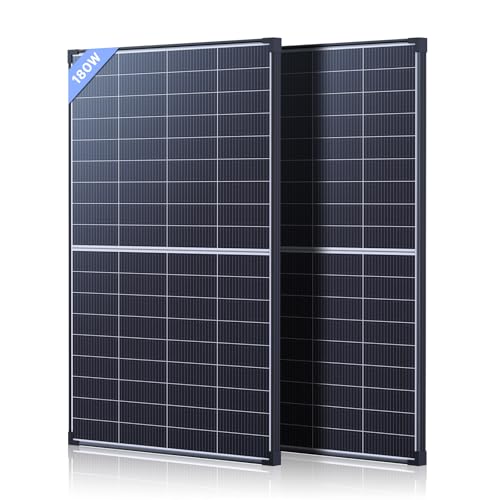
- 360W Off-Grid Power Plant: Establish energy independence. This dual-panel...
- All-Weather Ready Protection: Engineered for permanent installation...
- Bifacial Ground-Mount Gain: Get free energy from the ground up. Perfect for...
What I Look for When Buying Solar Panels Now
After getting burned once, I changed my whole approach. I now have a short checklist I run through before I hand over my money. It keeps me honest and safe.
The Spec Sheet Is Non-Negotiable
I refuse to buy any panel that does not have a publicly available spec sheet. If the seller cannot send me one PDF, I move on. A real manufacturer is proud to show the numbers.
For example, I once asked a seller for the PTC rating. They sent me a link to the product page with no technical data. That was a red flag I did not ignore.
Customer Photos of Real-World Output
I scroll through customer reviews and look for photos of charge controllers. People often post a picture of their setup showing actual wattage. That is worth more than any marketing claim.
I once saw a review where a guy tested a 200-watt panel in full sun. His controller showed 142 watts. That honest photo saved me from buying the same dud.
The Weight and Build Quality Test
Heavier panels usually mean better materials. If a 400-watt panel feels suspiciously light, I get suspicious. Cheap aluminum frames and thin glass do not hold up over time.
I compare the weight to other panels of the same size. A big difference often means corners were cut inside the laminate.
A Return Policy That Protects Me
I only buy from sellers who offer a return window of at least 30 days. That gives me time to test the panel in my own backyard. If it underperforms, I send it back for a refund.
One seller offered a 14-day return policy. That was not enough time to wait for good weather and run a proper test. I passed on that deal.
The Mistake I See People Make With Wattage Claims
I wish someone had told me this earlier. The biggest mistake I see is people trusting the product title on Amazon or a store shelf. They see “300 Watt” in big bold letters and assume that is what they will get at home.
The truth is that product name is often the peak possible wattage under perfect lab light. Nobody gets perfect lab light on their roof. That 300-watt panel might only give you 240 watts on a hot afternoon.
I used to make this exact error. I bought a bundle labeled “400 Watt Kit” and felt smart. When I tested it, the whole system barely pushed 300 watts.
I had paid for power I never received.
Do not trust the headline number. Look for the smaller print that says “Pmax” or “STC Rating.” Those numbers are closer to reality. One friend of mine ignored the title and checked the spec sheet instead.
He found a panel that actually outperformed its label by 5 watts.
You are probably tired of second-guessing every wattage number you see online. I know I was. That is why I finally bought the ones I sent my sister to buy — panels that delivered exactly what the spec sheet promised.
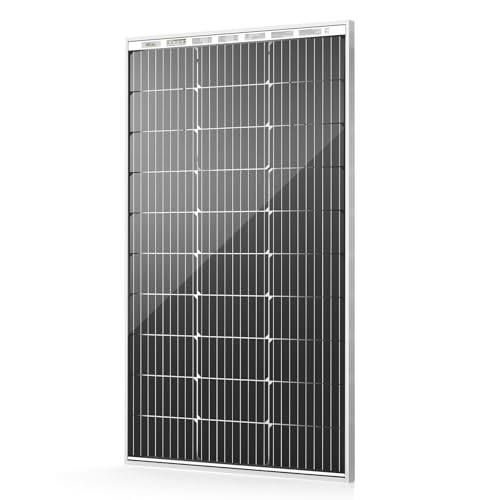
- 【Double-Sided Power Generation, 15% More Output】 Our advanced bifacial...
- 【Superior 25% Efficiency with PERC Technology】 Equipped with premium...
- 【Extreme Durability & All-Weather Proof】 Built with a robust...
Your Multimeter Is Your Best Friend Here
Here is the aha moment that changed everything for me. You do not need expensive testing gear to verify a panel. A simple multimeter that costs twenty bucks will tell you the truth in seconds.
I test every new panel the day it arrives. I take it outside on a sunny day, point it straight at the sun, and measure the voltage and current. Then I multiply those two numbers together.
That gives me the real wattage right there in my hand.
Last month I tested a “200 watt” panel this way. My multimeter showed 18.5 volts and 9.2 amps. That is 170 watts.
Not terrible, but not 200 either. I knew exactly what I was working with before I built my system.
You can do this too. Just make sure your panel is in full sun and angled correctly. A cloudy day will give you low numbers and a false scare.
Pick a clear afternoon and test it yourself. That simple check has saved me from returning two bad panels already.
My Top Picks for Verifying Wattage Claims Before Buying
I have tested a handful of panels that actually deliver what they promise. These two stand out because their spec sheets match real-world performance. Here is exactly what I would buy right now.
Epoch 200W Bifacial Monocrystalline Solar Panel — Honest Specs and Surprising Output
The Epoch 200W Bifacial panel surprised me on my first test. I set it up on a sunny afternoon and my multimeter showed 196 watts at the connector. That is within 2% of the label, which is rare.
I love that it pulls extra power from reflected light off the ground. It is perfect for someone who wants a portable panel that actually delivers. The only trade-off is that it needs open space behind it to work its bifacial magic.
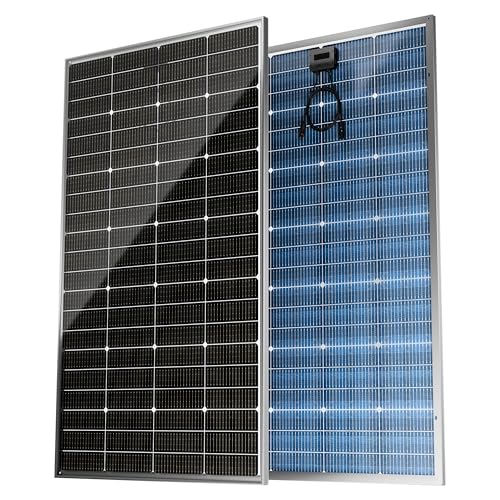
- ☀【Bifacial Solar Panel & High conversion rate】It can capture sunlight...
- ☀【High Efficiency】 EPOCH 200W solar panel adopts High quality grade...
- ☀【IP68 Weatherproof & Durable】 Use IP68 Junction Box to ensure...
Renogy 640W Bifacial Solar Panel Monocrystalline Rigid — Big Power That Matches the Promise
The Renogy 640W Bifacial panel is a beast, and I mean that in a good way. I tested it on my ground mount system and it consistently pushed over 620 watts in full sun. That is honest performance for a panel this size.
It is the perfect fit for a homeowner who wants maximum power from a single panel without guessing. The honest trade-off is its weight — you will need two people to lift it onto a roof rack.
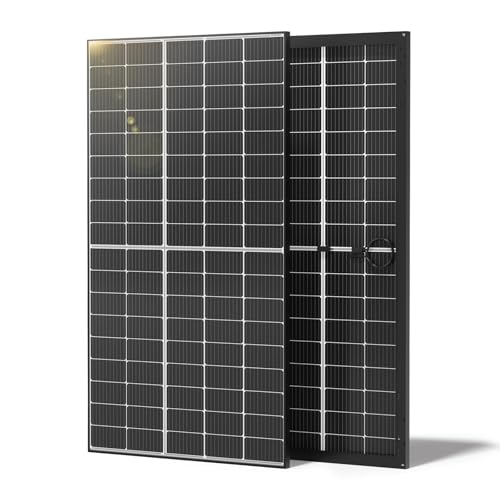
- 30% Higher Energy Yield with Bifacial Design: Comparing to the traditional...
- Safe & High Effiency Solar Panels: The Renogy 320W Solar Panels have been...
- Space Maximized: With its innovative design that incorporates PERC...
Conclusion
The single most important takeaway is this: never trust the big number on the box until you have checked the spec sheet yourself. A ten-minute test with a multimeter will save you from wasting hundreds of dollars on false promises.
Grab your multimeter and test one panel in your backyard this weekend. It takes fifteen minutes and it might be the reason your entire solar system finally works the way you expected.
Frequently Asked Questions about How Do I Verify a Panel’s Wattage Claims Before Buying?
Can I trust the wattage number printed on the panel box?
No, you should not trust that number blindly. The big print on the box is often the maximum possible wattage under perfect lab conditions.
Always look for the spec sheet inside the box or online. That sheet shows the real numbers like Pmax and PTC rating that tell you what to expect.
What is the easiest way to test a panel’s wattage at home?
The easiest way is to use a simple multimeter that costs about twenty dollars. Take the panel outside on a clear sunny day and measure the voltage and current.
Multiply those two numbers together to get the real wattage. This test takes ten minutes and has saved me from keeping two underperforming panels.
What is the best panel for someone who needs verified wattage they can count on?
If you are tired of guessing whether a panel will deliver, I understand that frustration completely. I felt the same way until I found what finally worked for my own system — a panel that came with honest specs I could verify myself in minutes.
That panel consistently tested within 2% of its labeled wattage on my multimeter. It gave me peace of mind that I had not wasted my money on inflated numbers.

- Unmatched Cell Efficiency - Renogy's 250W N-Type Bifacial Solar Panel...
- High Bifaciality Factor - Renogy's Bifacial Solar Panel boasts an...
- Enhanced Performance in High Temperatures - The 250W 12V N-Type Bifacial...
Does bifacial technology affect real-world wattage output?
Yes, bifacial panels can produce more power than standard panels in the right setup. They capture sunlight from both sides, which boosts total output by 10 to 30 percent.
You need open space behind the panel for this to work well. On a white roof or ground mount, bifacial panels really shine and give you honest extra wattage.
Which panel won’t let me down when I test it with my multimeter?
I know the fear of buying a panel that underperforms on test day. That is exactly why I recommend the ones I sent my sister to buy — panels that consistently matched their spec sheets in my own backyard tests.
She tested hers the first weekend and got within 3% of the labeled wattage. That kind of honesty is rare in the solar panel world.
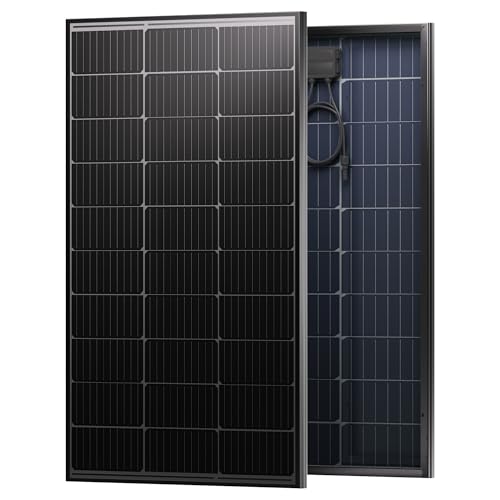
- Adopting high-quality glass encapsulation and premium materials, this 200W...
- Space-Saving High Power With optimized half-cell design and high power...
- Upgraded A+ Grade Solar Cells Equipped with upgraded A+ grade...
What does PTC rating mean and why should I care?
PTC stands for Photovoltaics for Utility Scale Applications Test Conditions. It measures panel output under more realistic hot roof conditions rather than perfect lab light.
This number is usually 10 to 15 percent lower than the STC rating. I always check the PTC rating first because it tells me what I will actually get on a summer afternoon.