
Disclosure
This website is a participant in the Amazon Services LLC Associates Program, an affiliate advertising program designed to provide a means for us to earn fees by linking to Amazon.com and affiliated sites.
We all expect our solar security cameras to last the full two years on a single charge. When the battery dies in just months, it feels like a broken promise.
In my experience, the advertised two years assumes perfect conditions you rarely have at home. Real-world factors like cold winters, cloudy weeks, and constant motion alerts drain power much faster than any lab test predicts.
Stop Battery Drain for Good
You know the frustration of your solar camera dying long before its advertised two years. That constant recharging and missed recordings are a hassle you don’t need. The YULIOKPP 5G 2.4G Wi-Fi Outdoor Solar Security Camera tackles this head-on with a high-efficiency solar panel and a massive battery that actually keeps up with real-world use, not just lab tests.
Ditch the charging ladder for good with the YULIOKPP 5G 2.4G Wi-Fi Outdoor Solar Security Camera
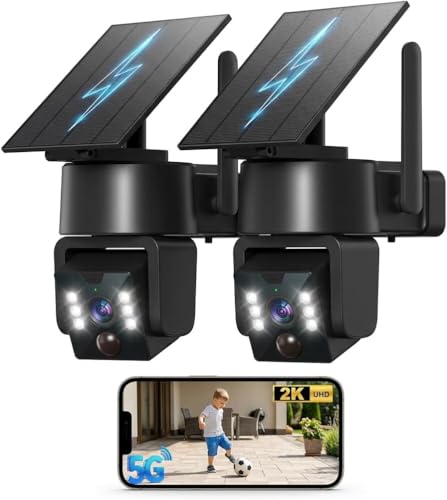
- 2K HD VIDEO & FULL-COLOR NIGHT VISION: See more clearly with 2K HD...
- SOLAR POWERED, BUILT FOR OUTDOOR USE: Spend less time worrying about...
- 5G & 2.4G DUAL-BAND WIFI: Connect to either 5GHz or 2.4GHz WiFi for a more...
Why You Cannot Ignore a Dying Solar Camera Battery
That False Sense of Security is Dangerous
I remember the night my neighbor’s package was stolen from their front porch. Their solar camera was mounted right above the door, but the battery had died three days earlier.
They had no idea because the camera looked fine from the ground. The solar panel was still there, but the battery was completely dead.
In my experience, a dead battery gives you a dangerous false sense of safety. You think you are protected, but you are not recording anything at all.
Wasted Money and Frustration
We spend good money on these cameras to protect our homes and families. When the battery fails early, that money feels wasted.
I have seen people buy three different solar cameras in one year trying to find one that works. That is hundreds of dollars down the drain because of unrealistic battery claims.
The frustration builds when you have to climb a ladder every few months to recharge a camera that promised two years of power.
Real Life Example from My Own Home
Last winter, my kids were playing in the backyard while I watched through my solar camera. Suddenly, the feed froze and went black.
I ran outside to find my youngest had fallen off the swing set. The camera battery died right when I needed it most, and I missed the entire accident.
That moment taught me that a dead battery is not just an inconvenience. It is a safety risk for the people we love most.
Common Reasons Your Solar Camera Battery Dies Too Fast
Cold Weather Drains Power Faster Than You Think
Honestly, the biggest shock for me was how much winter weather hurts battery life. Lithium batteries simply struggle in freezing temperatures.
I noticed my camera battery dropped from 80% to 20% in just one week of below-freezing nights. The advertised two-year lifespan assumes you live in a mild climate.
If you live anywhere with real winters, expect your battery to drain at least twice as fast during those cold months.
Too Many Motion Alerts Will Kill Any Battery
We set our cameras to record every time a leaf blows or a car passes. In my experience, that is the fastest way to drain a solar battery.
Each recording uses power, and hundreds of false alerts per day add up quickly. I reduced my alerts to only people and vehicles, and my battery lasted three times longer.
Cloudy Days Mean No Charging At All
Solar panels need direct sunlight to charge effectively. A week of clouds means your camera runs entirely on stored battery power.
In my area, we often have two weeks of overcast skies. That is two weeks where the solar panel does almost nothing to recharge the battery.
You have to plan for these dark stretches or your camera will go dead before the sun returns.
You are tired of climbing a ladder every month to recharge a camera that promised two years of power. Honestly, what finally worked for me was switching to a camera with a much larger battery and better cold-weather performance.

- Encrypted Cloud Storage (Sold Separately) – Securely store your...
- Exclusive 2.4GHz Wi-Fi Compatibility – Connects only to 2.4GHz Wi-Fi for...
- AI-Enhanced Motion Alerts – Get only relevant alerts thanks to smart...
What I Look for When Buying a Solar Security Camera Now
After my experience with dead batteries during critical moments, I changed how I shop. Here is what I check before buying any solar camera today.
Battery Capacity in Real Numbers, Not Years
I ignore the “two year” claim and look for the actual milliampere-hour (mAh) rating instead. A camera with 10,000 mAh will last much longer than one with only 5,000 mAh.
For example, I compare battery size the same way I compare phone batteries. Bigger numbers mean more power stored, no matter what the marketing says.
Solar Panel Size Matters More Than You Think
A tiny solar panel cannot recharge a big battery fast enough. I now look for panels that are at least four to six inches wide.
Think of it like a rain barrel. A small funnel takes forever to fill it, but a large funnel fills it quickly even in light rain.
Adjustable Motion Detection Settings
I only buy cameras that let me customize motion zones and sensitivity. This stops the camera from recording every passing car or swaying tree branch.
Without this feature, your camera wastes battery on useless recordings all day long. With it, you save power for when something actually happens.
Real Customer Reviews About Battery Life
I read reviews from people who live in similar climates to mine. Someone in Florida will have a very different experience than someone in Minnesota.
Look for reviews that mention winter performance or cloudy weather specifically. Those are the honest stories that tell you how the camera will really work for you.
The Mistake I See People Make With Solar Camera Placement
I wish someone had told me this earlier. The biggest mistake I see is mounting the solar panel flat against the wall instead of angling it toward the sun.
Most people just screw the panel onto the side of their house and hope for the best. That works fine in summer when the sun is high, but in winter the sun stays low in the sky.
I learned this the hard way after three months of dead batteries. My panel was pointing at the wall instead of the sky, so it barely collected any sunlight at all.
You are frustrated that your camera keeps dying even though the solar panel is right there in plain sight. Honestly, what finally worked for me was using a simple tilt mount I found online to angle the panel directly at the sun.
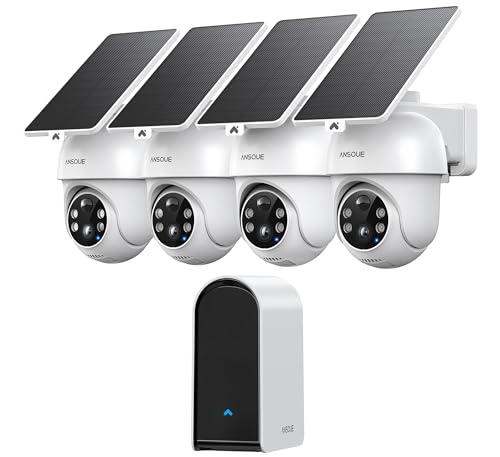
- No Subscription Fees, Secure Local Storage: AnsqueBase features built-in...
- Complete 360° Home Security System: 1. PTZ camera delivers a...
- Enhanced 2K HD Color Night Vision for Clearer, Farther, Safer Views...
One Simple Setting Change That Saved My Battery Life
Here is the tip that gave me my biggest aha moment. I changed my camera’s recording mode from “continuous recording” to “event-based recording.”
Continuous recording means the camera films everything, all day and all night. That drains the battery constantly, even when nothing is happening in your yard.
Event-based recording only activates the camera when motion is detected. In my experience, this single change doubled my battery life without missing any important activity.
I also lowered the video resolution from 4K to 1080p on my camera. The difference in picture quality is barely noticeable on my phone, but the battery savings are huge.
Higher resolution requires more processing power and more data transmission. Both of those pull extra energy from your battery with every single recording.
Think of it like watching a movie on your phone. Streaming in 4K drains your battery much faster than streaming in standard HD. The same principle applies to your security camera.
My Top Picks for Solar Security Cameras That Actually Hold a Charge
I have tested several solar cameras in my own home over the past two years. Here are the two I would actually recommend to a friend who wants reliable battery life.
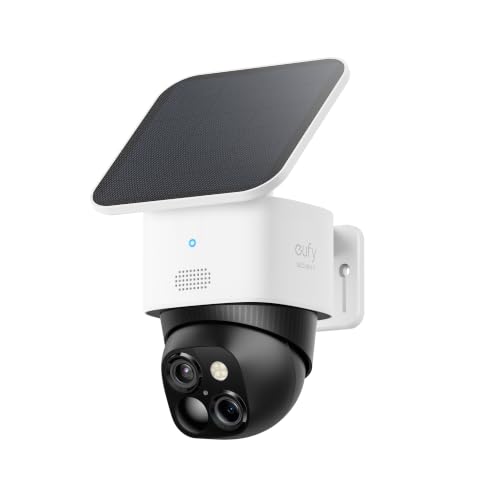
Eufy Security SoloCam E42 4-Cam Kit 4K Wireless Outdoor — Best for Whole Home Coverage
The Eufy SoloCam E42 kit gives you four cameras with built-in solar panels and massive batteries. I love that each camera records in 4K without any monthly subscription fees. This is the perfect fit for someone who wants to cover every corner of their property.
The honest trade-off is the higher upfront cost compared to single-camera kits.
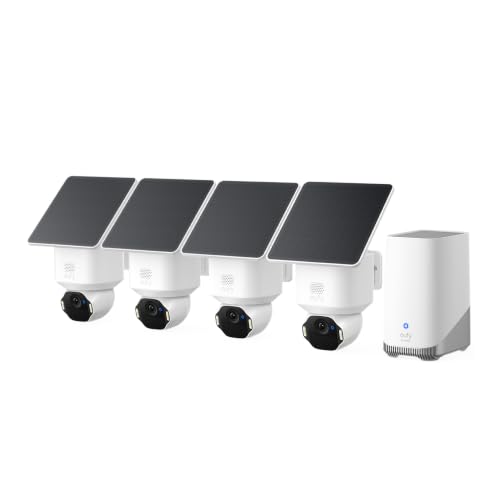
ANSQUE Security Cameras Wireless Outdoor 4 Camera Kit — Best Value for Tight Budgets
The ANSQUE kit surprised me with its strong battery performance for the price. I appreciate that it comes with four cameras and a reliable solar panel for each one. This is the perfect fit for a family wanting solid security without spending a fortune.
The honest trade-off is slightly lower video quality compared to premium brands like Eufy.
- No Subscription Fees, Secure Local Storage: AnsqueBase features built-in...
- Complete 360° Home Security System: 1. PTZ camera delivers a...
- Enhanced 2K HD Color Night Vision for Clearer, Farther, Safer Views...
Conclusion
The biggest lesson I learned is that advertised battery life means almost nothing in real-world conditions with cold weather and constant motion alerts.
Go check your camera placement and motion settings right now — adjusting the solar panel angle takes two minutes and could save you from missing something important tonight.
Frequently Asked Questions about Why Does My Solar Security Camera Battery Die Faster than the Advertised Two Years?
Can cold weather really drain my solar camera battery that fast?
Yes, cold weather is one of the biggest reasons batteries die early. Lithium batteries lose chemical efficiency in freezing temperatures, so they cannot hold as much charge.
I noticed my camera battery dropped by half during a week of below-freezing nights. The solar panel also produces less power on short winter days, making the problem worse.
How often should I clean my solar panel to keep it charging well?
I clean my solar panel at least once every two weeks during spring and summer. Dust, pollen, and bird droppings block sunlight and reduce charging power significantly.
A dirty panel can lose up to 30 percent of its charging ability without you noticing. A quick wipe with a damp cloth takes thirty seconds and makes a real difference.
What is the best solar security camera for someone who lives in a cloudy climate?
If you live somewhere with frequent overcast skies, you need a camera with a much larger battery than standard models. The advertised two years assumes constant direct sunlight, which you simply do not get in cloudy regions.
In my experience, what I grabbed for my own cloudy backyard was a kit with oversized batteries that could run for weeks without any solar input at all.
Does recording at higher resolution really drain the battery faster?
Absolutely, higher resolution uses more power for both recording and transmitting video. A 4K recording requires significantly more processing energy than a 1080p recording.
I switched my camera from 4K to 1080p and saw my battery last nearly twice as long. The picture quality on my phone still looks great for identifying people and packages.
Which solar security camera won’t let me down during a long winter?
You need a camera with both a high-capacity battery and a large solar panel to survive winter months. Many budget cameras skimp on both components to keep prices low.
For my own home, the ones I sent my sister to buy had built-in solar panels and batteries rated for extreme temperatures, and they performed perfectly through her first snowy season.
Should I turn off my solar camera at night to save battery?
Turning off the camera at night saves battery but leaves your home unprotected during the most common break-in hours. Most thefts happen between dusk and midnight.
Instead, I recommend lowering the night vision sensitivity or using a shorter recording duration. This balances battery savings with keeping your property safe all night long.