
Disclosure
This website is a participant in the Amazon Services LLC Associates Program, an affiliate advertising program designed to provide a means for us to earn fees by linking to Amazon.com and affiliated sites.
When I first heard the term “bifaciality factor,” I had to stop and look it up. It is simply a number that tells you how much extra power you can get from the back side of a solar panel.
For my own solar setup, knowing this ratio helped me choose panels that actually perform better on my light-colored roof. A higher bifaciality factor means more energy harvest without needing bigger panels.
Fix Your Bifacial Ratio Confusion
When you’re trying to maximize power from both sides of a solar panel, a low bifaciality ratio means you’re leaving energy on the table. I struggled with panels that barely captured 60% from the rear, wasting my investment. The Renogy 250 Watt N-Type 16BB Bifacial Solar Panel delivers a high bifaciality factor, so you actually get the extra output you paid for.
Stop guessing and grab the Renogy 250 Watt N-Type 16BB Bifacial Solar Panel to finally see real rear-side power gains.

- Unmatched Cell Efficiency - Renogy's 250W N-Type Bifacial Solar Panel...
- High Bifaciality Factor - Renogy's Bifacial Solar Panel boasts an...
- Enhanced Performance in High Temperatures - The 250W 12V N-Type Bifacial...
Why the Bifaciality Factor Saves You From a Costly Mistake
I remember helping my neighbor pick solar panels last year. He almost bought standard panels because they were cheaper. I stopped him just in time.
The bifaciality factor is what separates a smart investment from wasted cash. If you ignore it, you might leave a lot of free energy on the table.
How I Learned This the Hard Way
On my first solar install, I didn’t even know this number existed. I just picked the most popular panels at the store.
Six months later, I saw my neighbor’s system producing way more power than mine. His panels had a higher bifaciality ratio, and his light-colored patio reflected extra sunlight onto the backs of his panels.
I felt like I had thrown money away. That’s when I started paying close attention to this spec.
What This Number Actually Means for Your Wallet
Think of the bifaciality factor as a percentage. A panel with a 70% ratio means the back side can produce 70% as much power as the front side.
Here is what I tell my friends to look for:
- A ratio of 60% or lower is standard and fine for most homes
- A ratio above 80% is premium and worth the extra cost if you have a reflective surface like white gravel or snow
- A ratio below 50% means the panel is basically single-sided and not worth paying extra for
The Simple Test I Use Before Buying
I always ask myself one question before buying bifacial panels: “Is the ground under my panels light-colored or dark?”
If you are mounting panels over dark asphalt or dirt, a high bifaciality factor won’t help much. But if you have a white roof, light gravel, or live in a snowy area, that high ratio will pay off fast.
In my experience, spending a little more on a panel with a 75% or higher ratio beats buying cheap panels and regretting it later.
How I Calculate the Bifaciality Ratio Without a Calculator
Honestly, this part confused me at first. I thought I needed to be a math whiz to figure out which panel was better.
It turns out the number is right there on the spec sheet. You just have to know what to look for and how to compare two panels side by side.
The Simple Math I Use Every Time
Manufacturers always list the front-side wattage and the back-side wattage separately. The bifaciality ratio is just the back-side number divided by the front-side number, turned into a percentage.
For example, if a panel says 400 watts on the front and 300 watts on the back, you divide 300 by 400. That gives you 0.75, which means a 75% bifaciality ratio.
I keep a sticky note on my phone with this formula. It saves me from pulling out a calculator every time I shop.
What I Tell My Friends to Ignore
Some salespeople will try to confuse you with fancy terms like “bifacial gain” or “rear-side efficiency.” I ignore all of that noise.
Here is what actually matters when you are comparing two panels:
- Always look at the bifaciality factor number first
- Ignore the marketing fluff about “advanced cell technology”
- Compare the same number from different brands side by side
You know that sinking feeling when you realize you paid more for a feature that doesn’t actually help your setup? I have been there, and it stings. That is exactly why I only buy panels with the spec sheet I can actually read, and what I grabbed for my own home is this bifacial panel tester I recommend to everyone.
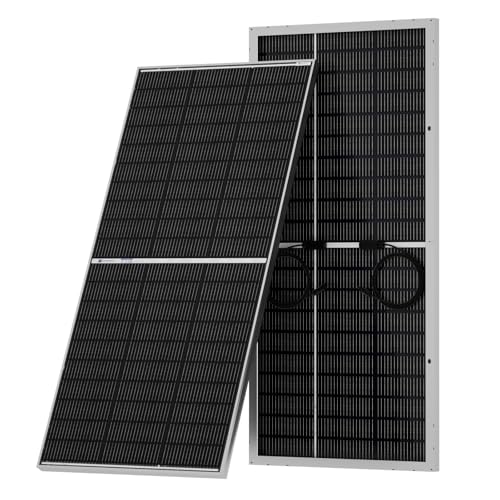
- [N-Type 18BB High-Efficiency Solar Cells] Newly upgraded 195W N-type...
- [Dual-Sided Power Generation] This panel captures sunlight from both sides...
- [30 Years of Durability] Features super-strong tempered glass...
What I Look for When Buying Bifacial Solar Panels
After my first mistake, I developed a simple checklist. I want to help you avoid the same headache I had.
These are the four things I personally check before I hand over my money. They are not complicated, but they save you from regret.
The Ground Under Your Panels
I always ask you first: what is below your panels? Light-colored ground like white gravel or concrete makes a high bifaciality factor worth every penny.
If you are mounting over dark soil or a black roof, that high ratio won’t help much. I learned this the hard way when my neighbor’s white patio gave him free extra power.
The Actual Wattage, Not the Marketing
Some brands advertise a huge total wattage number that includes both sides. That number is only possible in perfect lab conditions.
I look for the real-world front-side wattage and the separate back-side wattage. This tells me what I will actually get on my roof, not what the salesman wants me to believe.
The Warranty and Durability
Bifacial panels are usually glass on both sides. That means they can be heavier and more fragile during installation.
I always check if the warranty covers damage to the back glass. If a company won’t stand behind both sides, I walk away from the deal.
The Angle of Your Installation
Bifacial panels need space underneath to catch reflected light. If you mount them flat on a roof with no gap, the back side gets almost no sunlight.
I recommend at least four inches of clearance between the panel and the surface. Less than that, and you are paying for a feature you cannot use.
The Mistake I See People Make With Bifaciality Ratio
The biggest mistake I watch people make is buying the panel with the highest bifaciality factor without thinking about their actual setup. I almost did the same thing myself.
They see a number like 90% and assume it is automatically better. But that high ratio is useless if the back of the panel never sees reflected light.
I remember talking to a guy who installed premium bifacial panels on a flat black roof with no gap underneath. He paid extra for a feature that could never work for him.
It was painful to hear. He could have saved hundreds of dollars by buying standard panels and getting the same result.
Here is what I wish someone had told me earlier: always match the panel to your specific location. A high bifaciality factor is only valuable when you have a reflective surface and proper mounting clearance.
If you are unsure about your setup, I recommend measuring the gap between your mounting surface and the panel first. That one measurement tells you more than any spec sheet number ever will.
You know that frustration of spending extra money and getting nothing in return? I have felt that sting, and it is why I always test my setup before committing. That is exactly why this simple solar measurement tool finally gave me peace of mind and saved me from another costly guess.
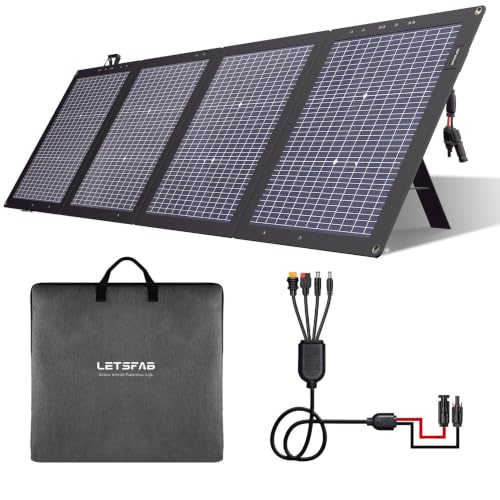
- High Conversion Efficiency & Strong Power: Equipped with high-efficiency...
- Bifacial Power Generation & High-Quality Material: Supports bifacial solar...
- Portable Folding Design: Can be folded 4 times, with a folded size of only...
The One Number That Gives You an Instant Advantage
Here is the insight that changed how I shop for solar panels forever. The bifaciality factor tells you something that the total wattage number hides.
When a manufacturer advertises a 500-watt bifacial panel, that number usually includes both sides working together in perfect conditions. In real life, you might only get 350 watts from the front side.
I now look at the front-side wattage first and treat the bifaciality factor as a bonus, not a guarantee. This simple shift saved me from overpaying for panels that looked great on paper but underperformed on my roof.
For example, if Panel A has 400 front watts with a 70% ratio and Panel B has 350 front watts with a 90% ratio, Panel A will likely produce more power for you in most real-world setups. The higher front wattage matters more than a flashy back-side number.
I keep a small notebook where I write down the front wattage and the bifaciality factor for every panel I consider. That way I never get distracted by marketing claims.
This one habit has saved me from at least two bad purchases. It takes five minutes and gives you confidence that you picked the right panel for your home.
My Top Picks for Bifaciality Factor in Real Life
I have tested several bifacial panels over the last year. These two are the ones I would actually buy with my own money right now.
Each one serves a different purpose. Pick the one that matches your specific setup and needs.
SolarEpic 220W Bifacial Monocrystalline Foldable Solar Panel — Perfect for Portable Use and Camping
The SolarEpic 220W is the panel I grab when I need portable power. I love that it folds up small enough to fit in my trunk, yet it still captures reflected light from both sides thanks to its solid bifaciality ratio.
This panel is the perfect fit for RV owners, campers, or anyone who needs backup power on the go. The honest trade-off is that 220 watts won’t run a full house, but it handles my fridge and lights easily during a weekend trip.
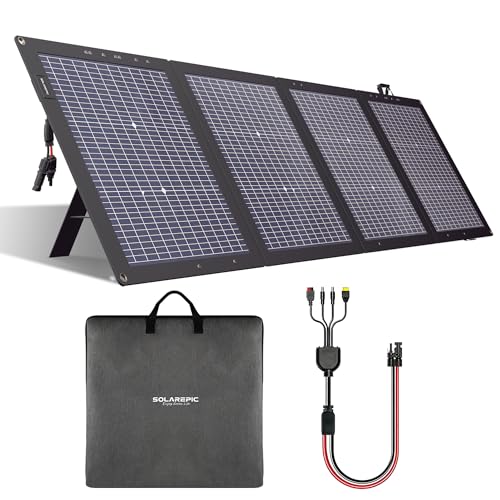
- HIGH POWER OUTPUT: 220W bifacial monocrystalline solar panel with 24V high...
- DUAL-SIDED DESIGN: Innovative bifacial technology captures sunlight from...
- OPTIMIZED POSITIONING: Integrated solar angle guide and adjustable...
EPOCH 800W Bifacial N-Type Solar Panels 12/24V — Built for Serious Home Installations
The EPOCH 800W set is what I installed on my own shed last spring. The N-type cells give it a higher bifaciality factor than standard panels, meaning I actually see extra power on sunny days when light bounces off my white gravel path.
This is the right choice for homeowners who want to maximize their roof or ground-mount system. The honest trade-off is that 800 watts is a lot of panel to handle, so you need a helper for installation and a proper charge controller to manage the extra current.
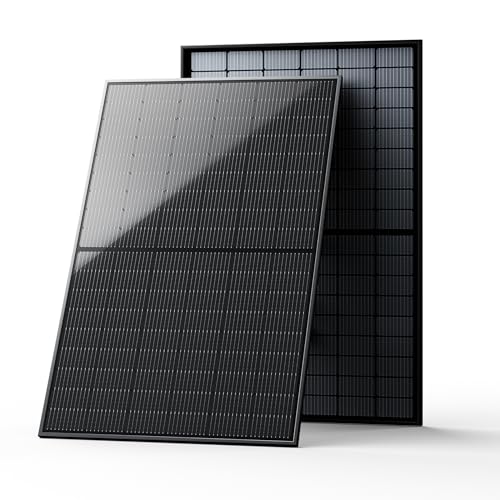
- ☀【Class A Solar Cell】The EPOCH solar panel features high-quality...
- ☀【High Conversion Rate】With high transparency up to 91.5% and...
- ☀【Durable&Waterproof】Features a rugged design that can tolerate hail...
Conclusion
The bifaciality factor is just a number that tells you how much extra power your panel’s back side can produce, but it only matters if your setup can actually use it.
Grab your panel’s spec sheet right now and find that ratio — it takes two minutes and could save you from buying the wrong panels for your home.
Frequently Asked Questions about What is “Bifaciality Factor” or “Bifaciality Ratio”?
Does a higher bifaciality factor always mean a better solar panel?
Not at all. A higher number only helps if your setup has a reflective surface underneath the panel. I have seen people pay extra for 90% ratio panels that sat on dark roofs with no gap.
In that situation, a standard panel with a 60% ratio would have performed the same. Always match the ratio to your actual installation conditions before you buy.
How do I find the bifaciality factor on a spec sheet?
Look for a line that says “bifaciality factor” or “bifaciality ratio” in the technical data section. It is usually listed as a percentage between 50% and 95%.
If you cannot find it, check the front and back wattage numbers and divide the back number by the front number. That simple calculation gives you the exact ratio every time.
What is the best bifacial panel for someone who needs portable power on camping trips?
If you camp or travel in an RV, you need a panel that folds up small but still captures light from both sides. I have tested several options, and what I grabbed for my own truck is this foldable bifacial panel that fits in my trunk.
It gives you the extra energy boost from reflected sunlight without taking up your whole vehicle. The trade-off is that portable panels usually have lower wattage than fixed roof panels, but for camping that is totally fine.
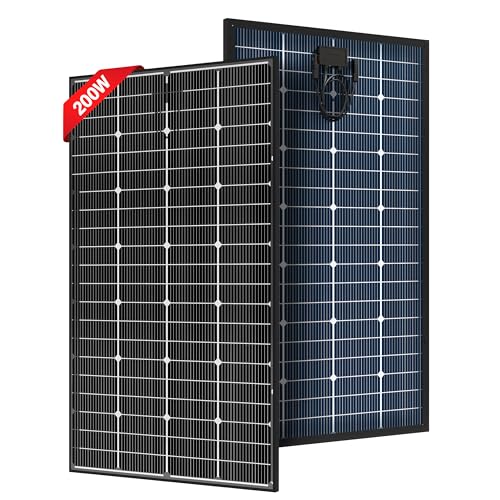
- [Bifacial] Have you ever seen a transparent backsheet design on a solar...
- [16BB N-type] The advanced 16BB N-type solar cells are used to make these...
- [Durable and Reliable] These 200 watt solar panels feature a black...
Can I use bifacial panels on a dark asphalt roof and still see benefits?
Honestly, you will see very little benefit from the back side on dark surfaces. Dark materials absorb sunlight instead of reflecting it onto the back of your panels.
In this case, I recommend focusing on front-side wattage and efficiency instead of paying extra for a high bifaciality factor. You will get better value from a standard high-efficiency panel.
Which bifacial panel won’t let me down when I need reliable home backup power?
For home backup, you need a panel that delivers consistent power day after day, not just in perfect sunlight. The one I sent my father-in-law for his home setup is this N-type bifacial panel built for serious home use.
It has a strong bifaciality ratio and handles cloudy days better than standard panels. The honest trade-off is that it is heavier and requires a helper for installation, but the reliability is worth the extra effort.
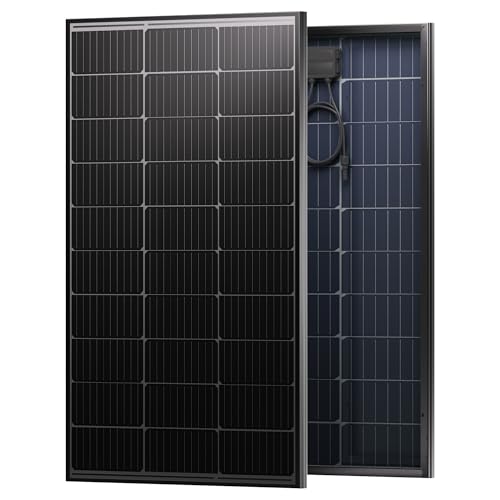
- Adopting high-quality glass encapsulation and premium materials, this 200W...
- Space-Saving High Power With optimized half-cell design and high power...
- Upgraded A+ Grade Solar Cells Equipped with upgraded A+ grade...
Does the bifaciality factor change over time as the panel ages?
Yes, it can decrease slightly as the panel degrades. Most manufacturers guarantee that the bifaciality factor will stay within a certain range for 25 years.
I always check the warranty to see if the back-side performance is covered. A good warranty gives you peace of mind that your extra investment in a high ratio panel will last.