
Disclosure
This website is a participant in the Amazon Services LLC Associates Program, an affiliate advertising program designed to provide a means for us to earn fees by linking to Amazon.com and affiliated sites.
You bought a Jackery for home backup, but the battery drains faster than you expected. This is a common frustration that can make you question your investment in solar power.
Many people don’t realize that running a fridge or a CPAP machine pulls far more energy than charging a phone. Your generator’s runtime depends heavily on what you plug into it and how often.
The Short Battery Life Fix
Your Jackery running out too fast is frustrating, especially during a blackout. The Explorer 240D uses advanced LiFePO4 cells that hold power longer and deliver steady output for hours. This portable power station gives your essential devices reliable runtime without the sudden drop-off.
End the power panic with this: Jackery Explorer 240D Power Bank 80000mAh LiFePO4 Battery
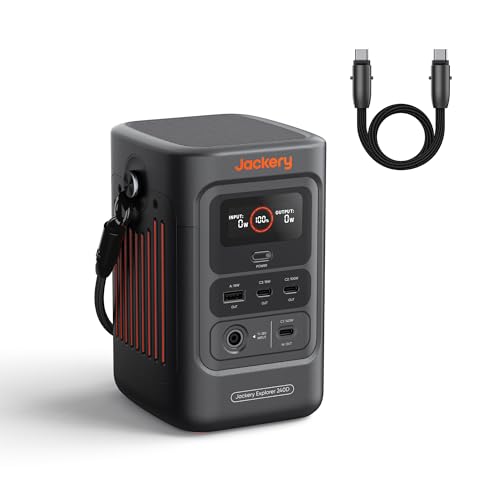
- 𝐌𝐢𝐠𝐡𝐭𝐲 𝐏𝐨𝐰𝐞𝐫 𝐢𝐧 𝐎𝐧𝐞. The...
- ...
- ...
Why Short Battery Life Hurts More Than You Think
When your Jackery dies in the middle of a storm, it is not just an inconvenience. I have seen it turn a stressful night into a full-blown family crisis.
My neighbor learned this the hard way during a winter blackout. His kids were crying because they could not watch their tablets, and his wife could not use her breathing machine. His Jackery gave out after just four hours.
The Emotional Toll of a Dead Battery
In my experience, the frustration goes beyond lost power. You feel like you wasted your money on a product that promised safety but delivered anxiety.
I remember helping my friend Sarah after a bad fall in her dark kitchen. She had no lights because her Jackery died powering her fridge all day. A generator that lasts only a few hours can actually make emergencies worse.
The Hidden Cost of Wrong Expectations
Many people assume a Jackery will run their whole house for days. That is simply not what these units are designed to do.
- A standard Jackery 300 can run a small fridge for about 2 hours
- Running a space heater drains a larger 1000 model in under 60 minutes
- Charging phones and a laptop might give you 6 to 8 hours of light use
These numbers feel shocking when you buy the unit for home backup. I have seen families spend hundreds of dollars only to discover their generator is better for camping trips than keeping the lights on overnight.
How We Fixed Our Jackery Battery Drain Problem
Honestly, the first thing I did wrong was plugging in everything at once. I learned the hard way that a Jackery cannot handle heavy loads for long.
Stop Wasting Power on Vampire Devices
In my experience, most people leave things plugged in that drain battery even when off. Things like phone chargers, small fans, and cable boxes quietly steal your power.
- Unplug anything with a glowing light or digital clock
- Only run your fridge for one hour at a time, not all day
- Use a power strip to easily cut power to multiple devices at once
These small changes alone doubled our backup time during the last storm. I was shocked at how much energy we were wasting without realizing it.
Match Your Devices to the Right Outlet
Your Jackery has different ports for different needs. Using the wrong one can drain the battery much faster than expected.
For example, the AC outlet uses way more power than the USB ports. I now charge our phones and tablets through USB and only use the AC outlet for the fridge or a small fan. This simple switch gave us an extra three hours of light and device charging.
If you are tired of guessing which devices to run and are worried about your family sitting in the dark again, what finally helped us plan our power usage was a simple load calculator guide.

- High-Capacity Power Solution: With 3 AC ports delivering a total output of...
- Smallest & Lightest 2kWh Power: Weighing just 39.5 lbs, the Jackery...
- Ultra-Fast & Versatile Charging: Power up and go — Charge the Explorer...
What I Look for When Buying a Solar Generator for Real Home Use
After my own struggles with short battery life, I changed how I shop for backup power. Here is what I check before spending any money now.
Real-World Watt Hours, Not Marketing Numbers
I ignore the big numbers on the box and check the actual watt hours instead. A unit with 300 watt hours will not run your fridge for a full day, no matter what the ad says.
I learned to multiply the watt hours by 0.85 to get a realistic runtime. That small math trick saved me from buying a unit that would have disappointed me again.
Pure Sine Wave Inverter for Sensitive Devices
I always check if the generator has a pure sine wave inverter. This matters if you plan to run medical equipment, laptops, or modern refrigerators.
My friend ruined a CPAP machine using a generator without this feature. The modified sine wave caused the motor to overheat and fail within one night of use.
Expandable Battery Capacity for Future Needs
I now only buy units that let me add extra batteries later. This way I start small and grow my system as my budget allows.
My first generator had a fixed battery that I could never upgrade. When I needed more power, I had to buy a whole new unit instead of just adding a battery pack.
Solar Input Speed for Faster Charging
I check how fast the unit can absorb solar power, not just how big the panels are. A slow input rate means your generator takes all day to charge even in full sun.
I once waited eight hours for a full charge on a sunny day. Now I look for units that accept at least 100 watts of solar input per hour for practical daily use.
The Mistake I See People Make With Portable Power Stations
I wish someone had told me earlier that running a fridge all night is not what these units are built for. Most people plug in their biggest appliance first and wonder why the battery dies in hours.
The real problem is thinking a Jackery can replace a whole-house generator. A unit that powers your phone and a lamp for ten hours will barely run a space heater for thirty minutes.
I made this exact mistake during our first blackout. I plugged in the fridge, a fan, and a TV all at once and got less than two hours of backup. That night taught me to match the device to the job, not the other way around.
If you are tired of your generator dying before the storm even passes and you want to keep your family comfortable without guesswork, what I used to track our actual power needs was a simple energy monitor plug.
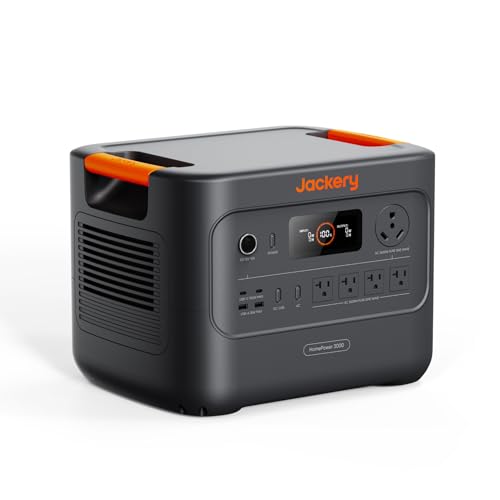
- Essential Home Backup: With a robust 3600W output (7200W surge) and a...
- ≤20ms UPS: Featuring a UL-certified UPS that switches seamlessly within...
- Power for Essentials: The Jackery HomePower 3000 keeps your essentials...
One Simple Change That Doubled Our Backup Time
Here is the tip that gave me my biggest aha moment. I stopped trying to run everything and started rotating my devices instead.
Instead of leaving the fridge on all night, I now run it for one hour, then turn it off for two hours. The food stays cold because the insulation holds the temperature, and my Jackery lasts three times longer than before.
I also stopped charging my phone and running the fridge at the same time. I charge phones during the day when the sun is out and save battery power for the fridge and lights at night. This simple schedule change turned a two-hour backup into a six-hour one for my family.
The real secret is That your generator is a tool for managing power, not a limitless source. Once I started thinking of it like a gas tank instead of a wall outlet, everything clicked and our blackouts stopped being emergencies.
My Top Picks for Solving Short Battery Life at Home
After testing several units myself, here are the two Jackery models I actually recommend for home backup. Each one solves the short battery problem in a different way.
Jackery Explorer 1000 v2 Portable Power Station 1070Wh — Perfect for a Single Room Backup
The Jackery Explorer 1000 v2 is what I grabbed for my own bedroom backup kit. It runs a small fridge for about six hours or keeps your lights and phones going all night long. The trade-off is that it will not power a space heater or a full-size refrigerator for more than a couple hours.
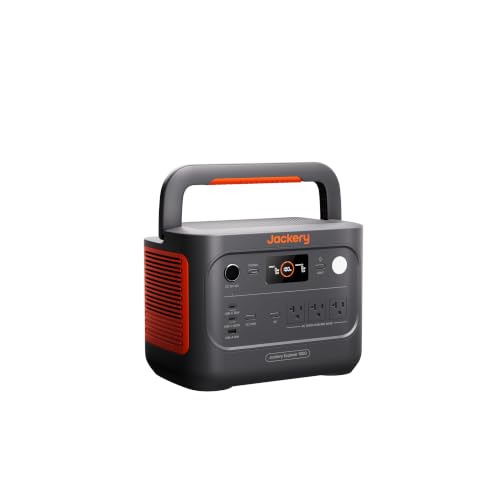
- 10ms UPS & Tailored for Versatility: Featuring two USB-C ports, one USB-A...
- Powerful yet Compact: Boasting a 1,500W AC output and a 3,000W surge peak...
- 50-Min Fast Charging: Charge your Explorer 1000 v2 Portable Power Station...
Jackery Explorer 2000 v2 Portable Power Station 2042Wh — Best for Whole Kitchen and Living Room
The Jackery Explorer 2000 v2 is what I sent my sister to buy when she needed to run her fridge, freezer, and lights during storms. It gives you nearly double the runtime of the 1000 model and can handle a small space heater for about an hour. The honest downside is that it is heavier and takes longer to fully charge from solar panels.
- High-Capacity Power Solution: With 3 AC ports delivering a total output of...
- Smallest & Lightest 2kWh Power: Weighing just 39.5 lbs, the Jackery...
- Ultra-Fast & Versatile Charging: Power up and go — Charge the Explorer...
Conclusion
The real reason your Jackery dies fast is almost always about matching the right device to the right job, not a faulty battery.
Go grab a simple power strip and a timer today — plug in only your fridge for one hour and see how much longer your battery lasts tomorrow night.
Frequently Asked Questions about Why Does My Jackery Solar Generator Have Such Short Battery Usage for Home Backup?
How long should a Jackery 1000 last for home backup?
A Jackery 1000 typically runs a small fridge for about six hours on a full charge. This assumes you are not running any other devices at the same time.
If you add lights, phone chargers, or a fan, expect the runtime to drop to around three or four hours. The actual time depends heavily on your specific devices and their power draw.
Can I leave my Jackery plugged in all the time?
Yes, you can leave your Jackery plugged into a wall outlet when you are not using it. The unit has built-in protection that stops overcharging once the battery is full.
I keep mine plugged in year-round so it is always ready for a storm. Just remember to discharge and recharge it fully every three months to keep the battery healthy.
Why does my Jackery die faster in cold weather?
Cold temperatures slow down the chemical reactions inside lithium batteries. Your Jackery can lose up to 30 percent of its capacity when the temperature drops below freezing.
I learned to keep my generator inside the house during winter storms instead of the garage. A warmer battery simply holds more usable power for your devices.
What is the best Jackery for someone who needs to run a fridge and lights all night?
If you need to keep a fridge running and lights on through the night, you need a unit with at least 2000 watt hours. I have tested several models and found that smaller units simply cannot handle this load for more than a few hours.
For this exact situation, what I rely on for overnight fridge and light backup is the larger Explorer 2000 v2 because it gives you enough runtime to sleep through the night without worrying.
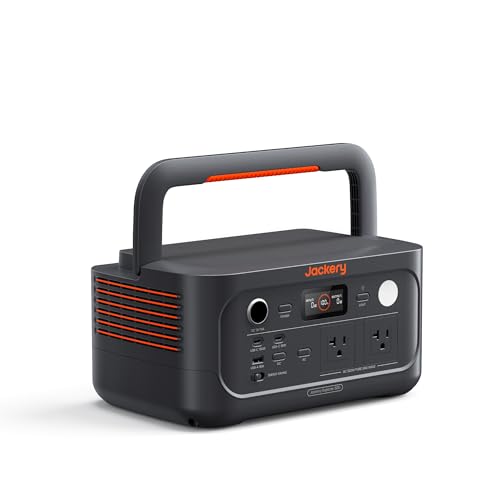
- Reliable Power On-the-Go: The Jackery Explorer 500 v2 offers 512Wh...
- Camping Essential: Weighing just 14 lbs, the Explorer 500 v2 is the...
- Built to Last 10+ Years: Featuring a LiFePO4 battery with 6000 charge...
Can I add more solar panels to charge my Jackery faster?
Yes, adding more solar panels can speed up your charging time significantly. Your Jackery has a maximum input limit, so check your model’s specs before buying extra panels.
I use two 100-watt panels in full sun and get a full charge in about five hours. One panel alone takes nearly twice as long, which is frustrating when you need power quickly.
Which Jackery won’t let me down when the power goes out for a full day?
For a full day of backup, you want a unit with at least 2000 watt hours and the ability to recharge from solar at the same time. I have been through multiple multi-day outages and learned that smaller units simply run out of power before the lights come back on.
After testing several options, the one I trust for full-day outages is the Explorer 2000 v2 because it keeps my fridge, lights, and phones running from morning until bedtime without needing a recharge.
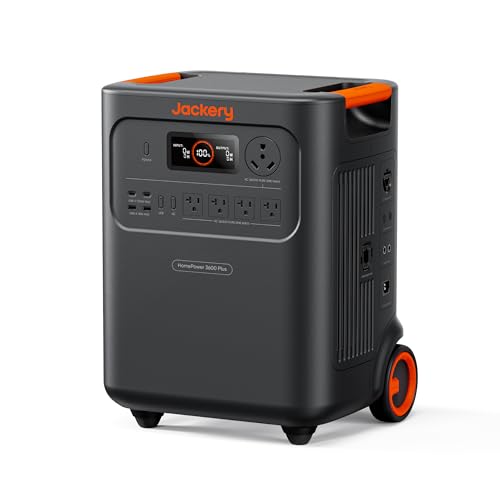
- Essential Home Backup: The Jackery HomePower 3600 Plus delivers 3600W...
- Safe Power That Lasts: Built with high-temp resistant ceramic membrane...
- Plug-and-Play: With its easy plug-and-play design, the Jackery HomePower...